Anachronisms in the Book of Mormon
The claim:
"Anachronisms: Horses, cattle, oxen, sheep, swine, goats, elephants, wheels, chariots, wheat, silk, steel, and iron did not exist in pre-Columbian America during Book of Mormon times. Why are these things mentioned in the Book of Mormon as being made available in the Americas between 2200 BC - 421 AD?"[1]
"Unofficial apologists claim victories in some of these items but closer inspection reveals significant problems. It has been documented that apologists have manipulated wording so that steel is not steel, sheep become never-domesticated bighorn sheep, horses become tapirs, etc."[2]
An anachronism is something showing up where it does not belong in time, like a wristwatch in a movie about ancient Rome. The CES Letter lists thirteen of them, things it says did not exist in the Americas during the centuries the book covers, and asks why the book mentions them. If the book describes horses and steel and wheat in a place and time that had none of those things, the argument goes, then it was made up by someone who did not know better.
It is a fair question. Some of these items really are hard. Mainstream archaeology does not accept the Book of Mormon as history, and a few of the things on this list have no clean answer yet. But the list as a whole tells a story the CES Letter never mentions, which is that item after item has moved off it, confirmed by ordinary, non-Latter-day-Saint science, over the years since 1830. The list is not growing. It is shrinking.
Start with the sword the list forgets to mention
Take steel first, because it is the clearest case.
For a long time, the standard objection was simple. The Book of Mormon says Nephi took a sword from a man named Laban, near Jerusalem around 600 BC, and that the blade was made "of the most precious steel" (1 Nephi 4:9). Critics said this was impossible. Steel, real hardened steel, did not exist that early.
Then they dug one up. At a site called Vered Jericho, about twelve miles east of Jerusalem, archaeologists pulled a complete iron sword, roughly a meter long, out of a building dated to right around Laban's time. A metals expert analyzed it and found that the iron had been deliberately hardened into steel by ancient smiths who knew what they were doing. The Israel Museum holds it today, and it has been described as the only complete sword of its size and type from that period yet found in Israel.[3] [4] [5]

That is a steel sword, at Laban's time, in Laban's region, the exact thing the Book of Mormon describes and the exact thing critics said was a giveaway that the book was fake. It is not even a lucky one-off. Hardened-steel blades and tools turn up across the ancient Near East for centuries before Laban, from Armenia to Galilee to a Philistine tomb.[6] A generation ago, "there was no steel back then" was a respectable objection. The dirt answered it.
When ancient peoples met new animals
The animals on the list, horses most of all, work differently, and they turn on a habit of language that is easy to miss.
When a people runs into an animal they have never seen, they almost never invent a brand-new word for it. They reach for a word they already have. When the Spanish brought horses to the Americas, the Maya did not coin a new term. They called the horse tzimin, a word they already used for "beast," and they marked the tapir off as tzimin che, "forest beast," to keep the two apart.[7] The Miami did the same with European sheep, labeling them "looks-like-a-cow." Going the other way, DeSoto met the American buffalo and called it simply vaca, "cow."[8] [9]
Scholars call this loan-shifting: when people attach a familiar name to an unfamiliar thing.[10] Nobody invented it to rescue the Book of Mormon. It is a documented, ordinary pattern that happens every time cultures collide. So when the Book of Mormon says "horses," it does not automatically mean the modern animal. It may mean whatever creature the Nephites decided to file under the word they already had, the same way the Maya filed horses under "beast."
The text itself drops hints that fit this. Across the whole book, which fills 531 pages in the edition you can buy today, horses come up only fourteen times. Nobody ever rides one. There is no cavalry, no mounted warfare anywhere, which is a strange thing to leave out if you are a frontier American in 1830 imagining an ancient war epic, since horses and battle went together in every story they knew. At one point they are simply listed among the livestock and grain a people gathers up before withstanding a siege (3 Nephi 3:22). That restraint is not what forgery looks like. A made-up ancient civilization tends to gallop.
None of this makes horses an easy item, and the in-depth version lays out the promising evidence for late-surviving American horses, the real problems with it, and the harder question of who exactly would be doing the renaming. But the question is not as simple as "horses did not exist, so the book is false." It runs straight into how human language actually behaves.
The item that quietly left the list
Here is the one that turns the whole approach around. Barley.
The Book of Mormon mentions barley as a Nephite crop and even as a unit of value, something you could trade with (Mosiah 9:9; Alma 11:7). For decades critics counted barley among the impossibilities: no barley in the ancient Americas. Then in 1983, archaeologists working a pre-Columbian site near Phoenix found a native grain called little barley, cultivated there long before Columbus. Once they knew to look, they found it again and again, in Illinois, Iowa, Kentucky, Oklahoma, Colorado. Michael Dunn and William Green, neither of them Latter-day Saints, point to extensive archaeological evidence for the crop in the Southwest and parts of Mexico.[11] [12] [13] Vorsila Bohrer, who studied the recovered crops, called it "a North American domesticated grain crop whose existence has not [previously] been suspected."[14] [15]
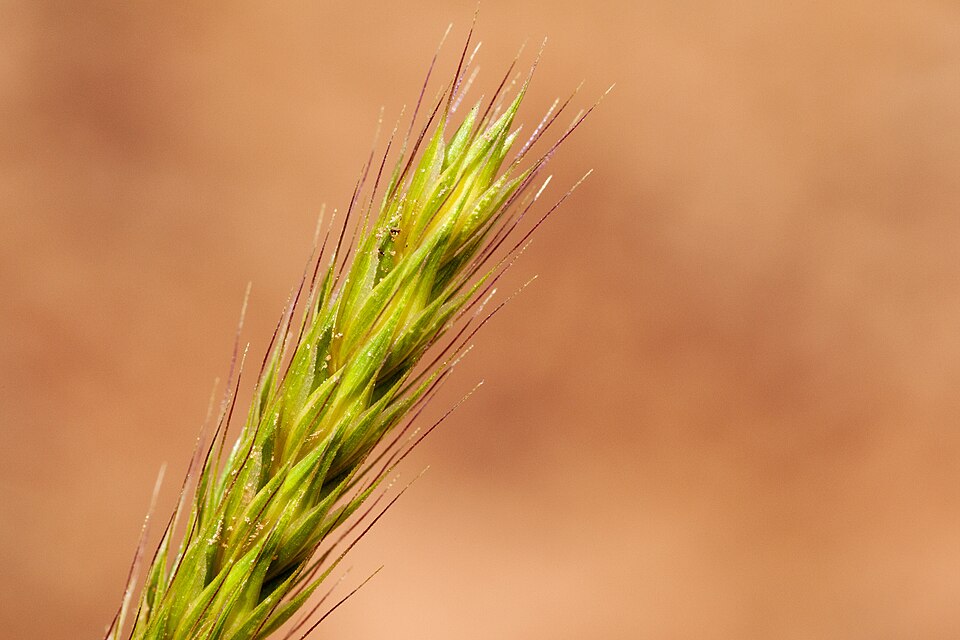
Compare that record with the CES Letter's own list. It names wheat and silk and iron. Why not barley, the grain a dig actually produced? Barley was one of the critics' best cards until the science went the other way. The list you are being shown is curated, and the item that got confirmed got dropped.
To be fair, this native barley is a different species from the Old World barley Lehi's family knew in Jerusalem, so it is not a perfect bullseye. But it does sink the claim that barley could not have grown in ancient America at all, which is the claim that was actually being made.
The whole list keeps moving one direction
You can argue the individual items back and forth, and people do. What has happened to the list as a whole, though, is the harder fact for the CES Letter to explain.
A scholar named Matthew Roper went through every item anyone has ever called a Book of Mormon anachronism, from 1830 down to today, and tracked what happened to each one over time. The trend is steep and it runs one way. In the mid-1800s, around 90 percent of the flagged items were unconfirmed, open question marks. By 2024, after almost two centuries of archaeology and linguistics, only about 9 percent were still unconfirmed.[16] A separate study by John Clark, looking at lists from nineteenth-century critics, found the same thing and put it plainly: "The overall trend in the data over the past 175 years fits the expectations for the Book of Mormon as history rather than hoax."[17]
Both of those counts deserve a grain of salt, since both come from Latter-day Saint scholars who decided what counts as confirmed, and the in-depth version is candid about that. But the basic direction does not depend on the exact percentages. One item at a time, the movement has been from "that could not have existed" to "actually, here it is": barley, hardened steel at 600 BC, cement in ancient Mexico at the date the book gives, curved swords, fortifications, pre-exilic Hebrew worship halls, Hebrew names later found on ancient documents. Things keep coming off the list. Almost nothing goes back on. If the Book of Mormon were a clumsy nineteenth-century invention, you would expect the opposite, more problems surfacing as we learned more. The reverse has happened.
There are many more items than the three covered above: silk, chariots, "coins" (a word that, it turns out, never actually appears in the Book of Mormon), elephants, and others. Each has its own story, and the full list is in the in-depth version, sorted by how strong the evidence is.
The ones still without answers
Here are the items that do not have clean answers.
Wheat. No one has found wheat in pre-Columbian America. You can argue, reasonably, that "wheat" in translation might stand for some native grain, the way "barley" did. But that argument cannot be checked, and right now there is no physical evidence. Wheat is the weakest entry on the plant list.
Iron and steel made in the New World. The Old World steel is solid, as we saw. But the Book of Mormon also describes Nephites and Jaredites working iron and making steel swords in the Americas, and there the evidence is simply missing. No ancient iron furnaces, no slag heaps, no forged iron tools or weapons have turned up anywhere in the pre-Columbian Americas. Some defenders have pointed to Olmec craftsmen who ground and polished iron ore into beads, but polishing ore is not the same as smelting metal out of it, and treating it as an answer blurs a line that matters. On New World ironworking, the critics are right: the evidence is not there.
The things the book leaves out. This is the sharpest one, and it cuts the opposite direction from everything above. If the Nephites really lived in ancient Mesoamerica, you would expect their record to mention the things that defined that world: cacao, the dominant trade good and ritual drink; the jaguar, the central animal of Maya religion; the ritual ball game played across the region for thousands of years; and above all obsidian, the volcanic glass that was the cutting edge of nearly every Mesoamerican weapon. The Book of Mormon spends roughly sixty chapters on warfare, cataloging swords and spears and shields in detail, and never once names obsidian. We know these things were central to Mesoamerican life, so their absence is not a gap waiting for some future shovel to fill. Of every form the objection takes, this is the one with no finished answer.[18]
There is a broader challenge too, and it does not come from the CES Letter. Michael Coe, a Yale archaeologist writing in 1973, judged that the Book of Mormon's picture of ancient America "has little to do with the early Indian cultures as we know them," and he was still repeating that judgment decades later.[19] [20] [21] He had the whole portrait in view: a literate, iron-using, horse-and-cattle civilization set against the maize-growing, obsidian-using Mesoamerica that archaeologists actually excavate. The mismatch he described is real. Clearing items off a list does not answer an objection built that way, and the in-depth version takes it on directly rather than waving it off.
Why anachronisms cannot decide it
So where does that leave you? With a ledger that has real entries in both columns.
The anachronism debate cannot prove the Book of Mormon false. Too many of its supposed knockout items have become evidence for the book instead, and the list has only shrunk with time. But it cannot prove the book true either, because the cultural picture does not fully line up and a handful of items still have no clean answer. By itself, this debate settles nothing. It only narrows the field.
Come back to the sword. A complete blade, deliberately hardened into steel, out of Laban's century and Laban's region, sits in the Israel Museum today, answering a verse critics said could never be true. No one could have pointed to it in 1830, or in 1900. Someone had to dig it up first, which is how this whole list has tended to move: the objection arrives, and the evidence catches up years later. Some objections are still waiting, and a few may never be answered. But the anachronism argument has two hundred years of history behind it, and that history has moved steadily in the Book of Mormon's favor.
Want the full case, including the strongest arguments the critics make and every source? Read the in-depth version.
Runnells, CES Letter (2017), "Book of Mormon," no. 5, p. 11. ↩︎
Runnells, CES Letter (2017), "Book of Mormon," no. 5, p. 11. ↩︎
Avraham Eitan, "Rare Sword of the Israelite Period Found at Vered Jericho," Israel Museum Journal 12 (1994): 61-62; see also A. Eitan, Excavations and Surveys in Israel 2 (1983): 106-107. ↩︎
"Laban's Steel Sword," Evidence Central, Scripture Central. https://scripturecentral.org/evidence/book-of-mormon-evidence-laban-s-steel-sword ↩︎
Hershel Shanks, "Antiquities director confronts problems and controversies," Biblical Archaeology Review 12, no. 4 (1986): 33, 35. This is the source Evidence Central credits for the assessment that the Vered Jericho blade is "the only complete sword of its size and type from this period yet discovered in Israel." The Israel Museum plaque language quoted on the same page is the shorter "iron hardened into steel." (Evidence Central prints the author's given name as "Hershall.") ↩︎
Herbert Maryon et al., "Early Near Eastern Steel Swords," American Journal of Archaeology 65, no. 2 (1961): 173-184. ↩︎
"Loanshifting: deer and tapirs," FAIR. https://www.fairlatterdaysaints.org/answers/Book_of_Mormon/Anachronisms/Animals/Horses/Loanshifting:_deer_and_tapirs ↩︎
John L. Sorenson, An Ancient American Setting for the Book of Mormon (Salt Lake City: Deseret Book; Provo, UT: FARMS, 1985), 294, quoted in "Book of Mormon/Animals/Cattle," FAIR, https://www.fairlatterdaysaints.org/evidences/Category:Book_of_Mormon/Animals/Cattle. The examples cited there include the Miami calling the buffalo "wild cows," the explorer DeSoto calling it "vaca, cow," the Delaware naming the cow after the deer, and the Miami labeling sheep "looks-like-a-cow." ↩︎
Matthew Roper, "Anachronisms: Accidental Evidence in Book of Mormon Criticisms — Chapter 1: Book of Mormon Animals," Interpreter: A Journal of Latter-day Saint Faith and Scholarship 65 (2025): 9-50. https://interpreterfoundation.org/journal/anachronisms-accidental-evidence-in-book-of-mormon-criticisms-book-of-mormon-animals ↩︎
Brant A. Gardner, "Anachronisms in the Book of Mormon," in A Reason for Faith: Navigating LDS Doctrine & Church History, ed. Laura Harris Hales (Provo, UT: BYU Religious Studies Center; Salt Lake City: Deseret Book, 2016), 33-44. https://rsc.byu.edu/reason-faith/anachronisms-book-mormon ↩︎
Daniel B. Adams, "Last Ditch Archeology," Science 83 4, no. 10 (December 1983): 32. ↩︎
Anna F. Graham, Karen R. Adams, Susan J. Smith, and Terence M. Murphy, "A New Record of Domesticated Little Barley (Hordeum pusillum Nutt.) in Colorado: Travel, Trade, or Independent Domestication," KIVA 83, no. 4 (2017): 414-442. https://escholarship.org/uc/item/1v84t8z1 ↩︎
"How Can Barley in the Book of Mormon Feed Faith?" KnoWhy #87, Scripture Central. https://scripturecentral.org/knowhy/how-can-barley-in-the-book-of-mormon-feed-faith ↩︎
Vorsila L. Bohrer, "Domesticated and Wild Crops in the CAEP Study Area," in Prehistoric Cultural Development in Central Arizona: Archaeology of the Upper New River Region, ed. Patricia M. Spoerl and George J. Gummerman, Occasional Paper 5 (Carbondale: Southern Illinois University, Center for Archaeological Investigations, 1984), 252. ↩︎
Nancy B. Asch and David L. Asch, "Archeobotany," in The Hill Creek Homestead and the Late Mississippian Settlement in the Lower Illinois Valley, ed. Michael D. Conner, Kampsville Archeological Center Research Series, Vol. 1 (Kampsville, IL: Center for American Archeology, 1985), 115-170. ↩︎
Matthew Roper, "Anachronisms: Accidental Evidence in Book of Mormon Criticisms — Chapter 9: Concluding Observations," Interpreter 65 (2025): 239-280. https://interpreterfoundation.org/journal/anachronisms-accidental-evidence-in-book-of-mormon-criticisms-chapter-9-concluding-observations ↩︎
John E. Clark, "Archaeological Trends and Book of Mormon Origins," BYU Studies Quarterly 44, no. 4 (2005): 83-104. https://scholarsarchive.byu.edu/byusq/vol44/iss4/10/. Clark's headline finding: "I found that about 60 percent of those criticisms have been resolved in favor of the book." Clark immediately cautions that "this exercise was meant, however, only as an indicator of trends rather than as a valid, statistical sample" and that the sixty-item set was "only about 3 percent of published criticisms, so the number of confirmations from that sample should not be taken as conclusively indicative of the whole." ↩︎
Three partial responses are commonly offered. (1) The abridgment defense. Mormon was selecting religious and military material rather than producing a cultural ethnography, which could explain why peripheral items (cacao as a commodity, jaguar imagery in everyday life) might be omitted. The limit: this fails for obsidian, whose military significance an abridger working through sixty chapters of warfare narrative could not avoid, and for cacao, whose economic and ritual significance was pervasive enough that any chronicler would encounter it. (2) The translation framework. Unfamiliar terms might have been rendered generically — obsidian as "stone" or "flint," for example. The limit: this is unfalsifiable as a general move, and the Book of Mormon's weapons are not described in stone-tool terms either; they are described in metallic terms (swords, cimeters, breastplates). (3) Cultural distinctiveness. Nephite culture may have been substantially different from surrounding Mesoamerican cultures. The limit: this creates tension with the Mesoamerican model itself, which relies on overlap with Mesoamerican archaeology to argue for a Mesoamerican setting in the first place. Each response carries partial weight; none individually resolves the obsidian and cacao absences. ↩︎
Michael D. Coe, "Mormons and Archaeology: An Outside View," Dialogue: A Journal of Mormon Thought 8, no. 2 (1973): 40-48. ↩︎
Coe, "Mormons and Archaeology," 42. ↩︎
Earl M. Wunderli, "Critique of a Limited Geography for Book of Mormon Events," Dialogue: A Journal of Mormon Thought 35, no. 3 (2002): 161-197. ↩︎