Reliability of Spiritual Witnesses
The claim:
"I felt the Spirit watching Saving Private Ryan and Schindler's List. Both R-rated and horribly violent movies. I also felt the Spirit watching Forrest Gump and The Lion King. After learning these disturbing issues, I attended a conference where former Mormons shared their stories. The same Spirit I felt telling me that Mormonism is true and that Joseph Smith was a true prophet is the same Spirit I felt in all of the above experiences."[1]
The CES Letter stacks up several versions of one charge. Spiritual feelings, it argues, are just brain chemistry and emotion dressed up in religious language. A neuroscience lab can watch the brain's reward center light up during a "feeling the Spirit" moment. Psychologists can produce the same warm, teary, uplifted feeling in a theater. And a popular General Authority once moved audiences to tears with war and baseball stories that turned out to be made up. If the very same feeling shows up at the movies, at a Church meeting, and even at a meeting of people leaving the Church, then how could that feeling ever tell you which religion is true?
It is a serious challenge, and this is one of the few sections where the strongest version of the criticism has real teeth. So start with what is true, including the parts that sting. In 2016, a University of Utah team put nineteen returned missionaries in a brain scanner and asked them to press a button whenever the feeling of the Spirit peaked. The brain's reward center lit up a second or two before the button press, the same circuit the brain uses for music, money, and love.[2] Paul Dunn really did fabricate his stories, and members really did weep through them. The feeling people get watching a great film is real and well studied. None of that is invented.
Missing from the CES Letter's case is what Latter-day Saint scripture and apostles actually teach about how spiritual confirmation is supposed to work. That teaching is almost two hundred years old, and it heads off most of this argument before it starts. It does not head off all of it, and the closing section of this page says where it falls short.
The whole argument runs on one swap
Trace the criticism to its hinge and you find a single move: it treats "feeling the Spirit" and "feeling an emotion" as the same thing. Then it shows that emotions are unreliable, and concludes the Spirit is unreliable. If the Church actually taught that any strong feeling is the Spirit, the argument would work cleanly.
It has never taught that. The most-quoted scripture on the subject was given to Oliver Cowdery in 1829, months before the Book of Mormon was printed. It does not say "pray and trust the feeling you get." It says the opposite:
"you must study it out in your mind; then you must ask me if it be right, and if it is right I will cause that your bosom shall burn within you... But if it be not right you shall have no such feelings, but you shall have a stupor of thought."[3]
Two things in there break the swap. First, study comes before the feeling. You are supposed to do the homework, reach a conclusion, and then ask whether you got it right. Second, there is a negative signal built in, a "stupor of thought," a sense of the answer going dark, when the thing you proposed is wrong. A system that only ever handed back warm feelings could not produce that. And Latter-day Saints do report it: missionaries who decide against a plan, investigators who pray and conclude the Church is not for them, members warned off a marriage or an investment. If the feeling were only an echo of your own hopes, where would a no ever come from?
The apostles have been just as direct in person. Howard W. Hunter, five years before he became president of the Church, stood in front of religious educators in 1989 and warned them off the exact equation the CES Letter needs:
"I get concerned when it appears that strong emotion or free-flowing tears are equated with the presence of the Spirit. Certainly the Spirit of the Lord can bring strong emotional feelings, including tears, but that outward manifestation ought not to be confused with the presence of the Spirit itself."[4]
An apostle told a room of teachers, on the record, not to mistake strong emotion for the Spirit. The framework that the CES Letter attacks, the one where any tear-jerking moment counts as revelation, is one the Church's own leaders spend their time correcting. The deeper resources here, the requirement of mind and heart together, the test of fruits over years rather than feelings in a moment, and the discernment that has to be developed like a skill, are laid out in the companion article on competing spiritual claims.
A doctrine that predicted the movie theater
Now take the sharpest line in the claim: the same Spirit at The Lion King, at a testimony meeting, and at an ex-Mormon conference. The CES Letter offers this as a trap. Latter-day Saint doctrine walked into it on purpose, in 1830, and called it a feature.
The Book of Mormon teaches that there are two different things going on when people feel drawn toward goodness. The first is the Light of Christ, and it is given to everyone, no exceptions:
"For behold, the Spirit of Christ is given to every man, that he may know good from evil; wherefore, I show unto you the way to judge; for every thing which inviteth to do good, and to persuade to believe in Christ, is sent forth by the power and gift of Christ."[5]
The second, the gift of the Holy Ghost, is narrower. It comes by covenant after baptism, and its job is specific: to confirm particular truths in answer to particular questions, like whether the Book of Mormon is the word of God. Apostle Dallin H. Oaks laid out the difference plainly in 1986. The Light of Christ is universal, a conscience and a pull toward what is good in every person alive. The gift of the Holy Ghost is for confirming the specific claims of the Restoration.[6]
Now set that doctrine next to the claim. If the Light of Christ is real and is given to everyone, then the doctrine flatly predicts that everyone, a Catholic, a Buddhist, a person with no religion, a faithful member, a person walking out the door, will feel something genuine when they meet real goodness, courage, sacrifice, or love. Wherever it shows up. Saving Private Ryan is about sacrifice and courage under fire. The Lion King is about loss, responsibility, and redemption. Of course those move people. The doctrine says they should.
And this is not a clever modern patch invented to absorb the criticism. The Church was teaching it long before anyone wrote the CES Letter. In 1978, the First Presidency put the universal version in writing, saying that great teachers and reformers outside the faith, naming Muhammad, Confucius, Socrates, and Plato, "received a portion of God's light," and that God gives "all peoples sufficient knowledge to help them on their way."[7] A doctrine that predicted the data has nothing to be embarrassed about.
So the movie reductio misses, but it makes a fair point underneath. The feeling at The Lion King really can be indistinguishable, in that moment, from a feeling during a testimony. The doctrine's answer is that the moment alone was never meant to be the test, which is exactly the concession this page comes back to at the end. The same doctrine handles the ex-Mormon at the conference: the Light of Christ may genuinely be touching real pain, real honesty, and real love in that room, none of which proves the proposition "the Church is false." That case asks for more care than the movies do, and the in-depth version gives it that care.
The brain scan proves less than it looks
The fMRI brain-scan study deserves its own answer, because critics treat it as the whole case in one image: the reward center fires, therefore the Spirit is just the brain rewarding itself.
One move quietly slips by in that leap. Showing that an experience runs through the brain is not the same as showing the experience is about nothing. The philosopher William James named this mistake back in 1902: confusing where a feeling comes from with whether the feeling is true.[8] Think it through with anything else. Seeing a chair lights up your visual cortex; that does not make the chair a hallucination. Understanding a math proof has a brain signature; the theorem is still true. Romantic love runs on measurable brain chemistry; no one concludes their marriage is fake. Every real thing you have ever known, you knew through your brain. Finding the neural wiring for spiritual experience tells you it is wired, like everything else. It cannot tell you whether anything is on the other end of the line.
The scientists who ran the study said as much themselves. Their published conclusion was careful: "We're just beginning to understand how the brain participates in experiences that believers interpret as spiritual, divine or transcendent."[2:1] Participates in. They measured the wiring, not the meaning. The reductive leap, from "the brain lights up" to "so there is nothing there," is the critic's addition, not the data's.
That is why the brain scan from the opening decides less than it first seems to. It settles, for good, that the feeling runs through ordinary brain hardware. Everyone already agreed it did. It leaves the real question, whether the feeling answers to anything real, exactly where it was, to be decided by other evidence.
Paul Dunn, the case that actually happened
The heaviest single exhibit is the Dunn case, because it is not a theory. It happened.
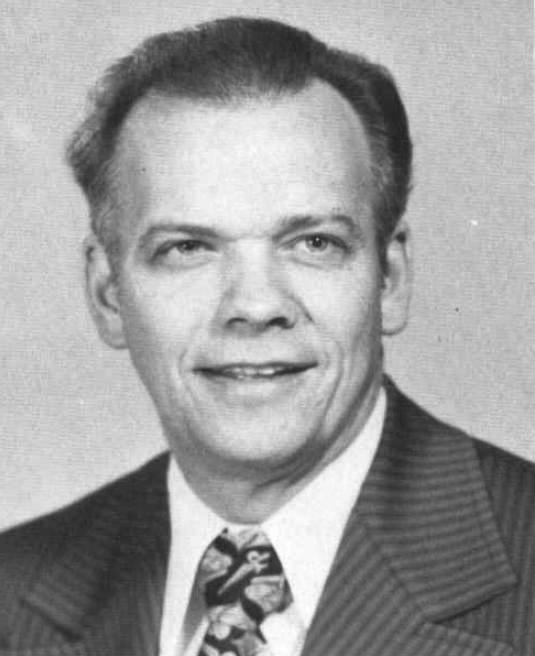
Paul H. Dunn was one of the most popular speakers in the Church for two decades. He told gripping stories: enemy machine-gun fire that tore away his gear without touching his skin, a best friend who died in his arms, a career with the St. Louis Cardinals. In 1991, a reporter named Lynn Packer documented that the signature stories were fabricated or heavily embellished.[9][10] Dunn admitted it in an open letter: "I confess that I have not always been accurate in my public talks and writings," and acknowledged the Church had "placed a heavy penalty" upon him.[11] People had sat in those audiences and felt the Spirit. The stories were not true. Put those two sentences side by side and you have the criticism at full strength.
The faithful answer turns on a distinction the criticism never tests: what, exactly, was the Spirit confirming? Hold it next to the way Jesus taught. He taught mostly in parables. The Good Samaritan was not a real man; the Prodigal Son was invented too. When listeners felt the truth of those stories, no one says the Spirit failed because the characters were fictional. The Spirit was confirming the principle, sacrifice, courage, mercy, God's care, not the biographical details of the vehicle carrying it.[12] Members who wept at Dunn's stories were responding to courage and providence and faith, which are real, even when the man telling them had invented the props.
The CES Letter also gets the timeline backward, and the correction matters. It implies Dunn was quietly pushed into retirement because he got caught, the cover-up exposed. The dates run the other way. Dunn was made emeritus, the honorary semi-retirement, on October 1, 1989, citing age and health. The newspaper exposé did not run until February 1991, sixteen months later.[11:1] And the "first General Authority to gain emeritus status" framing is misleading: emeritus status had been a standard policy since 1978 for aging leaders, and many had received it before Dunn for ordinary reasons.[13][14] FAIR's read is blunt and, on the documentary record, correct: "No documented evidence has appeared that faithful members received some sort of spiritual confirmation that the stories taught were true."[15]
Look too at what the Church did, slowly, with Dunn. The Doctrine and Covenants opens by warning, in the Lord's own preface from 1831 (D&C 1:24–25), that his servants speak "in their weakness," and that "inasmuch as they erred it might be made known." The system that the CES Letter says cannot police itself did police itself: a senior leader's fabrications were detected, admitted, and disciplined. Imperfectly and uncomfortably, but it happened.
The gap between doctrine and practice
The Dunn case leaves a real bruise. The "principles, not details" reading is true, but it is a reading members could only reach afterward, once the fabrications were public. In the moment, they thought they were hearing the true life story of a man they trusted, and they were wrong about that. The Spirit confirmed the principle; their confidence in the specifics was misplaced; and they had no way to know it at the time. That cost is real, and it shows that this kind of confirmation can go wrong on a wide scale and for a long time.
The deeper concession is the one every part of this page eventually reaches. A single spiritual experience, taken by itself in the moment, cannot tell you which specific thing it is confirming. The warmth a convert feels reading the Book of Mormon, the elevation a moviegoer feels at The Lion King, the peace someone feels deciding to leave, can feel the same from the inside. The framework does not claim that the single moment sorts them out. It claims the sorting happens over time and across the whole picture: study done beforehand, the quiet and plain quality of true promptings, the fruits that either grow or wither across years, and a case built from many strands rather than one feeling. That answer is fair, but it is also a more modest claim than what members often absorb at church, where the warm moment itself gets treated as the proof. There is a real gap between what the doctrine says and what the lived practice teaches. The apostles who keep correcting it are the clearest proof that the gap is there.
Study first, then confirm
Pressed all the way down, the disagreement is not really about whether the feeling is neural. No one contests that. It is about a method, and what that method can and cannot do.
The CES Letter pictures a single feeling carrying the entire weight of someone's faith, so that one bad feeling would end the whole question. That was never the Church's method. Spiritual experience is one strand in a rope. The other strands are the Book of Mormon, the witnesses who handled the plates and never recanted, two centuries of prophetic teaching, and the fruits of changed lives. Pull any single strand and the rope holds, because the strands are braided. The feeling was never meant to do the job alone.
Which is why, when the question about feelings gets hard, you can reach first for evidence that does not depend on a feeling at all. Joseph Smith dictated the Book of Mormon, roughly 270,000 words, in about sixty working days.[16] It is a book you can pick up and examine. You can study its language, its names, its internal consistency across hundreds of pages, and weigh whether a young farmer with little schooling could have produced it. The method the framework actually asks for is to do that work first, and then ask God to confirm what you have already studied out. That is a long way from "feel good during a Church video." The feeling is the check on the conclusion, not a substitute for the evidence.
Want the full case, including the strongest arguments the critics make and every source? Read the in-depth version.
Runnells, CES Letter (2017), "Testimony & Spiritual Witness," no. 9, p. 79. ↩︎
Michael A. Ferguson, Jared A. Nielsen, Jace B. King, et al., "Reward, Salience, and Attentional Networks Are Activated by Religious Experience in Devout Mormons," Social Neuroscience 13, no. 1 (2018): 104–116 (published online November 29, 2016). https://doi.org/10.1080/17470919.2016.1257437. fMRI study of 19 devout Latter-day Saints (12 male, 7 female; all former full-time missionaries) during religious tasks. Documented activation in nucleus accumbens, ventromedial prefrontal cortex, and frontal attentional regions during reported "feeling the Spirit." Authors' framing: "We're just beginning to understand how the brain participates in experiences that believers interpret as spiritual, divine or transcendent." Ferguson (lead author): "When our study participants were instructed to think about a savior, about being with their families for eternity, about their heavenly rewards, their brains and bodies physically responded." ↩︎ ↩︎
Doctrine and Covenants 9:7–9. Given to Oliver Cowdery in April 1829, four months before the Book of Mormon went to press. The framework's foundational text on spiritual confirmation: study first; then ask; if right, "your bosom shall burn within you"; if not right, "you shall have a stupor of thought." ↩︎
Howard W. Hunter, "Eternal Investments," address to religious educators, February 10, 1989. The Church publishes the text as an excerpt from An Evening with President Howard W. Hunter, 10 February 1989, in Teaching Seminary: Preservice Readings (2004), 20–23. https://www.churchofjesuschrist.org/study/manual/teaching-seminary-preservice-readings-religion-370-471-and-475/eternal-investments. Full quote: "I get concerned when it appears that strong emotion or free-flowing tears are equated with the presence of the Spirit. Certainly the Spirit of the Lord can bring strong emotional feelings, including tears, but that outward manifestation ought not to be confused with the presence of the Spirit itself." Hunter, then President of the Quorum of the Twelve Apostles, became President of the Church in 1994. ↩︎
Moroni 7:13–17 (Book of Mormon). Verse 16: "For behold, the Spirit of Christ is given to every man, that he may know good from evil; wherefore, I show unto you the way to judge; for every thing which inviteth to do good, and to persuade to believe in Christ, is sent forth by the power and gift of Christ; wherefore ye may know with a perfect knowledge it is of God." ↩︎
Dallin H. Oaks, "Spiritual Gifts," BYU Women's Conference, March 28, 1986; published as Dallin H. Oaks, "Spiritual Gifts," Ensign, September 1986. https://www.churchofjesuschrist.org/study/ensign/1986/09/spiritual-gifts. The single most precise apostolic articulation of the three-tier divine influence framework: (1) the Spirit of Christ — universal, "given to every man, that he may know good from evil" (Moroni 7:16); (2) manifestations of the Holy Ghost — preparatory, "given to lead earnest seekers to repentance and baptism"; (3) the gift of the Holy Ghost — received after baptism through the laying on of hands, providing access to spiritual gifts. ↩︎
First Presidency Statement, "God's Love for All Mankind," February 15, 1978, signed by Spencer W. Kimball, N. Eldon Tanner, and Marion G. Romney. Sent to mission presidents in countries where Christianity is not the majority religion. The statement is preserved in the Church History Library catalog (https://catalog.churchofjesuschrist.org/assets?id=06d52821-9342-4f20-9cb3-358e6f8c8bfa) and reproduced in BYU-Idaho archives at https://archives.byui.edu/s/public/page/1978-statement-god-love-for-all-mankind. ↩︎
William James, The Varieties of Religious Experience: A Study in Human Nature (New York: Longmans, Green, and Co., 1902). Identified four marks of mystical experience: ineffability, noetic quality, transiency, passivity. Named the genetic fallacy — confusing the origin of an experience with its significance or value. ↩︎
Lynn Kenneth Packer and Joel Campbell, "Mormon Apostle Says He Embellished Stories," Arizona Republic, February 16, 1991. The original public exposure of the Dunn fabrications. Confirmed via Wikipedia's "Paul H. Dunn" article and FAIR's "Criticisms of Paul H. Dunn" page. ↩︎
Lynn Kenneth Packer, "The Paul Dunn Stories," Sunstone 15:6 (December 1991). https://archive.org/download/storiesof_Dunn/Dunn.pdf. The primary scholarly investigation of the Dunn fabrications, published by the journalist who broke the case. The Sunstone article documents the specific fabrications (the Cardinals claim, the "best friend died in his arms" story, the machine-gun-bullets-through-clothing combat narrative), Dunn's response ("I haven't purposely tried to embellish or rewrite history. I've tried to illustrate points"), and Packer's own loss of his BYU teaching contract during the investigation. Book-length expansion: Lynn Kenneth Packer, Lying for the Lord: The Paul H. Dunn Stories (Kindle, 2015). ↩︎
"Elder Dunn Offers Apology for Errors, Admits Censure," Deseret News, October 27, 1991. https://www.deseret.com/1991/10/27/18948334/elder-dunn-offers-apology-for-errors-admits-censure/. The Deseret News reporting on Dunn's October 26, 1991 Church News open letter. Exact wording of the apology: "I confess that I have not always been accurate in my public talks and writings. Furthermore, I have indulged in other activities inconsistent with the high and sacred office which I have held… [Church authorities] have censured me and placed a heavy penalty upon me." Don LeFevre, Church spokesman, declined to disclose the penalty: "an internal matter, and we don't discuss such matters" publicly. The article also confirms Dunn's emeritus status was effective October 1, 1989, sixteen months before the Arizona Republic exposé in February 1991. ↩︎ ↩︎
Sarah Allen, "The CES Letter Rebuttal — Part 41," FAIR Blog, January 14, 2022. https://www.fairlatterdaysaints.org/blog/2022/01/14/41. The most directly on-topic Latter-day Saint response to the Dunn portion of the CES Letter. Core argument: the Spirit testifies to the truth of gospel principles embedded in narratives, not to biographical specifics. Cites Michael Ash: "The Spirit testifies to the truth of those things which ultimately lead people to God, not to ancillary details — fictional, embellished, or misremembered — which serve as mere vehicles for the larger message." ↩︎
Spencer W. Kimball, "The Sustaining of Church Officers," October 1978 General Conference. The emeritus policy for General Authorities was instituted as a general policy in 1978 to honor aging General Authorities, well before Dunn received the status; many General Authorities had already received emeritus status before Dunn for entirely benign reasons. ↩︎
Runnells, CES Letter (2017), "Testimony & Spiritual Witness," no. 6, pp. 77–78. ↩︎
FAIR, "Paul H. Dunn's stories about baseball and World War II." https://www.fairlatterdaysaints.org/answers/Mormonism_and_church_leadership/Criticisms/Paul_H._Dunn's_baseball_and_war_stories. Develops the position that receiving warm feelings during speeches differs from dynamic revelation; positive emotional responses don't constitute spiritual confirmation of factual claims; members should distinguish between passive emotional comfort and active revelatory witness through sincere study and prayer. Two distinct passages on the page: (1) "Simply receiving a warm feeling about a speech or article is not enough to call it revelation or a confirmation of the spirit"; and (2) "No documented evidence has appeared that faithful members received some sort of spiritual confirmation that the stories taught were true." ↩︎
John W. Welch, "Timing the Translation of the Book of Mormon: 'Days [and Hours] Never to Be Forgotten,'" BYU Studies Quarterly 57, no. 4 (2018): 10–50. https://byustudies.byu.edu/article/timing-the-translation-of-the-book-of-mormon-days-and-hours-never-to-be-forgotten/. Welch's reconstruction of the 1829 dictation calendar: subtracting documented interruptions from the April-to-June window leaves "a total of only 57 to 63 available full-time working days," and "not many more than the equivalent of about 60 actual working days," for a dictation Royal Skousen's earliest-text count puts at 269,510 words. ↩︎