KJV Mistranslations in the Book of Mormon
The claim:
"The Book of Mormon includes mistranslated biblical passages that were later changed in Joseph Smith's translation of the Bible. These Book of Mormon verses should match the inspired JST version instead of the incorrect KJV version that Joseph later fixed."[1]
The worry comes down to this. Joseph Smith called the Book of Mormon "the most correct book on earth." Yet when it quotes the Sermon on the Mount, it matches his King James Bible word for word, mistakes and all, even in places he would later rewrite in his own revision of the Bible (the Joseph Smith Translation, or JST). The CES Letter prints one passage three ways, side by side, to show the gap: the Book of Mormon tracks the old King James, while Joseph's later JST departs from it sharply. If the Book of Mormon is the most correct book and he fixed those verses later, why did he not get them right the first time?
The CES Letter has its facts straight here, and the question is one a believer should be able to answer. But the example it picked to make this case is, of all the places it could have looked, almost the worst possible one. In the same sermon, a few dozen verses earlier, the Book of Mormon drops a King James phrase that the oldest copies of Matthew turned out to lack; most modern Bibles now drop it too. Deeper in, the same pattern shows up: where the book breaks from the King James, its readings often match ancient texts Joseph had never seen. Some King James mistakes really are in the book, and they get a section of their own below.
Start in the same sermon they did
Open the King James Bible to Matthew 5:22 and you find Jesus warning that "whosoever is angry with his brother without a cause shall be in danger of the judgment." The Book of Mormon quotes that sermon at 3 Nephi 12:22, and it drops those three words. No "without a cause." Just: whoever is angry is in danger of the judgment.[2]
That looks like a small thing. It is not. In 1830, the longer reading, with "without a cause," was what every English Bible printed. Then the oldest manuscripts started coming to light. The phrase is missing from the earliest Greek copies of Matthew, missing from the writings of the earliest Christians who quoted the verse, missing from Codex Sinaiticus, a fourth-century Bible a scholar named Tischendorf would not find at a desert monastery until 1844.[3] The leading textual scholar of the New Testament, Bruce Metzger, concluded the words were "added by copyists in order to soften the rigor of the precept."[4] Today the shorter reading is the standard one. The NIV, the ESV, the NASB all leave "without a cause" out, exactly as the Book of Mormon did in 1830.[4:1]
So the very sermon the CES Letter cites as proof that Joseph copied his Bible is the sermon where the Book of Mormon corrects his Bible, decades before the scholarship caught up. And the correction even sharpens the doctrine. "Whoever is angry is in danger of the judgment" is a stricter, cleaner teaching than one that leaves a loophole for anger we think is justified.[5]
This omission was not completely unknown in Joseph's world, though. Adam Clarke's widely sold Bible commentary mentioned that some manuscripts lacked the phrase.[6] So the fair claim is narrower: not that nobody could have known, but that the Book of Mormon matched the reading that scholarship would later confirm, against the Bible Joseph owned. That is still a remarkable place to end up.
The Letter combed this sermon for proof that the mistakes never got fixed. Why does it skip the verse where the Book of Mormon fixed one?
The argument smuggles in two things that are not true
Two assumptions carry its conclusion, and it argues for neither: one about the JST's purpose, one about what "most correct" means.
The first is that Joseph's later JST was meant to restore the Bible's original wording, so that anything not matching it is "wrong." That is not what the JST was. Robert Matthews and Kent Jackson have spent careers on it, and Jackson edited Joseph's translation manuscripts for the Joseph Smith Papers. Both describe a many-sided project: prophetic commentary, harmonizing the Gospels, theological expansion, not a word-for-word recovery of a lost text.[7] One study found that most of the verses Joseph changed in his translation of Matthew 5 through 7 do not match the 3 Nephi version either.[7:1] If the JST and the Book of Mormon were never meant to be identical, there is no contradiction when they differ.
The second is that "most correct book" means every word is flawless. Read what Joseph actually said: the Book of Mormon is "the most correct of any book on earth, and the keystone of our religion, and a man would get nearer to God by abiding by its precepts, than by any other book." He was talking about the power of its teachings to bring a person to God, not making a claim that no inherited translation wrinkle survives in its pages. The argument leans its whole weight on a reading of that phrase the words do not support.
There is also a reason the two sermons read differently that has nothing to do with error. John Welch has argued that 3 Nephi is best understood as a sermon the risen Christ gave at a temple, to a covenant people, in a different setting from the Galilean hillside of Matthew.[2:1] Same teacher, different occasion. They overlap because it is the same Lord; they are not required to be one identical transcript.
What a copyist could never have done
The deeper problem for the copying theory is that, again and again, where the Book of Mormon departs from the King James, it lines up with ancient manuscripts Joseph Smith could not read and did not own.
Take Abinadi, the prophet who quotes Isaiah 53 to a wicked king in Mosiah 14. A scholar named Shon Hopkin compared that whole passage against the King James line by line and found twenty differences. Fourteen of them either match an ancient manuscript witness or are an equally fair translation of the Hebrew.[8] Three of those changes run in the same direction: where the King James Isaiah says "iniquity," "transgression," and "sin," Abinadi says "iniquities," "transgressions," and "sins," each shift agreeing with the Septuagint, the ancient Greek Old Testament translated centuries before Christ.[8:1] One man pluralizing three words to match a Greek text he could not read is hard to wave off as a lucky guess.
The same passage fixes a known King James stumble. In Isaiah 53:7 the King James wobbles between past and present tense ("he opened not his mouth" but then "so he openeth not"). Abinadi keeps it consistently past tense, which is the more accurate rendering of the underlying Hebrew, and the Great Isaiah Scroll from the Dead Sea Scrolls, copied around 125 years before Christ and unearthed in 1947, backs the consistent past tense.[9] More striking still, Abinadi explains the grammar he is using. He notes that prophets speak "of things to come as though they had already come" (Mosiah 16:6), a precise description of a Hebrew convention scholars call the prophetic perfect.[10] He is not just reproducing Isaiah. He understands how Isaiah's Hebrew works.
A second example sits at the exact verse the CES Letter's separate complaint about King James errors leans on. At 2 Nephi 12:16, quoting Isaiah 2:16, the King James reads "ships of Tarshish" while the oldest Greek copies read "ships of the sea." For ages scholars assumed one tradition had simply lost a line. The Book of Mormon keeps both: "upon all the ships of the sea, and upon all the ships of Tarshish."[11] Joseph could not read Greek, and no widely circulated English Septuagint existed where he lived in 1829.[12] [13] He had no way to copy a line that was not in his Bible.
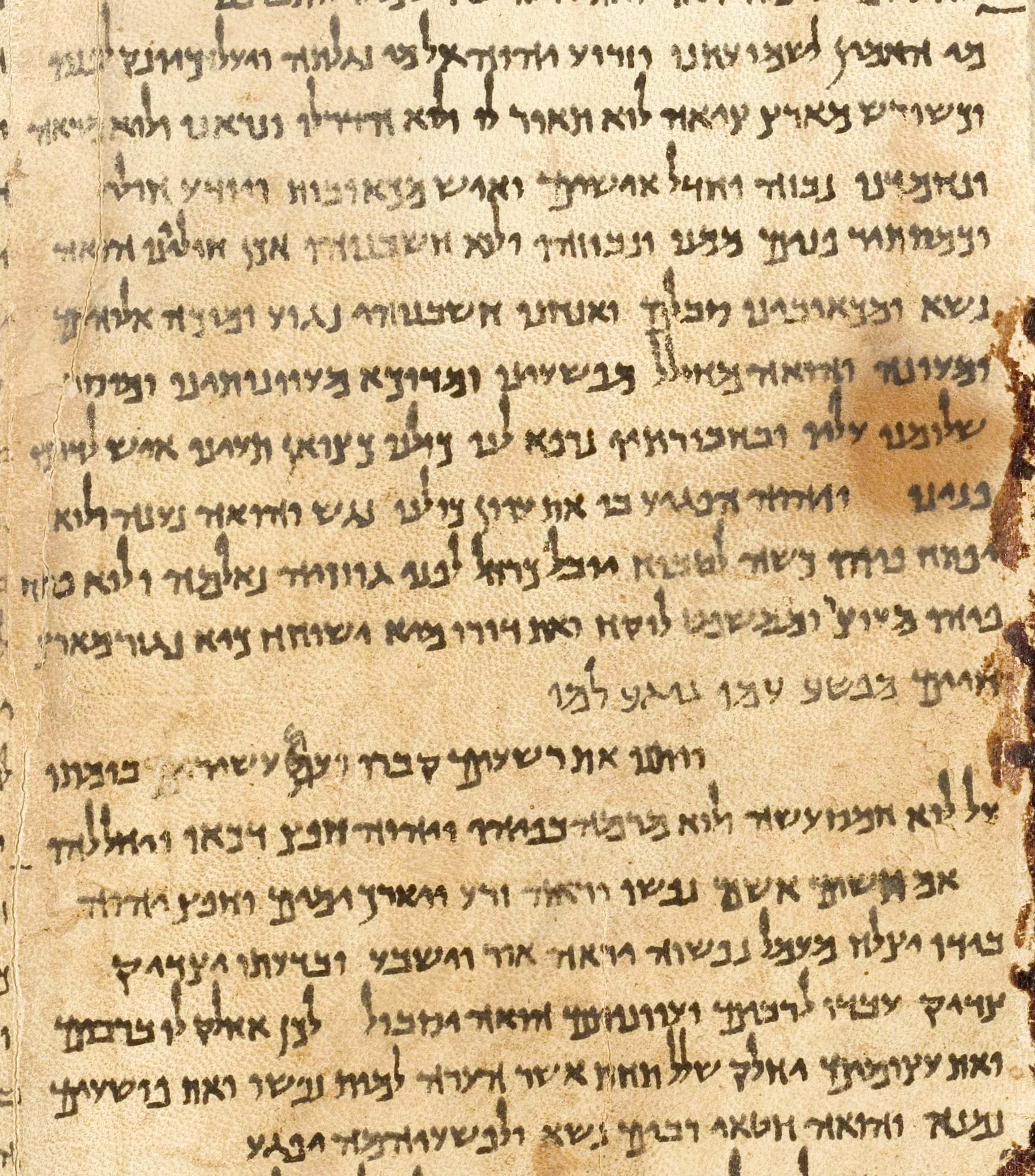
These are not the only cases. A first-person verb at 1 Nephi 20:11 matches that same Dead Sea scroll against the King James; a missing "not" at 2 Nephi 19:3 matches a Hebrew correction every modern Bible now follows.[14] One alignment could be a fluke. A whole run of them is something else: a text that keeps siding with manuscripts no one in 1829 New York could open. The full set of these is laid out in the in-depth version.
The readings with no defense
Not every King James reading the Book of Mormon kept can be defended as a fair alternative. Some are simply wrong.
A critical website asked two of the most respected Hebrew scholars alive to grade several King James verses the Book of Mormon preserves: Jan Joosten, who held the senior Hebrew chair at Oxford, and Robert Alter, the celebrated Hebrew Bible translator.[15] They rated a half-dozen of them as flatly inaccurate. The King James "pleasant pictures" at Isaiah 2:16 should be "ships," Joosten said, because the Hebrew word was borrowed from Egyptian, which the King James translators could not access.[15:1] "Of quick understanding" at Isaiah 11:3 is, in Alter's words, "entirely wrong."[15:2] And the Book of Mormon carries those errors verbatim. (The same verse again: 2 Nephi 12:16 keeps an ancient reading Joseph could not have known and repeats a King James mistake in the same breath.)
There is a harder case still. The strongest critics, scholars like David Wright, Stan Larson, and Colby Townsend, point out that some of the Book of Mormon's changes only make sense in English, as if an English-speaking mind were reworking the King James rather than translating Hebrew. One stretch even tracks the King James wording of a New Testament verse from Paul more closely than the Old Testament passage it quotes.[16] [17] Faithful scholarship has no tidy, finished answer to all of this.
What it has is a position that starts by agreeing with the critics. The Book of Mormon's Bible passages were not produced as fresh, independent translations from the plates. They were given to 1829 readers in the King James English those readers already trusted, and the imperfections of that English came along for the ride. The book says of itself, over and over, that its purpose is to testify of Christ, not to be a flawless Hebrew lexicon. Even FAIR, defending the book, grants the point plainly: "God can achieve all of His divine goals without a perfect translation," and not one of these errors teaches anything false.[18]
The place to find the most accurate rendering of Isaiah is a modern study Bible. The place to find the doctrine of Christ is the Book of Mormon. Those are different jobs.
If you want to see every one of these objections laid out at full strength, the in-depth version walks through the genuine King James errors, Wright's English-only changes, and the Paul case.
The example that proves the opposite
Keep the scale of this in view. The whole dispute concerns the small fraction of the Book of Mormon that quotes the Bible. And even inside that fraction, the evidence cuts the opposite way from the CES Letter's claim. A forger copying Isaiah does not rewrite half of what he copies, side with manuscripts buried in a cave until 1947, or drop a line from the Sermon on the Mount that the best scholarship would not confirm for another century.
The companion page on the broader King James wording question makes the larger point: the roughly ninety percent of the Book of Mormon that has no Bible parallel is the real heart of it, a record dictated aloud in about sixty working days. Some of what Wright and Townsend found is still waiting for an answer. But the CES Letter walked into the Sermon on the Mount to prove the book was copied, and the Sermon on the Mount is where the book corrected the copy. That is not the footprint of a forgery.
Want the full case, including the strongest arguments the critics make and every source? Read the in-depth version.
Runnells, CES Letter (2017), "Book of Mormon," no. 3, pp. 10-11. The CES Letter prints three side-by-side passages: 3 Nephi 13:25-27 (matching the KJV verbatim), KJV Matthew 6:25-27 (explicitly labeled "From the King James Version Bible – not the JST"), and JST Matthew 6:25-27 (explicitly labeled "Joseph Smith Translation of the same passages in the LDS Bible"). Runnells concludes: "The Book of Mormon is 'the most correct book' and was translated a mere decade before the JST. The Book of Mormon was not corrupted over time and did not need correcting. How is it that the Book of Mormon has the incorrect Sermon on the Mount passage and does not match the correct JST version in the first place?" ↩︎
John W. Welch, The Sermon at the Temple and the Sermon on the Mount: A Latter-day Saint Approach (Deseret Book / FARMS, 1990); also John W. Welch, Illuminating the Sermon at the Temple and the Sermon on the Mount (FARMS, 1999); and John W. Welch, "The Sermon at the Temple and the Greek New Testament Manuscripts," in Illuminating. Welch identifies the manuscript witnesses for the omission of "without a cause" at Matthew 5:22: P64/67 (~AD 200), Codex Sinaiticus (4th c., original hand), Codex Vaticanus (4th c.), the Latin Vulgate, Ethiopic texts, the Gospel of the Nazarenes, and church fathers Justin, Tertullian, and Origen. Welch verbatim: "In my estimation, this textual variant in favor of the Sermon at the Temple is very meaningful." Also: "It is much more severe to say, 'Whoever is angry is in danger of the judgment'" without the qualifier. https://scripturecentral.org/archive/books/book-chapter/sermon-temple-and-greek-new-testament-manuscripts ↩︎ ↩︎
"Without a Cause," Scripture Central Evidence Central. Verbatim: the omission "appears in early Greek papyri (p64, p67), Sinaiticus, Vaticanus, the Latin Vulgate" plus Ethiopic manuscripts and Church Fathers (Justin, Tertullian, Origen); Jerome himself mentioned the phrase "was not found in the oldest manuscripts known to him." On contemporary status: "This is now the predominate reading of Matthew 5:22, as rendered in most modern versions of the Bible." https://scripturecentral.org/evidence/without-a-cause ↩︎
Bruce M. Metzger, A Textual Commentary on the Greek New Testament, 2nd ed. (Stuttgart: Deutsche Bibelgesellschaft / United Bible Societies, 1994), on Matthew 5:22. Metzger concludes the longer reading was "added by copyists in order to soften the rigor of the precept." The word eikēi is absent from the earliest and best manuscript witnesses. Modern critical Greek editions (NA28, UBS5) print the shorter reading. The NIV, ESV, NASB, and NRSV all follow the shorter reading -- the same reading the Book of Mormon published in 1830. ↩︎ ↩︎
Daniel K. Judd and Allen W. Stoddard, "Adding and Taking Away 'Without a Cause' in Matthew 5:22," in How the New Testament Came to Be, ed. Kent P. Jackson and Frank F. Judd Jr. (BYU RSC / Deseret Book, 2006), 157-174. Definitive LDS scholarly treatment confirming the doctrinal-significance argument: removing "without a cause" creates a stricter ethical standard against anger itself, not merely unjustified anger. https://rsc.byu.edu/how-new-testament-came-be/adding-taking-away-without-cause-matthew-522 ↩︎
Adam Clarke, The Holy Bible, Containing the Old and New Testaments, with a Commentary and Critical Notes (London, 1810-1826), commentary on Matthew 5:22. Clarke discussed the eikēi textual variant and noted that some manuscripts omitted it. The variant was therefore not entirely unknown in Joseph Smith's English-language commentary environment, even though modern textual-critical consensus had not yet formed. The strongest framing of the case is "the Book of Mormon aligned with what later became scholarly consensus, against the KJV" -- not "Joseph could not have known." ↩︎
David A. LeFevre, "The Sermon on the Mount in the Joseph Smith Translation," in The Sermon on the Mount in Latter-day Scripture, ed. Gaye Strathearn, Thomas A. Wayment, and Daniel L. Belnap (BYU RSC / Deseret Book, 2010). LeFevre verbatim: "at least 58 of the 86 verses changed by Joseph Smith's translation of Matthew 5-7 differ from the account in 3 Nephi, many in substantial ways." The data shows the JST is not a "stable reference text" against which the BoM can be measured for "correctness." Wayment is one of three editors of the volume but is not the author of this chapter. https://rsc.byu.edu/sermon-mount-latter-day-scripture/sermon-mount-joseph-smith-translation ↩︎ ↩︎
Shon D. Hopkin, "Isaiah 52-53 and Mosiah 13-14: A Textual Comparison," in Abinadi: He Came Among Them in Disguise, ed. Shon D. Hopkin (BYU RSC / Deseret Book, 2018), 139-166. Hopkin's verbatim summary: "In the Abinadi narrative, of the twenty variants that exist, fourteen find support in an ancient manuscript witness -- such as the Septuagint, the Targums, or the Dead Sea Scrolls -- or they are an equally appropriate translation from the Masoretic Text." On the types of variants: "the types of variants in the Dead Sea Scrolls do appear to match the types of variants found in the Book of Mormon fairly closely. This could possibly support the view of the Book of Mormon as a translation of an ancient text." On the overall analytic situation: "In all, the picture that emerges from the analysis is varied and complex, with several possible explanations for the differences." On Mosiah 14:9 ("evil" vs. "violence"): "Theologically, the difference between the servant doing no 'violence' and doing no 'evil' is very important for the point that Abinadi is making. The view of the servant as one who does no violence is much less important than the portrayal of the servant as free from evil and thus able to suffer and atone for the sins of the people." Final framing: "The Book of Mormon may not have been a modern creation, but it was certainly a modern translation." https://rsc.byu.edu/abinadi/isaiah-52-53-mosiah-13-14 ↩︎ ↩︎
Royal Skousen, "Textual Variants in the Isaiah Quotations in the Book of Mormon," in Isaiah in the Book of Mormon, ed. Donald W. Parry and John W. Welch (Provo: FARMS, 1998), 369-390. Skousen's eight major findings (basis for KnoWhy #39): (1) the KJV is the base text for Isaiah quotations; (2) Isaiah passages were dictated; (3) original BoM chapter divisions don't match the KJV; (4) original BoM is closer to the KJV than later editions; (5) the majority of differences are NOT associated with italicized words; (6) corrections in the original manuscript don't suggest revision-from-KJV; (7) duplicate Isaiah quotations help restore original readings; (8) the JST used the 1830 BoM as a source for some Isaiah revisions. On Mosiah 14:7: "Abinadi's quotation of Isaiah 53:7 more consistently uses the past tense than does the KJV"; "the Book of Mormon version renders the underlying Hebrew verbs of Isaiah 53:7 more correctly than does the KJV." https://scripturecentral.org/archive/books/book-chapter/textual-variants-isaiah-quotations-book-mormon ↩︎
Mosiah 16:6. Abinadi explains: "And now if Christ had not come into the world, speaking of things to come as though they had already come, there could have been no redemption." This is a precise description of the Hebrew prophetic perfect tense, a recognized convention in Hebrew grammar (Gesenius, Joüon-Muraoka). ↩︎
Dana M. Pike and David Rolph Seely, "'Upon All the Ships of the Sea, and Upon All the Ships of Tarshish': Revisiting 2 Nephi 12:16 and Isaiah 2:16," Journal of Book of Mormon Studies 14, no. 2 (2005): 12-25. The KJV's "pleasant pictures" renders Hebrew śĕkîyôt, now widely understood to relate to Ugaritic and Egyptian words meaning "ship" or "vessel." The Septuagint reads "every ship of the sea, and upon every display of fine ships." 2 Nephi 12:16 uniquely combines both traditions. Pike and Seely deliberately hedge: "the ancient Hebrew and Greek versions of the Bible as they impact our understanding of [Isaiah 2:16] in 2 Nephi 12:16 are much more complex" than typically assumed; they consider it "much more plausible that [a scribal error] occurred only once, with the Hebrew" -- leaving the textual history unresolved rather than declaring the BoM definitively original. Charles Thomson's 1808 English Septuagint was "rare for its time." Joseph Smith began studying Greek/Latin only in the 1830s-1840s. https://scholarsarchive.byu.edu/jbms/vol14/iss2/4/ ↩︎
John W. Welch, "Joseph Smith's Awareness of Greek and Latin," in Approaching Antiquity: Joseph Smith and the Ancient World, ed. Lincoln H. Blumell, Matthew J. Grey, and Andrew H. Hedges (BYU RSC, 2015). Welch documents that Joseph Smith's exposure to Greek and Latin began in the 1830s, in the Kirtland and Nauvoo eras. Joseph could not read Greek in 1829. https://rsc.byu.edu/approaching-antiquity-joseph-smith-ancient-world/joseph-smiths-awareness-greek-latin ↩︎
The first English Septuagint was Charles Thomson's 1808 translation, with a small print run that left it rare in 1829. Lancelot Brenton's widely-distributed English Septuagint (the standard for over a century) was not published until 1844, fifteen years after the Book of Mormon. https://en.wikipedia.org/wiki/Septuagint ↩︎
John A. Tvedtnes, "Isaiah Variants in the Book of Mormon," in Isaiah and the Prophets, ed. Monte S. Nyman and Charles D. Tate Jr. (BYU RSC, 1984), 165-178. Tvedtnes verbatim summary: "Of the 234 variants rated, 59 are +, 126 are =, and 49 are –." Among non-neutral variants, 55% favor the BoM, 45% favor the KJV -- meaningful but not statistically overwhelming. The strongest individual cases anchor on identifiable ancient manuscript witnesses (1QIsa-a, LXX, Targums, Vulgate). On the Qere reading at Isaiah 9:3: "the Qere deletes it, as do twenty Hebrew manuscripts." Tvedtnes was a faithful Latter-day Saint scholar; his ratings involve interpretive judgment; no neutral textual critic has independently replicated the scoring methodology. https://rsc.byu.edu/isaiah-prophets/isaiah-variants-book-mormon ↩︎
"Scholar Survey: KJV Translation Errors in Book of Mormon Isaiah," A Careful Examination. Compiles ratings from Jan Joosten (then-Regius Professor of Hebrew, Oxford), Robert Alter (UC Berkeley), and additional reviewers on a 5-point Likert scale (4 = "Perfectly Accurate"; 0 = "Completely Inaccurate"). Survey covered KJV translations, ESV comparisons, and Strong's Concordance references. Joosten on Isaiah 2:16 "pictures": 0/4 -- "the word means 'ships' (the word was borrowed from Egyptian, which the KJV translators had no access to)." Joosten on Isaiah 3:3 "eloquent orator": 0/4 -- "ESV is better." Joosten on Isaiah 9:1 "grievously afflict": 0/4 -- "but I sympathize, the verse is really difficult." Joosten on Isaiah 11:3 "of quick understanding": 0/4 -- "the text means 'his smelling will be in the fear of the Lord'." Joosten on Isaiah 49:5: "the Hebrew here has two alternate reading lo[w] 'to him'/lo['] 'not'; according to the context 'to him' is correct." Alter on Isaiah 11:3: KJV and ESV "are entirely wrong." Alter on Isaiah 3:2: "The diviner is correct, and the last term should be 'expert in incantations.'" Note: Isaiah 13:22 / 2 Nephi 23:22 ("dragons") received a split rating rather than unanimous 0/4. https://faenrandir.github.io/a_careful_examination/scholar-survey-kjv-translation-errors-in-bom-isaiah/ ↩︎ ↩︎ ↩︎
Colby Townsend, "'The Robe of Righteousness': Exilic and Post-Exilic Isaiah in The Book of Mormon," Dialogue: A Journal of Mormon Thought 55, no. 3 (Fall 2022): 75-106. Townsend verbatim: "As a contribution to the larger project of examining the King James Bible's influence on The Book of Mormon, this essay focuses on several aspects of the problem of Isaiah in The Book of Mormon." On the Romans 10:21 / Isaiah 65:2 mediation: "Although slightly varying among themselves in terminology, each of the three verses in The Book of Mormon dependent on Isaiah 65:2 is far closer in its wording to the KJV of Romans 10:21 than Third Isaiah." Also: "The author of The Book of Mormon only knew the book of Isaiah as it is found in the KJV." And: "These verses also cannot be stripped from Nephi's or Jacob's texts without doing irreparable harm to their message. The author of these chapters knew Third Isaiah and the New Testament." Specific Trito-Isaiah phrases in original BoM compositions include "robe of righteousness" (2 Nephi 4:33; 9:14; cf. Isaiah 61:10) and "mighty to save" (2 Nephi 31:19; Alma 7:14, 34:18; cf. Isaiah 63:1). https://www.dialoguejournal.com/articles/the-robe-of-righteousness-exilic-and-post-exilic-isaiah-in-the-book-of-mormon/ ↩︎
The Romans 10:21 finding is empirical: Townsend documents -- and the article accepts -- that three Book of Mormon verses (2 Nephi 28:32, Jacob 5:47, Jacob 6:4) track the specific English wording of Romans 10:21 more closely than they track Isaiah 65:2 (whether in Hebrew or in modern critical English translation). The phrase shape is Pauline-KJV, not Trito-Isaiah-Hebrew. The KJV-scaffolding model handles biblical-quotation passages cleanly: where the Book of Mormon quotes Isaiah, the KJV provides the English rendering. Trito-Isaiah phrases in original Nephite voices (the "robe of righteousness" and "mighty to save" cases) are already a stretch for the simple model -- they require either (a) the divine translation supplying the post-exilic phrasing because the underlying Nephite concept aligned closely enough that the KJV idiom captured it, or (b) the Nephites somehow having access to post-Lehi prophetic material via revelation. The standard faithful response to "post-Lehi material in BoM" is the Malachi precedent: 3 Nephi 24-25 explicitly attributes Malachi to a post-Nephi-departure timeframe. Divine intervention added attributed post-exilic content. But Townsend's examples are unattributed -- Trito-Isaiah phrases appear in Nephite mouths as their own composition. The Malachi precedent covers attributed delivery; it does not cover unattributed phraseology. The Romans 10:21 case is harder still: the specific phrase shape tracks Paul's KJV English filtration of the Hebrew rather than the Hebrew itself or even an independent translation of the Greek. The divine translator was working through the New Testament's KJV Pauline phrasing in the act of rendering original Nephite compositions. The translation medium was not just KJV-Old-Testament English supplying biblical-quotation language, but KJV-English-as-such (including Pauline NT phrasings) functioning as the broader linguistic substrate. No peer-reviewed faithful-side rebuttal engages Townsend's specific textual findings on this point. Frederick's "vernacularization" framework describes the broader phenomenon at a level that includes the Romans 10:21 case, but it does not specifically defend why this particular type of mediation is theologically appropriate or what exactly the divine selection process was that produced it. ↩︎
"KJV Translation Errors in the Book of Mormon," FAIR. Classifies 91 alleged errors into categories: not errors, translation variants, diachronic shifts, legitimate mistranslations, and modern translator conventions. Verbatim: "In no case, however, is there a translation variant, broadening of meaning, change in meaning, change in intent, etc. that teaches incorrect doctrine or otherwise compels a reader into believing something false." Also: "God can achieve all of His divine goals without a perfect translation." FAIR-acknowledged "genuine mistranslations" preserved in the BoM include Isaiah 3:2 "prudent" → "diviner" (no doctrinal change); Isaiah 3:3 "orator" → "enchanter" (no doctrinal change); Isaiah 2:16 "pictures" → "ships" (rhetorical intent preserved); Isaiah 3:18 "cauls" → "headbands" (same basic meaning). https://www.fairlatterdaysaints.org/answers/KJV_translation_errors_in_the_Book_of_Mormon ↩︎