Evolution & the Fall
The claim:
"2 Nephi 2:22 and Alma 12:23-24 state there was no death of any kind (humans, all animals, birds, fish, dinosaurs, etc.) on this earth until the 'Fall of Adam,' which according to D&C 77:6-7 occurred about 7,000 years ago. It is scientifically established that there has been life and death on this planet for billions of years. How does the Church reconcile this?
How do we explain the massive fossil evidence showing not only animal deaths but also the extinctions of over a dozen different Hominid species over the span of 250,000 years prior to Adam?"[1]
"How do I have pre-Adamic Neanderthal DNA and Neanderthal blood circulating my veins when this species died off about 33,000 years before Adam and Eve?"[2]
The argument here is about what scripture supposedly commits the Church to. Latter-day Saint scripture, it says, locks the Church into a planet only about 7,000 years old, with no creature of any kind dying before Adam, no human-like species before Adam, and Adam and Eve as the literal ancestors of everyone alive. Science has shown all of that to be false: the earth is billions of years old, a dozen hominid species lived and died long before any date for Adam, and many of us carry Neanderthal DNA from a species that vanished tens of thousands of years before he supposedly appeared. If the Church is committed to that timeline, the argument runs, the Church is simply wrong.
The science is right. The earth is ancient. Other human-like species really did live and die before Adam. The Neanderthal DNA is real. This page grants all three up front. The argument is with the claim stacked on top of them, that the Church is committed to the opposite. That commitment was never real, and a single afternoon at the pulpit in 1931 shows why.
An apostle with a geology degree already said this
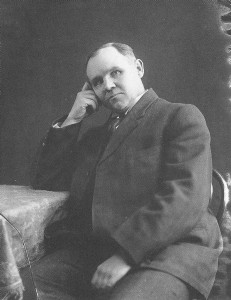
In 1931, James E. Talmage stood at the Salt Lake Tabernacle pulpit and told the Saints that the chalk beds and deep-sea limestones are packed with the bones of animals that "lived and died, age after age, while the earth was yet unfit for human habitation."[3]
Talmage was an Apostle with a doctorate in geology, and the address carried more than his own authority: that November, the First Presidency went through the text with him and authorized its publication, first in the Deseret News and then as a Church pamphlet.[3:1] The Church's most senior science-trained leader taught pre-Adamic death as settled fact almost a century ago, and the planet he described is the very one the CES Letter says the Church cannot accept: living things dying, age after age, long before any human walked it.
That one fact is enough to unravel the whole argument, because the argument depends on the Church being committed to the opposite. It never was.
The Church has no official position on this
The CES Letter skips the one piece that changes everything. The Church has never made the age of the earth or the theory of evolution into binding doctrine. It has done the opposite, on the record, for over a century.
The 2016 New Era, answering the question for the Church's youth, puts the position in two sentences: "The Church has no official position on the theory of evolution. Organic evolution... is a matter for scientific study."[4] The answer goes on: "Nothing has been revealed concerning evolution."[4:1] The Church History Topics entry "Organic Evolution" reports that the youth magazine's 2016 articles "reiterated" it.[5]
This is not a recent retreat in the face of awkward science. Back in 1871, decades before anyone could date a rock, Brigham Young was telling the Saints that the geologists had "good reason for their faith" in an earth of "thousands and millions of years," and that whether creation took "six days" or "as many millions of years" would stay "a matter of speculation" unless God gave revelation on it.[6] A Church President said that. The latitude the Church gives on these questions is original equipment, not damage control.
In April 1931, after a running dispute among senior leaders over exactly these questions, the First Presidency handed down its answer, and James E. Talmage wrote the decision into his journal the same day: the belief "that there was no death upon the earth prior to Adam's fall," his record reads, "is likewise declared to be no doctrine of the Church."[7] A memorandum to the general authorities that same spring pointed the same way, telling them to leave "geology, biology, archaeology and anthropology... to scientific research."[8] The very claim the CES Letter says the Church is committed to, the First Presidency had already labeled "no doctrine of the Church" back in 1931. Why is the entire case aimed at a position the Church's leadership had rejected, in writing, nearly a century ago?
The verses don't say what the CES Letter says
The argument leans on three scriptures. Read with the words the CES Letter leaves out, none of them carries the weight placed on it.
2 Nephi 2:22. The "no death" verse comes from Lehi's farewell sermon to his son Jacob. Lehi is making a theological point, that opposition and choice are necessary, building to his famous line a few verses later: "Adam fell that men might be; and men are, that they might have joy."[9] The "no death" verse is a what-if along the way, and it contains a location the CES Letter drops from its quotation. The full text: "if Adam had not transgressed... he would have remained in the garden of Eden. And all things which were created must have remained in the same state."[10] In the garden. The verse describes what would have stayed frozen inside Eden, the paradise Adam and Eve lived in, not the condition of the entire planet outside it. Lehi never says no animal anywhere on earth ever died before the Fall. The conflict only appears once you trim away "in the garden of Eden."
Alma 12:23. Same move. The CES Letter reads this as a flat statement that nothing died before the Fall. It is actually an if-then about a road not taken: "if it had been possible for Adam to have partaken of the fruit of the tree of life at that time, there would have been no death."[11] Alma's point is that if Adam had eaten from the tree of life after his transgression, death would never have come, which is why he was kept from it. The verse spells out a hypothetical that never happened, and says nothing about whether the wider world held death before the Fall.
D&C 77:6-7. This is where the 7,000 years comes from. The verses describe "the seven thousand years of [the earth's] temporal existence."[12] That phrase, temporal existence, means the era of human probation since the Fall, the time God deals with people on this earth, not the geological age of the planet. Talmage's same 1931 address drew the boundary plainly: the creation chapters "were never intended as a text-book of geology, archaeology, earth-science, or man-science."[3:2] The verse marks out the span of human history that matters to the plan of salvation; it was never meant to date the planet.
Three verses, three qualifiers the CES Letter's quotations leave on the cutting-room floor. Put them back and the airtight case for a 7,000-year-old deathless earth simply isn't in the text. (Faithful scholars actually read these verses in several compatible ways; the in-depth version lays them out side by side.)
Key Point
The CES Letter quotes each verse with its qualifier removed. 2 Nephi 2:22 says Adam "would have remained in the garden of Eden." Alma 12:23 says "if it had been possible for Adam to have partaken of the fruit of the tree of life at that time, there would have been no death." D&C 77:6-7 says "the seven thousand years of [the earth's] temporal existence." None of the three, read whole, makes the no-death-anywhere-for-7,000-years claim the CES Letter pins on "the Church."
Adam as the first covenant-bearer, not the first body
Now the harder question, the one the hominids and the Neanderthal DNA actually raise. If anatomically modern humans existed for roughly 300,000 years before any reasonable date for Adam, what was Adam? When did "those guys," as the CES Letter puts it, stop being human?[13]
The answer turns on a distinction the Restoration is unusually well equipped to make. There are two different things "first man" could mean. One is biological: the first creature with a human body. The other is covenantal: the first person to receive a spirit from God in the full sense, the first to stand accountable before God, the first prophet, the first to step into the story of Eden, the Fall, and the plan of salvation. The science only speaks to the first meaning. The scriptures are making the second.
The 2016 New Era says exactly this when it teaches that "there were no spirit children of Heavenly Father on the earth before Adam and Eve were created."[4:2] The sentence is about spirit children, not about bodies. Human-shaped bodies could well have existed before Adam; what begins with Adam is the covenant role. Other human-like populations could have lived and died as biology, while the spiritual-covenant role the scriptures care about starts with him.
This is not an idea invented to dodge the CES Letter. Faithful Latter-day Saint biologists have been building it out for decades. Trent Stephens and Jeffrey Meldrum, two scientists at Idaho State University, laid out the fullest version in their 2001 book Evolution and Mormonism: God created life through evolution; Adam and Eve are real, historical people, the first to become covenant-bearers; the human-like species before them were biologically continuous with Adam but not yet covenant-bearers; and the Fall introduced covenant mortality, the spiritual separation from God the Atonement heals, not the biological death of every organism.[14] Steven Peck, a BYU biology professor, developed a similar reading in a peer-reviewed journal and a later book, describing Adam and Eve as the first of God's spirit children joined to one of these evolved bodies.[15][16]
Read this way, every fact the CES Letter raises fits without strain. A dozen hominid species before Adam: fine, they were biology, not covenant-bearers. Modern humans at 315,000 years ago: fine, the covenant role still begins with Adam. Neanderthal DNA in your genome: fine, interbreeding among biological populations says nothing about who first carried the covenant. Adam's importance was never about being the first body off the assembly line.
The Restoration already had plenty of room for this. BYU, the Church's own university, with the First Presidency on its board, has taught mainstream evolutionary biology as standard science since 1971 and runs an active, well-funded research program in it today.[17] Some of the most prominent Latter-day Saints of the last century were working scientists who saw no conflict: Henry Eyring, a Berkeley-trained chemist who won the National Medal of Science and whose son now sits in the First Presidency, wrote that "since the Gospel embraces all truth, there can never be any genuine contradictions between true science and true religion."[18]
The CES Letter actually opens its science section by quoting Eyring, then argues against a view he plainly did not hold. He was describing the faithful position, not a problem for it. In April 2015, Russell M. Nelson, a pioneering heart surgeon decades before he became Church President, dedicated BYU's Life Sciences Building and made the point again: "There is no conflict between science and religion."[19] The in-depth version traces this whole tradition of faithful scientists.
What members were actually taught
The cleanest part of this story is the scripture and the official position. The messy part is what ordinary members were actually taught for much of the twentieth century.
While the framework above sat in the institutional record, two influential leaders spent decades teaching the opposite to the broad membership. Joseph Fielding Smith, an Apostle and later Church President, argued for a young earth, no pre-Adamic death, and no pre-Adamic life in his 1954 book Man: His Origin and Destiny, and he presented it not as opinion but as revealed truth.[20] Bruce R. McConkie's Mormon Doctrine hardlined the same positions and was, for forty years, the most widely owned Latter-day Saint reference book outside scripture.[21] For a great many members across those generations, the working assumption absorbed from manuals, books, and parents really was young-earth, no-death-before-Adam.
The fair defense is that the Church never canonized either man's view, and that the 1931 First Presidency memorandum had already ruled it out as doctrine more than twenty years before Man: His Origin and Destiny was printed. That is true, and it matters. But it does not erase the gap. The official, open position sat in old magazines and an internal memo; the books in members' homes said something stricter. Those two things were both real at the same time, and the open version was not the one the average member of that era heard.[22]
There is one more genuinely open question. In 2015, Elder Jeffrey R. Holland described pre-Fall Eden as a place of "neither human death nor future family."[23] That fits the covenantal reading well, human death meaning the covenant-bearers, Adam and his line. But if you read "human" to mean any biological Homo sapiens, it collides with the 315,000-year fossil record, and a listener not already thinking in covenant terms would naturally read it that way. The covenantal reading resolves the tension, but only for someone who already holds the distinction. And the deeper question underneath, what the moral standing of those pre-Adamic humans actually was, the Church has never answered. The most accurate thing to say is the New Era's "Nothing has been revealed." The framework was never built to depend on that answer, which is why it holds steady with the question left open.
The Fall was never about biology
Everything hinges on what kind of event the Fall is. If it is a biological event, a calendar date when organism-level death first switched on, then deep time and the fossil record really would be a problem. In Restoration theology, though, the Fall is a theological event: the entry of human mortality, the separation from God's presence, the necessary setup for the Atonement. It teaches that we live in a fallen state, that this was God's plan rather than an accident, and that Christ overcomes it. Not one of those three depends on a date for the earth or a mechanism for Adam's body. The theology works whether God formed Adam from dust in an instant or guided long ages of life toward a body prepared to receive a spirit and make a choice.
Once you see that, the apparent collision just dissolves. The deep-time earth, the dozen hominid species, the Neanderthal DNA: the deep-time record was already in front of Talmage in 1931, and the newer discoveries only extend it. What the Restoration is really committed to is exactly what it always was: that we are God's children, that Adam and Eve lived and bore the covenant, that the Fall was purposeful, and that the Atonement reaches everyone.
The Book of Mormon is silent on the age of the earth. On what the Fall was for, it speaks plainly: "Adam fell that men might be; and men are, that they might have joy." Lehi's sermon is covenant theology, an account of why mortality, agency, and joy required a Fall, and the Adam in it is the first covenant-bearer, the man who opens the story the Atonement finishes. With the qualifiers restored, that is what the verses were teaching all along. Fossils can date bones. They cannot date a covenant.
Want the full case, including the strongest arguments the critics make and every source? Read the in-depth version.
Runnells, CES Letter (2017), "Science," no. 1, p. 111. ↩︎
Runnells, CES Letter (2017), "Science," no. 3, p. 111. ↩︎
James E. Talmage, "The Earth and Man," address delivered in the Salt Lake Tabernacle, 9 August 1931. Published in the Deseret News, 21 November 1931, after the First Presidency reviewed the address with Talmage and authorized its publication (Talmage journal, 17 November 1931, per Sherlock 1980, 73; Grant journal, 17 November 1931, per Keller 1982, 87–88). Reprinted as a Church pamphlet in 1931. Reprinted in The Instructor 100, no. 12 (December 1965): 474–477, continued in 101, no. 1 (January 1966): 9–15. Online: https://interpreterfoundation.org/reprint-sm1-12-the-earth-and-man/. ↩︎ ↩︎ ↩︎
"What does the Church believe about evolution?" New Era, October 2016. https://www.churchofjesuschrist.org/study/new-era/2016/10/to-the-point/what-does-the-church-believe-about-evolution. ↩︎ ↩︎ ↩︎
"Organic Evolution," Church History Topics, The Church of Jesus Christ of Latter-day Saints. https://www.churchofjesuschrist.org/study/history/topics/organic-evolution. ↩︎
Brigham Young, discourse, 14 May 1871, Journal of Discourses 14:114–118 (the quoted geological/age-of-earth material at 14:115–116). ↩︎
James E. Talmage, personal journal, 7 April 1931 (29:42), Archives and Manuscripts, Harold B. Lee Library, Brigham Young University, as quoted in FAIR, "Death before the Fall of Adam and Eve," https://www.fairlatterdaysaints.org/answers/Death_before_the_Fall_of_Adam_and_Eve. Talmage's same-day record of the First Presidency's announced decision; corroborated in Sherlock 1980, 71, and in Trent D. Stephens and D. Jeffrey Meldrum, Evolution and Mormonism (Signature Books, 2001), 65. ↩︎
First Presidency, Memorandum to General Authorities, April 1931, 6–7, as quoted in FAIR, "Adam and Eve as historical figures" (§ First Presidency statement, 1931), https://www.fairlatterdaysaints.org/answers/Adam_and_Eve_as_historical_figures; cf. James E. Talmage journal, 7 April 1931 (29:42), Archives and Manuscripts, Harold B. Lee Library, Brigham Young University. Documentary history in Sherlock 1980 and Keller 1982. ↩︎
2 Nephi 2:25. ↩︎
2 Nephi 2:22. ↩︎
Alma 12:23. ↩︎
Doctrine and Covenants 77:6–7. ↩︎
Runnells, CES Letter (2017), "Science," no. 2, p. 111. ↩︎
Trent D. Stephens and D. Jeffrey Meldrum, with Forrest B. Peterson, Evolution and Mormonism: A Quest for Understanding (Salt Lake City: Signature Books, 2001). ↩︎
Steven L. Peck, "Crawling Out of the Primordial Soup: A Step toward the Emergence of an LDS Theology Compatible with Organic Evolution," Dialogue: A Journal of Mormon Thought 43, no. 1 (Spring 2010): 1–36. https://www.dialoguejournal.com/articles/crawling-out-of-the-primordial-soup-a-step-toward-the-emergence-of-an-lds-theology-compatible-with-organic-evolution-2/. ↩︎
Steven L. Peck, Evolving Faith: Wanderings of a Mormon Biologist (Provo, UT: Maxwell Institute Publications, 2015). https://mi.byu.edu/evolving-faith. ↩︎
"50 Years of Teaching Evolution at BYU," BYU Life Sciences Magazine. https://lifesciences.byu.edu/magazine/50-years-of-teaching-evolution-at-byu. Course Zoology 404 / Comparative Evolutionary Theory launched fall 1971 by Dr. Clayton White and Dr. Duane Jeffery; 1997–2021 grant and publication statistics for the BYU evolutionary biology faculty. ↩︎
Henry Eyring, The Faith of a Scientist (Salt Lake City: Bookcraft, 1967), 13, 31, 41, 60, 105–106. Internet Archive scan: https://archive.org/details/faithofscientist0000eyri. ↩︎
Russell M. Nelson, remarks at the dedication of the BYU Life Sciences Building, 9 April 2015. Reported in Church News, 14 April 2015. https://www.thechurchnews.com/2015/4/14/23212914/elder-nelson-dedicates-life-sciences-building-there-is-no-conflict-between-science-and-religion/. ↩︎
Joseph Fielding Smith, Man: His Origin and Destiny (Salt Lake City: Bookcraft, 1954). Explicit defense of young-earth creationism, no pre-Adamic death, global flood, and approximately 6,000-year earth as Church doctrine. ↩︎
Bruce R. McConkie, Mormon Doctrine (Salt Lake City: Bookcraft, 1958; 2nd ed., 1966). Treated belief in young-earth creationism, no pre-Adamic death, and a global flood as required by the gospel. Mormon Doctrine was widely treated by lay members as quasi-canonical despite repeated First Presidency discomfort with it. ↩︎
Joseph Fielding Smith treated young-earth creationism and no-pre-Adamic-death as revealed doctrine across sixty-two years of senior leadership and was Church President 1970–1972. His writings remain in print at Deseret Book. McConkie's Mormon Doctrine hardlined the same positions and was for forty years (1958–1990s) the most-distributed Latter-day Saint reference work outside canonized scripture. For most lay members in the McKay-through-Benson era, what they were taught from manuals and parents was effectively young-earth creationism plus no-pre-Adamic-death. ↩︎
Jeffrey R. Holland, "Where Justice, Love, and Mercy Meet," April 2015 General Conference. https://www.churchofjesuschrist.org/study/general-conference/2015/04/where-justice-love-and-mercy-meet. Holland describes pre-Fall Eden as "a paradisiacal setting where there was neither human death nor future family." ↩︎