KJV Errors in the Book of Mormon
The claim:
"What are 1769 King James Version edition errors doing in the Book of Mormon? A purported ancient text? Errors which are unique to the 1769 edition that Joseph Smith owned?"[1]
"When King James translators were translating the KJV Bible between 1604 and 1611, they would occasionally put in their own words into the text to make the English more readable. We know exactly what these words are because they're italicized in the KJV Bible. What are these 17th century italicized words doing in the Book of Mormon? Word for word?"[2]
"The Book of Mormon includes mistranslated biblical passages that were later changed in Joseph Smith's translation of the Bible."[3]
When the Book of Mormon quotes the Bible, mostly Isaiah, it does so in the wording of the King James Version. The CES Letter builds three complaints on that wording:
- The mistakes came along. Where the King James translators got a verse wrong, the Book of Mormon repeats the same wrong reading, errors the CES Letter says are unique to the 1769 printing the Smith family owned.
- The italics came along. The King James translators italicized the words they added to smooth out the English, and those added 17th-century words appear in the Book of Mormon word for word.
- Joseph's later corrections do not match. Years afterward, Joseph made an inspired revision of the Bible that changed some of these same verses, and the Book of Mormon quotes them the old way.
These three complaints make a single accusation: that the Book of Mormon's Bible passages were copied straight out of the King James Bible Joseph Smith owned, mistakes, italics, and all. An ancient record translated by the gift of God should not read like one particular English Bible. If it does, the argument goes, then Joseph wrote the thing himself.
But the simple copying theory begins to break down once you examine what the Book of Mormon actually does with the Bible. It does not merely reproduce Isaiah. Roughly half the Isaiah verses it quotes come out worded differently from the King James, and some of those differences line up with ancient manuscripts that nobody would find for another century. And at one verse, the Book of Mormon carries two competing ancient readings side by side, where every Bible available to Joseph carried one or the other. Royal Skousen, who has spent his career reconstructing the Book of Mormon's earliest text, calls that verse the one place in the book where a Bible quotation did not come out of the King James.
More broadly, this objection illustrates a recurring weakness in the CES Letter's treatment of the Book of Mormon: it misses the forest for the trees. It isolates a phrase, a borrowed passage, or an apparent anachronism and treats that detail as though explaining it would explain the book itself. But neither the CES Letter nor any other critic has offered a plausible account of how the Book of Mormon, taken as a whole, came into existence: a long, complex narrative with its own history, theology, geography, characters, literary structures, recurring themes, and internal connections, dictated in a matter of months by a young man with little formal education. Pointing to King James language may raise a legitimate question about the translation process, but it does not explain the book.
Nor is the presence of biblical quotations itself surprising. The book begins with a family fleeing Jerusalem before its destruction and carrying the brass plates, a sacred record that included the writings of Isaiah. A people who escaped with a treasured collection of scripture would naturally read it, study it, teach from it, and quote it. Even then, the borrowed chapters are a small part of the book. The copying theory still has to explain where everything else came from.
The wording really does match
Start with what the critics have right: the Bible passages in the Book of Mormon, mostly long chapters of Isaiah, really do follow the wording of the King James Version.
But following the wording is not the same as copying the book. Picture how this would work if the translation really did come from God, for an American audience in 1829 who knew their scriptures in King James English. Where the ancient text on the plates matched the Isaiah those readers already had, the natural thing is to give it back to them in the language they knew, and to change the wording only where the ancient text actually said something different. Scholars handled the Dead Sea Scrolls the same way in our own day. In some modern translations of the scrolls, roughly ninety percent of the wording is carried straight over from the King James, and the translators depart from it exactly where the scrolls themselves depart from the Hebrew everyone already had.[4] Inspired writers have always worked this way. The New Testament authors quoted an imperfect Greek translation of the Old Testament rather than stopping to correct it against the Hebrew.[5]
So King James wording in the Book of Mormon is what you would expect if the book is what it claims to be. The mistakes that rode along with that wording are the price of handing people a text in language they already trusted.
Two of the CES Letter's details do not even survive checking. It calls these mistakes unique to the 1769 edition Joseph owned, but the same readings sit in the original 1611 printing too.[6] And its third complaint, that these verses should instead match Joseph's later revision of the Bible, assumes that revision was a word-for-word restoration of the original wording. Robert Matthews, who wrote the foundational study of it, described a work of additions, deletions, rearrangements, and other alterations, what many call an inspired revision. A revision like that has no reason to match every verse.[7] The italicized words, the Letter's second complaint, get a full answer of their own in the companion article on the King James italics.
The real question is what the Book of Mormon does beyond the King James, because a copy should do nothing beyond its source.
The verse on every critic's list
The Letter's charge is a category, not a single verse. Wherever the King James translators got something wrong, it says, the Book of Mormon repeats the mistake. So take a verse that critics list among the King James translators' mistranslations. In the King James Bible, Isaiah 2:16 warns against "all the ships of Tarshish," and the Book of Mormon quotes it the same way, Tarshish and all. Shared wording already has an answer. A shared mistake would be a harder problem. Why would an ancient record match Joseph's own Bible word for word?
But the argument leaves something out. The oldest Greek copies of Isaiah, a translation called the Septuagint, made centuries before Christ, do not say "ships of Tarshish." They read "every ship of the sea." Each tradition has one of the two lines and not the other. The Book of Mormon does something neither Bible does. It keeps both: "upon all the ships of the sea, and upon all the ships of Tarshish."[8]
| Source | Reading at Isaiah 2:16 |
|---|---|
| King James Bible (from the Hebrew) | "upon all the ships of Tarshish, and upon all pleasant pictures" |
| Greek Septuagint | "upon every ship of the sea, and upon every display of fine ships" |
| Book of Mormon (2 Nephi 12:16) | "upon all the ships of the sea, and upon all the ships of Tarshish, and upon all pleasant pictures" |
That extra line is the trouble for the copying theory. It is not in the King James Bible Joseph owned. He could not read Greek,[9] and no English translation of the Greek was circulating where he lived in 1829. So where did it come from? At the very verse critics hold up as proof of copying, the Book of Mormon carries a double reading that nothing on Joseph's shelf could supply. One proposal is that the original verse carried both lines and each later Bible kept only one of them. The two scholars who have studied this verse most closely decline to endorse it, and say that no explanation yet offered answers everything the verse raises. Skousen calls the question of how Joseph could have known that Greek reading at all "the great mystery."[10]
A copy does not rewrite its own source
If Joseph were copying Isaiah out of his Bible, the Book of Mormon's chapters should match the King James almost exactly. They do not. Three separate studies have counted the differences, and they all fall in the same range: the Book of Mormon alters the wording in roughly half of the Isaiah verses it quotes.[11][12][13] A forger copying a passage does not rewrite half of it.
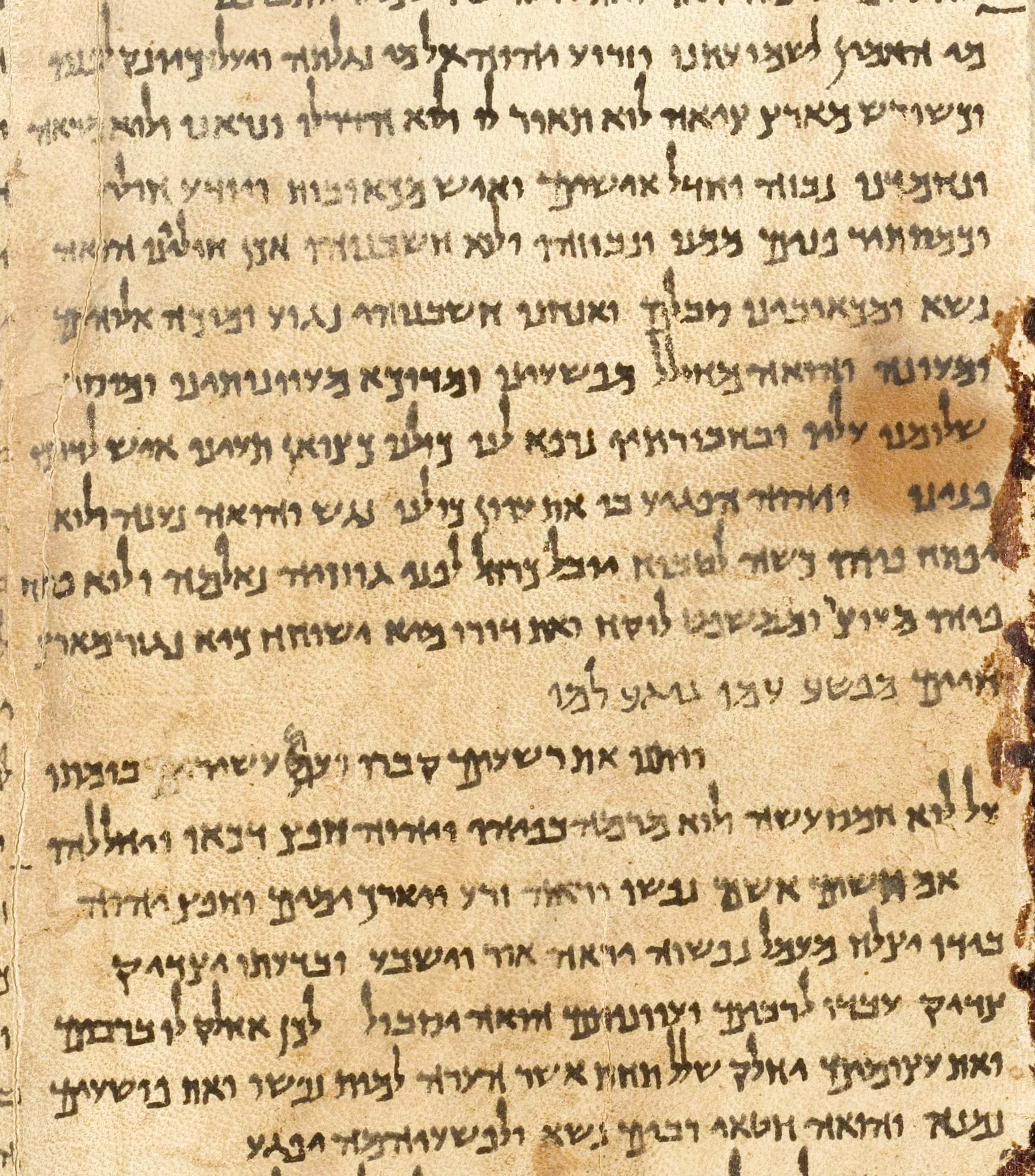
The changes are not random, either. In a number of places the Book of Mormon leaves the King James behind and matches the Dead Sea Scrolls instead, the oldest known copies of Isaiah, written about 125 years before Christ and sealed in a cave until 1947, more than a century after the Book of Mormon was printed.[14] One example: where the King James has Isaiah warn a single "inhabitant" of Samaria, the Book of Mormon reads "inhabitants," and when the Great Isaiah Scroll came out of its cave, it read "inhabitants" too. The in-depth version lays five of these alignments side by side.
One change even reaches into the New Testament. In the Sermon on the Mount, the Book of Mormon leaves out the phrase "without a cause" that the King James includes, siding with the earliest Greek manuscripts, a reading modern scholars now think is probably the original, though they still argue about it.[15] A separate article takes up the Sermon on the Mount in detail.
When Joseph wrote in his own voice
A simpler test needs no manuscripts at all. If the Book of Mormon's old-fashioned English came out of Joseph Smith, then his own writing should sound the same way. It does not. When Joseph wrote in his own voice, like the short history he penned in 1832, he wrote plain, ordinary English for his time. The Book of Mormon, by contrast, is full of grammar and word meanings that had faded out of English generations before he was born, older in places than the King James Bible itself. Whatever the source of that archaic language was, it was not Joseph's own way of writing.[16] The book also carries Hebrew patterns of phrasing that the King James does not contain at all.[17]
Woven in, not pasted in
A copyist takes whatever sits in front of him. The Book of Mormon's prophets handle Isaiah like authors who know it by heart. Nephi does not quote Isaiah at random. He chooses the chapters that mirror his own family's story, a people driven out of Jerusalem and led through the wilderness, and he tells his readers outright that he picked them because they fit.[18] He even wraps the whole long stretch of Isaiah in a quiet pun on his own name. Nephi means "good" in Egyptian, and he opens the section writing of things that are "good" and closes it, chapters later, saying he has written them "for their good," a play on words that runs across Egyptian, Hebrew, and English at once.[19] These are the moves of someone who understood Isaiah deeply and shaped it on purpose, not someone padding a forgery with Bible chapters.
The Isaiah dating problem
Most scholars believe that parts of Isaiah were written later than the rest, during Israel's exile in Babylon, which came after Lehi's family had already left Jerusalem with their scriptures. Yet some of those later-sounding chapters appear in the Book of Mormon, where, on that dating, they could not have been on the plates Lehi carried. The two Latter-day Saint scholars who know the Isaiah material best both admit this is a genuine problem, and that the standard defenses have been thin.[20][21]
There are workable faithful responses. The earliest of that "later" material may have been written just before Lehi left, which closes most of the gap. And the Book of Mormon already shows God adding scripture after the fact: the risen Christ gives the Nephites words from the prophet Malachi, who lived long after Lehi was gone, so the same thing could account for a few later passages. These are live possibilities rather than finished proofs, and a couple of the hardest cases are still open. The in-depth version goes further into all of it.
How much of the book this touches
It helps to remember how small this question is. Everything above concerns the part of the book that quotes the Bible. The great bulk of the book has no King James source behind it: its own history, its own geography that stays consistent across hundreds of pages, names with workable ancient roots, and the archaic language already mentioned. All of it was dictated aloud in about sixty working days, roughly 270,000 words.[22]
Parts of the Bible-wording question are hard. But it is a question about the seams of the Book of Mormon, not its substance. We began with one verse, 2 Nephi 12:16, that holds together two lines the surviving Bibles divide between them. The book that verse belongs to reads exactly like what it claims to be, an ancient record given to its first readers in the language they already trusted.
Want the full case, including the strongest arguments the critics make and every source? Read the in-depth version.
Runnells, CES Letter (2017), "Book of Mormon," no. 1, p. 9. ↩︎
Runnells, CES Letter (2017), "Book of Mormon," no. 2, p. 9. ↩︎
Runnells, CES Letter (2017), "Book of Mormon," no. 3, pp. 10-11. ↩︎
FAIR, "Isaiah and the Book of Mormon." States that "in some translations of the DSS, approximately 90% is simply copied from the KJV," and that the translators "unabashedly copied the KJV, except where the DSS texts were substantially different from already known Hebrew manuscripts." https://www.fairlatterdaysaints.org/answers/Isaiah_and_the_Book_of_Mormon ↩︎
New Testament authors frequently quoted the Septuagint (Greek Old Testament) even where it diverged from the Hebrew original. For example, Matthew 1:23 quotes Isaiah 7:14 using the Septuagint's parthenos ("virgin") rather than the Hebrew almah ("young woman"). This demonstrates that inspired authors working within a scriptural tradition used the available translation rather than independently correcting it against the original language. ↩︎
FAIR, "KJV Translation Errors in the Book of Mormon." The translation choices the CES Letter highlights exist identically in the 1611 KJV, with side-by-side 1611 and 1769 source links for each. FAIR notes that "five major editions of the KJV were published in 1611, 1629, 1638, 1762, and 1769," that "the 1611 and 1769 editions contain the exact same 'translation errors'," and that the alleged errors are "not unique to the 1769 version." https://www.fairlatterdaysaints.org/answers/KJV_translation_errors_in_the_Book_of_Mormon ↩︎
Robert J. Matthews, "A Plainer Translation": Joseph Smith's Translation of the Bible -- A History and Commentary (Provo, UT: Brigham Young University Press, 1975). Foundational JST scholarship. The quoted wording follows Matthews's own entry "Joseph Smith Translation of the Bible (JST)" in the Encyclopedia of Mormonism, which states that the work "consists of additions, deletions, rearrangements, and other alterations" and that "many call it an 'inspired revision.'" https://archive.org/details/aplainertranslat0000matt ↩︎
Dana M. Pike and David R. Seely, "'Upon All the Ships of the Sea, and Upon All the Ships of Tarshish': Revisiting 2 Nephi 12:16 and Isaiah 2:16," Journal of Book of Mormon Studies 14, no. 2 (2005). Their conclusion: "We are thus not presently aware of any solution that satisfactorily accounts for all the questions regarding 2 Nephi 12:16 in its relation to the preserved text of Isaiah 2:16." The English rendering of the Septuagint quoted above is Brenton's, per their note 39. Haplography appears in their endnotes as a definition rather than as an adopted thesis, and their note 58 raises dittography by Joseph Smith and Oliver Cowdery as a possibility that "at least needs to be considered." https://scholarsarchive.byu.edu/jbms/vol14/iss2/4/ ↩︎
John W. Welch, "Joseph Smith's Awareness of Greek and Latin," in Approaching Antiquity: Joseph Smith and the Ancient World, ed. Lincoln H. Blumell, Matthew J. Grey, and Andrew H. Hedges (Provo, UT: Religious Studies Center, BYU, 2015), pp. 303-328. The earliest documented item is Joseph's January 1834 acquisition of Thomas Hartwell Horne's Introduction to the Critical Study and Knowledge of the Holy Scriptures; a Greek lexicon arrives in November 1835, a recorded morning of Greek study in December 1835, and a hired Greek and Latin instructor in the winter of 1836-37. https://rsc.byu.edu/approaching-antiquity-joseph-smith-ancient-world/joseph-smiths-awareness-greek-latin ↩︎
Royal Skousen, The History of the Text of the Book of Mormon, Part Five: The King James Quotations in the Book of Mormon (Provo, UT: FARMS / BYU Studies, 2019). Identified 36 direct KJV quotations (strings of 16 or more identical words) and 83 paraphrastic quotations. On dating the copytext, Skousen's own summary states that "the copytext for the biblical quotations and paraphrases dates after the 1660s, but not more precisely"; a single later-italics example would imply a date "from after the 1760s," while "the 16 examples involving word differences imply that the copytext could date up to a century earlier." On 2 Nephi 12:16 he writes that "with only one exception, all the biblical quotations and paraphrases come from the King James Bible," and asks how Joseph Smith "could have known about the Greek reading"; the same summary identifies that exception as "a phrase in 2 Nephi 12:16 (~ Isaiah 2:16), 'and upon all the ships of the sea', which is found in Miles Coverdale's 1535 Bible ('upon all ships of the sea')." See Royal Skousen, "The History of the Book of Mormon Text: Parts 5 and 6 of Volume 3 of the Critical Text," BYU Studies Quarterly 59, no. 1 (2020): 87-128. https://scholarsarchive.byu.edu/byusq/vol59/iss1/5/ The quotation counts and the dating window quoted above are independently reported in Roger Terry, "Royal Skousen's Book of Mormon Critical Text Project," BYU Studies Quarterly 64, no. 1 (2025): 152, which states that Skousen "found only thirty-six word-strings that he considered quotations" and that he "lists eighty-three examples of paraphrastic quotations." ↩︎
John A. Tvedtnes, "Isaiah Variants in the Book of Mormon," in Isaiah and the Prophets, ed. Monte S. Nyman and Charles D. Tate Jr. (Provo, UT: BYU Religious Studies Center, 1984), pp. 165-78. Sorted variants into seventeen types and rated each type: "Of the 234 variants rated, 59 are +, 126 are =, and 49 are –. That is, there are more favoring the Book of Mormon than the KJV, while most favor neither." Of the 59, the manuscript-anchored types (version support, ancient scribal error, more-ancient-text evidence, singular-plural version support) total 55; the remaining 4 fall under "BM superior to KJV as a translation from MT Hebrew," a translation-quality judgment rather than a manuscript witness. The same study reports 207 of 478 verses as showing variation. https://rsc.byu.edu/isaiah-prophets/isaiah-variants-book-mormon ↩︎
Carol F. Ellertson, "The Isaiah Passages in the Book of Mormon: A Non-Aligned Text" (MA thesis, Brigham Young University, 2001). Applied Emanuel Tov's textual criticism methodology to classify the Book of Mormon's Isaiah as an independent, non-aligned text. https://scholarsarchive.byu.edu/etd/4663/ ↩︎
Stephen Gibson, cited in Debunking-CESLetter, "KJV 1769 Errors." 46% of 433 Isaiah verses identical to KJV, 54% modified. The figures are quoted at two removes; the page names the author but gives no study title. https://debunking-cesletter.com/book-of-mormon-1/kjv-1769-errors/ ↩︎
Donald W. Parry and Stephen D. Ricks, "Worthy of Another Look: The Great Isaiah Scroll and the Book of Mormon," Journal of the Book of Mormon and Other Restoration Scripture 20, no. 2 (2011): 78-80. Parry has served since 1994 on the International Team of Translators of the Dead Sea Scrolls. The authors note that their representative examples "have been adapted from Tvedtnes's work," and close by observing that such examples "could be multiplied." https://scholarsarchive.byu.edu/jbms/vol20/iss2/7/ ↩︎
Stan Larson, "The Historicity of the Matthean Sermon on the Mount in 3 Nephi," in New Approaches to the Book of Mormon: Explorations in Critical Methodology, ed. Brent L. Metcalfe (Salt Lake City: Signature Books, 1993), 115-64. The eight passages are the revised count of this chapter; Larson's earlier "The Sermon on the Mount: What Its Textual Transformation Discloses Concerning the Historicity of the Book of Mormon," Trinity Journal 7, no. 1 (1986): 23-45, proposed eleven. Larson holds that at all eight the Book of Mormon follows the Textus Receptus, and treats the 3 Nephi 12:22 omission of "without a cause" as a separate item that in his judgment "does not meet the criteria which were used to select my eight examples." ↩︎
Stanford Carmack, "How Joseph Smith's Grammar Differed from Book of Mormon Grammar: Evidence from the 1832 History," Interpreter: A Journal of Mormon Scripture 25 (2017). Joseph's 1832 history shows modern English; the Book of Mormon's archaic features are not his personal style. https://interpreterfoundation.org/journal/how-joseph-smiths-grammar-differed-from-book-of-mormon-grammar-evidence-from-the-1832-history ↩︎
Scripture Central KnoWhy, "Why Are There Hebraisms in the Book of Mormon?" Donald W. Parry: "the Book of Mormon's use of Hebraistic literary forms cannot simply be attributed to Joseph Smith's familiarity with the English Bible." https://scripturecentral.org/knowhy/why-are-there-hebraisms-in-the-book-of-mormon ↩︎
S. Kent Brown, "What Is Isaiah Doing in First Nephi?" in From Jerusalem to Zarahemla (Provo, UT: BYU Religious Studies Center, 1998), pp. 9-27. https://rsc.byu.edu/jerusalem-zarahemla/what-isaiah-doing-first-nephi-how-did-lehis-family-fare-so-far-home ↩︎
Matthew L. Bowen, "'For Their Good Have I Written Them': The Onomastic Allusivity and Literary Function of 2 Nephi 25:8," Interpreter: A Journal of Latter-day Saint Faith and Scholarship 53 (2022): 77-90. https://interpreterfoundation.org/journal/for-their-good-have-i-written-them-the-onomastic-allusivity-and-literary-function-of-2-nephi-258 ↩︎
Grant Hardy, Understanding the Book of Mormon: A Reader's Guide (New York: Oxford University Press, 2010). At p. 69 Hardy writes that "Recent Isaiah scholarship has moved away from the strict differentiation of the work of First and Second Isaiah (though still holding to the idea of multiple authorship) in favor of seeing the book of Isaiah as the product of several centuries of intensive redaction and accretion. In other words, even Isaiah 2–14 would have looked very different in Nephi's time than it did four hundred years later at the time of the Dead Sea Scrolls, when it was quite similar to what we have today." He calls dismissal of scholars who "do not believe in prophecy" an "inadequate (and inaccurate) response." ↩︎
Joshua M. Sears, "Deutero-Isaiah in the Book of Mormon: Latter-day Saint Approaches," in They Shall Grow Together: The Bible in the Book of Mormon, ed. Charles Swift and Nicholas J. Frederick (Provo, UT: BYU Religious Studies Center, 2022), pp. 365-392. https://rsc.byu.edu/they-shall-grow-together/deutero-isaiah-book-mormon ↩︎
John W. Welch, "Timing the Translation of the Book of Mormon: 'Days [and Hours] Never to Be Forgotten,'" BYU Studies Quarterly 57, no. 4 (2018): 10-50. Welch concludes the translation occupied "57 to 63 available full-time working days." See also Welch's earlier overview in Opening the Heavens: Accounts of Divine Manifestations, 1820-1844, ed. John W. Welch, 2nd ed. (Provo, UT: BYU Studies, 2017). The same article puts the earliest text at 269,510 words, a figure Welch credits to Royal Skousen. https://byustudies.byu.edu/article/timing-the-translation-of-the-book-of-mormon-days-and-hours-never-to-be-forgotten/ ↩︎