KJV Italics in the Book of Mormon
The claim:
"When King James translators were translating the KJV Bible between 1604 and 1611, they would occasionally put in their own words into the text to make the English more readable. We know exactly what these words are because they're italicized in the KJV Bible. What are these 17th century italicized words doing in the Book of Mormon? Word for word? What does this say about the Book of Mormon being an ancient record?"[1]
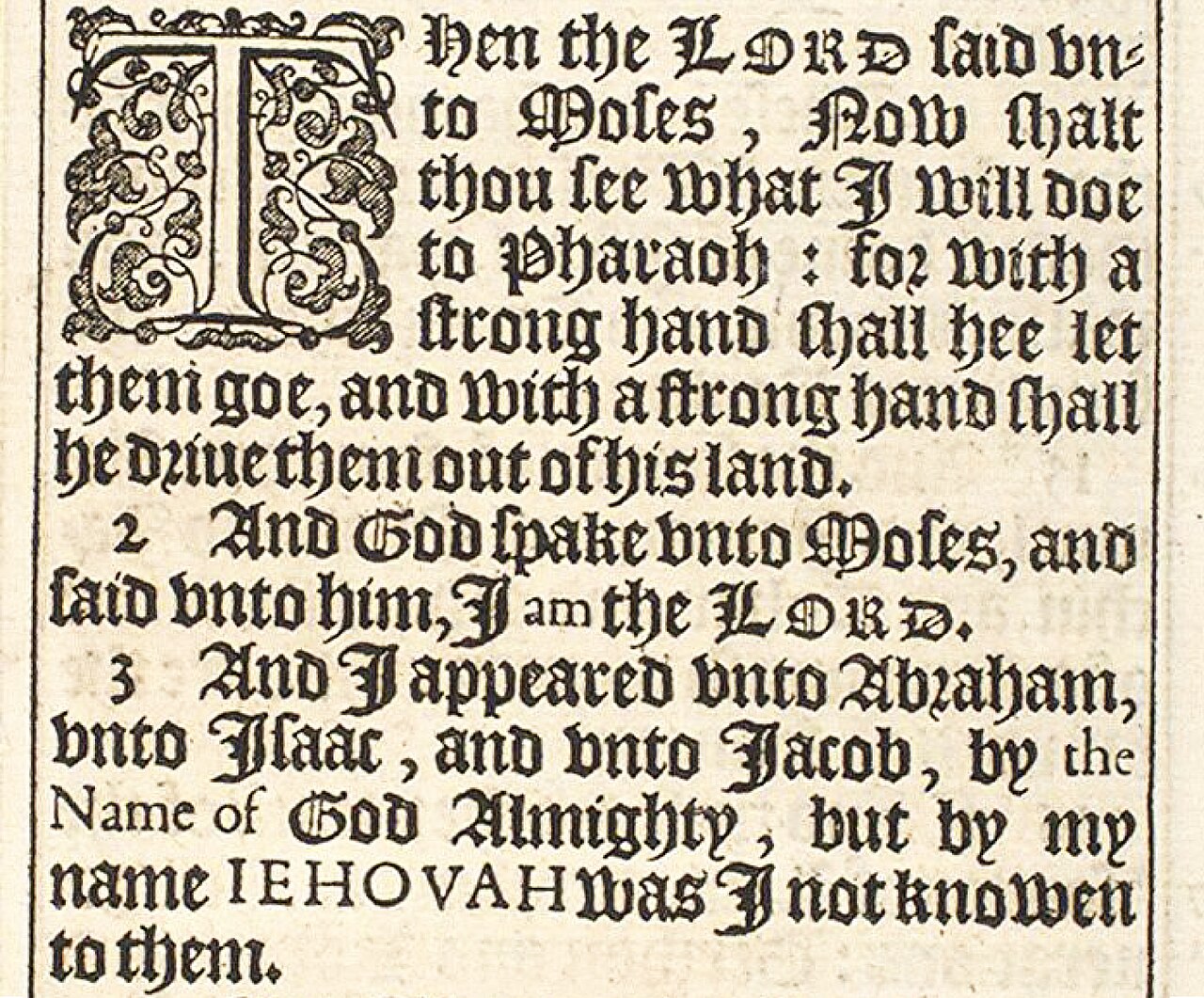
Open a King James Bible and you will find a scattering of words printed in italics. Those were not in the original Hebrew or Greek. The King James translators added them to make the English read smoothly, and they set them in italics to mark them openly as their own additions. The CES Letter's point is that some of those added English words show up in the Book of Mormon too, in the long chapters it quotes from Isaiah. If Joseph Smith were really translating an ancient record off gold plates, why would it contain the private word choices of seventeenth-century Englishmen? The implied answer is that he was not translating anything. He was copying out of the Bible on his shelf.
The charge is partly right: most of those added seventeenth-century words really are in the book's Isaiah chapters. But the italics turn out to be the single worst piece of evidence a critic could have picked, because far from copying them, the Book of Mormon deletes them, in a pattern no one copying a Bible would ever produce. Where scholars have counted, four in ten of the italicized words are missing, against one in a hundred of the words around them.
Yes, most italics are kept
Where the Book of Mormon quotes Isaiah, it tracks the King James wording closely, and the italics are no exception. By one careful count, about 62 percent of the King James italicized words inside the Book of Mormon's Isaiah are kept word for word.[2] No serious defender disputes that the King James is the base text those chapters are built on. The broader question of why an inspired translation would lean on one English Bible at all is its own subject, and the companion page on KJV wording in the Book of Mormon walks through it: in short, handing 1829 readers their Isaiah in the King James English they already trusted is exactly what you would expect, and inspired writers have always quoted the scripture their audience knew rather than stopping to retranslate it.
This page is about the narrower charge: not the King James wording in general, but the italics specifically. And on that one, the numbers turn against the critic.
What the italicized words actually are
Italicized words are not mistakes, and they are not stray decorations. They are grammar.
Hebrew and English do not work the same way. Hebrew often leaves out a word that English cannot live without, the little connective bones of a sentence. The most common example is the verb "is." Hebrew has no such word in many sentences where English absolutely requires one. So when the King James men translated Isaiah's cry, the Hebrew gave them something closer to "Woe me," and a few words later, "I a man of unclean lips." To make that English at all they had to supply the missing verbs, and the supplied words got the italic flag: "Woe is me! for I am undone; because I am a man of unclean lips."
English Bible translators going back to the 1557 Geneva New Testament marked their added words in a distinct typeface so a reader could tell, at a glance, which words were the translators' scaffolding and which came straight from the source. The scholars who have catalogued them found that the overwhelming majority, around 87 percent, are exactly this kind of unavoidable grammatical filler. Only about 11 percent do anything to the meaning.[3]
That single fact dismantles the popular version of the argument. People sometimes imagine that if you stripped the italicized words out of a King James passage, what remained would be the "pure" ancient text. What remains is broken English. Take the italics out of Isaiah's line and you are left with "Woe me, for I am undone; because I a man of unclean lips," which is not Hebrew and not anything, just a sentence with its joints removed.
The fingerprint a forger could not leave
Picture a man with a Bible open in front of him, copying Isaiah onto a sheet of paper to pass off as ancient scripture. His copy would look like the Bible. Treating one kind of word differently from the rest would never occur to him. The italicized words sit right there in the running text, grammatically essential, visually a little different but woven in. A copyist copies them along with everything else.
That is not what the Book of Mormon does. A faithful scholar named Stan Spencer took a controlled sample, the chapters that became 2 Nephi 16 and 17 (Isaiah 6 and 7), where the Book of Mormon's text is especially well documented, and he counted every word.[4]
| Word category | Total in the KJV chapters | Dropped in the Book of Mormon | Drop rate |
|---|---|---|---|
| Italicized words | 37 | 15 | 41% |
| Ordinary words | 1,021 | 11 | 1% |
The gap is forty to one. Spencer's statistical conclusion is blunt: a clustering that strong "is not attributable to chance."[5]
A copying signature runs the other way. Plagiarism reproduces its source evenly; it does not reach in and surgically thin out one specific category of words.[6] Something in the process that produced the Book of Mormon was treating the King James translators' added words as removable, the exact opposite of what a man copying a printed page would do.
When the Book of Mormon drops one of these grammatical props, the result is often clumsy English. "Woe is me" becomes "Woe me." "Here am I; send me" becomes "Here I; send me." A copyist would never produce that; he would just reproduce the smooth King James line. An author deliberately rewriting the passage would not produce it either, because he would notice he had mangled the grammar and fix it.
What it looks like is something stranger: a text that arrived with those words already missing, and someone supplying the gaps on the fly as he dictated, sometimes hitting the right word and sometimes leaving a hole. Joseph Smith went back and repaired several of these gaps in the 1837 edition, putting the "is" back into "Woe is me." If the omissions had been intentional, there would have been nothing to repair.[7]
The competing explanations of what produced this pattern get debated in detail in the in-depth version. The takeaway does not depend on which of them wins. Every serious candidate has to give you that deletion pattern, and copying gives you the Bible back.
A hostile witness saw the same thing, in 1831
There is also a piece of outside corroboration, and it comes from someone trying to discredit Joseph Smith.
In August 1831, a Philadelphia newspaper called The Sun ran a sneering account of the translation, reprinted from another paper and apparently based on talk traced back to Martin Harris, one of the men who helped with it. The reporter got plenty wrong and meant the whole thing as ridicule. But the mockery preserved one specific observation: what "astonished Harris most, was, that Jo should omit all the words in the Bible that were printed in Italic."[8]
An enemy of the Church, writing in 1831 with no statistical tools and no motive to help, had already noticed what the counting would later confirm. The omission of italicized words was visible enough during the actual dictation to get printed as a curiosity. Whatever else that account proves or fails to prove, it tells us the forty-to-one pattern is not some artifact of modern word-counting. It was happening in the room.
Joseph's own circle knew what italics meant
One objection supposes the faithful explanation needs Joseph Smith to have understood what italic type signified, and that a young farmer with almost no schooling never could have.
Joseph's circle was discussing King James italics openly within three years of the book's publication. W.W. Phelps wrote in an 1833 Church periodical that the Book of Mormon had an advantage over the old scripture in that it had "not been tinctured by the wisdom of man, with here and there an Italic word to supply deficiencies."[9] He drops the term casually, assuming his readers already know that italicized words are the human translators' additions. So the idea was in the air, understood correctly, right from the beginning. The italicized words were recognized for what they are: the work of men, marked as such.
Conscious editing shows its work
Joseph Smith did once go through the King James Bible making conscious changes, printed book in hand. That project is called the Joseph Smith Translation, done mostly from 1830 to 1833. It records how he treated italicized words when he could see them, so we can ask whether the Book of Mormon looks like the same process.
It does not. When scholars tabulated the Joseph Smith Translation, they found his attention tracked the meaning of the words. The harmless grammatical italics he changed about half the time; the small group of italicized words that actually distort meaning, he hit hard, changing or removing them at a 63 percent clip.[10][11] That is the signature of a man reading carefully and fixing what matters.
The Book of Mormon shows nothing of the kind. Its omissions do not sort by meaning. They fall across the grammatical and the meaning-altering words alike, at a flat rate, leaving ungrammatical debris behind. One process is a careful editor working with the text in front of him. The other looks like words coming up missing from a text the dictator could not see, with gaps half-filled by ear. They are different fingerprints, and that difference is the tell. A man paging through his Bible left one of them. He did not leave the other.
The witnesses to the dictation describe Joseph staring into a hat with no book in sight. With his face in the hat, who was reading the italics?
The harder objection isn't the italics
The critics' strongest argument does not turn on italics at all. When scholars independently translate the same Hebrew chapter, no two of them phrase it identically: same meaning, different words. The Book of Mormon's Isaiah does not look like that. It tracks the King James almost word for word, varying only in scattered small ways. David Wright argues that this near-verbatim match is itself the strongest sign of direct dependence on the King James.[12]
He is right about the wording: the Book of Mormon's Isaiah is plainly built on the King James as its English base. The whole faithful case rests on that being an acceptable way for an inspired translation to reach a King James-reading audience, with the real evidence of authenticity living in what the text does on top of that base. Wright and the other leading critics get their full say in the in-depth version.
The italics numbers themselves also leave a question or two open. If something in the process was treating italicized words as removable, it is not obvious why roughly 60 percent of them stayed. And the forty-to-one number, striking as it is, has not yet been tested in the most rigorous way possible: by separating the effect of a word being italicized from the effect of it just being a short, droppable little word. The pattern points strongly at italics, but that last formal check remains undone.[13]
None of those open questions helps the copying theory, though. A copyist hypothesis predicts even reproduction, and the data shows the opposite. The remaining questions are about which faithful explanation fits best, not about whether copying can account for the pattern. It cannot.
The critics picked the wrong evidence
The biblical quotations are a small slice of the Book of Mormon, and the italicized words are a small slice of that slice. The critic offered the italics as a smoking gun. Examined closely, they are the opposite: the one place where a copyist would have left perfect prints and the Book of Mormon instead left a pattern that copying cannot produce.
And the other ninety-odd percent of the book has no biblical parallel to copy from at all: its own narrative, its own geography, its own prophets and sermons. That is the book the italics argument was supposed to expose as a copy. It points instead to a text that behaves, even in its borrowed chapters, like nothing a man with a Bible and a pen could have made.
Want the full case, including the strongest arguments the critics make and every source? Read the in-depth version.
Runnells, CES Letter (2017), "Book of Mormon," no. 2, p. 9. ↩︎
Spencer, "Missing Words," 50 n. 11 and 53 n. 14, both citing Royal Skousen, "Textual Variants in the Isaiah Quotations in the Book of Mormon," in Isaiah in the Book of Mormon, ed. Donald W. Parry and John W. Welch (Provo: FARMS, 1998), 382. Per n. 11, approximately 38% of the KJV's italicized words across the Book of Mormon's Isaiah quotations are "linked to differences"; per n. 14, 29% of the differences between Book of Mormon Isaiah and the KJV involve italicized words, leaving 71% of those differences unrelated to italics. The retained-italic rate of approximately 62% follows directly from the 38% figure. ↩︎
Wayment and Yost, "The Joseph Smith Translation," 54-58. Group A italics ("syntactic supplements") account for 1,410 of 1,628 italicized words in the four Gospels; only Group C words (183, or roughly 11%) are "foreign to Greek grammar" and actually alter meaning. ↩︎
Stan Spencer, "Missing Words: King James Bible Italics, the Translation of the Book of Mormon, and Joseph Smith as an Unlearned Reader and Editor of a Visioned Text," Interpreter: A Journal of Latter-day Saint Faith and Scholarship 38 (2020): 49, 52. https://interpreterfoundation.org/journal/missing-words-king-james-bible-italics-the-translation-of-the-book-of-mormon-and-joseph-smith-as-an-unlearned-reader/ ↩︎
Spencer, "Missing Words," 52. ↩︎
Spencer, "Missing Words," 49-58. Plagiarism produces uniform reproduction; the 40x disparity is not what copying generates, regardless of which specific hypothesis explains it. ↩︎
Spencer, "Missing Words," 81-82. Joseph corrected several earlier omissions in the 1837 edition, including putting "is" back into "Woe is me" at 2 Nephi 16:5. The pattern of later restoration suggests the original omissions were unintentional gaps rather than editorial choices. ↩︎
"Mormonites," The Sun (Philadelphia), August 18, 1831, printed under the reprint credit "From the A. M. Intelligencer"; cited and discussed in Spencer, "Missing Words," 62-63 and 80-82. Page images of the original printing are available via University of Utah digital exhibits at https://exhibits.lib.utah.edu/s/century-of-black-mormons/item/23483; the quotation above has been checked against the page-1 image, which also shows the reprint credit and, in the preceding sentence, the reporter's own memorize-and-omit theory of the dictation. ↩︎
W.W. Phelps, editorial in The Evening and the Morning Star 1, no. 8 (January 1833): n.p. Quoted in Wayment and Yost, "The Joseph Smith Translation," 51-52, and discussed in Kevin L. Barney, "KJV Italics," By Common Consent (blog), October 13, 2007. https://bycommonconsent.com/2007/10/13/kjv-italics/ ↩︎
Wayment and Yost, "The Joseph Smith Translation," 55-60. ↩︎
Wayment and Yost, "The Joseph Smith Translation," 58-59. Category C words ("foreign to Greek grammar, sometimes altering meaning") showed 63% alteration or removal compared to 50% overall, indicating that Joseph's JST work concentrated heaviest on the most problematic italicized words. ↩︎
David P. Wright, "Joseph Smith's Interpretation of Isaiah in the Book of Mormon," Dialogue: A Journal of Mormon Thought 31, no. 4 (Winter 1998): 197-234. https://www.dialoguejournal.com/articles/joseph-smiths-interpretation-of-isaiah-in-the-book-of-mormon/ Wright's argument: independent translations show wide lexical and syntactic variation while preserving meaning; the Book of Mormon Isaiah follows the KJV nearly word-for-word with only scattered micro-level changes; this absence of synonymous variation is the strongest evidence for direct KJV dependence. ↩︎
A fully controlled study would compare omission rates of italicized "is" with non-italicized "is" of comparable frequency in the same chapters, italicized "the" with non-italicized "the," and so on; that study has not been published. A reader who reads "the strongest single piece of statistical evidence" should also read "and the formal control study has not yet been done." The available data shows the correlation is with italic status rather than word type alone, but the formal type-by-type control remains an open research item. ↩︎