DNA and the Book of Mormon
The claim:
"DNA analysis has concluded that Native American Indians do not originate from the Middle East or from Israelites but rather from Asia. Why did the Church change the following section of the introduction page in the 2006 edition Book of Mormon, shortly after the DNA results were released?
'…the Lamanites, and they are the principal ancestors of the American Indians'
to
'…the Lamanites, and they are among the ancestors of the American Indians'
UPDATE: The Church conceded in its January 2014 Book of Mormon and DNA Studies essay that the majority of Native Americans carry largely Asian DNA. The Church, through this essay, makes a major shift in narrative from its past dominant narrative and claims of the origins of the Native American Indians."[1]
Henry C. Harpending, a population geneticist at the University of Utah and a member of the National Academy of Sciences, was once asked what genetic trace fifty Phoenicians would leave if they had arrived somewhere 2,600 years ago and intermarried freely with the locals. His answer: at most "an occasional strange stray haplotype," and even that we would probably write off as post-Columbian admixture.[2] Fifty seafarers from a documented Mediterranean civilization, genetically invisible after twenty-six centuries: that is the scientific baseline against which the CES Letter's DNA argument has to be read.
The CES Letter compresses one of its rhetorically heaviest arguments into roughly 125 words: a one-sentence verdict ("DNA analysis has concluded"), a rhetorical question implying institutional retreat, a side-by-side textual comparison, and an "UPDATE" framing the 2014 Gospel Topics Essay as a "concession."[1:1] The brevity is itself the move. Presenting DNA as obviously settled does the persuasive work that the actual evidence will not. The real scientific debate occupies hundreds of pages of peer-reviewed scholarship on both sides, virtually none of which the CES Letter engages.
This article answers the DNA criticism in its scholarly form rather than its slogan form. It develops the science of population genetics from the ground up. It documents the historical record of the Limited Geography Model (LGM), the proposal that Book of Mormon events occurred within a limited Mesoamerican region rather than across the whole hemisphere, from primary sources predating DNA criticism by decades. It examines what the Book of Mormon text itself claims about its peoples. And it engages the hard questions: the Jaredite scale problem, the autosomal-DNA detection threshold, the unfalsifiability charge, and the institutional-timing pattern.
The verdict this article will defend, stated up front: DNA evidence is neutral on the Book of Mormon. It cannot decisively refute the text given the demographic parameters the text itself describes, and it does not affirmatively support it either. The CES Letter's "case closed" framing is unwarranted; so is any framing that treats DNA as a positive argument for the Book of Mormon. Both sides have to look elsewhere, and on the elsewhere, the Book of Mormon does considerably better than its critics generally acknowledge.
What population genetics can and cannot detect
Before evaluating any specific claim, one methodological question has to be asked: under what conditions can modern DNA evidence detect or rule out an ancient migration?
Population geneticists routinely distinguish three different kinds of inherited DNA, each with different properties relevant to that question. Mitochondrial DNA (mtDNA) is inherited only from the mother, traces a single maternal lineage back through time, and does not recombine; it is therefore vulnerable to total erasure by drift if no female descendant in any generation passes it forward. Y-chromosome DNA behaves the same way along the paternal line. Autosomal DNA is inherited from all ancestors and integrated across the genome by recombination. It is more resistant to total erasure, but breaks into smaller and smaller chromosomal segments with each generation that passes.[3][2:1]
Three further concepts do most of the work in evaluating ancient migration claims. The founder effect describes how a small colonizing group carries only a small, possibly unrepresentative sample of the genetic diversity of its parent population. Genetic drift describes the random fluctuation of allele frequencies from generation to generation, which operates most powerfully on small populations and on lineages held by only a small fraction of the gene pool. Lineage extinction describes the cumulative effect: any given individual lineage has a meaningful probability of disappearing entirely from the descendant population in any given generation, even when the underlying genealogical relationship persists.[3:1][4]
Three operational conditions must be met for an ancient migration to be detectable in modern DNA. The founding signal must have been large enough at the start to survive drift; the time depth must not have allowed too many lineages to go extinct; and the host population must have been small enough that the founding group was not numerically swamped. When any of these conditions fails, the founding signal becomes statistically undetectable. Not because no migration occurred, but because the math does not preserve it.[5][6]
This article's argument is two-step: first, the Book of Mormon text itself supports the LGM: Lehi's party arriving as a small group absorbed into a much larger existing population, with regional rather than hemispheric geography (developed at length below); second, given the LGM, DNA cannot decide the question. The order matters. The argument is not that DNA's silence proves the LGM reading; that would be circular. The argument is that the text itself favors the LGM reading, given which DNA cannot detect a Lehite signal.[7]
Under the LGM, the Book of Mormon describes a scenario in which all three detection conditions fail at once. The founding group is small: Lehi's party was roughly 20–30 people, plus the comparable Mulekite group, plus the longer-time-depth Jaredite group.[8][9][10] The time depth is large, roughly 2,600 years for Lehi and 4,000-plus for the Jaredites. And the host population, by every credible Mesoamerican reconstruction, was orders of magnitude larger.[3:2][9:1][10:1] To these the text adds at least one intervening bottleneck it describes itself (the Nephite-line collapse at Cumorah around AD 385 in Mormon 6, strictly a bottleneck on the Nephite-identifying line, since Lamanite descendants persisted) and one massive bottleneck the post-Columbian record documents: substantial population collapse from 1492 to 1650, on the order of 90% in the most affected regions.[11][12]
Asking whether modern DNA can detect this specific migration is a coherent scientific question. The answer, given current methods and the LGM parameters the text describes, is: probably not. And not because of any apologetic maneuver, but because population genetics imposes its own limits regardless of what the truth happens to be.
A faithful reader cannot use this to claim DNA supports the Book of Mormon. A critic cannot use the absence of detectable Israelite DNA to claim the migration did not occur. DNA simply cannot deliver the verdict the CES Letter says it has delivered.
What the science actually shows
The broad scientific finding is undisputed. Comprehensive DNA surveys of Native American populations (mtDNA, Y-chromosome, and autosomal analysis alike) consistently show that the vast majority of Native American genetic ancestry traces to East Asian and Siberian founding populations who migrated to the Americas roughly 15,000–25,000 years ago via Beringia, the ancient land bridge across what is now the Bering Strait.[13][14] The five major mtDNA haplogroups found in Native Americans (A, B, C, D, and X) all trace to these founding populations.[3:3][15]
The Church's own Gospel Topics Essay states this directly: "The evidence assembled to date suggests that the majority of Native Americans carry largely Asian DNA."[3:4] This is not a "concession," because the Church has never disputed it. It is a statement of empirical fact, and it sits on neither side of the Book of Mormon question.
The science has become considerably more textured in the last fifteen years. Three findings in particular reframe the simple "Asian/non-Asian" binary the CES Letter implies.
The Beringian Standstill and the founding mtDNA lineages
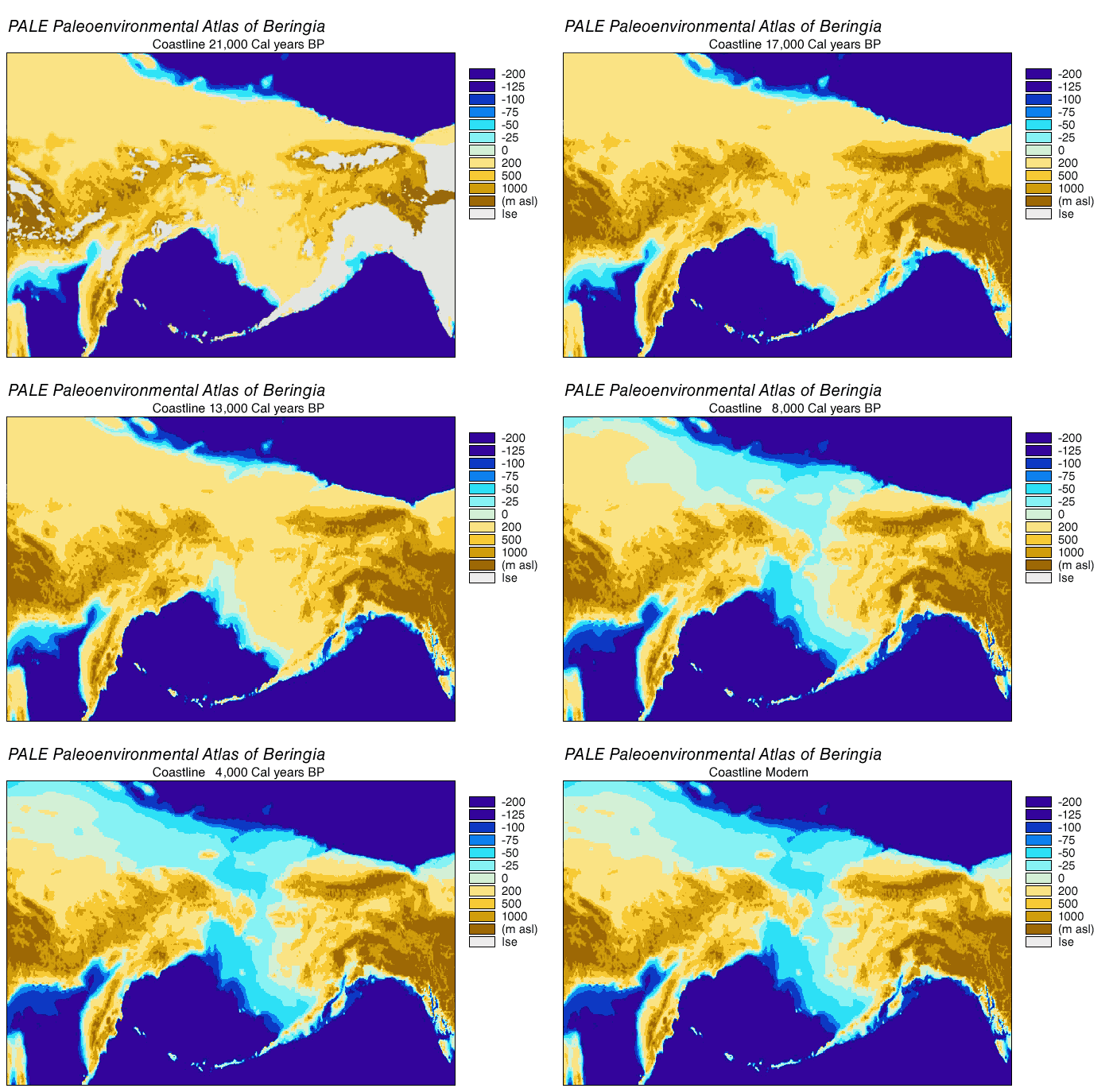
Tamm et al. (2007) established what is now called the Beringian Standstill model: a small founding population isolated in Beringia for up to roughly 15,000 years before dispersing into the Americas as the ice sheets retreated.[14:1] Achilli et al. (2008) refined the coalescence dates for the four pan-American mtDNA founding haplogroups to a range of roughly 18,000–24,000 years before present, averaging about 20,000 years.[15:1] Perego et al. (2010), Ugo Perego's mainstream peer-reviewed work in Genome Research, extended the founding-lineage catalog with additional rare variants.[16] Perego holds a PhD in genetics and biomolecular studies from the University of Pavia under Antonio Torroni, one of the world's leading researchers on Native American mtDNA; his peer-reviewed publication record is that of a mainstream scientist, not an apologetics staffer.[2:2]
Ancient Western Eurasian ancestry: the Mal'ta result
In 2014, Raghavan et al. published genome-wide analysis of a 24,000-year-old Siberian boy from the Mal'ta site, estimating that 14–38% of Native American autosomal ancestry derives from a population genetically closer to Western Eurasians than to East Asians.[17] The genetic history of the Americas, in other words, is not a clean East Asian story. A substantial Western Eurasian component was present in the founding population itself, predating the Book of Mormon timeframe by tens of thousands of years.
This does not support the Book of Mormon. The Mal'ta-derived ancestry is far too old to be Lehite. It does, though, complicate the CES Letter's implicit framing that "Native Americans are from Asia, full stop." The scientific picture is more complex than a clean binary.
Ghost populations and pre-Columbian transoceanic contact
A series of recent studies has further complicated the simple picture. Skoglund et al. (2015) identified Population Y, a population genetically affiliated with present-day Australasian groups (indigenous Australians, New Guineans, and Andaman Islanders) that contributed an Australasian-related ancestry component on the order of 1–2% in certain Amazonian populations, including the Suruí and Karitiana.[18] Posth et al. (2018) sequenced 49 ancient genomes from Central and South America and identified previously unknown streams of gene flow between North and South America.[19] Krettek et al. (2025) sequenced ancient individuals from the Bogotá Altiplano dating from roughly 6,000 to 500 years ago and identified a previously unknown basal South American lineage whose people, in the authors' own words, "do not carry differential affinity to ancient North American groups nor contribute genetically to ancient or present-day South American populations": a population, that is, that lived in the Americas for thousands of years and then disappeared without leaving descendants in any modern reference sample.[20] Ferraz et al. (2023), with Posth a co-author, documented genetic heterogeneity among contemporaneous Sambaqui shellmound groups of the southeastern and southern Brazilian coast, at odds with the similarity expressed in the archaeological record, and Castro e Silva et al. (2021) documented the broader spread of the Australasian-affiliated signal across the Pacific coast of South America.[21][22]
These ghost lineages, by definition, cannot be detected in modern Native American populations. They appear only because researchers sequenced ancient samples directly. And this is the empirical backdrop against which the Lehite scenario has to be evaluated: ancient DNA repeatedly reveals populations invisible in modern DNA. If entire civilizations have come and gone in the Americas without leaving detectable modern descendants, the absence of detectable Lehite DNA is not the anomaly the CES Letter implies.
One recent finding stands apart from the ghost-lineage pattern. Ioannidis et al. (2020), published in Nature, used genome-wide analysis of 807 individuals from 17 Polynesian island populations and 15 Pacific coast Native American groups to demonstrate pre-Columbian Polynesian–Native American admixture, dated to AD 1150–1230.[23] The Native American genetic contribution most closely matches indigenous inhabitants of present-day Colombia, and the contact occurred in eastern Polynesia, prior to the settlement of Easter Island.
The Ioannidis result has limited but real bearing on the Book of Mormon DNA debate. The contact is between Polynesia and the Pacific coast of South America (not between the Middle East and the Americas) and is dated to AD 1150–1230, well after the Book of Mormon period. It does not affirmatively support the Lehite migration. What it does is retire any blanket claim that pre-Columbian transoceanic contact is too implausible to take seriously as a category, a claim no longer defensible after Ioannidis. Detecting such contact also requires the most sophisticated genome-wide methods available, and succeeds only in the most favorable scenarios: relatively recent contact (~800 years ago, not 2,600), a small host population (Polynesian islands of thousands, not continental populations), and no intervening catastrophic bottleneck. The Lehite scenario differs on every one of those variables. Ioannidis is a category-level retort to "transoceanic contact is impossible," not direct positive evidence for a Lehite migration.
The science of population genetics in plain terms
The CES Letter does not engage the science. Yet the actual mathematics of population genetics is the heart of why DNA evidence is inconclusive on the Book of Mormon.
Founder effect: a worked example
The founder effect explains why a small migrating group cannot be assumed to carry "representative" DNA of its parent population.
The Gospel Topics Essay illustrates this with Ugo Perego's own genealogy:
"[Perego's] genealogy confirms that he is a multigeneration Italian, but the DNA of his paternal genetic lineage is from a branch of the Asian/Native American haplogroup C. … If Perego and his family were to colonize an isolated landmass, future geneticists conducting a study of his descendants' Y chromosomes might conclude that the original settlers of that landmass were from Asia rather than Italy."[3:5]
This dismantles a foundational assumption buried in the CES Letter's argument: that "Israelite DNA" is a known, defined thing that can be searched for in Native American populations. We do not know what specific haplogroups Lehi carried, or what Sariah, Ishmael, or Ishmael's wife carried, and on the maternal side, the female members of the Lehite party were the only contributors to mtDNA in the colony. There is no "Lehite reference sample" of any kind, and even tribal-level inferences about Lehi or Ishmael (whose lineages are conventionally identified with Manasseh and Ephraim) tell us nothing about the specific maternal-line haplogroups Sariah and Ishmael's wife carried into the colony.[4:1][2:3]
What was there to compare against? The hunt that was actually performed went after haplogroups assumed to be representative of "Israelite" ancestry, applied to populations that may or may not have ever carried those haplogroups. That is not a search that can succeed or fail; it is a search whose target is undefined. (Modern admixture-detection methods that do not require known haplotype templates are addressed separately in the autosomal-DNA section below.)
Genetic drift: the Stacey/Sheffield/Crandall simulation
A widely cited paper for thinking quantitatively about this question is Andrew Stacey, Nathan C. Sheffield, and Keith A. Crandall, "Calculating Expected DNA Remnants from Ancient Founding Events in Human Population Genetics," published in the peer-reviewed mainstream journal BMC Genetics in 2008.[5:1] Stacey was in BYU's Department of Statistics; Sheffield and Crandall were in BYU's Department of Biology. The methodology is mainstream population genetics and the publication venue is non-LDS.
The simulation modeled 200 migrants entering a host population of 5,000, with 100 generations elapsed (~2,000 years) and 1,000 loci sampled. Against the Lehite scenario, the simulation parameters are mixed: a larger founding group (200 versus ~30, friendlier to detection), similar time depth, a much smaller host population (5,000 versus millions, friendlier to detection, because a smaller host preserves founder fraction more effectively), and no intervening bottlenecks (versus the post-Columbian collapse and the Nephite-line collapse, again friendlier to detection).
The results, verbatim from the paper:
"Out of the 1,000 simulated loci, 140 (14%) drifted to extinction within 100 generations."
Mean migrant allele frequency in the final combined population was about 1%. And:
"[I]n 60% of individuals sequenced for 50 loci, we would not expect to find a single migrant allele."
The authors' conclusion, stated as plainly as it can be:
"[I]t must be remembered that drift is stochastic and that historic genetic parameters are, for the most part, unknown. Thus, the absence of specific genetic data is not conclusive evidence against historic admixture."[5:2]
The key word is stochastic. Drift is random; outcomes are probabilistic. A founding allele has a non-trivial chance of going extinct in any generation, and over 100 generations these chances compound. Even in a simulation that is friendlier to detection on most relevant variables than the Lehite case, the founding signal vanishes across most individuals. Push the parameters toward the Lehite scenario in the directions that matter most (much larger host, longer time depth, additional bottlenecks) and detection becomes substantially harder still.
Lineage extinction: the Llamas et al. (2016) finding
A particularly important secular paper for this debate is Bastien Llamas et al., "Ancient Mitochondrial DNA Provides High-Resolution Time Scale of the Peopling of the Americas," published in Science Advances in 2016.[24]
The method: 92 whole mitochondrial genomes recovered from pre-Columbian South American skeletons dating from 8,600 to 500 years before present, from which 84 distinct haplotypes were identified.
The headline finding, verbatim:
"All of the ancient mitochondrial lineages detected in this study were absent from modern data sets, suggesting a high extinction rate."[24:1]
The major Native American founding haplogroups (A, B, C, D, X) absolutely persist in modern populations; that is not in dispute. What Llamas et al. found is that every distinct fine-grained haplotype, every specific sub-lineage sequence variant, recovered in their 92-skeleton South American sample is absent from the modern reference databases. This is sub-haplogroup-level extinction within a regional sample, measured against contemporary reference databases that admittedly under-represent some indigenous populations.
If the specific sub-lineage variants present in the Americas just 500 years ago, known to have existed and documented by skeletal remains, are now absent from modern reference databases, then expecting to detect specific sub-lineage variants from a small Near Eastern family that arrived 2,600 years ago and intermixed with a much larger existing population is not a reasonable scientific test. It is a test the modern Native American reference set cannot pass for many pre-Columbian ancestors, regardless of origin. The CES Letter ignores the finding entirely.
The Iceland precedent: Helgason 2009
Iceland supplies one well-documented real-world demonstration of rapid drift on the founder-mtDNA pool. Helgason et al. (2009), published in PLoS Genetics, sequenced mtDNA from 68 medieval Icelandic skeletons about 1,000 years old.[25]
Iceland was settled around AD 870 by Norse and Celtic colonists who kept detailed genealogical records; the country is famous for its sagas and lineage records, so the conditions for tracing founder DNA forward are unusually favorable. Despite this, the researchers found:
"Due to a faster rate of genetic drift in the Icelandic mtDNA pool during the last 1,100 years, the sequences carried by the first settlers were better preserved in their ancestral gene pools than among their descendants in Iceland."[25:1]
Only 40.4% of the 57 ancient Icelandic haplotypes are represented in a contemporary Icelandic database of 816 sequences. About 60% are not detected in the contemporary reference database, effective extinction or near-extinction in modern Iceland, and this in roughly 35 generations. The ancient Icelandic mtDNA is now more closely related to mtDNA from contemporary Scotland, Ireland, and Scandinavia than to mtDNA in modern Iceland, the founders' own direct descendants.
The Gospel Topics Essay summarizes the broader Iceland finding directly: "A study in Iceland combining both genetic and genealogical data demonstrates that the majority of people living in that country today inherited mitochondrial DNA from just a small percentage of the people who lived there only 300 years ago."[3:6] John Butler pushes the point further. A NIST Fellow, ranked by Thomson Reuters' ScienceWatch in 2011 as the worldwide high-impact author in legal medicine and forensic science over the previous decade, and author of the standard textbook Forensic DNA Typing, Butler notes that the Iceland data shows "the majority of people living today in Iceland had ancestors living only 150 years ago that could not be detected based on the Y-chromosome and mitochondrial DNA tests being performed and yet the genealogical records exist showing that these people lived and were real ancestors."[6:1] His professional assessment is unambiguous: "DNA information alone therefore cannot disprove or prove the Book of Mormon," and "reference samples are always needed to provide relevant results with any kind of DNA testing," and we have no Lehi reference, no Sariah reference, no Ishmael reference.[6:2][4:2]
Iceland is not a direct numerical analog for the Lehite case. In Iceland the founders are the population; in the Lehite case the founders would never be the population, and Lehite drift would compound against a much larger host. But Iceland demonstrates that even in the most favorable demographic scenario for tracing founder mtDNA forward, substantial drift-driven loss occurs at the haplotype level in just a thousand years.
The Phoenician comparison: Henry Harpending
The opening Phoenician figure needs its full context, because it comes from outside the LDS scholarly community. Henry C. Harpending was a Distinguished Professor of Anthropology at the University of Utah and an internationally recognized population geneticist, elected to the National Academy of Sciences in 1996.[26] Asked whether fifty Phoenicians arriving in the Americas some 2,600 years ago and intermarrying with indigenous people would leave detectable DNA today, Harpending replied:
"I doubt that we would pick up [evidence of the Phoenicians] today at all… If they intermixed freely and widely… then the only trace would be an occasional strange stray haplotype. Even if we found such a haplotype we would probably assume it was the result of post-Columbian admixture."[2:4]
The Phoenicians were a major seafaring civilization. They established colonies throughout the Mediterranean and left abundant archaeological evidence, written records, and a visible cultural footprint. Their genetic trace, according to a recognized population geneticist at a secular research university, would be undetectable in modern populations of the regions they admixed with. If the Phoenicians are genetically invisible, expecting one family from Jerusalem to be genetically visible after 2,600 years is unreasonable.
The Saqqaq Paleo-Eskimo precedent
Morten Rasmussen et al. (2010), published in Nature, sequenced a roughly 4,000-year-old genome from a Saqqaq individual in Greenland.[27] The sequencing revealed an entire population that had migrated to the Americas separately from earlier Native American founders and left no descendant population in the Americas. The Saqqaq culture occupied West Greenland for roughly 1,700 years (~2500 BCE to ~800 BCE), then vanished approximately 2,800 years ago without contributing detectable DNA to any modern population of the Americas (its closest modern relatives are Siberian).[28] The Saqqaq mechanism (near-isolation rather than absorption into a much larger host) differs from the Lehite scenario, but the underlying point holds: whole populations can vanish from the modern Americas' detectable genetic record.[3:7][2:5]
The post-Columbian bottleneck
Even before asking about Lehite DNA specifically, the pre-Columbian gene pool of the Americas is not the gene pool that survived to be sampled by modern researchers. The Spanish conquest produced what the Gospel Topics Essay describes, quoting molecular anthropologist Michael H. Crawford, as a moment that "squeezed the entire Amerindian population through a genetic bottleneck."[3:8]
Estimates of population loss between 1492 and 1650 cluster around 90%.[11:1][12:1] In central Mexico alone, the population dropped from roughly 25 million in 1519 to about 2.5 million by 1570, a roughly 90% decline within about fifty years.[11:2] A bottleneck of that magnitude eliminates countless lineages. Even if a small Lehite signal had survived 2,000-plus years of drift to reach the year 1500, the bottleneck of 1492–1650 alone could plausibly have erased it.
Genealogical vs. genetic ancestry: Rohde, Olson, Chang (2004)
A foundational mathematical insight the CES Letter never engages: there is a difference between being someone's genealogical ancestor and being someone's genetic ancestor.
Douglas L. T. Rohde, Steve Olson, and Joseph T. Chang, "Modelling the Recent Common Ancestry of All Living Humans," Nature 431 (2004), demonstrated that the most recent common genealogical ancestor of all currently living humans lived approximately 2,300–3,400 years ago, depending on model assumptions. Beyond an earlier point, the "identical-ancestors point," every single individual alive at that time who has any descendants today is a genealogical ancestor of every single person alive today.[29]
The implication is striking. Lehi could be a genealogical ancestor of every Native American, indeed of every human alive today, without contributing any detectable DNA whatsoever. After about 10 generations a person has 1,024 genealogical ancestors but inherits DNA from only a fraction of them. After 100-plus generations, Lehi's timeframe, the number of genealogical ancestors who contributed no detectable DNA dwarfs the number who did. Genealogical ancestry and genetic ancestry are mathematically distinct, and they diverge sharply over time depths longer than a few centuries.
The 2006 introduction's wording, "among the ancestors," is mathematically more accurate than "principal ancestors" and was always going to be more accurate, regardless of the Book of Mormon's historicity. This is not a Church concession to DNA criticism. It is a correction to a 1981 wording that had been imprecise from the start.
The Gospel Topics Essay states the principle directly:
"[P]ortions of a population may in fact be related genealogically to an individual or group but not have DNA that can be identified as belonging to those ancestors. In other words, Native Americans whose ancestors include Book of Mormon peoples may not be able to confirm that relationship using their DNA."[3:9]
The Limited Geography Model is not a post hoc rescue
The CES Letter's strongest implicit move is the suggestion that the LGM and the "others in the land" framework were invented to dodge DNA evidence. The CES Letter writes as if any apologetic reading more nuanced than "Lamanites = all Native Americans" must be a defensive retreat from external pressure. The historical record does not support that framing.
The textual case for "others in the land," and the geographical case for a limited Mesoamerican setting, predates DNA criticism by 70-plus years. The institutional Church's adoption of these readings did lag the scholarly Church's. But the readings themselves were not invented to absorb DNA evidence. They were articulated decades before DNA could possibly have been an issue.
Joseph Smith's 1841 endorsement of a Mesoamerican setting
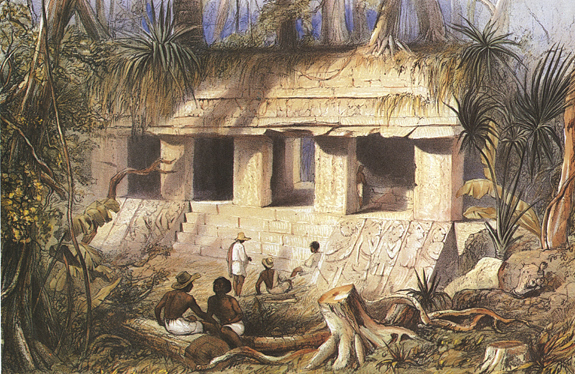
In September 1841, John M. Bernhisel, a Latter-day Saint in New York City, sent Joseph Smith a copy of John Lloyd Stephens' just-published Incidents of Travel in Central America, Chiapas, and Yucatan (1841), via Wilford Woodruff, who carried it to Nauvoo that fall.[30]
On November 16, 1841, Joseph wrote Bernhisel a letter preserved in the Joseph Smith Papers:
"I received your kind present by the hand of Er. [Wilford] Woodruff & feel myself under many obligations for this mark of your esteem & friendship which to me is the more interesting as it unfolds & developes many things that are of great importance to this generation & corresponds with & supports the testimony of the Book of Mormon; I have read the volumnes with the greatest interest & pleasure & must say that of all histories that have been written pertaining to the antiquities of this country it is the most correct luminous & comprihensive."[31]
Stephens' books are about Central America: Chiapas, Yucatan, and Guatemala specifically. Joseph said this Mesoamerican-focused archaeology "corresponds with & supports the testimony of the Book of Mormon." In 1841, Joseph Smith himself treated a Mesoamerican setting for Book of Mormon events as supportable from the most current archaeology of his day, well over a century before DNA became a criticism.
The 1842 Times and Seasons editorials
Two unsigned 1842 editorials in the Times and Seasons, published while Joseph Smith was the editor of record, explicitly identified Mesoamerica as a Book of Mormon setting. The September 15, 1842 issue carried "Extract from Stephens' 'Incidents of Travel in Central America'" together with editorial commentary identifying the Mesoamerican setting:[32]
"Mr. Stephens' great developements of antiquities are made bare to the eyes of all the people by reading the history of the Nephites in the Book of Mormon. They lived about the narrow neck of land, which now embraces Central America, with all the cities that can be found."[32:1]
The follow-up "Zarahemla" editorial in the October 1, 1842 issue developed the Central American identification at greater length:
"It will not be a bad plan to compare Mr. Stephens' ruined cities with those in the Book of Mormon: light cleaves to light, and facts are supported by facts. The truth injures no one…"[33]
"Central America, or Guatimala, is situated north of the Isthmus of Darien and once embraced several hundred miles of territory from north to south."[33:1]
The "narrow neck of land, which now embraces Central America" is a direct LGM identification, published under Joseph Smith's editorship, in 1842. Whether Joseph personally drafted these editorials is debated; they were published under his editorial oversight in the Church's official organ. A Mesoamerican reading of Book of Mormon geography was therefore on the table within Joseph's lifetime, 160 years before DNA criticism emerged.
The Gospel Topics Essay cites this material approvingly, alongside Hugh Nibley's later work, as part of its case that LDS geographic understanding was always more sophisticated than blanket hemispheric assumption.[3:10]
Joseph Smith's recorded statements on Book of Mormon geography are not internally uniform. The Bernhisel letter and the 1842 Times and Seasons editorials point toward Mesoamerica. The 1834 "Zelph" episode in Illinois (in which Joseph identified mound remains as belonging to "a white Lamanite" known "from the Hill Cumorah, or eastern sea, to the Rocky mountains"), together with the consistent identification of the Hill Cumorah as the New York drumlin and references in the Doctrine and Covenants (D&C 28, 30, 32) to U.S. Native American tribes as "Lamanites," points toward broader continental geography.[34] The historical record does not support a single, settled geographic view from Joseph. What it does support is the narrower point: a Mesoamerican reading dates to Joseph's own lifetime, one of several that his statements allow.
Anthony W. Ivins, First Presidency, 1929 General Conference
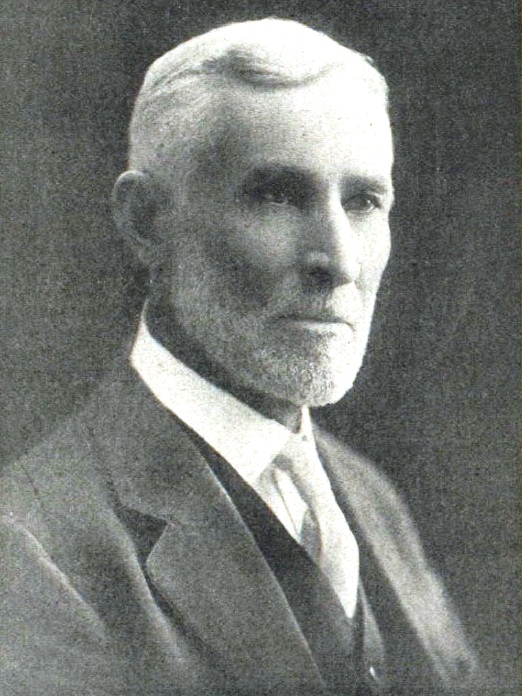
The single most important pre-DNA prophetic statement on the question is Anthony W. Ivins, then a member of the First Presidency, in April 1929 General Conference:
"The Book of Mormon teaches the history of three distinct peoples, or two peoples and three different colonies of people, who came from the old world to this continent. It does not tell us that there was no one here before them. It does not tell us that people did not come after."[35]
That was 73 years before Murphy's "Lamanite Genesis" essay (2002), 75 years before Southerton's Losing a Lost Tribe (2004), and 77 years before the 2006 introduction change. The Gospel Topics Essay quotes this passage. A First Presidency member, in General Conference, in 1929, explicitly affirmed that the Book of Mormon does not claim Lehite peoples were the sole or principal ancestors of Native Americans.
The pre-DNA scholarly chain
Ivins's 1929 statement is not an isolated outlier. It sits in an unbroken chain of pre-DNA LDS scholarship:
- Janne Sjodahl (1921): "[T]he Book of Mormon has nothing to say about the occupation of America by man before the arrival of the Jaredites."[36]
- B. H. Roberts (1920s, published 1985): in his private studies Roberts weighed an "others in the land" answer to the text's population problems, noting that "if such other races or tribes existed then the Book of Mormon is silent about them."[37]
- Anthony W. Ivins (1929): the General Conference statement quoted above.[35:1]
- Hugh Nibley (1952): Lehi in the Desert and the Improvement Era "Jaredite" series, arguing for Asian Jaredite origins and broader migration patterns.[38]
- John Sorenson (1984): the two-part Ensign series, "Digging into the Book of Mormon: Our Changing Understanding of Ancient America and Its Scripture" (Sept–Oct 1984), published under official Church imprint.[39]
- John Sorenson (1985): An Ancient American Setting for the Book of Mormon (Deseret Book/FARMS), the foundational book-length LGM treatment.[40]
- John Sorenson (1992): "When Lehi's Party Arrived in the Land, Did They Find Others There?" Journal of Book of Mormon Studies 1/1, predating DNA criticism by a decade and consolidating the textual case for "others in the land."[9:2]
- Matthew Roper (2003): "Nephi's Neighbors: Book of Mormon Peoples and Pre-Columbian Populations," FARMS Review 15/2, the comprehensive review of the textual evidence.[10:2]
- John Sorenson and Matthew Roper (2003): "Before DNA," Journal of Book of Mormon Studies 12/1: the title alone announces the chronological priority.[41]
The scholarly framework that answers the DNA criticism was in place 70-plus years before the criticism existed. Daniel C. Peterson, at the 2014 FAIR Conference, summarized the position: the LGM "has been created because the Book of Mormon demands it… This sort of thing has been in the works for a long time, before there was any talk about DNA, before the discovery of the DNA double-helix model."[42]
The 1981 introduction backstory
Daniel C. Peterson's 2014 FAIR talk reports a backstory he says has never been published: the 1981 wording was objected to at the time, on textual grounds, and the objections were overruled.[42:1] This is a single secondary account of an unpublished committee process, and a skeptical reader is right to weight it accordingly. The broader argument does not depend on it. What the broader argument does depend on (the 1921–2003 published scholarly chain, the 1929 Ivins First Presidency statement, the textually supported nature of the 2006 revision) is independently verifiable in primary sources.
The 1830 Book of Mormon, additionally, had no introduction at all. The current preface (1981, with the McConkie wording) and the chapter headings (1920) are editorial additions, not part of the canonical scriptural text.[43] The CES Letter cites the introduction-page wording as if it were scripture-level Church teaching. It was always editorial frontmatter, never canonized in any form. Correcting an editorial preface is not the same as altering scripture.
What the Book of Mormon text itself describes
Beyond the historical record of the LGM scholarship, the Book of Mormon text itself, in its 1830 form, before any DNA debate could possibly have shaped its wording, describes a scenario consistent with a small founding migration absorbed into a larger existing population. The text does not require the LGM, but it accommodates it more naturally than the hemispheric reading.
Mormon's "pure descendant of Lehi" (3 Nephi 5:20)
"I am Mormon, and a pure descendant of Lehi."
The phrase makes no rhetorical sense if everyone Mormon writes for is a pure descendant of Lehi. It is meaningful only if pure Lehite descent is unusual among the surrounding population. Mormon is essentially saying: I am one of the rare ones. By Mormon's time (~AD 350), this is direct textual evidence that most "Nephites" and "Lamanites" were not of pure Lehite ancestry, exactly the demographic situation in which Lehite genetic markers would have been overwhelmingly diluted.[44]
Sherem appears from outside the colony (Jacob 7:1–4)
"And now it came to pass after some years had passed away, there came a man among the people of Nephi, whose name was Sherem… [H]e had a perfect knowledge of the language of the people; wherefore, he could use much flattery, and much power of speech…"
Sherem appears in the Nephite community a generation or two after Lehi, with full mastery of the language and theological sophistication, and the text introduces him as an arrival, not a kinsman. Where did he come from? The text offers no internal explanation, but the existence of "others in the land" provides one.[9:3]
Lamanite population growth (Jarom 1:6)
"And they were scattered upon much of the face of the land, and the Lamanites also. And they were exceedingly more numerous than were they of the Nephites; and they loved murder and would drink the blood of beasts."
By the verse's own count, two hundred years after Lehi left Jerusalem (Jarom 1:5, roughly 400 BC), the Lamanites are described as "exceedingly more numerous" than the Nephites. From a few sons of Laman and Lemuel and a few sons of Ishmael (who sided with Laman), this is biologically impossible without absorption of pre-existing populations. Roper (2003), "Nephi's Neighbors," calculates this in detail: a single founding family cannot produce a population this large in this timeframe absent extensive intermarriage with existing peoples.[10:3]
The narrow neck: a day-and-a-half's journey (Alma 22:32)
"[A]nd now, it was only the distance of a day and a half's journey for a Nephite, on the line Bountiful and the land Desolation, from the east to the west sea."
The "narrow neck" is a day and a half's journey wide, roughly thirty miles by ordinary travel estimates. This is not continental geography; it is regional geography. The Book of Mormon's described landscape is consistent with a Mesoamerican setting (the Isthmus of Tehuantepec is approximately 120 miles, but several textual details fit narrower features within Mesoamerica) and inconsistent with a hemispheric reading that would require crossing the Isthmus of Panama in a day and a half. This is 1830 textual evidence, not a 1985 retrofit.[45]
Key Point
The textual case for limited geography is internal to the 1830 Book of Mormon. It cannot be a 1985 apologetic rescue of the text against DNA evidence, because the relevant verses were already in the published Book of Mormon more than a century and a half before DNA was an issue.
Other textual indicators
KnoWhy #435 catalogs textual indicators that Book of Mormon peoples were not alone in the land;[46] the textual case includes:
- Rapid Nephite population growth that cannot be explained by a single founding family
- Sherem's outsider characteristics and language mastery (Jacob 7:3–4)
- Mulekite language corruption in just 400 years (Omni 1:17), implausible for an isolated population of pure Mulekite descent, easy if mixed with locals
- "Lamanitish servants" (Alma 17:26) and "Ishmaelitish women" (Alma 3:7) as ethnic categories distinct from "Lamanite" simpliciter
- The people of Zarahemla outnumbering the Nephites at first contact (Mosiah 25:1–13)
- Jacob's olive tree allegory (Jacob 5) describing grafting onto wild rootstock, a metaphor for absorbed peoples
- 2 Nephi 1:5–11: Lehi's blessing promised the land to "all those who should be led out of other countries," anticipating other migrations
- Apparent dialect/cultural distinctions within "the Nephites" and "the Lamanites" inconsistent with single-family descent
- The post-Mosiah expansion of "Nephite" and "Lamanite" identity into political/cultural rather than strictly genealogical categories
The text describes what the LGM proposes. The only thing that genuinely changed in 2006 was the introduction page, a piece of editorial frontmatter, being brought into closer alignment with what the text itself had always said.
The 2006 introduction change in context
The CES Letter's central rhetorical move on this topic is the post hoc construction: "Why did the Church change the … introduction page in the 2006 edition Book of Mormon, shortly after the DNA results were released?" The framing implies causation by temporal proximity without explicitly claiming it.
"Conceded" is the CES Letter's word, and it implies an opponent admitting something against interest. But the Gospel Topics Essay is not a confession; it is a scholarly analysis explicitly engaging the science and explaining why DNA evidence neither confirms nor disproves the Book of Mormon. Its actual statements are scientifically careful, not defensive: "DNA studies cannot be used decisively to either affirm or reject the historical authenticity of the Book of Mormon," and "Nothing is known about the DNA of Book of Mormon peoples."[3:11] Reframing scholarly analysis as concession is a rhetorical move, not a fair summary.
For a reader who wants the criticism whole, the more rigorous sources are Murphy's "Lamanite Genesis" (2002) and "Simply Implausible" (2003); Southerton's Losing a Lost Tribe (2004) and "DNA Über-Apologetics" (2005); Murphy and Baca's 2020 chapter; and the secular population-genetics literature cited here. The apologetic literature in turn (Perego/Ekins, Butler/Perego, Stacey/Sheffield/Crandall, Sorenson, Roper, Peterson) addresses these arguments directly. The CES Letter's slogan-plus-insinuation does not.
The strongest critical arguments
The CES Letter's two-paragraph slogan is not the strongest version of the DNA criticism. Refuting the slogan would leave the scholarly version untouched.
The credentialed critical voices are real and sober. Thomas W. Murphy holds a PhD in anthropology and chaired the anthropology department at Edmonds College (formerly Edmonds Community College); his foundational essay "Lamanite Genesis, Genealogy, and Genetics" (in Vogel and Metcalfe, eds., American Apocrypha, 2002) introduced the population-genetics critique into mainstream Mormon studies.[47] His 2003 Dialogue article "Simply Implausible" remains the most direct rebuttal of LDS limited-geography defenses; Murphy argues that "the population growth attested in the Book of Mormon is mathematically impossible for groups of the size and make-up described in the text," concluding that "a limited geography for the Book of Mormon anywhere in the Americas is, in sum, simply implausible."[48] Murphy and Angelo Baca's 2020 chapter in Harris and Bringhurst's The LDS Gospel Topics Series integrates the population-genetics critique with a settler-colonial structural argument.[49]
Simon Southerton holds a PhD in plant genetics, was an LDS bishop before resigning his membership, and wrote Losing a Lost Tribe: Native Americans, DNA, and the Mormon Church (Signature Books, 2004) and "DNA Über-Apologetics" (Sunstone 138, September 2005). His central argument is that LDS DNA apologetics give too much weight to the drift, founder-effect, and lineage-extinction defenses while not honestly accounting for the gap between those defenses and what the institutional Church actually taught about universal Lamanite identity for over a century.[50][51]
The Lehite-side scale problem (Helaman 3:8, 11:20, Mormon 6)
Murphy's "Simply Implausible" mounts the population-scale challenge most directly on the Lehite side. That matters, because the Lehite verses need their own answer; the Jaredite concession does not supply it.
The relevant text:
- Helaman 3:8 describes Nephite-and-Lamanite expansion: "they did multiply and spread, and did go forth from the land southward to the land northward, and did spread insomuch that they began to cover the face of the whole earth."
- Helaman 11:20 describes the post-judgment recovery: "the people of Nephi began to prosper again in the land, and began to build up their waste places, and began to multiply and spread, even until they did cover the whole face of the land, both on the northward and on the southward, from the sea west to the sea east."
- Mormon 6:9–15 describes the climactic battle at Cumorah, with Nephite forces organized into twenty-three military units of ten thousand each, and Lamanite armies described as overwhelming in number.
These are not Jaredite verses. They describe Lehite-descended populations on the Lehite-side timeline. They are exactly the verses Murphy invokes to argue that "small group absorbed into a much larger host" cannot be the whole apologetic answer, because the text itself describes Lehite-descended populations spreading over "the whole face of the land" and supplying military forces of substantial scale.
The apologetic engagement runs along three lines, with one limit at the end:
On "Lehite" identity becoming a political/cultural category. The Book of Mormon's own usage of "Nephite" and "Lamanite" shifts away from strictly genealogical descent and toward political and religious categories well before Helaman 3. By the late Mosiah period the people of Zarahemla (Mulekites, who outnumbered the Nephites at first contact, per Omni 1:14–19 and Mosiah 25) have been politically incorporated as "Nephites." By Alma's day "Lamanitish servants" (Alma 17:26) and "Ishmaelitish women" (Alma 3:7) appear as ethnic categories distinct from "Lamanite" simpliciter. The "whole face of the land" being filled with "Nephites and Lamanites" in Helaman 3:8 / 11:20 is therefore consistent with Lehite-descended people having absorbed substantial earlier populations and become identifiable by political and religious affiliation rather than by founding genealogy. This is not a dodge; it is the text's own usage. Roper, "Nephi's Neighbors," develops this argument in detail on textual grounds.[10:4] "Nephite/Lamanite" by Helaman's day does not mean "person of pure Lehite descent."
On the Mormon 6 figures. The Mormon 6:9–15 numbers, twenty-three Nephite units of ten thousand, are military force counts rather than a census of Nephite-descended populations. Even so, the order of magnitude (perhaps 230,000-plus Nephite combatants alone) does not square with descent from a single sixth-century-BC family unless either population numbers in the text follow the rhetorical-inflation conventions characteristic of ancient Near Eastern and Mesoamerican military and census reporting, or "Nephite" by AD 385 is a political-religious affiliation absorbing many earlier and contemporary peoples, or some combination of both. Sorenson, Mormon's Codex, treats both possibilities at length.[52]
On Helaman 3:8 specifically. "Cover the face of the whole earth" and "spread upon all the face of the land" (4 Nephi 1:23) are formulaic biblical phrases (compare Genesis 1:28, 9:1, 11:9; the same formula recurs throughout the Hebrew Bible). They mean the expansion of a regional people across a meaningful territory, not continental-scale demography. The geography sections above and the geography article develop the Mesoamerican territorial frame within which "the face of the land" is a coherent regional formula.
The limit at the end. None of the above eliminates the underlying question. If "Nephite/Lamanite" is doing political-and-religious work, the text's "expanded Lehite peoples" are most of the host population by demographic mass, overwhelmingly composed of pre-existing peoples with their own DNA, which is what we observe in modern Native American populations. The apologetic position is not that the text is "small" in the sense of "a few dozen Lehites at AD 385." It is that the text describes a small founding genetic input, a much larger host population at the start, and political-and-religious categories absorbing the host into a "Lehite" identity by the Helaman period. The math of detection does the work the apologetic position needs it to do, even when the cultural-political population is substantial.
The Jaredite scale problem
The Jaredite case is the hardest single concession here. The text describes Jaredites as a major civilization persisting roughly 1,500-plus years before the climactic destruction in Ether 15, in which Coriantumr "saw that there had been slain by the sword already nearly two millions of his people,"[53] and for most of that span the text portrays them as the dominant population in their region, not a small enclave swamped by a host. "Small group absorbed into a larger host" therefore does not apply on Lehite-friendly terms; the apologetic answer cannot fully resolve the difficulty.[54]
The autosomal-DNA detection threshold
The technically most sophisticated of the critical arguments concerns the limits of autosomal DNA detection.
The argument runs this way. The mtDNA traces a single maternal lineage and the Y-chromosome traces a single paternal lineage; both can be erased by drift. But autosomal DNA comes from all ancestors at once, recombined across the genome each generation, which makes it much harder to erase completely. Modern haplotype-based admixture-detection methods, particularly Hellenthal et al. (2014)'s GLOBETROTTER methodology, have been validated on simulated admixture events 7 to 160 generations back (roughly 200–4,400 years) with contributions from 3% to 50%.[55] Chacón-Duque et al. (2018) used these methods on 6,500-plus Latin Americans and identified small Sephardic Jewish ancestry signals, but dated them to roughly 10 generations ago (post-Columbian Converso migration), not pre-Columbian.[56] Therefore, the argument concludes, if a 600 BC Lehite signal at any meaningful level were present, GLOBETROTTER-style methods would detect it.
Where the argument has real weight: detection thresholds are real. Apologists who rely on a generic "drift erased it" defense without engaging the autosomal-DNA literature are not addressing the strongest case.
Where the argument has limits:
- In simulation, GLOBETROTTER's power to detect admixture when present was 94% (p<0.01). But for weak signals accuracy was lower: around 40% of scenarios with a source contributing only 5% of DNA yielded elevated (>25%) rates of falsely inferring multiple admixture times and/or admixing groups.[55:1]
- No published study has modeled detection power for the specific Book of Mormon parameters: a founding group of ~30, a host population in the millions, a 2,600-year time depth, and intervening catastrophic bottlenecks (post-Columbian collapse plus pre-Columbian wars described in the text itself).
- The expected Lehite tracts after 100 generations of recombination would be on the order of a single centimorgan, at or below the length current haplotype methods reliably identify as discrete tracts, and present, if at all, at trace frequency.[57]
- The Converso study screened modern Latin Americans (with significant post-Columbian European/African admixture, which adds noise), not unbroken-pre-Columbian-ancestry indigenous populations.
Given what we know about the parameters, current methods cannot rule out a Lehite-scale event, but no published study has proven this directly either. The faith position rests on a quantitative claim that is plausible but not directly tested.[2:6]
The unfalsifiability charge
The most intellectually serious version of the DNA criticism, mounted most carefully by Murphy and Baca (2020), is the unfalsifiability charge.[49:1]
The trajectory:
- Pre-2000s: Lamanites = principal ancestors of all Native Americans (1981 introduction).
- 2002: Murphy publishes the genetic critique.
- 2004: Southerton publishes his book.
- 2006: introduction changed to "among the ancestors."
- 2014: Gospel Topics Essay explains why DNA evidence is "inconclusive."
- Current apologetic position: Lehites were too small a group, too long ago, absorbed into too large a population, for their DNA to be detectable.
The charge: each new piece of evidence is met with a further retreat that makes the claim progressively less testable, until the current apologetic position renders the Book of Mormon's DNA-relevant claims effectively unfalsifiable.
The trajectory is real. The institutional Church's positions did shift in apparent response to scientific pressure, and "Lehite DNA might be undetectable due to drift in this specific scenario" is, strictly speaking, unfalsifiable by DNA evidence, in the sense that no DNA observation could confirm or refute it. But the charge conflates scholarly correction with institutional correction. The "others in the land" textual framework was developed by Sorenson and others before DNA criticism existed. The institutional adoption lagged the scholarship and tracked the criticism timeline, yes, but the underlying textual position was not invented to dodge the science.
The current apologetic position is unfalsifiable by DNA evidence specifically, but that is a fact about the limits of DNA methods given the parameters of the Lehite scenario, not a metaphysical claim that the Book of Mormon is untestable. The text remains testable on textual, archaeological, linguistic, and historical grounds. Nahom and Bountiful in Arabia (independently confirmed by archaeology and geography after Joseph Smith's death), chiasmus and Hebraisms in the text, the production-speed argument, and the witnesses' testimony surviving disaffection from the Church are all empirical claims that can be evaluated.[58][59][60] "Unfalsifiable on this specific question" is a fair characterization of where DNA stands. "Unfalsifiable in principle" overreaches.
The institutional-timing pattern
The CES Letter's strongest fair criticism is the institutional-timing pattern. The Church's introduction change (2006) and Gospel Topics Essay (2014) did track external criticism, even though the underlying scholarship preceded the criticism by decades.
Critics are not wrong to note this. Through much of the 20th century, official Church discourse (General Conference talks, Sunday School manuals, prophetic statements) operated under hemispheric assumptions even while LDS scholars were arguing differently. Spencer W. Kimball's "Of Royal Blood" (Ensign, July 1971) said "the term Lamanite includes all Indians and Indian mixtures, such as the Polynesians, the Guatemalans, the Peruvians, as well as the Sioux, the Apache, the Mohawk, the Navajo, and others."[61] Gordon B. Hinckley dedicated temples in Latin America and the Pacific for "the children of Lehi."[62] The Indian Student Placement Program (begun informally in 1947, made an official program in 1954, and wound down in the 1990s) was an institutional embodiment of universal Lamanite identification.[63] Why institutional correction often lags scholarly correction in any large hierarchical institution is a real question. But the slow institutional adoption of an existing scholarly position is a different phenomenon from the construction of a new defensive position out of nothing.
The Hebraic-X2a hypothesis is correctly rejected
Some LDS apologists, particularly Heartland-model advocates Rod Meldrum and Wayne May, have claimed that mitochondrial haplogroup X2a is evidence of an Israelite-Lehite migration. This claim is rejected by mainstream LDS scholarship.
Mainstream LDS DNA scholarship (Perego, Butler, Whiting) explicitly rejects the X2a-as-Lehite argument, and so does mainstream secular population genetics:[64][65][66]
- Native American X2a is distinct from Old World X2. Its internal coalescence dates to roughly 18,000 years before present, implying arrival by about 11,000 years ago, long before any plausible Book of Mormon migration.
- Reidla et al. (2003), "Origin and Diffusion of mtDNA Haplogroup X," AJHG 73:1178–1190, established the deep age of X2a.[64:1]
- Raff and Bolnick (2015), "Does Mitochondrial Haplogroup X Indicate Ancient Trans-Atlantic Migration to the Americas? A Critical Re-Evaluation," PaleoAmerica 1, no. 4: 297–304, summarize: "The idea that haplogroup X2a is derived from an ancient trans-Atlantic migration to the Americas has been repeatedly considered — and rejected — by anthropological geneticists over the last two decades." Their critique addresses the broader trans-Atlantic migration claim (which includes Solutrean and other hypotheses) and applies a fortiori to the more specific Israelite-migration variant.[65:1]
- Perego, in his BYU RSC chapter: "In order for X2a to fit within Book of Mormon chronology, the currently accepted molecular clocks would need considerable recalibration, or other samples from the Old World carrying additional mutations shared with the Native American X2a would be needed."[66:1] Perego does not advance X2a as evidence for the Book of Mormon.
- Butler and Perego (2025) reject both the "X2a disproves the Book of Mormon" claim and the "X2a proves the Book of Mormon" claim as oversimplifications.[4:3]
The mainstream LDS scholarly position is the one taken here: the strong faithful case does not depend on X2a. It depends on population genetics making any small Lehite signal undetectable in principle given the demographic parameters, and on the LGM as the textually correct reading of the Book of Mormon. The Heartland-X2a line is a fringe LDS apologetic position rejected by the actual practitioners of LDS DNA scholarship.
The settler-colonial critique
Murphy and Baca (2020) mount a sophisticated structural argument: that the Book of Mormon "projects a nineteenth-century, settler colonial, stereotypical, racialized, social organization of civilized (Nephite) and savage (Lamanite) peoples back into the past," and that claiming a Middle Eastern origin for Indigenous peoples is itself a form of epistemic colonialism, overriding Indigenous origin stories with a settler narrative. Even a "respectful" Limited Geography Model still inserts a Judeo-Christian narrative into Indigenous history without Indigenous consent.[49:2][67]
The Murphy-Baca structural argument does not reduce to "is the Book of Mormon historically true." Their concern is about the manner of narration as much as its accuracy. The Church's evolving relationship with Indigenous communities (the discontinuation of the Indian Student Placement Program, wound down in the 1990s with the last participants finishing in 2000; the receding of universal-Lamanite-identification rhetoric; the careful framing of the 2014 Gospel Topics Essay; and the Church's ongoing work with Indigenous Latter-day Saint communities) represents a real engagement with this kind of question, though one that is ongoing and properly belongs to the broader conversation between the Church and Indigenous communities. The historical-authenticity question is decided on textual, archaeological, linguistic, and witness grounds rather than on DNA; the structural critique stands as its own question about the manner of narrating Indigenous identity. Both questions deserve direct engagement, and neither reduces to the other.
Where the evidence points
Defense alone is not the whole story. The faithful position on DNA is not a shrug that the evidence is inconclusive. It is sharper than that: population genetics, properly understood, makes the absence of detectable Lehite DNA the precisely expected outcome, true Book of Mormon or not, and the broader evidentiary case for the Book of Mormon never depended on DNA in the first place.
The one point everyone agrees on: most Native American DNA traces to East Asian and Beringian sources, and the Gospel Topics Essay affirms it outright.[3:12] Nothing in the faithful position needs it to be otherwise. The disputed claim is the next one over: that "DNA analysis has concluded" the Book of Mormon false. That claim rests on a methodological error.
The math predicts exactly what we observe. Founder effect, drift, lineage extinction, and the post-Columbian bottleneck together predict that a migration of roughly 30 people 2,600 years ago, absorbed into a much larger host and subjected to repeated later bottlenecks, would leave no detectable modern signal, and they predict it regardless of whether the migration happened. That is not an apologetic assertion; it is what the literature shows when you stack the cases. Llamas et al. (2016): every fine-grained pre-Columbian sub-lineage in a 92-skeleton sample is gone from modern databases within 500 years.[24:2] The Stacey/Sheffield/Crandall (2008) simulation: the founding signal vanishes across most individuals even on parameters friendlier to detection than the Lehite case.[5:3] Iceland: nearly 60% of founder haplotypes undetectable in 35 generations under ideal genealogical conditions.[25:2] Rasmussen's Saqqaq: an entire population occupies Greenland for over a millennium and leaves no descendant population in the Americas.[27:1][28:1] And the Phoenicians, by Harpending's assessment, would themselves be invisible.[2:7] The Lehite scenario sits at the worst end of every one of these variables. Asking why we do not see Lehite DNA is asking a question whose answer is built into the math.
Nor can the criticism fall back on the claim that an ocean crossing was implausible to begin with. Mainstream genetics has now demonstrated one: Ioannidis et al. (2020), Polynesian–Native American contact around AD 1200, between Polynesia and the Pacific coast of South America.[23:1] This does not prove a Lehite migration. The Ioannidis case is later, runs in a different direction, and sits in a far more favorable detection regime. What it forecloses is the rhetorical move that transoceanic contact is itself absurd.
The "ad hoc rescue" charge fails twice over. The Limited Geography Model was documented long before DNA was an issue, and the 1830 text fits it from the inside. Historically, an unbroken chain runs from Joseph Smith's 1841 Bernhisel letter and the 1842 Times and Seasons editorials through Sjodahl (1921), Roberts (1920s), Ivins (1929), Nibley (1952), Sorenson (1984/1985/1992), Roper (2003), and Sorenson and Roper's pointedly titled "Before DNA" (2003); the Ivins First Presidency statement alone predates Murphy's foundational paper by 73 years.[31:1][32:2][33:2][35:2][41:1] Textually, the 1830 Book of Mormon describes localized geography (a narrow neck a day and a half wide), Lamanite numbers that outstrip a single family within two hundred years, outsiders like Sherem appearing without explanation, and Mormon's claim to be "a pure descendant of Lehi," a boast that means nothing unless pure Lehite descent was already rare.[44:1][10:5] A text fixed in print in 1830 cannot have been retrofitted to a criticism that arrived in 2002.
The concessions run toward a smaller apologetic claim. Four tensions are genuinely strong: the Jaredite scale problem, the autosomal-DNA detection threshold (where no published study has modeled the exact Book of Mormon parameters), the strict unfalsifiability of the apologetic position on DNA specifically, and the institutional-timing pattern. The answer in each case is more careful than dismissive. From the 19th century through much of the 20th, Church discourse treated Native American descent from Lehi as something the future would corroborate. DNA did not corroborate it in that broad way. The apologetic position has accordingly contracted, from "DNA will eventually confirm Native American descent from Lehi" to "DNA is silent on the question, given the demographic parameters, and the case rests on other evidence." Critics are right that "the case rests on other evidence" is partly a position settled into rather than always held. That is a real recalibration of what DNA was ever going to be able to deliver, not a pretense that nothing changed.
So the verdict is neutrality, and the neutrality cuts both ways. DNA cannot decisively refute the Book of Mormon given the demographic parameters the text describes, and it cannot affirmatively support it. Neither verdict survives the math: not the CES Letter's declaration of finality, and not any apologetic hope that DNA points toward the book. Which leaves the real question where it always was, somewhere DNA was never going to reach.
That question is decided on the text. The Book of Mormon's content is testable: Hebraisms, chiasmus, ancient Near Eastern literary forms, Nahom and Bountiful confirmed by archaeology and geography in Arabia, internally consistent geography across a 270,000-word dictation, hundreds of details confirmed by scholarship decades or centuries later, and the witnesses whose testimony survived disaffection from the Church.[58:1][59:1][60:1] The archaeology article develops the population-scale evidence, including the 2018 PACUNAM LiDAR survey that revised peak Maya population estimates upward to 7 to 11 million, with 60,000-plus previously undetected structures in a single 2,144 km² survey block. The anachronisms article develops the per-item evidence: pre-Columbian barley (confirmed 1983), Mesoamerican cement, the Vered Jericho sword (deliberately carburized steel at Laban's exact period and region), and the broader pattern of textual claims confirmed since 1830. "Where is Lehi's DNA?" is the wrong question. The right one is what kind of evidence an ancient migration of this size, age, and demographic setting should leave, and what kind we actually have. Population genetics says: not DNA; the math forbids it. Linguistics, Arabian geography, internal textual structure: present and accounted for.
That is also why the hardest stretches of this debate belong next to the steadiest fact in the case. Suppose DNA cannot detect a small Israelite family after 2,600 years. It almost certainly cannot, for reasons that have nothing to do with the book's historicity. The harder question is the one the book's production has posed since 1829, the dictation the scribes and family watched and never disavowed, treated at length in the production circumstances pages.[60:2][68] DNA was never going to settle that. The DNA "absence" is what the math predicts. What survives is what was always going to matter.
Further Reading
- "Book of Mormon and DNA Studies," Gospel Topics Essays, The Church of Jesus Christ of Latter-day Saints (2014).
- John M. Butler and Ugo A. Perego, Let's Talk About Misconceptions with DNA and the Book of Mormon (Deseret Book, 2025).
- Ugo A. Perego and Jayne E. Ekins, "Is Decrypting the Genetic Legacy of America's Indigenous Populations Key to the Historicity of the Book of Mormon?" Interpreter 38 (2020): 355–390.
- John L. Sorenson and Matthew Roper, "Before DNA," Journal of Book of Mormon Studies 12, no. 1 (2003): 6–23.
- Scripture Central, "Why Hasn't Lehi's DNA Been Found?" KnoWhy #280.
- For the related questions of archaeology, anachronisms, and geography, see the dedicated articles on this site.
Runnells, CES Letter (2017), "Book of Mormon," no. 4, p. 11. ↩︎ ↩︎
Ugo A. Perego and Jayne E. Ekins, "Is Decrypting the Genetic Legacy of America's Indigenous Populations Key to the Historicity of the Book of Mormon?" Interpreter: A Journal of Latter-day Saint Faith and Scholarship 38 (2020): 355–390. https://interpreterfoundation.org/journal/is-decrypting-the-genetic-legacy-of-americas-indigenous-populations-key-to-the-historicity-of-the-book-of-mormon-2/ ↩︎ ↩︎ ↩︎ ↩︎ ↩︎ ↩︎ ↩︎ ↩︎
"Book of Mormon and DNA Studies," Gospel Topics Essays, The Church of Jesus Christ of Latter-day Saints, 2014. https://www.churchofjesuschrist.org/study/manual/gospel-topics-essays/book-of-mormon-and-dna-studies?lang=eng ↩︎ ↩︎ ↩︎ ↩︎ ↩︎ ↩︎ ↩︎ ↩︎ ↩︎ ↩︎ ↩︎ ↩︎ ↩︎
John M. Butler and Ugo A. Perego, Let's Talk About Misconceptions with DNA and the Book of Mormon (Salt Lake City: Deseret Book, 2025). https://www.deseretbook.com/product/6054479.html Cf. Daniel C. Peterson's review, Meridian Magazine, September 23, 2025 (the book's rejection of both X2a claims). ↩︎ ↩︎ ↩︎ ↩︎
Andrew Stacey, Nathan C. Sheffield, and Keith A. Crandall, "Calculating Expected DNA Remnants from Ancient Founding Events in Human Population Genetics," BMC Genetics 9 (2008): 66. https://doi.org/10.1186/1471-2156-9-66 ↩︎ ↩︎ ↩︎ ↩︎
John M. Butler, "Addressing Questions Surrounding the Book of Mormon and DNA Research," FARMS Review 18, no. 1 (2006): 101–108. https://scripturecentral.org/archive/periodicals/journal-article/addressing-questions-surrounding-book-mormon-and-dna-research ↩︎ ↩︎ ↩︎
The two-step structure: the textual case for the LGM is argued from the 1830 text on its own terms (the Limited Geography Model and text sections below); given the LGM, the population-genetics conditional follows (the detection-conditions section, the simulation, and the case studies). A one-step "DNA cannot see Lehites because they would be hard to see" would be circular; the textual case is the load-bearing claim. ↩︎
Lehi's family is described in 1 Nephi 16:7 and elsewhere; the founding party included Lehi, Sariah, their sons (Laman, Lemuel, Nephi, Sam, and, born in the wilderness, Jacob and Joseph), Ishmael's family (Ishmael, his wife, sons, and daughters who married Lehi's sons), and Zoram. Estimates of the total founding party's size are typically 20–30 individuals; see Sorenson, "When Lehi's Party Arrived" (cited above) and Roper, "Nephi's Neighbors" (cited above) for the standard reconstructions. ↩︎
John L. Sorenson, "When Lehi's Party Arrived in the Land, Did They Find Others There?" Journal of Book of Mormon Studies 1, no. 1 (1992): 1–34. https://scholarsarchive.byu.edu/jbms/vol1/iss1/2/ ↩︎ ↩︎ ↩︎ ↩︎
Matthew Roper, "Nephi's Neighbors: Book of Mormon Peoples and Pre-Columbian Populations," FARMS Review 15, no. 2 (2003): 91–128. https://scripturecentral.org/archive/periodicals/journal-article/nephis-neighbors-book-mormon-peoples-and-pre-columbian-populations ↩︎ ↩︎ ↩︎ ↩︎ ↩︎ ↩︎
Estimates of post-Columbian Native American population collapse cluster around 90% in heavily affected regions (Mexico, central Andes) within roughly 100–150 years of contact, with continent-wide estimates running as high as 95% over a longer 400-year horizon. For the Mexico-specific 90% figure, see Sherburne F. Cook and Woodrow Borah, Essays in Population History: Mexico and the Caribbean, 3 vols. (Berkeley: University of California Press, 1971–1979); for the broader continental estimates and methodological discussion, see David E. Stannard, American Holocaust: The Conquest of the New World (New York: Oxford University Press, 1992); William M. Denevan, ed., The Native Population of the Americas in 1492, 2nd ed. (Madison: University of Wisconsin Press, 1992); and David S. Jones, "Virgin Soils Revisited," William and Mary Quarterly 60, no. 4 (October 2003): 703–742. ↩︎ ↩︎ ↩︎
Michael H. Crawford, The Origins of Native Americans: Evidence from Anthropological Genetics (Cambridge: Cambridge University Press, 1998). https://www.cambridge.org/core/books/origins-of-native-americans/530BBA84E6293C2D38CF6476CBD7398D ↩︎ ↩︎
David Reich et al., "Reconstructing Native American Population History," Nature 488 (2012): 370–374. https://reich.hms.harvard.edu/sites/reich.hms.harvard.edu/files/inline-files/2012_Nature_NativeAmericans.pdf ↩︎
Erika Tamm et al., "Beringian Standstill and Spread of Native American Founders," PLoS ONE 2, no. 9 (2007): e829. https://journals.plos.org/plosone/article?id=10.1371/journal.pone.0000829 ↩︎ ↩︎
Alessandro Achilli et al., "The Phylogeny of the Four Pan-American MtDNA Haplogroups: Implications for Evolutionary and Disease Studies," PLoS ONE 3, no. 3 (2008): e1764. https://pmc.ncbi.nlm.nih.gov/articles/PMC2258150/ ↩︎ ↩︎
Ugo A. Perego et al., "The Initial Peopling of the Americas: A Growing Number of Founding Mitochondrial Genomes from Beringia," Genome Research 20, no. 9 (2010): 1174–1179. https://genome.cshlp.org/content/20/9/1174 ↩︎
Maanasa Raghavan et al., "Upper Palaeolithic Siberian Genome Reveals Dual Ancestry of Native Americans," Nature 505 (2014): 87–91. https://doi.org/10.1038/nature12736 ↩︎
Pontus Skoglund et al., "Genetic Evidence for Two Founding Populations of the Americas," Nature 525 (2015): 104–108. https://www.nature.com/articles/nature14895 ↩︎
Cosimo Posth et al., "Reconstructing the Deep Population History of Central and South America," Cell 175, no. 5 (2018): 1185–1197. https://www.cell.com/cell/fulltext/S0092-8674(18)31380-1 ↩︎
Kim-Louise Krettek et al., "A 6000-Year-Long Genomic Transect from the Bogotá Altiplano Reveals Multiple Genetic Shifts in the Demographic History of Colombia," Science Advances 11 (2025): eads6284. https://pmc.ncbi.nlm.nih.gov/articles/PMC12118548/ ↩︎
Tiago Ferraz et al., "Genomic History of Coastal Societies from Eastern South America," Nature Ecology & Evolution 7, no. 8 (2023): 1315–1330. https://www.nature.com/articles/s41559-023-02114-9 ↩︎
Marcos Araújo Castro e Silva et al., "Deep Genetic Affinity Between Coastal Pacific and Amazonian Natives Evidenced by Australasian Ancestry," PNAS 118, no. 14 (2021): e2025739118. https://www.pnas.org/doi/10.1073/pnas.2025739118 ↩︎
Alexander G. Ioannidis et al., "Native American Gene Flow into Polynesia Predating Easter Island Settlement," Nature 583 (2020): 572–577. https://www.nature.com/articles/s41586-020-2487-2 ↩︎ ↩︎
Bastien Llamas et al., "Ancient Mitochondrial DNA Provides High-Resolution Time Scale of the Peopling of the Americas," Science Advances 2, no. 4 (April 2016): e1501385. https://pmc.ncbi.nlm.nih.gov/articles/PMC4820370/ ↩︎ ↩︎ ↩︎
Agnar Helgason et al., "Sequences From First Settlers Reveal Rapid Evolution in Icelandic mtDNA Pool," PLoS Genetics 5, no. 1 (2009): e1000343. https://journals.plos.org/plosgenetics/article?id=10.1371/journal.pgen.1000343 ↩︎ ↩︎ ↩︎
Alan R. Rogers, "Henry C. Harpending, 1944–2016," Biographical Memoirs (Washington, DC: National Academy of Sciences, 2018); the NAS member directory lists his election year as 1996. ↩︎
Morten Rasmussen et al., "Ancient Human Genome Sequence of an Extinct Palaeo-Eskimo," Nature 463 (2010): 757–762. https://www.nature.com/articles/nature08835 ↩︎ ↩︎
The Saqqaq culture is generally dated from c. 2500 BCE to c. 800 BCE — a duration of roughly 1,700 years — disappearing approximately 2,800 years before present. The Rasmussen et al. 2010 Nature paper sequenced a single individual approximately 4,000 years old (mid-Saqqaq); the population's overall span is the longer figure. See, e.g., Bjarne Grønnow, The Frozen Saqqaq Sites of Disko Bay, West Greenland: Qeqertasussuk and Qajaa (2400–900 BC): Studies of Saqqaq Material Culture in an Eastern Arctic Perspective (Museum Tusculanum Press, 2017), and the Wikipedia summary at https://en.wikipedia.org/wiki/Saqqaq_culture. ↩︎ ↩︎
Douglas L. T. Rohde, Steve Olson, and Joseph T. Chang, "Modelling the Recent Common Ancestry of All Living Humans," Nature 431 (2004): 562–566. https://www.nature.com/articles/nature02842 ↩︎
See the historical introduction to Letter to John M. Bernhisel, 16 November 1841, The Joseph Smith Papers (Bernhisel's gift was handed to Wilford Woodruff in New York in early September 1841; Woodruff's journal, September 9, 1841). https://www.josephsmithpapers.org/paper-summary/letter-to-johnm-bernhisel-16november-1841/1 ↩︎
Joseph Smith to John M. Bernhisel, November 16, 1841, in The Personal Writings of Joseph Smith, ed. Dean C. Jessee, rev. ed. (Salt Lake City: Deseret Book, 2002), 533. The Joseph Smith Papers Project hosts a transcript and image of the original. https://www.josephsmithpapers.org/paper-summary/letter-to-johnm-bernhisel-16november-1841/1 ↩︎ ↩︎
"Extract from Stephens' 'Incidents of Travel in Central America,'" Times and Seasons 3, no. 22 (September 15, 1842): 911–915 (the editorial commentary on the Stephens extract, including the "Mr. Stephens' great developements of antiquities … narrow neck of land, which now embraces Central America" passage, falls on p. 915). Cited in similar format by the Gospel Topics Essay, footnote 8. Joseph Smith Papers Project hosts the issue: https://www.josephsmithpapers.org/paper-summary/times-and-seasons-15-september-1842/ ↩︎ ↩︎ ↩︎
"Zarahemla," Times and Seasons 3, no. 23 (October 1, 1842): 927–928 (whole-number issue 59). https://www.josephsmithpapers.org/paper-summary/times-and-seasons-1-october-1842/ ↩︎ ↩︎ ↩︎
On the Zelph episode and the multi-directional character of Joseph Smith's geographic statements, see Kenneth W. Godfrey, "What Is the Significance of Zelph in the Study of Book of Mormon Geography?" Journal of Book of Mormon Studies 8, no. 2 (1999): 70–79; and Matthew Roper, "Joseph Smith, Revelation, and Book of Mormon Geography," FARMS Review 22, no. 2 (2010): 15–85. These treatments document both the Mesoamerican-pointing 1841–1842 statements and the continental-pointing Zelph and D&C material, and discuss how the historical record sustains multiple readings rather than a single settled geographic view. ↩︎
Anthony W. Ivins, Conference Report, April 1929 (Salt Lake City: The Church of Jesus Christ of Latter-day Saints), 15. Quoted in "Book of Mormon and DNA Studies," Gospel Topics Essays, footnote 7. ↩︎ ↩︎ ↩︎
J. M. Sjodahl, "The Book of Mormon and Modern Research," Improvement Era 25, no. 2 (December 1921): 154. Sjodahl's 1927 book An Introduction to the Study of the Book of Mormon (Salt Lake City: Deseret News Press, 1927) develops the same position at length ("All Indians are not the Descendants of Lehi," 435–436). ↩︎
B. H. Roberts, Studies of the Book of Mormon, ed. Brigham D. Madsen (Urbana: University of Illinois Press, 1985; repr. Signature Books, 1992), written in the early 1920s and published posthumously. Weighing an "others in the land" answer to the text's population problems, Roberts wrote: "To this answer there would be the objection that if such other races or tribes existed then the Book of Mormon is silent about them. Neither the people of Mulek nor the people of Lehi or after they were combined, nor any of their descendants ever came in contact with any such people, so far as any Book of Mormon account of it is concerned." See also discussion at https://bhroberts.org/. ↩︎
Hugh W. Nibley, Lehi in the Desert, The World of the Jaredites, There Were Jaredites (Salt Lake City and Provo, UT: Deseret Book and FARMS, 1988); originally published in part as the Improvement Era "Jaredite" series, 1952. ↩︎
John L. Sorenson, "Digging into the Book of Mormon: Our Changing Understanding of Ancient America and Its Scripture," Ensign, September 1984 and October 1984. https://www.churchofjesuschrist.org/study/ensign/1984/09/digging-into-the-book-of-mormon-our-changing-understanding-of-ancient-america-and-its-scripture ↩︎
John L. Sorenson, An Ancient American Setting for the Book of Mormon (Salt Lake City: Deseret Book and FARMS, 1985). ↩︎
John L. Sorenson and Matthew Roper, "Before DNA," Journal of Book of Mormon Studies 12, no. 1 (2003): 6–23, 113–115. https://scripturecentral.org/archive/periodicals/journal-article/dna ↩︎ ↩︎
Daniel C. Peterson, "Some Reflections on That Letter to a CES Director," FAIR Conference, August 2014. https://www.fairlatterdaysaints.org/conference/august-2014/reflections-letter-ces-director ↩︎ ↩︎
The 1830 Book of Mormon contained no preface beyond Joseph Smith's brief title-page text; chapter headings were added in 1920 (under James E. Talmage's direction), and the current preface (the introduction page including the "principal ancestors" wording) was added in 1981. The 1981 introduction was drafted by Bruce R. McConkie and approved by the Scriptures Publication Committee — chaired by Thomas S. Monson and including Boyd K. Packer and McConkie, with W. James Mortimer serving as executive secretary. See Royal Skousen's textual-criticism work (e.g., The Book of Mormon: The Earliest Text [Yale University Press, 2009]) for the publication history of the canonical text and its editorial additions; and "New Edition of the LDS Scriptures Now Available," Ensign (October 1981), and contemporary Deseret News coverage, for the committee's composition. ↩︎
3 Nephi 5:20: "I am Mormon, and a pure descendant of Lehi." On the rhetorical force of this phrase, see Sorenson, An Ancient American Setting (1985), and Roper, "Nephi's Neighbors" (2003). ↩︎ ↩︎
For the comprehensive treatment of Book of Mormon geography and the Limited Geography Model, see the geography article on this site. ↩︎
Scripture Central, "Did 'Others' Influence Book of Mormon Peoples?" KnoWhy #435, August 21, 2019. https://scripturecentral.org/knowhy/did-others-influence-book-of-mormon-peoples ↩︎
Thomas W. Murphy, "Lamanite Genesis, Genealogy, and Genetics," in American Apocrypha: Essays on the Book of Mormon, ed. Dan Vogel and Brent Lee Metcalfe (Salt Lake City: Signature Books, 2002), 47–77. SSRN preprint: https://papers.ssrn.com/sol3/papers.cfm?abstract_id=3749665 ↩︎
Thomas W. Murphy, "Simply Implausible: DNA and a Mesoamerican Setting for the Book of Mormon," Dialogue: A Journal of Mormon Thought 36, no. 4 (2003): 109–131. https://www.dialoguejournal.com/wp-content/uploads/sbi/articles/Dialogue_V36N04_129.pdf ↩︎
Thomas W. Murphy and Angelo Baca, "DNA and the Book of Mormon: Science, Settlers, and Scripture," in The LDS Gospel Topics Series: A Scholarly Engagement, ed. Matthew L. Harris and Newell G. Bringhurst (Salt Lake City: Signature Books, 2020). SSRN preprint: https://papers.ssrn.com/sol3/papers.cfm?abstract_id=3950642 ↩︎ ↩︎ ↩︎
Simon G. Southerton, Losing a Lost Tribe: Native Americans, DNA, and the Mormon Church (Salt Lake City: Signature Books, 2004). ↩︎
Simon G. Southerton, "DNA Über-Apologetics: Overstating Solutions—Understating Damages," Sunstone 138 (September 2005): 70–73. https://sunstone.org/wp-content/uploads/sbi/articles/138-70-73.pdf ↩︎
John L. Sorenson, Mormon's Codex: An Ancient American Book (Salt Lake City: Deseret Book and Neal A. Maxwell Institute, 2013). ↩︎
Ether 15:2 (LDS edition): "He saw that there had been slain by the sword already nearly two millions of his people, and he began to sorrow in his heart; yea, there had been slain two millions of mighty men, and also their wives and their children." https://www.churchofjesuschrist.org/study/scriptures/bofm/ether/15 ↩︎
The honest apologetic answers on the Jaredite scale problem are reasonable but cannot be demonstrated from the text with certainty. They include: (1) that population numbers in ancient texts — including ancient Near Eastern and Mesoamerican texts — routinely follow rhetorical conventions that inflate military and census figures by orders of magnitude (Sorenson, Mormon's Codex, treats this at length); (2) that the Ether 15 destruction is itself a catastrophic bottleneck that would have eliminated most or all Jaredite descendants in a single generation; (3) that any Jaredite remnant integrated into later populations is subject to all the same drift mechanisms over 2,500+ additional years to the present. The Jaredite case is one place where the steelman case is genuinely strong and the apologetic answer is least clean. ↩︎
Garrett Hellenthal et al., "A Genetic Atlas of Human Admixture History," Science 343, no. 6172 (2014): 747–751. https://www.science.org/doi/10.1126/science.1243518 ↩︎ ↩︎
Juan Camilo Chacón-Duque et al., "Latin Americans Show Wide-Spread Converso Ancestry and Imprint of Local Native Ancestry on Physical Appearance," Nature Communications 9 (2018): 5388. https://www.nature.com/articles/s41467-018-07748-z ↩︎
Simon Gravel, "Population Genetics Models of Local Ancestry," Genetics 191, no. 2 (2012): 607–619 (tract-length expectation, eq. 1). https://doi.org/10.1534/genetics.112.139808 ↩︎
On Nahom and Bountiful in Arabia, see S. Kent Brown, "'The Place That Was Called Nahom': New Light from Ancient Yemen," Journal of Book of Mormon Studies 8, no. 1 (1999): 66–68; Warren P. Aston, Lehi and Sariah in Arabia: The Old World Setting of the Book of Mormon (Bloomington, IN: Xlibris, 2015); and the NHM altars unearthed in 1988 at the Bar'an temple near Marib, Yemen, dated to the 8th–7th centuries BC. ↩︎ ↩︎
On chiasmus and Hebraisms in the Book of Mormon, see John W. Welch, "Chiasmus in the Book of Mormon," BYU Studies 10, no. 1 (1969): 69–84; Donald W. Parry, Poetic Parallelisms in the Book of Mormon: The Complete Text Reformatted (Provo, UT: Maxwell Institute, 2007); and the body of work on Hebrew literary forms in the Book of Mormon collected at https://scripturecentral.org/ ↩︎ ↩︎
For documentation of the Three Witnesses and Eight Witnesses and their consistency under disaffection from the Church, see Richard Lloyd Anderson, Investigating the Book of Mormon Witnesses (Salt Lake City: Deseret Book, 1981); Steven C. Harper, "Evaluating Three Arguments Against Joseph Smith's First Vision," Mormon Historical Studies 9, no. 2 (Fall 2008); and the witnesses section on this site. ↩︎ ↩︎ ↩︎
Spencer W. Kimball, "Of Royal Blood," Ensign, July 1971. https://www.churchofjesuschrist.org/study/ensign/1971/07/of-royal-blood ↩︎
Gordon B. Hinckley, dedicatory prayer of the Lima Peru Temple, January 10–12, 1986: "Remember, Father, Thine ancient covenant with the children of Lehi that in the latter days Thou wouldst favor them and bring to them a knowledge of their Redeemer." Text in Church News, January 19, 1986, 7; transcript at https://churchofjesuschristtemples.org/lima-peru-temple/prayer/. Similar language recurs across Hinckley's Latin American and Pacific dedications (the Guatemala City prayer of 1984 addresses "the sons and daughters of Lehi"); Church News coverage of these dedications documents the pattern. ↩︎
"Indian Student Placement Program," Church History Topics, The Church of Jesus Christ of Latter-day Saints (1947 first informal placement; official program 1954; final participant graduated 2000). https://www.churchofjesuschrist.org/study/history/topics/indian-student-placement-program?lang=eng ↩︎
Maere Reidla et al., "Origin and Diffusion of mtDNA Haplogroup X," American Journal of Human Genetics 73 (2003): 1178–1190. https://www.cell.com/ajhg/fulltext/S0002-9297(07)61980-6 ↩︎ ↩︎
Jennifer A. Raff and Deborah A. Bolnick, "Does Mitochondrial Haplogroup X Indicate Ancient Trans-Atlantic Migration to the Americas? A Critical Re-Evaluation," PaleoAmerica 1, no. 4 (2015): 297–304. https://doi.org/10.1179/2055556315Z.00000000040 ↩︎ ↩︎
Ugo A. Perego, "The Book of Mormon and the Origin of Native Americans from a Maternally Inherited DNA Standpoint," in No Weapon Shall Prosper: New Light on Sensitive Issues, ed. Robert L. Millet (Provo, UT: BYU Religious Studies Center, 2011), 171–216. https://rsc.byu.edu/no-weapon-shall-prosper/book-mormon-origin-native-americans-maternally-inherited-dna-standpoint ↩︎ ↩︎
The Murphy-Baca argument cannot be dismissed by saying the text doesn't use the vocabulary of nineteenth-century settler colonialism. Their argument depends on the structural relationship between a settler-origin religion narrating Indigenous history and the Indigenous communities whose histories are displaced. The Church's historical relationship with Indigenous peoples — universal Lamanite identification, the Indian Student Placement Program, prophetic rhetoric about "Israelite" heritage — is a real institutional history that the Church has been moving away from over the past several decades. Murphy and Baca argue that the act of claiming a Middle Eastern origin for Indigenous peoples overrides Indigenous origin stories with a settler narrative — independent of whether that narration is historically accurate. The apologetic response distinguishes two claims: whether a settler-origin religion has standing to narrate Indigenous identity at all (Murphy-Baca's structural concern), and whether the Book of Mormon is historically authentic (decided on textual, archaeological, linguistic, and witness grounds rather than DNA). If the Book of Mormon is historically authentic, the Lehite migration is a fact of Indigenous history regardless of how the narration sits with modern observers, and historical truth is not contingent on whose interests it serves. If it is not, the structural critique has substantially more force. ↩︎
On the production circumstances of the Book of Mormon, see John W. Welch, "The Miraculous Translation of the Book of Mormon," in Opening the Heavens: Accounts of Divine Manifestations, 1820–1844, ed. John W. Welch (Provo, UT: BYU Studies, 2005); see also the book-of-mormon-translation section on this site. ↩︎