KJV Errors in the Book of Mormon
The claim:
"What are 1769 King James Version edition errors doing in the Book of Mormon? A purported ancient text? Errors which are unique to the 1769 edition that Joseph Smith owned?"[1]
"When King James translators were translating the KJV Bible between 1604 and 1611, they would occasionally put in their own words into the text to make the English more readable. We know exactly what these words are because they're italicized in the KJV Bible. What are these 17th century italicized words doing in the Book of Mormon? Word for word? What does this say about the Book of Mormon being an ancient record?"[2]
"The Book of Mormon includes mistranslated biblical passages that were later changed in Joseph Smith's translation of the Bible. These Book of Mormon verses should match the inspired JST version instead of the incorrect KJV version that Joseph later fixed."[3]
The Book of Mormon quotes long stretches of the Bible, mostly Isaiah, in the language of the King James Version. That borrowing, the CES Letter argues, gives the book away. It raises three related claims:
- The Book of Mormon reproduces translation errors unique to the 1769 edition of the King James Version (KJV), the edition Joseph Smith owned.
- It copies the KJV's italicized words word for word. Those italics mark words the King James translators added to smooth the English, so they belong to the 17th century, not to an ancient text.
- It contains mistranslated biblical passages that Joseph Smith later corrected in his inspired revision of the Bible, the Joseph Smith Translation (JST). On the CES Letter's logic, the Book of Mormon should match the corrected JST reading, not the KJV error.
All three are offered as evidence that Joseph copied from his family Bible rather than translating an ancient record.
Start at the verse Royal Skousen singles out as the lone exception to the Book of Mormon's King James base text. At Isaiah 2:16 the King James reads "the ships of Tarshish" and the Greek Septuagint reads "every ship of the sea." Each surviving tradition carries one of the two lines. The Book of Mormon, at 2 Nephi 12:16, keeps both. Joseph Smith could not read Greek, and no English Septuagint was in general circulation in 1829. Where would the line have come from? A copyist working from the 1769 King James Bible could not have produced that reading, and it sits at one of the very verses critics catalog as King James mistranslations.
| Source | Reading at Isaiah 2:16 |
|---|---|
| KJV (Masoretic Hebrew tradition) | "upon all the ships of Tarshish, and upon all pleasant pictures" |
| Greek Septuagint (LXX) | "upon every ship of the sea, and upon every display of fine ships" |
| 2 Nephi 12:16 | "upon all the ships of the sea, and upon all the ships of Tarshish, and upon all pleasant pictures" |
That single verse does not answer the whole charge, and it is not meant to. The KJV really did serve as the linguistic substrate for the Book of Mormon's biblical passages. But the evidence refuses to behave the way a copied text should. The Book of Mormon modifies its biblical material at roughly a 50% rate. Its departures from the King James text repeatedly agree with ancient manuscripts no one in 1829 knew existed, including Isaiah scrolls that lay buried near the Dead Sea until 1947. Its language carries features older than the KJV itself. And at one critical moment it omits a Sermon on the Mount phrase that the earliest Greek manuscripts also lack, a reading the modern critical text has since adopted (though textual criticism on the variant is contested). The strongest critical case, made by David P. Wright, Colby Townsend, Stan Larson, and Grant Hardy, is far more rigorous than the CES Letter's version, and it is what this article answers.
The CES Letter's method here has a recurring weakness: it isolates a detail (a phrase, an apparent anachronism, a borrowed chapter) and treats explaining the detail as though it explained the book. No critic has produced a workable account of the whole: roughly 270,000 words of sustained narrative, theology, geography, and literary architecture, dictated in about sixty working days by a young man whose formal schooling was slight.[4] The King James question is real, and this article works through it in full. But it concerns the translation's surface, not where the book came from.
Context and Background
How Much of the Book of Mormon Is Biblical Quotation?
Philip Barlow's survey of the Book of Mormon's biblical language found that "more than fifty thousand phrases of three or more words, excluding definite and indefinite articles, are common to the Bible and the Book of Mormon."[5] The direct quotations are the most visible part of that pattern: long runs of Isaiah, the Sermon on the Mount from Matthew 5-7, Malachi 3-4, and shorter passages. Royal Skousen's History of the Text of the Book of Mormon, Part Five: The King James Quotations in the Book of Mormon (2019), the definitive scholarly treatment, identified 36 direct KJV quotations (passages with 16 or more consecutive matching words) and 83 paraphrastic quotations.[6]
B.H. Roberts addressed the objection over 120 years ago, and his answer was a translation-mechanism answer, not an appeal to shared ancient tradition. When Joseph Smith saw the Nephite record quoting Isaiah or Malachi or the words of the Savior, Roberts proposed, he compared the passages, found them alike in substance, and "adopted our English translation; and hence, we have the sameness." Roberts offered it as "but a conjecture," though one he believed "reasonable," and he pressed just as hard on the other side of the ledger: the differences between the Book of Mormon passages and their King James parallels also have to be accounted for.[7]
That the Book of Mormon speaks in KJV language is well documented on all sides. The dispute is over what it means for the translation.
The Translation Setting
Multiple eyewitnesses described Joseph Smith's translation method. Emma Smith testified: "He had neither manuscript nor book to read from."[8] David Whitmer described Joseph placing the seer stone in a hat, drawing the hat closely around his face to exclude the light, and reading off the English that appeared to him in the darkness, one character at a time.[9] The stone-in-hat method makes continuous Bible consultation during dictation impractical, with Joseph's face pressed into the hat and extraneous light shut out.[10]
The Smith family did own a Bible, as did virtually every American household in the 1820s, but the physical constraint of the translation process makes it difficult to explain how Joseph could have consulted it during dictation. Skousen's analysis of the original manuscript confirms dictation: misspellings reflect mishearings (phonetic errors), not misreadings of a printed text.[11] Oliver Cowdery's first attempt at "Coriantumr" was "Coriantummer," a spelling that betrays an ear reaching for an unfamiliar name rather than an eye copying a printed one. Cowdery bought a Bible of his own on October 8, 1829, some months after the translation closed in late June, and Joseph Smith was in Harmony, Pennsylvania, when the purchase was made.[12] Skousen's Part Seven: The Early Transmissions of the Text (2024) extends the manuscript-evidence case for dictation through the full transmission history.[13]
A Conceded Starting Point: The King James as Base Text
Skousen confirmed that the KJV served as the starting point for English rendering of biblical passages in the Book of Mormon.[6:1] That fact does not imply plagiarism any more than a modern translator's use of familiar phrasing implies plagiarism. In some modern Dead Sea Scrolls translations, roughly 90 percent of the text is simply carried over from the KJV, departing from it where the scrolls themselves differ from the Hebrew manuscripts already known.[14] A divine translation directed to a 19th-century audience steeped in KJV language would naturally employ the same principle: use familiar biblical phrasing where the underlying text substantially agreed, and signal genuine variants through divergence.
Skousen went on to ask which King James printing those quotations actually depend on. Substantive word differences rule out the 1611 printings and every edition before 1660, so on his reading the copytext "dates after the 1660s, but not more precisely." One further clue points later: a verb that King James editions began setting in italics in the 1770s is missing from the corresponding Book of Mormon passage, which on Skousen's reckoning would put the copytext past the 1760s. Skousen flags that as the only italics example supporting a later date, and notes that the sixteen word-difference cases "imply that the copytext could date up to a century earlier."[6:2] Reviewing the volume for BYU Studies Quarterly, Roger Terry put the upshot this way: "Most likely, the printing that is quoted in the Book of Mormon was published between 1770 and 1820."[6:3] What the finding settles is narrower than a single edition, but it leaves the CES Letter's version without support: the King James text behind the Book of Mormon is a printing well after 1611, and Skousen never lands on the 1769 Oxford edition the CES Letter names.
Further Reading
The single most important scholarly resource on this question is Royal Skousen's The History of the Text of the Book of Mormon, Part Five: The King James Quotations in the Book of Mormon (FARMS / BYU Studies, 2019), with Skousen's own 2020 BYU Studies Quarterly summary as the accessible companion. Skousen's Part Seven: The Early Transmissions of the Text (2024) extends the analysis to the full manuscript-to-print transmission history.
The Translation Framework: KJV Scaffolding Around Ancient Content
Most thoughtful Latter-day Saint scholars work with a framework that takes the KJV-as-substrate finding as a prediction rather than an embarrassment. Blake T. Ostler's 1987 Dialogue article articulated the foundational "modern expansion of an ancient source" model: the Book of Mormon contains genuine ancient material expanded and interpreted through Joseph Smith's nineteenth-century context, including KJV language.[15] Brant Gardner extended this with a "functional translation" or "localization" model in The Gift and Power (2011), arguing the divine interface supplied meaning through familiar English forms.[16] Stan Spencer (2020) developed a more specific mechanism, his "Missing Words" proposal, taken up in full below.[17] These models share a common premise: ancient content mediated through 19th-century English scaffolding, with the KJV serving as the linguistic medium.
Under this framework, when Joseph encountered passages substantially overlapping the Isaiah his audience knew, the divine translation supplied that familiar English text. Where the underlying text diverged, the translation diverged. The errors are the cost of using a pre-existing English text. The principle is consistent with how revelation has operated throughout scriptural history: the writers of the New Testament worked from the Septuagint's Greek even where its renderings were imperfect, instead of going behind it to the Hebrew. Matthew 1:23 quotes Isaiah 7:14 with parthenos ("virgin") where the Hebrew has almah ("young woman").[18] D&C 1:24 grounds the principle theologically: revelation is "given unto my servants in their weakness, after the manner of their language."
This framework is the article's working thesis. It concedes real ground: the Isaiah passages are not fresh translations, and the KJV's fingerprints are there. But it accommodates the data better than either simple plagiarism or a tight word-by-word translation model. Its concrete testable predictions (ancient-manuscript alignments the KJV cannot produce, linguistic features older than the KJV, internal consistency resistant to piecemeal revision) are addressed in the sections that follow.
Analysis
The "1769 Edition Errors" Claim Is Factually Inaccurate
The CES Letter's foundational claim, that the Book of Mormon contains errors "unique to the 1769 edition," is demonstrably wrong. The translation choices usually produced as examples (such as "pleasant pictures" at Isaiah 2:16 or "eloquent orator" at Isaiah 3:3, both entries in FAIR's catalog of alleged King James errors) exist identically in the 1611 KJV.[19] The 1769 revision by Benjamin Blayney chiefly standardized spelling and punctuation.[20] It did not introduce new translation errors.[19:1] FAIR states plainly: "there are no errors that are unique to the 1769 edition."[21]
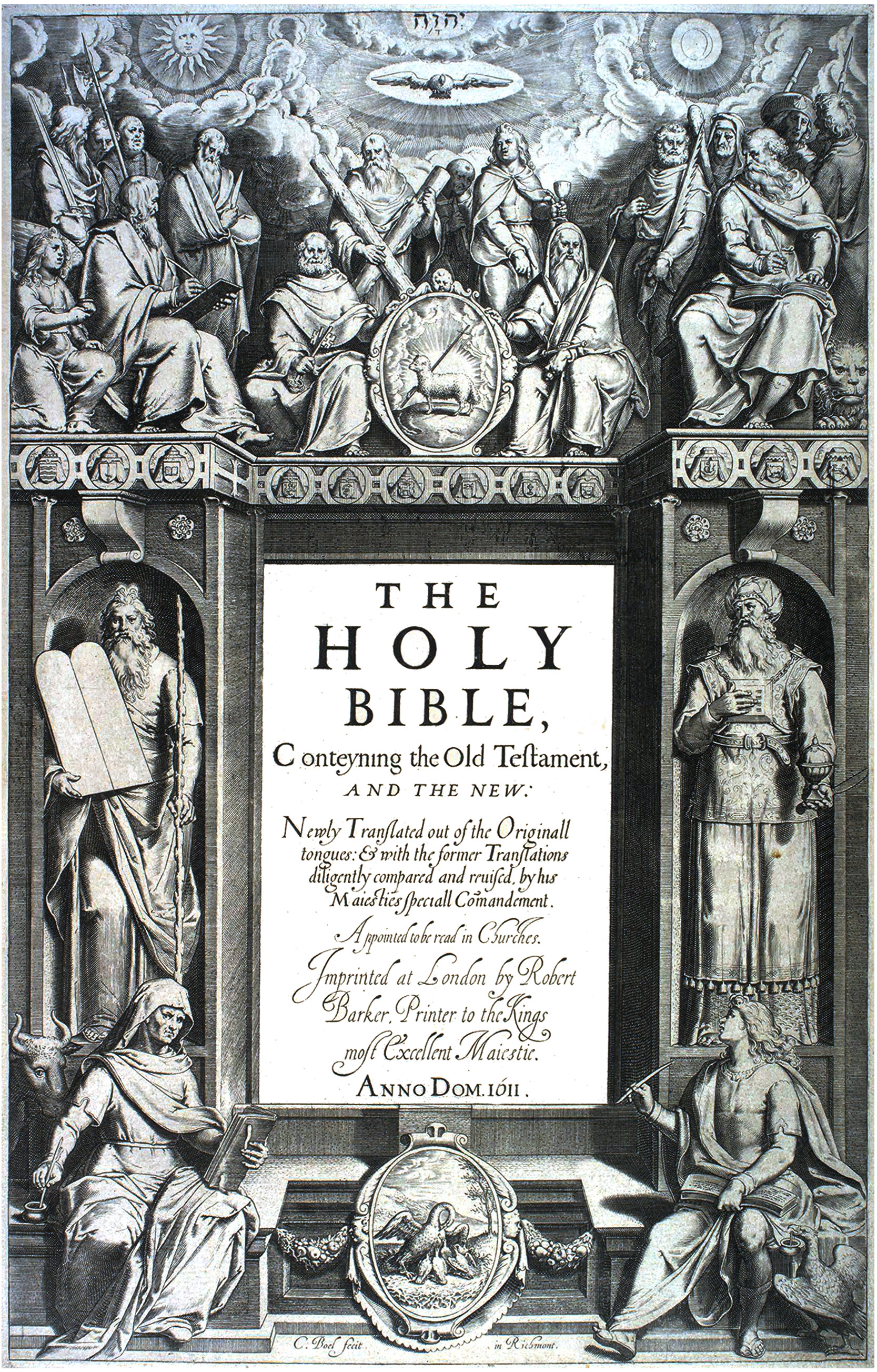
The CES Letter asserts the claim without demonstrating it. No specific error is shown to exist in the 1769 edition but not in earlier editions. The reader is asked to accept the "unique to 1769" premise on assertion alone.[1:1] If errors unique to the 1769 edition are the heart of the charge, why does the CES Letter never name one? And the dating work described above undercuts the premise from the other direction, since Skousen's copytext analysis never reaches the 1769 Oxford edition at all.[6:4]
This is the weakest element of the CES Letter's argument, but rebutting only this version would be a deflection. The real question is not whether the Book of Mormon contains errors specific to the 1769 edition (it does not) but whether it reproduces KJV translation choices that modern scholars regard as incorrect.
Categorizing the Alleged "Errors"
FAIR's catalog of 91 alleged KJV translation errors reveals a spectrum, not a monolithic block of mistakes.[22] Some are older English meanings rather than translation errors at all; some are legitimate translation variants where the Hebrew is genuinely ambiguous; some are not errors when the alternative manuscript traditions are considered. But a substantial portion, perhaps a majority of the catalog, are real cases where the KJV translators got the Hebrew wrong and the same wrong readings carried over. Genuine mistranslations exist. The question is what their reproduction tells us about the translation process.
The Genuine Mistranslations
A survey of prominent Hebraists compiled by a critical website, drawing responses from Jan Joosten and Robert Alter among others, rates several passages as significant mistranslations:[23]
| Passage | KJV Reading | Hebrew Original | Modern Scholarly Rendering |
|---|---|---|---|
| Isaiah 2:16 / 2 Nephi 12:16 | "pleasant pictures" | sekiyyot | "ships" |
| Isaiah 3:3 / 2 Nephi 13:3 | "eloquent orator" | nebon lachash | "expert in charms" |
| Isaiah 11:3 / 2 Nephi 21:3 | "quick understanding" | (root involves smelling) | "his smelling will be in the fear of the Lord" |
| Isaiah 13:22 / 2 Nephi 23:22 | "dragons" | tannim | "jackals" |
These are not defensible alternative readings. They are cases where the KJV misrendered the Hebrew and the Book of Mormon carries the same rendering. Under the Ostler-Gardner-Spencer framework, the Book of Mormon's Isaiah is not a fresh translation: where the Nephite text substantially overlapped with the KJV, the KJV rendering was used as-is, including its imperfections. The same principle is visible in how New Testament authors quote the Septuagint rather than producing fresh corrections from the Hebrew.[18:1] The mistranslations are a real concession, but they are consistent with how inspired authors have used available translations throughout scriptural history.
The Modification Rate: What Plagiarism Actually Looks Like
Multiple scholars have documented the rate at which the Book of Mormon's Isaiah modifies the KJV: Tvedtnes (1984) found 207 of 478 verses (~43%) show variations;[24] Ellertson (2001) found 216 of 433 verses (50%) with 370 total variants;[25] Gibson reports 54% modified.[26] The modification is plainly visible in Grant Hardy's The Annotated Book of Mormon (Oxford University Press, 2023) and his earlier Maxwell Institute Study Edition (2018), both of which use bold formatting to highlight every variation from the KJV in Isaiah passages.[27] [28] Why would a copyist rewrite half of what he was copying?
Further Reading
Grant Hardy's The Annotated Book of Mormon (Oxford UP, 2023) is the premier academic reference; his Maxwell Institute Study Edition (2018) is the accessible parallel.
The bare modification rate does not distinguish between (1) an ancient text rendered through KJV scaffolding, with substantial overlap producing the unmodified portion and divergent ancient material producing the modified portion, and (2) a 19th-century author creatively adapting the KJV. Both models predict a rate in this general range. The distinguishing evidence must come from the nature and pattern of the modifications: do the divergences align with ancient manuscripts the author could not have known? Do they show linguistic features that resist 19th-century explanation?
Dead Sea Scroll Alignments
The strongest positive evidence lies in manuscripts Joseph Smith could not have known existed. The Book of Mormon had been in print for 117 years when the Dead Sea Scrolls surfaced in 1947. They include the Great Isaiah Scroll (1QIsa-a), the oldest near-complete manuscript of Isaiah, dated to roughly 125 BCE. In several cases, the readings that differ from the KJV are the ones these ancient manuscripts support.
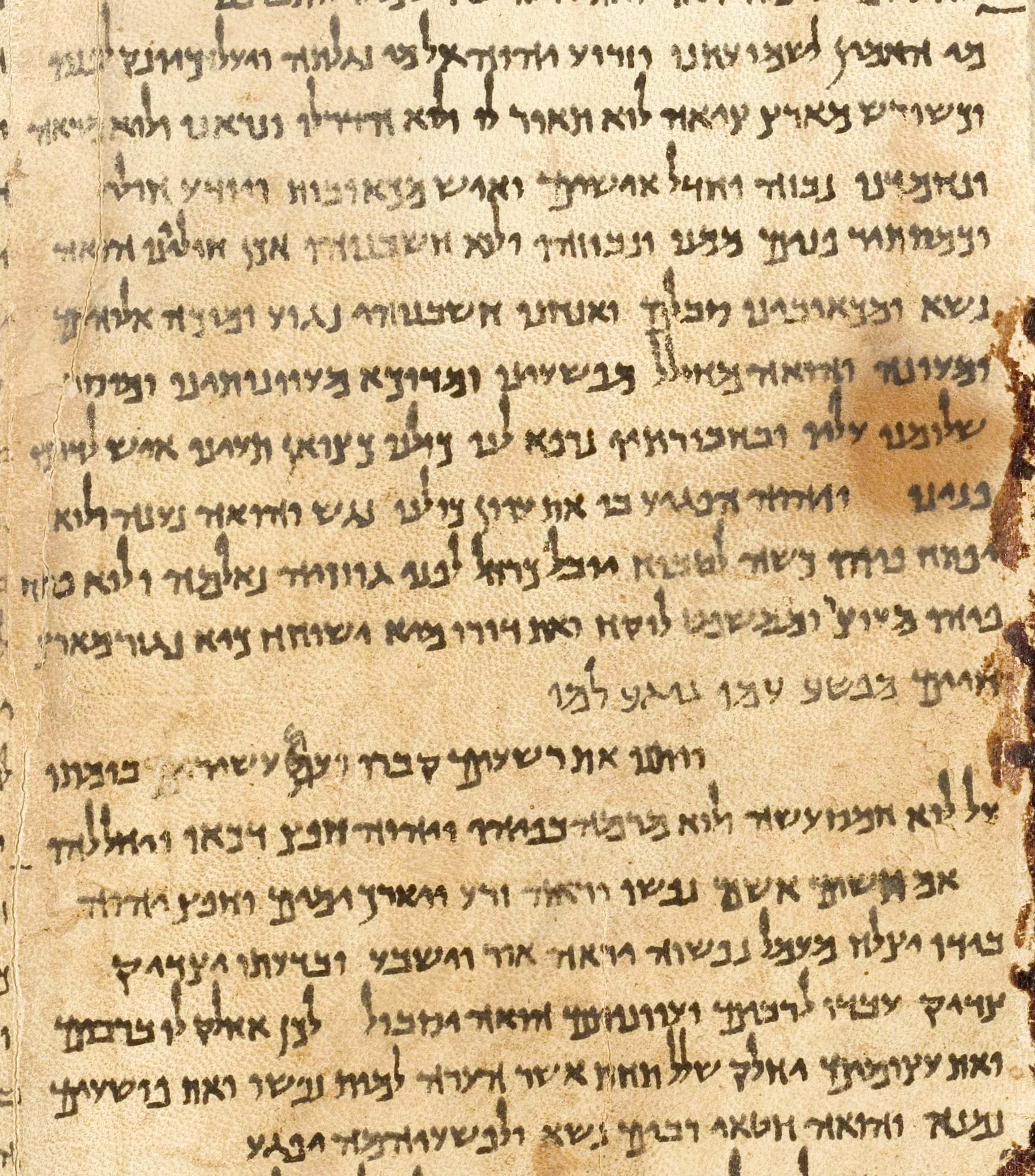
Donald W. Parry (a Dead Sea Scrolls translator himself) and Stephen D. Ricks documented five specific passages:[29]
| Passage | KJV Reading | Book of Mormon Reading | Dead Sea Scroll (1QIsa-a) | Agreement |
|---|---|---|---|---|
| Isaiah 3:9 / 2 Nephi 13:9 | "they hide it not" | "and they cannot hide it" | "and they hide it not" | BoM and 1QIsa-a both add "and" |
| Isaiah 9:9 / 2 Nephi 19:9 | "the inhabitant of Samaria" (singular) | "the inhabitants of Samaria" (plural) | "the inhabitants of Samaria" (plural) | BoM and 1QIsa-a agree on plural |
| Isaiah 14:32 / 2 Nephi 24:32 | "What shall one then answer the messengers of the nation?" | "What shall then answer the messengers of the nations?" | "What shall then answer the messengers of the nations?" | Both drop "one" and take a plural verb |
| Isaiah 48:11 / 1 Nephi 20:11 | "how should my name be polluted?" | "I will not suffer my name to be polluted" | "how can I be polluted" | Both use a first-person verb |
| Isaiah 50:2 / 2 Nephi 7:2 | "their fish stinketh" | "their fish to stink because the waters are dried up" | "their fish dry up" | BoM keeps the KJV's "stinketh" and the scroll's "dry up" |
Individually, most of these alignments are minor: adding "and," changing singular to plural, slight verb changes.[29:1] These are the kinds of small variants that arise routinely in manuscript transmission. A person who occasionally tweaked phrasing while adapting the KJV could produce some of these by coincidence. No single example is decisive on its own.
But the pattern is what matters, and these five examples are not an independent line of evidence: Parry and Ricks adapted them from John Tvedtnes's earlier study, which is the wider one. Tvedtnes sorted 234 Isaiah variants into seventeen types and marked each type as favoring the Book of Mormon, favoring the KJV, or favoring neither:[24:1]
| Rating | Count |
|---|---|
| Favor the Book of Mormon | 59 |
| Neutral | 126 |
| Favor the KJV | 49 |
The scorecard shows more variants favoring the Book of Mormon than favoring the KJV, while most favor neither. This is the wrong outcome for the simple-plagiarism hypothesis: a derivative text should not be vindicated by ancient manuscripts more often than its source. Two qualifications belong with the number. Of the 59, 55 rest on an ancient manuscript or version that actually reads with the Book of Mormon; the remaining four are Tvedtnes's judgment that the Book of Mormon renders the same Hebrew better, which is a translation-quality call and not a manuscript witness. And the margin (59 vs. 49) is modest, Tvedtnes wrote as a faithful Latter-day Saint, and the ratings involve subjective judgments about which readings "favor" which text. No non-LDS textual critic has independently replicated his scoring methodology.
The 49 cases where the KJV reads better than the Book of Mormon also matter. They include passages where the KJV's reading reflects better Hebrew scholarship than the Book of Mormon's, and they are the kind of evidence Wright and other critics use to argue the Book of Mormon looks like editorial KJV revision rather than independent ancient transmission. The cumulative pattern (some BoM > KJV cases, some KJV > BoM cases, occasional Dead Sea Scrolls alignment, heavy KJV pattern preservation) is what the KJV-scaffolding framework predicts, a translation using KJV phrasing plus ancient material occasionally showing through, but it is also broadly consistent with creative editorial revision of the KJV. The 59-vs-49 margin tilts toward the historicity reading, but only modestly.[24:2]
150 Non-Aligned Variants
Carol Ellertson applied Emanuel Tov's textual criticism methodology, the same framework used for classifying Dead Sea Scroll manuscripts, to the Book of Mormon's Isaiah passages. Her findings include 370 total variants in 216 of 433 verses, classified by ancient textual tradition as follows:[25:1]
| Category | Count |
|---|---|
| Agree with Septuagint (LXX) | 76 |
| Agree with Qumran (Dead Sea Scrolls) | 28 |
| Agree with Masoretic Text (MT) | 52 |
| Non-aligned (no known source) | 150 |
Ellertson also sorts the same 370 variants on a second, independent axis: 119 of them, about a third, involve the KJV's italicized words, and 251 do not. That axis is not a subdivision of the alignment categories above, so the two sets of counts are not additive; the italics question gets its own treatment in the italics section below. Using Tov's criteria, the Book of Mormon's Isaiah qualifies as an "independent" or "non-aligned text," a text that has evolved away from all known biblical text families.[25:2]
"Non-aligned" classification by itself does not resolve provenance: it is consistent with both an independent ancient textual witness and a 19th-century author making editorial changes to the KJV. Combined with the 156 variants that do align with ancient sources (76 LXX + 28 Qumran + 52 MT), the 150 non-aligned variants gain weight under a cumulative reading. The Septuagint figure is itself a composite of 40 variants with full or partial LXX support and 36 in agreement with it, and the cumulative case rests on the alignments, not on the non-alignments alone.
"All the Ships of the Sea": Preserving Both Textual Traditions
Key Point
Isaiah 2:16 sits on the standard lists of alleged King James mistranslations, and what the Book of Mormon does with it is rarely mentioned. At 2 Nephi 12:16 the Book of Mormon carries both the Hebrew tradition ("ships of Tarshish") and the Greek Septuagint tradition ("ships of the sea"), a fuller reading than either surviving tradition offers. Greek was closed to Joseph Smith in 1829, and an English Septuagint was effectively unavailable.
At 2 Nephi 12:16 (Isaiah 2:16), the Book of Mormon reads: "upon all the ships of the sea, and upon all the ships of Tarshish, and upon all pleasant pictures."[30]
The KJV has only: "upon all the ships of Tarshish, and upon all pleasant pictures."
The Greek Septuagint (LXX), in Brenton's standard English rendering, has: "and upon every ship of the sea, and upon every display of fine ships."[30:1]
The Book of Mormon uniquely preserves both lines. One explanation that has circulated in Latter-day Saint writing is that the original Isaiah carried both parallel poetic lines and that each later tradition lost one through a copyist's eye skipping from one similar phrase to the next. Dana Pike and David Seely, who worked the verse in the most detail, decline to endorse that account or any other: "We are thus not presently aware of any solution that satisfactorily accounts for all the questions regarding 2 Nephi 12:16 in its relation to the preserved text of Isaiah 2:16." They also raise the opposite possibility, that the doubled line entered through dittography on the part of Joseph Smith and Oliver Cowdery, and say it "at least needs to be considered as a possibility."[30:2] A copyist's doubling, though, explains only the repetition, not the filling: the repeated line reads "the sea," and the King James page in front of Joseph offered nothing but "Tarshish" to repeat.
The datum itself is not in dispute, and it is the datum that does the work. Royal Skousen, who identifies this phrase as the only place in the Book of Mormon where a biblical quotation does not come from the King James Bible, states the problem for any copying account: "The great mystery here, of course, is how Joseph Smith, if he was the author (the English-language translator) of the Book of Mormon, could have known about the Greek reading (or its occurrence in one of the earlier English Bible translations from the 1530s) in order to insert it into his Book of Mormon quotation, otherwise totally based upon the King James Bible."[6:5] The route his parenthetical names is a substitution, not a doubling: Coverdale's 1535 Bible reads "upon all ships of the sea" in place of the Tarshish line, so it too supplies only one of the two clauses the Book of Mormon carries.
Joseph Smith had no Greek in 1829. John Welch's survey of his documented Greek and Latin study turns up nothing earlier than January 1834, five years after the translation, when Joseph acquired a critical-study handbook; the Greek lexicon, the hired tutor, and the journal entries recording actual study all come later still.[31] The first widely circulated English Septuagint, Brenton's, did not appear until 1844, and the earlier Thomson translation of 1808 ran to about a thousand copies, most of which went unsold and ended up as scrap paper.[32] A reader may still want to know whether the Septuagint reading could have reached Joseph through an English Bible commentary. That objection has a serious form; David Wright presses it hardest, and his argument is taken up below.
The KJV Italics Pattern
The CES Letter highlights KJV italicized words in the Book of Mormon as evidence of copying. KJV italics mark words the translators added for English readability that are not in the underlying Hebrew or Greek. The CES Letter cites two examples where the Book of Mormon retains all italicized words and treats this as representative.[2:1]
The two examples are not representative. Italicized words go missing from the Book of Mormon's Isaiah far more often than the words around them. In the two chapters Stan Spencer examines most closely, 2 Nephi 16-17, 41% of the KJV's italicized words are missing from the Book of Mormon's text against 1% of the non-italicized words, a rate roughly forty times higher; across all of the Book of Mormon's Isaiah chapters his figure for omitted italics is 37%.[17:1] Royal Skousen, working a dataset of 516 variants, found 150 of the 392 italicized words in the KJV's Isaiah (38%) linked to differences in the Book of Mormon,[33] and David P. Wright, the article's most rigorous critic, reports 40% missing in the Isaiah chapters he examines. Estimates land between 30% and 45% depending on counting choices, such as whether italicized articles and auxiliary verbs are included and which Isaiah chapters are sampled. The precise ratio is not a fixed datum, but the gross pattern is robust. Neither simple plagiarism (which would reproduce all words) nor independent translation (which would have no reason to track KJV italics) produces this.
Spencer's "Missing Words" hypothesis is the fullest attempt to explain the disparity. Joseph received a visioned English text from which a prior translator had already removed the KJV's italicized words, and he tried, imperfectly, to put them back. Spencer is careful about what that means: on his reading Joseph "was not trying to revise the biblical text, but rather to restore words he believed had been somehow dropped." The hypothesis is built around an 1831 Sun (Philadelphia) article in which Martin Harris reportedly said Joseph "should omit all the words in the Bible that were printed in Italic," and when Harris corrected him, "persisted that the plates were right, and the Bible was wrong."[17:2] This is a constructive hypothesis. Spencer reads the 1831 account as describing a real translation practice and builds the explanation around it; the 1831 source is also a critical newspaper postdating the translation by two years, and Spencer himself calls it secondhand at best. It is one explanatory model among several rather than a settled finding.
The erratic quality of the restorations is meaningful but not decisive. The variants are uneven and sometimes damage meaning, consistent with Spencer's "unlearned reader trying to restore missing words" reading, but also consistent with rapid editorial revision. The observational signature is not unique to either hypothesis.
Further Reading
For a detailed analysis of the KJV italics question, including the broken grammar pattern, the 1837 corrections, and the 1831 eyewitness account, see our companion article on KJV Italics.
The JST Discrepancy: Engaging the Strongest Argument
The CES Letter's third claim turns on an expectation: where Joseph Smith later revised a biblical passage, the Book of Mormon ought to read the way his revision reads rather than the way the King James reads.[3:1] This rests on the assumption that the JST restores the Bible's original text. Latter-day Saint scholarship has long offered multiple models for the JST. Robert J. Matthews, whose 1975 study is the foundational treatment, described the work as consisting of "additions, deletions, rearrangements, and other alterations," and noted that "many call it an 'inspired revision.'"[34] Kent P. Jackson, in the modern definitive treatment, is careful about how far restoration can be pressed. Many Latter-day Saints assume the JST is "all, or at least primarily, the restoration of original text," which Jackson calls "not an unreasonable assumption for some of the JST's content" while judging the evidence "inconclusive."[35] If the JST is partly commentary or expansion, the argument that the Book of Mormon "should match" the JST in every case weakens considerably.
The stronger version of the argument does not need a scholarly ruling on any particular verse. It only needs the asymmetry: where the JST revises a King James passage and the Book of Mormon does not, why did the 1829 translation leave standing what the 1832 revision saw fit to change? The defensible faithful response has three elements. First, the JST was produced after years of additional study and revelation, "line upon line, precept upon precept." Second, the KJV-scaffolding model explains the mechanism: the divine translation used KJV phrasing where the two texts substantially overlapped, including its imperfections, rather than producing a fresh translation of every biblical passage. Third, the Sermon at the Temple is presented to a different audience; 3 Nephi 12:1-2 rewrites the Beatitudes to reference baptism. The CES Letter cherry-picks the passages that match while ignoring those that differ.[36]
Further Reading
The JST discrepancy, the Sermon on the Mount, and the "without a cause" variant that aligns with the earliest Greek manuscripts are treated at length in the companion article on KJV Mistranslations.
Early Modern English: Suggestive but Debated Evidence
If Joseph Smith simply copied from the KJV, the Book of Mormon's language should derive from the KJV. Stanford Carmack and Royal Skousen identified extensive Early Modern English (EME) grammar and vocabulary in the Book of Mormon that they argue predates the KJV and cannot be derived from it.[37] The cleanest sub-argument in this section does not depend on contested corpus methodology: Joseph's own 1832 history, written in his own voice, shows modern English, not Early Modern English.[38] Whatever the Book of Mormon's archaic features are, they are not Joseph's personal style. This personal-baseline comparison holds the author constant; whether the broader EME thesis succeeds or fails, the gap between Joseph's documented 1832 prose and the Book of Mormon's prose remains a real datum.
Beyond that baseline, Skousen documented 41 archaic word meanings absent from the KJV. The readings below are the original or earliest text of each passage; later editors modernized several of them, so the current printed Book of Mormon reads differently in three of the four cases noted:[39]
| Word/Phrase | BoM Passage (earliest text) | Meaning | Last Known Use | In KJV? |
|---|---|---|---|---|
| "but if" (= "unless") | Mosiah 3:19 (Talmage replaced it with "unless" in 1920) | unless | Spenser, 1596 | No |
| "cross" (= "contradict") | Alma 10:16, Mosiah 12:19 | to contradict | 1589-1702 (obsolete) | No |
| "departed" (= "parted") | Helaman 8:11 (current text reads "parted") | parted or divided (Red Sea) | 1297-1677 | No |
| "to that" (= "until") | 1 Nephi 18:9 (current text reads "even that") | until | late Middle English-1600s | No |
These lexical findings are the most concrete part of the case: specific words used in specific Book of Mormon passages carrying meanings that had faded from English between the 1530s and the 1730s, generations before Joseph Smith. Additional grammatical findings amplify the pattern:
- Periphrastic did: Measured as a share of did-plus-infinitive adjacency, the Book of Mormon's past-tense periphrastic did rate is 24%, matching 16th-century English texts rather than 1820s American English; the King James Bible sits at 1.2% on the same measure.[37:1]
- Personal which: The Book of Mormon uses which as a personal relative pronoun at 52%, a rate that does not match the KJV.[37:2]
- Lest-shall construction: The Book of Mormon uses this 14 times at a rate 17 times higher than the Bible; zero instances appear in pseudo-biblical writings of the era.[37:3]
An important academic-status caveat: Carmack publishes almost exclusively in Interpreter (an LDS scholarly venue), and his corpus methodology, early-modern collocation searches in the Oxford English Dictionary (OED) and Early English Books Online (EEBO) databases, has not yet been substantively engaged by mainstream historical-linguistics journals. The disagreement that does exist is an in-house one. Brant Gardner and Orson Scott Card have argued that Joseph Smith's own language frequently made its way into the Book of Mormon's wording, and Carmack has answered them directly, contending that the earliest text's linguistic fingerprint is Early Modern English rather than Joseph's.[40] The broader external situation is that mainstream historical linguistics has not yet weighed in. Standard objections are real: any large corpus will contain statistical outliers, pseudo-biblical authors adopt archaic registers, and collocation databases have coverage gaps. The lexical findings form the sturdier core because they make point claims about specific words rather than statistical inferences from frequency distributions; the grammatical-frequency claims are more dependent on corpus methodology that has not yet been independently validated. The Joseph-1832 baseline remains the cleanest sub-argument, standing entirely clear of the contested corpus methodology.
Hebraisms the KJV Does Not Explain
The Book of Mormon contains Hebrew language patterns that do not come from the KJV:
- The if-and conditional construction: Mosiah 2:21 reads, in the earliest text, "I say if ye should serve him with your whole soul—and yet ye would be unprofitable servants." This Hebrew-style conditional using "and" instead of "then" appears nowhere in the KJV. It appears seven times in Helaman 12:13-21's original manuscript.[41]
- Construct state: "works of righteousness" instead of "righteous works," reflecting Hebrew grammatical word order.[41:1]
- A sophisticated Hebraism in 2 Nephi 12:2: Paul Hoskisson demonstrated that the Book of Mormon's reading of "when" instead of KJV's "that" creates a Hebrew waw functioning as "then," a grammatical construction described in Gesenius's Hebrew grammar. Producing it by inserting "when," an otherwise unattested reading of the verse, "would seem like an impossible task for Joseph Smith," Hoskisson writes, "given that he had much less schooling than the average reader today."[42]
- Semitic name wordplay: Shilom derives from Hebrew root shlm (peace); Zeniff requests the land "in peace" and receives Shilom but experiences war there instead, an ironic wordplay invisible to English readers.[41:2]
Donald Parry, quoted above on the scrolls, concluded: "the Book of Mormon's use of Hebraistic literary forms cannot simply be attributed to Joseph Smith's familiarity with the English Bible."[41:3] These features appear outside the KJV-quoted passages, evidence the simple-plagiarism hypothesis has nothing to say about.
Isaiah Is Woven In, Not Pasted In
The CES Letter frames Isaiah quotations as if they were pasted into the Book of Mormon wholesale. The textual evidence shows sophisticated literary integration that is inconsistent with plagiarism and consistent with ancient prophetic engagement.
Nephi selected specific Isaiah chapters that mirror his family's exile experience. S. Kent Brown demonstrated that Isaiah 48-49 tracks the family's lived situation: exile from Jerusalem, water from rocks in the desert (48:21), peace "as a river" (48:18) echoing Lehi naming the river Laman.[43] John Welch identified a four-stage prophetic framework (Christ's coming, scattering, Gentile era, restoration) that Nephi sets out first in his own vision in 1 Nephi 11-14, and then selects and arranges Isaiah 2-14 to fit. The framework is not laid out in Isaiah itself. Someone had to build it and map Isaiah onto it.[44] When Nephi reaches Isaiah 29, he does something the Book of Mormon has a word for. Nephi and Jacob call it "likening," reading a prophet's words as speaking to their own people and situation. Robert Cloward traced how the likening works on Isaiah 29, where Isaiah's sealed book, a figure for the blindness of Jerusalem, is repurposed into a prophecy about a literal book, the Book of Mormon itself.[45] Brant Gardner has suggested the move is akin to the later Jewish concept of pesher, an interpretive commentary on scripture attested in the Dead Sea Scrolls.[46] Preachers in Joseph Smith's era routinely applied Old Testament prophecy to contemporary events, so likening by itself is not a distinctive marker. What is harder to place in 1829 is the sustained editorial work: the selecting, the reordering, and the fitting of one prophet's material to a framework built somewhere else.
Matthew Bowen identified an inclusio, a bracketing literary frame, around the entire Isaiah block in 2 Nephi: the opening (2 Nephi 5:30-31) reads "thou shalt engraven many things upon them which are good in my sight, for the profit of thy people," and the closing (2 Nephi 25:7-8) reads "for their good have I written them." Bowen calls this onomastic wordplay, a frame built on the author's own name: the Egyptian name Nephi derives from nfr, "good." Read in Egyptian, Hebrew, and English together, it is a design a 19th-century author could not have planned.[47] At 2 Nephi 12:12 and 12:14, Nephi further added clauses absent from the Hebrew Masoretic Text, universalizing Isaiah's judgment imagery to apply to "all nations." This matches his stated purpose in 2 Nephi 25:3: "that they may know the judgments of God, that they come upon all nations."[48] These are not the actions of a plagiarist. They are the actions of an author who understood his source text deeply and adapted it deliberately.
Joseph M. Spencer's A Word in Season: Isaiah's Reception in the Book of Mormon (University of Illinois Press, 2023), a monograph from a major non-LDS university press, examines how Isaiah is received and reinterpreted across the Book of Mormon by Abinadi, the resurrected Christ, and Nephi. Spencer argues the Book of Mormon's Isaiah usage is theologically sophisticated, not mere copying.[49] Joshua Sears reviewed the book for BYU Studies Quarterly in 2024, calling it a groundbreaking study.[50] An important caveat: Spencer's argument is literary and theological, not a defense of historical antiquity. The monograph is cited here for the sophistication of the Book of Mormon's Isaiah-engagement, not as direct evidence of antiquity.
Further Reading
The two most important recent monographs on Book of Mormon-Isaiah scholarship are Joseph M. Spencer's A Word in Season: Isaiah's Reception in the Book of Mormon (University of Illinois Press, 2023), published outside the Latter-day Saint academic presses, and his earlier The Vision of All: Twenty-Five Lectures on Isaiah in Nephi's Record (Greg Kofford Books, 2016). Joshua Sears's 2024 BYU Studies Quarterly review is the best short orientation to where the field currently stands.
The Brass Plates as an Independent Textual Tradition
Noel Reynolds argued that the brass plates represent a pre-exilic Josephite (Manassite) textual tradition distinct from the Judahite tradition that produced the Masoretic Text and the KJV.[51] The brass plates carried prophetic writings that the Judahite scribal tradition never took in: Zenos, Zenock, Neum. They were written in Egyptian, matching a Josephite scribal tradition, and Lehi was "taught in the language of the Egyptians" (Mosiah 1:4). Archaeological evidence documented by Orly Goldwasser shows Egyptian scribal influence in seventh-century Israel.[51:1] Evidence Central catalogs 33 internal claims about the brass plates maintained consistently despite the text being dictated out of sequence.[52]
This provides a plausible mechanism for why the Book of Mormon's Isaiah differs from the KJV: the brass plates preserved a separate textual family that diverged centuries before the Masoretic tradition was standardized.
The Adam Clarke Hypothesis
Colby Townsend argued that Joseph Smith consulted Adam Clarke's Bible commentary (published 1810-1826) while dictating Isaiah passages.[53] Kent P. Jackson worked through the eleven cases Townsend examines and rejected every one. His summary of the method is direct: "In seeking evidence for his thesis that Joseph Smith authored the Book of Mormon with Adam Clarke's commentary in hand, Townsend comes upon instances in which a word from one source vaguely resembles a word or two in the other. Then he invents an explanation for how and why Joseph Smith copied the words or the ideas from Clarke. The problem is that none of them work." Case by case, Jackson finds the shared vocabulary too thin to carry the claim, finds Book of Mormon patterns that recur far from Clarke, and in several instances finds that Townsend has misread what Clarke actually wrote.[54]
Jackson's critique answers Townsend's fullest statement of the case, published in the Journal of the Bible and its Reception in 2025; the scholarly conversation is ongoing. The related claim about the JST (Wayment and Wilson-Lemmon, 2020) belongs to a separate literature with its own critics.[55] On the Book of Mormon claim specifically, Jackson's critique is detailed and substantive, and the Adam Clarke hypothesis currently lacks a strong evidentiary foundation.
The Strongest Critical Arguments
The CES Letter's version of this argument is not the strongest available. The rigorous critical case is built in pieces: David Wright on the italics and the English-dependent variants, Stan Larson on the Sermon on the Mount, Colby Townsend on the Adam Clarke commentary and on Isaiah's composition history, and Grant Hardy on what recent Isaiah scholarship costs the traditional reading.
Wright's KJV Dependency Thesis
David P. Wright's essay in American Apocrypha (2002) is the most comprehensive critical treatment.[56] He summarizes the evidence for King James dependence in seven numbered claims: the Book of Mormon reproduces the KJV literally apart from scattered words and phrases; it focuses its changes on words the KJV italicizes; it preserves the KJV's obscure, problematic, and erroneous renderings; some of its variants show an ignorance of Hebrew style and some depend on the ambiguity of English; many of its additions look like secondary expansions; it quotes Second Isaiah; and, in his seventh, proofs offered for the antiquity of its Isaiah text are "wanting or indecisive."
Wright's strongest piece of evidence is the statistical pattern of missing KJV italics. Italicized words are a thin slice of the text, only about 3.6% of the words in the Isaiah chapters the Book of Mormon quotes, yet 40% of them go missing there, a disparity Wright argued proves direct KJV dependence.[56:1]
This is a strong argument, and the answer to it runs in three parts.
First, Spencer's Missing Words hypothesis, set out above, would produce exactly the observed pattern if a prior translator had first stripped the italics from the visioned text. It is a constructive explanation rather than independent confirmation, and it leans on a single hostile newspaper account from 1831.[17:3]
Second, Wright's own seventh category takes up the Isaiah 2:16 reading. The understanding of "ships of Tarshish" as "ships of the sea" was, in his words, "widely publicized in eighteenth- and early-nineteenth-century Bible commentaries," and he names five, from John Wesley's Explanatory Notes (1765) through the American printings of Thomas Scott's annotated Bible. Joseph, he suggests, could have picked the gloss up "through reading such works or, more likely, through hearing sermons or conversations based on such sources." The answer lies in what the commentary tradition actually does. It substitutes "ships of the sea" for "Tarshish," treating the one as a rendering of the other. 2 Nephi 12:16 does not swap one phrase for the other; it carries both as parallel lines, which is the one thing none of the proposed 1829 routes supplies. The same limit binds the ancient versions, which Wright himself grants "do not have a second clause with 'Tarshish' as in the BM." Neither do the commentaries.
Third, Tvedtnes's 1984 survey found 55 Book of Mormon variants with an ancient manuscript or version reading in their favor, a body of data any pure-KJV-revision account has to absorb.[24:3] Tvedtnes also answered Wright in print, arguing that many of the Book of Mormon's Isaiah variants find support in ancient versions, while noting that Skousen's manuscript work corrects parts of his own earlier study.[57]
English Polysemy Variants
Wright's fourth claim, that some variants exploit the ambiguity of English, has a pointed example: Book of Mormon variants that turn on the polysemy (multiple meanings) of English words.[56:2] Wright's illustration:
- Isaiah 2:10 (KJV): "for fear of the Lord, and for the glory of his majesty"
- 2 Nephi 12:10: "for the fear of the Lord and the glory of his majesty shall smite thee"
In the KJV, "for" renders the Hebrew mippenei, "because of." In 2 Nephi 12:10 the same word changes function and becomes a conjunction. His argument is that the reading "would require an entirely different underlying Hebrew word (such as ki 'because')," and that the polysemy of the English word "is part of what facilitates this variant in the BM text, i.e., the BM variant is based on the English text."[56:3]
This is a challenging observation. Under the KJV-scaffolding model, it is possible that the visioned text included modifications based on the English rendering that were imperfectly transmitted. This is less satisfying than a clean explanation, and the polysemy variants remain one of the strongest pieces of evidence in the critical case. Not every data point has a tidy answer.
The Deutero-Isaiah Question
The Deutero-Isaiah hypothesis divides Isaiah into at least two authors: Proto-Isaiah (chapters 1-39, the eighth-century prophet) and Deutero-Isaiah (chapters 40-55, an anonymous author most scholars place after the fall of Jerusalem in 586 BC and probably nearer the rise of Cyrus around 540), with some scholars adding a Trito-Isaiah (chapters 56-66) that developed in stages over time.[58] The Book of Mormon quotes from Deutero-Isaiah sections: 1 Nephi 20-21 (Isaiah 48-49), 2 Nephi 7-8 (Isaiah 50-51). If these chapters were written after the exile began, they could not have reached the brass plates when Lehi left Jerusalem around 597 BC.
Joshua Sears, a Hebrew Bible scholar at BYU, outlined five major reasons scholars posit multiple authors: shifts in narrative voice, changes in presumed historical setting, literary dependencies on later biblical texts, thematic and stylistic differences, and linguistic analysis showing "Transitional Biblical Hebrew" features in chapters 40-66.[58:1]
Grant Hardy, a faithful Latter-day Saint scholar writing for Oxford University Press, acknowledged that "Recent Isaiah scholarship has moved away from the strict differentiation of the work of First and Second Isaiah (though still holding to the idea of multiple authorship) in favor of seeing the book of Isaiah as the product of several centuries of intensive redaction and accretion."[59] Sears's assessment of the Latter-day Saint response is blunt. The counterarguments have consisted mostly of short book chapters that "address these topics either superficially or not at all," and no one has yet produced a defense of Isaiah's unity carrying "the detail and rigor that would be necessary to truly challenge the academic consensus on its own terms."[58:2]
Faithful Approaches to the Evidence
Faithful scholarship engaging this question carries acknowledged limitations. On the linguistic side, Avi Hurvitz is quoted for the finding that the language of Second Isaiah is "well anchored in classical Hebrew and the imprints of late biblical Hebrew are quite scanty," which is not what a genuinely post-exilic composition would be expected to show.[60] Hurvitz's argument concerned the dating of Hebrew, not Isaianic unity as such, and Daniel Ellsworth is the Latter-day Saint writer who has pressed it into service here. Ellsworth also observed that Jeremiah 11:19 uses language closely parallel to Isaiah 53:7-8, suggesting Jeremiah knew these passages as authentic Isaiah material during his early career.[61]
The structural and statistical arguments carry limits of their own. Avraham Gileadi documented a complex "Bifid Structure" in Isaiah, a model Sears reports "has not been widely adopted, even by fellow Latter-day Saint scholars."[62] L. Lamar Adams and Alvin Rencher's 1975 BYU computerized stylistic analysis concluded that its results strongly support the authorship unity of the book, though its methodology predates modern computational authorship attribution.[63] Some major scholars (Brevard Childs, John Goldingay, Christopher Seitz) defend forms of unity at the canonical or theological level while accepting historical-critical layering at the compositional level; citing them for "Isaianic unity" in the historical-critical sense overstates what they argue. The historical-critical consensus that Isaiah underwent post-exilic redaction is strong, and the evidence behind it cannot be dismissed.
Sears catalogs four faithful approaches to the evidence. The approaches and the scholars filed under them are his; the strength and limitation summaries are this article's:[58:3]
| Approach | Key Scholars | Strength | Limitation |
|---|---|---|---|
| 1. Dismiss scholarly dating (the BoM is the authority) | Talmage, McConkie | Strong faith commitment | Avoids engaging real evidence |
| 2. Defend Isaiah's unity on textual grounds | Roberts, Sperry, Adams, Nyman, Ludlow, Jackson, Gileadi, Chadwick | Engages evidence directly | LDS treatments remain brief vs. book-length critical studies |
| 3. Work with scholarship; find nuanced solutions | Nibley, Hamblin, Welch | Balanced, intellectually satisfying | Requires accepting tension with consensus |
| 4. Explore divine intervention in the text | Spencer, Gardner, Frederick | Theologically sophisticated; removes historical pressure | Less empirically testable |
William Hamblin proposed that Deutero-Isaiah began prophesying to the captives in Babylon after the first deportation of 597 BC rather than after the second in 586. If Nephi's family sojourned in the desert for, in Sears's illustration, "say, three years" before returning for the brass plates, that leaves time for the prophecies to be written and copied onto the plates before Nephi took them.[58:4] On this chronology Deutero-Isaiah would be a prophet contemporary with Lehi and Nephi, perhaps one of the "many prophets" of 1 Nephi 1:4. This is the most intellectually satisfying historical solution, closing the gap "from centuries down to a few decades," though Hardy's observation that "even Isaiah 2–14 would have looked very different in Nephi's time than it did four hundred years later at the time of the Dead Sea Scrolls" complicates approaches depending on early dating alone.[59:1] Approach 4 has a scriptural precedent: Jesus himself directed the Nephites to add Malachi 3-4 to their records (3 Nephi 24-25), chapters written after 600 BC that the original brass plates could not have carried. If God could add Malachi by direct revelation, the same mechanism could account for other post-exilic content.[58:5]
Given that Hardy and Sears, the leading LDS Isaiah scholars currently active, both characterize the unity-defense (Approach 2) as inadequate to the critical case, this article privileges Approaches 3 and 4. Hamblin's narrow dating for most Deutero-Isaiah material, supplemented by divine revelation for content outside that window, is the most defensible faithful framework, but it involves tension with mainstream scholarship.
Townsend's Trito-Isaiah Extension
Colby Townsend extended the problem beyond Deutero-Isaiah, arguing that even Isaiah 2-14, the "First Isaiah" chapters Nephi quotes in 2 Nephi 12-24, underwent substantial post-exilic redaction.[64] He also identified Trito-Isaiah echoes in original Book of Mormon compositions:
- "Robe of righteousness" (2 Nephi 4:33, 9:14), from Isaiah 61:10 (Trito-Isaiah)
- "Mighty to save" (2 Nephi 31:19, Alma 7:14, 34:18), from Isaiah 63:1 (Trito-Isaiah)
- Dependence on Isaiah 65:2 (Trito-Isaiah), mediated through Romans 10:21 (2 Nephi 28:32, Jacob 5:47, 6:4)[64:1]
These are not quoted chapters that could be explained as brass-plates content. They are phrases woven into the Book of Mormon's own narrative voice. The phrase "mighty to save" from Isaiah 63:1 appears in passages attributed to Nephite authors (Alma 7:14, 34:18, 2 Nephi 31:19), original compositions, not quotations. If Trito-Isaiah was composed centuries after Lehi left Jerusalem, Nephite authors should not be using its distinctive language.
The Romans 10:21 mediation (Trito-Isaiah phraseology filtered through Pauline epistles, appearing in pre-Christian Nephite voices) is the most difficult datum in the KJV question, and the Malachi precedent does not cleanly resolve it.[65] A KJV-scaffolding response might be that these phrases reflect the English rendering rather than original Nephite composition: the translation process supplying familiar KJV-tradition phraseology because the underlying Nephite concept was close enough to be captured by it. This is defensible within the framework, but it concedes that for these passages the "translation" was loose enough that English idiom from later Christian scripture supplied the wording. Faithful scholarship has not yet produced a clean resolution; the available frameworks accommodate the data without crisply explaining it.
The Sermon on the Mount (3 Nephi 12-14)
Key Point
At Matthew 5:22 / 3 Nephi 12:22, the Book of Mormon omits "without a cause," aligning with the earliest Greek manuscripts (P67, Sinaiticus, Vaticanus) against the KJV's Textus Receptus reading (the printed Greek New Testament tradition that underlies the KJV). The textual judgment is contested in modern New Testament criticism, and the modern critical Greek text adopts the omission.
Stan Larson applied New Testament textual criticism to 3 Nephi's Sermon on the Mount. He selected eight passages where the evidence runs strongly against the Textus Receptus and in favor of the modern critical Greek text, and found that at all eight the Book of Mormon "always follows the secondary text seen in the late Textus Receptus." Because it "agrees with the KJV rather than the earliest Greek text at these eight points," he concluded, "its dependence on the KJV is apparent."[66]
But Larson also found one Book of Mormon reading running the other direction, and he set it deliberately outside his eight: "Only the following Book of Mormon omission seems to receive ancient support." At Matthew 5:22 / 3 Nephi 12:22:
| Source | Reading |
|---|---|
| KJV | "whosoever is angry with his brother without a cause shall be in danger of the judgment" |
| Textus Receptus | (includes eike, "without a cause") |
| Earliest Greek Manuscripts (P67, Sinaiticus, Vaticanus) | (no eike) |
| 3 Nephi 12:22 | "whosoever is angry with his brother shall be in danger of his judgment" |
The Book of Mormon omits "without a cause," diverging from the KJV to align with the earliest extant Greek manuscripts.[66:1] Joseph Smith couldn't read Greek in 1829, and he had no direct access to the earliest manuscripts.[31:1] The omission has subsequently been adopted by major modern Bible translations: the RSV in 1946, the NIV in 1973, and the modern critical Greek texts (Nestle-Aland, UBS). Jerome reported the phrase as a scribal addition absent from the manuscripts he trusted, and Bruce Metzger concluded it was "much more likely that the word was added by copyists in order to soften the rigor of the precept, than omitted as unnecessary."[67] Judd and Stoddard argue the omission directly affects doctrinal meaning: Jesus's command without "without a cause" is a demanding ethical standard against anger itself.[68] John Welch argued that this omission meets Larson's own criteria and belongs with the eight; Larson answered that it "does not meet the criteria which were used to select my eight examples."
The one place where the Book of Mormon parts company with the King James Sermon is the place where the earliest manuscripts part company with it too.
The textual criticism is contested. Byzantine-priority editors (Robinson and Pierpont) print the phrase as original. The Tyndale House Greek New Testament, published in 2017, omits it, siding with 3 Nephi. The Book of Mormon's omission aligns with one major textual tradition (Alexandrian-priority) against another (Byzantine).
A separate question is whether Joseph could have known about the variant from a 19th-century source. Adam Clarke's Commentary on the Bible (1810-1826) discusses the eike variant. Whether Joseph saw Clarke's discussion in 1829 is contested. If he did, the alignment is a noteworthy interpretive choice but not direct evidence of access to ancient manuscripts. If he did not, it is significant alignment with what later critical scholarship would establish as the earliest reading. Either way, the Book of Mormon publishes the reading modern critical editors would later adopt, departing from the King James in front of him.
The eight Textus Receptus agreements are a real challenge. Under the KJV-scaffolding model, they are consistent with the same principle observed in the Isaiah passages: where the underlying record substantially overlapped with Jesus's Galilean sermon, the KJV rendering was used as the English foundation. John Welch's Illuminating the Sermon at the Temple and Sermon on the Mount grants that the substantial similarities between 3 Nephi 12-14 and Matthew 5-7 are "readily apparent," then works through the differences one at a time. His conclusion is that the relationship between the two texts "cannot be attributed to a superficial, thoughtless, blind, or careless plagiarism." The differences are instead "systematic, consistent, methodical, and in several cases quite deft."[69] The Textus Receptus agreements remain a tension point, partially offset by the "without a cause" omission, which aligns with the earliest manuscripts.
Further Reading
The Sermon on the Mount gets a full treatment in KJV Mistranslations, including the "without a cause" variant, the Stendahl analysis from Harvard Divinity School, and Welch's identification of approximately 50 temple-related elements in 3 Nephi's version.
Evidence Supporting Church Truth Claims
The case for the Book of Mormon's Isaiah chapters does not stop at defense. Several features of the text are difficult or impossible to explain under any naturalistic hypothesis.
The 1 Nephi 21:1 Chiastic Preface
The Book of Mormon adds an entire poetic preface to Isaiah 49:1 that does not appear in the KJV or Masoretic Text:
"And again: Hearken, O ye house of Israel, all ye that are broken off and are driven out because of the wickedness of the pastors of my people; yea, all ye that are broken off, that are scattered abroad, who are of my people, O house of Israel. Listen, O isles, unto me..."
Tvedtnes identified this as having ABCDC'B'A' chiastic structure, a Hebrew literary form in which the second half inverts the order of the first. The systematic modern study of chiasmus in biblical literature was developed by 20th-century scholars (Nils Lund 1942; John Welch's Chiasmus in Antiquity 1981), but the phenomenon had been observed earlier: Robert Lowth's De Sacra Poesi Hebraeorum (1753) developed the foundational theory of Hebrew poetic parallelism (focused on direct parallelism); John Jebb's Sacred Literature (1820) explicitly identified and named introverted parallelism (epanodos); and Thomas Boys's Tactica Sacra (1824) applied the concept much further, all before the Book of Mormon's publication.[70] What is not documented is Joseph Smith having access to or training in any of this scholarship. Constructing a working Hebrew-style chiasm and inserting it seamlessly into a longer Isaiah passage required knowledge an unschooled frontier farmer is unlikely to have possessed.[24:4]
Skousen's Manuscript Findings
Royal Skousen's multi-decade Critical Text Project yields findings that collectively favor an ancient origin:[71]
- The original manuscript is closer to the KJV than the printer's manuscript. Corrections in that manuscript, in Skousen's words, "give very little evidence for the hypothesis that Joseph Smith altered the text while he supposedly read it off from a King James Bible."
- Isaiah passages that appear multiple times in the Book of Mormon remain internally consistent without reference to a printed source.
- The original chapter divisions ignore the KJV chapter system.
- When Smith later produced the JST, he incorporated Book of Mormon readings into Isaiah, treating the Book of Mormon as authoritative source, not derivative.
Skousen attaches a qualification to that last point which complicates the picture: Joseph "did not realize the extent to which his copy text, the 1830 edition, contained textual errors; as a consequence, these errors were carried over into the JST."[71:1] (What counts as a "change" in the Book of Mormon's textual history, including the CES Letter's "100,000 changes" framing, is the subject of Godhead Changes.)
The Physical Constraints of Translation
The stone-in-hat method, confirmed by multiple eyewitnesses and acknowledged in the Gospel Topics essay, makes continuous Bible consultation impractical, though not strictly impossible.[10:1] Lucy Mack Smith stated that Joseph "had never read the Bible through" before the translation, a claim about systematic reading rather than about general biblical familiarity.[72] There is no evidence of a family Bible serving as a constant household reference during dictation in the way a fabricator's source text would need to be.
The sheer volume of non-biblical content, which dwarfs the quoted material, includes unique narrative, proper names with plausible Semitic etymology, internal geography, complex theology, Hebraisms independent of the KJV, and chiastic structures. Even if every KJV-related claim were granted in full, it would not explain the origin of this material, produced inside the roughly sixty working days described at the outset.[4:1]
Further Reading
Archaeological and textual evidence for the Book of Mormon's antiquity is treated in the companion articles on Archaeology, Anachronisms, and DNA and the Book of Mormon.
Assessment
The CES Letter's weak version, "errors unique to the 1769 edition," is factually inaccurate. There are no errors unique to the 1769 edition, and Skousen's own copytext analysis, which places the King James printing behind the Book of Mormon somewhere after the 1660s, never arrives at the 1769 Oxford edition. (That finding does not by itself rebut the broader concern that post-1611 KJV features are reflected in the Book of Mormon, but it shows the CES Letter has not done its textual homework.) The strong version, made by Wright, Townsend, Larson, and Hardy, is substantially harder: the KJV italics ~40% disparity, the genuine mistranslations, the English polysemy variants, the eight Textus Receptus agreements in 3 Nephi, the Trito-Isaiah phrases in original Book of Mormon compositions, and the Deutero-Isaiah question represent real challenges.
The most defensible faithful position acknowledges the KJV as the English scaffolding for biblical-passage translation. The Isaiah chapters are not fresh translations from an ancient language, and the King James text is plainly underneath them. But the evidence shows that something more than the KJV is present: readings confirmed by Dead Sea Scrolls, 150 variants matching no known textual tradition, archaic Hebrew forms, Septuagint alignments, archaic English vocabulary owing nothing to the KJV, and sophisticated literary integration.
The strongest positive evidence comes from data points the simple-plagiarism hypothesis cannot easily explain. The Dead Sea Scroll alignments put the Book of Mormon with manuscripts buried for two millennia. The dual reading at 2 Nephi 12:16 joins the Hebrew and the Greek lines where each surviving tradition has one. The "without a cause" omission at 3 Nephi 12:22 matches the earliest Greek manuscripts, though the textual judgment remains contested. And the variation in italicized words is disproportionate.
The largest remaining challenge is the Deutero-Isaiah question. The two Latter-day Saint experts closest to the material both say the unity-defense has not yet answered the critical case at its own level. Faithful approaches (Hamblin's narrow dating; Approach 4 divine intervention modeled on the Malachi precedent) offer frameworks but do not achieve the consensus the critical position commands. The Trito-Isaiah language that surfaces in Nephite authors' own voices, above all the phrasing mediated through Romans 10:21, is genuinely difficult and remains unresolved.
A reader who concludes the copying case fails, and on the evidence above, it does, still has the rest of the Book of Mormon to account for. Nothing in the KJV question touches the Hebraisms Joseph could not have known, the vocabulary older than the source he is said to have copied, the geography that holds together across a dictation given out of order, or the literary architecture that only modern scholarly tools made visible.
The KJV question is a bounded problem: it concerns the passages that quote the Bible, and its hardest pieces (the Deutero-Isaiah material, the polysemy variants, the Romans-mediated phrases) are difficulties faithful scholarship can name precisely even where it cannot yet close them. We began with one such verse, 2 Nephi 12:16, which carries both parallel lines the surviving Bible traditions split between them. But the book containing that verse is not a bounded problem. It exists, dictated once and straight through, and the simple-plagiarism story cannot account for how.
Runnells, CES Letter (2017), "Book of Mormon," no. 1, p. 9. ↩︎ ↩︎
Runnells, CES Letter (2017), "Book of Mormon," no. 2, p. 9. ↩︎ ↩︎
Runnells, CES Letter (2017), "Book of Mormon," no. 3, pp. 10-11. ↩︎ ↩︎
John W. Welch, "Timing the Translation of the Book of Mormon: 'Days [and Hours] Never to Be Forgotten,'" BYU Studies Quarterly 57, no. 4 (2018): 10-50. Welch concludes the translation occupied "57 to 63 available full-time working days." See also Welch's earlier overview in Opening the Heavens: Accounts of Divine Manifestations, 1820-1844, ed. John W. Welch, 2nd ed. (Provo, UT: BYU Studies, 2017). The same article puts the earliest text at 269,510 words, a figure Welch credits to Royal Skousen. https://byustudies.byu.edu/article/timing-the-translation-of-the-book-of-mormon-days-and-hours-never-to-be-forgotten/ ↩︎ ↩︎
Philip L. Barlow, Mormons and the Bible: The Place of the Latter-day Saints in American Religion (New York: Oxford University Press, 1991), 27: "More than fifty thousand phrases of three or more words, excluding definite and indefinite articles, are common to the Bible and the Book of Mormon." Quoted, with the page pin, in Daniel L. Belnap, "The King James Bible and the Book of Mormon," in The King James Bible and the Restoration, ed. Kent P. Jackson (Provo, UT: Religious Studies Center, BYU, 2011), note 9. https://rsc.byu.edu/king-james-bible-restoration/king-james-bible-book-mormon ↩︎
Royal Skousen, The History of the Text of the Book of Mormon, Part Five: The King James Quotations in the Book of Mormon (Provo, UT: FARMS / BYU Studies, 2019). Identified 36 direct KJV quotations (strings of 16 or more identical words) and 83 paraphrastic quotations. On dating the copytext, Skousen's own summary states that "the copytext for the biblical quotations and paraphrases dates after the 1660s, but not more precisely"; a single later-italics example would imply a date "from after the 1760s," while "the 16 examples involving word differences imply that the copytext could date up to a century earlier." On 2 Nephi 12:16 he writes that "with only one exception, all the biblical quotations and paraphrases come from the King James Bible," and asks how Joseph Smith "could have known about the Greek reading"; the same summary identifies that exception as "a phrase in 2 Nephi 12:16 (~ Isaiah 2:16), 'and upon all the ships of the sea', which is found in Miles Coverdale's 1535 Bible ('upon all ships of the sea')." See Royal Skousen, "The History of the Book of Mormon Text: Parts 5 and 6 of Volume 3 of the Critical Text," BYU Studies Quarterly 59, no. 1 (2020): 87-128. https://scholarsarchive.byu.edu/byusq/vol59/iss1/5/ The quotation counts and the dating window quoted above are independently reported in Roger Terry, "Royal Skousen's Book of Mormon Critical Text Project," BYU Studies Quarterly 64, no. 1 (2025): 152, which states that Skousen "found only thirty-six word-strings that he considered quotations" and that he "lists eighty-three examples of paraphrastic quotations." ↩︎ ↩︎ ↩︎ ↩︎ ↩︎ ↩︎
B.H. Roberts, "Bible Quotations in the Book of Mormon; and Reasonableness of Nephi's Prophecies," Improvement Era 7, no. 3 (January 1904): 179-196. Roberts argued that when Joseph Smith found the Nephite record paralleling biblical passages, "he adopted our English translation; and hence, we have the sameness," a solution Roberts presented as "but a conjecture" that he believed "reasonable." He then pressed the differences between the Book of Mormon passages and their King James parallels as a second problem requiring its own account. https://scripturecentral.org/archive/periodicals/magazine-article/bible-quotations-book-mormon-and-reasonableness-nephis-prophecies ↩︎
Emma Smith, interview with Joseph Smith III, published in Saints' Herald 26 (1 October 1879): 289-290. ↩︎
David Whitmer, An Address to All Believers in Christ (Richmond, MO: 1887), 12. ↩︎
"Book of Mormon Translation," Gospel Topics Essays, The Church of Jesus Christ of Latter-day Saints. https://www.churchofjesuschrist.org/study/manual/gospel-topics-essays/book-of-mormon-translation?lang=eng ↩︎ ↩︎
Royal Skousen, "How Joseph Smith Translated the Book of Mormon: Evidence from the Original Manuscript," Journal of Book of Mormon Studies 7, no. 1 (1998): 22-31. https://scripturecentral.org/archive/periodicals/journal-article/how-joseph-smith-translated-book-mormon-evidence-original-manuscript ↩︎
Kent P. Jackson, "Joseph Smith's Cooperstown Bible: The Historical Context of the Bible Used in the Joseph Smith Translation," BYU Studies Quarterly 40, no. 1 (2001): 41-70. Documents that on October 8, 1829, Oliver Cowdery bought the 1828 H. and E. Phinney quarto Bible at Grandin's store in Palmyra, months after the translation was completed in late June 1829, and that Joseph Smith was in Harmony, Pennsylvania, when the Bible was purchased. This is the Bible later used in preparing the Joseph Smith Translation, not a translation aid. https://byustudies.byu.edu/article/joseph-smiths-cooperstown-bible-the-historical-context-of-the-bible-used-in-the-joseph-smith-translation ↩︎
Royal Skousen, The History of the Text of the Book of Mormon, Part Seven: The Early Transmissions of the Text (Provo, UT: FARMS / BYU Studies, 2024). Latest published Critical Text volume; covers transmission from Joseph Smith through 1830 publication. https://byustudies.byu.edu/book-of-mormon-critical-text-project ↩︎
FAIR, "Isaiah and the Book of Mormon." States that "in some translations of the DSS, approximately 90% is simply copied from the KJV," and that the translators "unabashedly copied the KJV, except where the DSS texts were substantially different from already known Hebrew manuscripts." https://www.fairlatterdaysaints.org/answers/Isaiah_and_the_Book_of_Mormon ↩︎
Blake T. Ostler, "The Book of Mormon as a Modern Expansion of an Ancient Source," Dialogue: A Journal of Mormon Thought 20, no. 1 (1987): 66-123. Seminal articulation of the "modern expansion" model: the Book of Mormon contains genuine ancient material expanded and interpreted through Joseph Smith's nineteenth-century context, including KJV language. https://www.dialoguejournal.com/articles/the-book-of-mormon-as-a-modern-expansion-of-an-ancient-source/ ↩︎
Brant A. Gardner, The Gift and Power: Translating the Book of Mormon (Salt Lake City: Greg Kofford Books, 2011). Argues for a functional translation model with "localization" -- adaptation of a translated text to the cultural and linguistic expectations of its audience. https://gregkofford.com/products/the-gift-and-power ↩︎
Stan Spencer, "Missing Words: King James Bible Italics, the Translation of the Book of Mormon, and Joseph Smith as an Unlearned Reader," Interpreter: A Journal of Latter-day Saint Faith and Scholarship 38 (2020): 45-106. Documents the 41%/1% (40:1) disparity in 2 Nephi 16-17 (Isaiah 6-7) specifically; broader-sample studies (Belnap 38%, Wright ~40%) confirm the same general magnitude. Cites "Mormonites," The Sun, August 18, 1831 -- Martin Harris reporting that Joseph "should omit all the words in the Bible that were printed in Italic" and "persisted that the plates were right, and the Bible was wrong." https://interpreterfoundation.org/journal/missing-words-king-james-bible-italics-the-translation-of-the-book-of-mormon-and-joseph-smith-as-an-unlearned-reader ↩︎ ↩︎ ↩︎ ↩︎
New Testament authors frequently quoted the Septuagint (Greek Old Testament) even where it diverged from the Hebrew original. For example, Matthew 1:23 quotes Isaiah 7:14 using the Septuagint's parthenos ("virgin") rather than the Hebrew almah ("young woman"). This demonstrates that inspired authors working within a scriptural tradition used the available translation rather than independently correcting it against the original language. ↩︎ ↩︎
FAIR, "KJV Translation Errors in the Book of Mormon." The translation choices the CES Letter highlights exist identically in the 1611 KJV, with side-by-side 1611 and 1769 source links for each. FAIR notes that "five major editions of the KJV were published in 1611, 1629, 1638, 1762, and 1769," that "the 1611 and 1769 editions contain the exact same 'translation errors'," and that the alleged errors are "not unique to the 1769 version." https://www.fairlatterdaysaints.org/answers/KJV_translation_errors_in_the_Book_of_Mormon ↩︎ ↩︎
David Norton, A Textual History of the King James Bible (Cambridge: Cambridge University Press, 2005), 106, 153. Norton judges that Blayney's "most significant contribution was to the spelling and, in some respects, the grammar of the text," records that Blayney "regarded the original punctuation as no more binding than the original spelling: it was freely variable," and cautions that "Blayney's claims exceed his achievement." ↩︎
FAIR, "Detailed Response to CES Letter, Book of Mormon." States "there are no errors that are unique to the 1769 edition." https://www.fairlatterdaysaints.org/answers/Detailed_response_to_CES_Letter,_Book_of_Mormon ↩︎
FAIR, "KJV Translation Errors in the Book of Mormon." Catalogs 91 alleged translation errors by category. https://www.fairlatterdaysaints.org/answers/KJV_translation_errors_in_the_Book_of_Mormon ↩︎
"Scholar Survey: King James Version Translation Errors in Book of Mormon Isaiah Passages," A Careful Examination (faenrandir.github.io). Critical/post-Mormon website that compiled responses solicited by email and in Reddit forums; the two eminent respondents are Hebrew scholars Jan Joosten (then-Regius Professor of Hebrew at Oxford) and Robert Alter (UC Berkeley), and other responses come from pseudonymous forum participants. The scholarly assessments were solicited while Joosten held the Oxford chair; the underlying linguistic analysis is cited here for its academic substance regardless of subsequent events. Readers should be aware of the source's critical perspective and its informal method. The Hebrew transliterations and the "jackals" rendering are verified against the pointed Hebrew text and standard lexicons rather than against this source. Brown-Driver-Briggs names Isaiah 13:22 explicitly under the gloss "jackal" (s.v. תַּן), and the ESV, NRSVue, NIV, NASB, and NKJV all read "jackals" at that verse against the KJV's "dragons," though the precise zoological referent of the underlying word is not fully settled. https://faenrandir.github.io/a_careful_examination/scholar-survey-kjv-translation-errors-in-bom-isaiah/ ↩︎
John A. Tvedtnes, "Isaiah Variants in the Book of Mormon," in Isaiah and the Prophets, ed. Monte S. Nyman and Charles D. Tate Jr. (Provo, UT: BYU Religious Studies Center, 1984), pp. 165-78. Sorted variants into seventeen types and rated each type: "Of the 234 variants rated, 59 are +, 126 are =, and 49 are –. That is, there are more favoring the Book of Mormon than the KJV, while most favor neither." Of the 59, the manuscript-anchored types (version support, ancient scribal error, more-ancient-text evidence, singular-plural version support) total 55; the remaining 4 fall under "BM superior to KJV as a translation from MT Hebrew," a translation-quality judgment rather than a manuscript witness. The same study reports 207 of 478 verses as showing variation. https://rsc.byu.edu/isaiah-prophets/isaiah-variants-book-mormon ↩︎ ↩︎ ↩︎ ↩︎ ↩︎
Carol F. Ellertson, "The Isaiah Passages in the Book of Mormon: A Non-Aligned Text" (MA thesis, Brigham Young University, 2001). Applied Emanuel Tov's textual criticism methodology to classify the Book of Mormon's Isaiah as an independent, non-aligned text. https://scholarsarchive.byu.edu/etd/4663/ ↩︎ ↩︎ ↩︎
Stephen Gibson, cited in Debunking-CESLetter, "KJV 1769 Errors." 46% of 433 Isaiah verses identical to KJV, 54% modified. The figures are quoted at two removes; the page names the author but gives no study title. https://debunking-cesletter.com/book-of-mormon-1/kjv-1769-errors/ ↩︎
Grant Hardy, The Annotated Book of Mormon (New York: Oxford University Press, 2023). The first fully annotated academic edition of the Book of Mormon, modeled after the Oxford Annotated Bible series. Six years of work; ~500 pages of annotations through six drafts. Uses bold formatting to highlight every variation from the KJV in Isaiah passages. https://global.oup.com/academic/product/the-annotated-book-of-mormon-9780190082208 ↩︎
Grant Hardy, ed., The Book of Mormon: Another Testament of Jesus Christ, Maxwell Institute Study Edition (Provo: Maxwell Institute, 2018). Bolds KJV additions and footnotes significant removals. Accessible parallel to the Oxford edition. https://mi.byu.edu/maxwell-institute-study-edition ↩︎
Donald W. Parry and Stephen D. Ricks, "Worthy of Another Look: The Great Isaiah Scroll and the Book of Mormon," Journal of the Book of Mormon and Other Restoration Scripture 20, no. 2 (2011): 78-80. Parry has served since 1994 on the International Team of Translators of the Dead Sea Scrolls. The authors note that their representative examples "have been adapted from Tvedtnes's work," and close by observing that such examples "could be multiplied." https://scholarsarchive.byu.edu/jbms/vol20/iss2/7/ ↩︎ ↩︎
Dana M. Pike and David R. Seely, "'Upon All the Ships of the Sea, and Upon All the Ships of Tarshish': Revisiting 2 Nephi 12:16 and Isaiah 2:16," Journal of Book of Mormon Studies 14, no. 2 (2005). Their conclusion: "We are thus not presently aware of any solution that satisfactorily accounts for all the questions regarding 2 Nephi 12:16 in its relation to the preserved text of Isaiah 2:16." The English rendering of the Septuagint quoted above is Brenton's, per their note 39. Haplography appears in their endnotes as a definition rather than as an adopted thesis, and their note 58 raises dittography by Joseph Smith and Oliver Cowdery as a possibility that "at least needs to be considered." https://scholarsarchive.byu.edu/jbms/vol14/iss2/4/ ↩︎ ↩︎ ↩︎
John W. Welch, "Joseph Smith's Awareness of Greek and Latin," in Approaching Antiquity: Joseph Smith and the Ancient World, ed. Lincoln H. Blumell, Matthew J. Grey, and Andrew H. Hedges (Provo, UT: Religious Studies Center, BYU, 2015), pp. 303-328. The earliest documented item is Joseph's January 1834 acquisition of Thomas Hartwell Horne's Introduction to the Critical Study and Knowledge of the Holy Scriptures; a Greek lexicon arrives in November 1835, a recorded morning of Greek study in December 1835, and a hired Greek and Latin instructor in the winter of 1836-37. https://rsc.byu.edu/approaching-antiquity-joseph-smith-ancient-world/joseph-smiths-awareness-greek-latin ↩︎ ↩︎
Charles Thomson's English translation of the Septuagint was published in 1808. American Philosophical Society, "Musings on Manuscripts: A Testament to Thomson," records that "only a thousand copies were printed; most went unsold and ended up as scrap paper." https://www.amphilsoc.org/blog/musings-manuscripts-testament-thomson The first widely used English Septuagint was Sir Lancelot C. L. Brenton's, published by Samuel Bagster and Sons, London, 1844. ↩︎
The 516-variant dataset and the 38% figure are Royal Skousen's, reported in Daniel L. Belnap, "The King James Bible and the Book of Mormon," in The King James Bible and the Restoration, ed. Kent P. Jackson (Provo, UT: Religious Studies Center, BYU, 2011), note 5, citing Royal Skousen, "Textual Variants in the Isaiah Quotations in the Book of Mormon," in Isaiah in the Book of Mormon, ed. Donald W. Parry and John W. Welch (Provo, UT: FARMS, 1998), 369-90. Of 516 variants between the Book of Mormon's Isaiah and the KJV's, 150 concern italicized portions; against a total of 392 italicized words in KJV Isaiah, those 150 are 38%. https://rsc.byu.edu/king-james-bible-restoration/king-james-bible-book-mormon ↩︎
Robert J. Matthews, "A Plainer Translation": Joseph Smith's Translation of the Bible -- A History and Commentary (Provo, UT: Brigham Young University Press, 1975). Foundational JST scholarship. The quoted wording follows Matthews's own entry "Joseph Smith Translation of the Bible (JST)" in the Encyclopedia of Mormonism, which states that the work "consists of additions, deletions, rearrangements, and other alterations" and that "many call it an 'inspired revision.'" https://archive.org/details/aplainertranslat0000matt ↩︎
Kent P. Jackson, Understanding Joseph Smith's Translation of the Bible (Provo, UT: Religious Studies Center, BYU, 2022). Modern definitive treatment of the JST. Jackson writes that "many Latter-day Saints assume that the New Translation is all, or at least primarily, the restoration of original text. This is not an unreasonable assumption for some of the JST's content," and that "our evidence is thus inconclusive, but again we cannot rule out the idea that some material in the Joseph Smith Translation restores text that was once in the Bible but was at some point lost or removed from it." https://rsc.byu.edu/book/understanding-joseph-smiths-translation-bible ↩︎
Runnells, CES Letter (2017), "Book of Mormon," pp. 10-11. The CES Letter presents the Sermon on the Mount passages that match the KJV while not addressing the significant modifications in 3 Nephi 12:1-2 and elsewhere. ↩︎
Stanford Carmack, "Is the Book of Mormon a Pseudo-Archaic Text?" Interpreter: A Journal of Mormon Scripture 28 (2018): 177-232. Documents past-tense periphrastic did at 24%, personal which at 52%, lest-shall construction at 17x biblical rate. See also Stanford Carmack, "A Plain Exposition of Book of Mormon English by Means of Short Questions and Informed Answers," Interpreter 63 (2025): 107-120. https://interpreterfoundation.org/journal/is-the-book-of-mormon-a-pseudo-archaic-text ↩︎ ↩︎ ↩︎ ↩︎
Stanford Carmack, "How Joseph Smith's Grammar Differed from Book of Mormon Grammar: Evidence from the 1832 History," Interpreter: A Journal of Mormon Scripture 25 (2017). Joseph's 1832 history shows modern English; the Book of Mormon's archaic features are not his personal style. https://interpreterfoundation.org/journal/how-joseph-smiths-grammar-differed-from-book-of-mormon-grammar-evidence-from-the-1832-history ↩︎
Evidence Central, "Archaic Vocabulary." In The Nature of the Original Language (2018), Royal Skousen identified 41 instances of a "distinct archaic meaning" that "no longer exists in English," plus phrases (25), grammar (13), and dialect features (14), for more than 90 lexical items. "Generally speaking," Skousen writes, "the meanings for these words date from the 1530s up into the 1730s." The readings cited in the table are from the earliest text; Talmage substituted "unless" for "but if" at Mosiah 3:19 in the 1920 edition, and the current edition reads "parted" at Helaman 8:11 and "even that" at 1 Nephi 18:9. https://scripturecentral.org/evidence/archaic-vocabulary ↩︎
The inner-Latter-day-Saint disagreement over the Early Modern English thesis is a dispute about the translation model. Brant A. Gardner and Orson Scott Card have argued that Joseph Smith's own language frequently shaped the Book of Mormon's wording; Stanford Carmack answered them in "Joseph Smith Read the Words," Interpreter: A Journal of Mormon Scripture 18 (2016): 41-64, arguing that "a comparison of the earliest text with the textual record tells us that this is an incorrect view of the translation" and that "the linguistic fingerprint of the Book of Mormon, in hundreds of different ways, is Early Modern English." The debate about the significance and interpretation of archaic English features continues within faithful scholarship. https://interpreterfoundation.org/journal/joseph-smith-read-the-words/ ↩︎
Scripture Central KnoWhy, "Why Are There Hebraisms in the Book of Mormon?" Donald W. Parry: "the Book of Mormon's use of Hebraistic literary forms cannot simply be attributed to Joseph Smith's familiarity with the English Bible." https://scripturecentral.org/knowhy/why-are-there-hebraisms-in-the-book-of-mormon ↩︎ ↩︎ ↩︎ ↩︎
Paul Y. Hoskisson, "Was Joseph Smith Smarter Than the Average Fourth Year Hebrew Student? Finding a Restoration-Significant Hebraism in Book of Mormon Isaiah," Interpreter: A Journal of Mormon Scripture 17 (2016): 151-158. https://interpreterfoundation.org/journal/was-joseph-smith-smarter-than-the-average-fourth-year-hebrew-student-finding-a-restoration-significant-hebraism-in-book-of-mormon-isaiah ↩︎
S. Kent Brown, "What Is Isaiah Doing in First Nephi?" in From Jerusalem to Zarahemla (Provo, UT: BYU Religious Studies Center, 1998), pp. 9-27. https://rsc.byu.edu/jerusalem-zarahemla/what-isaiah-doing-first-nephi-how-did-lehis-family-fare-so-far-home ↩︎
John W. Welch, "Getting through Isaiah with the Help of the Nephite Prophetic View," in Isaiah in the Book of Mormon, ed. Donald W. Parry and John W. Welch (Provo, UT: FARMS, 1998), pp. 19-45. ↩︎
Robert A. Cloward, "Isaiah 29 and the Book of Mormon," in Isaiah in the Book of Mormon, ed. Donald W. Parry and John W. Welch (Provo, UT: FARMS, 1998). Cloward's frame is the text's own term: the process "which Nephi and Jacob call 'likening'" was "in part their justification for using Isaiah's words (see 1 Nephi 19:23-24; 22:8; 2 Nephi 6:5; 11:2, 8)." His section "Nephi's Likening of the Words of Isaiah 29" traces the repurposing of Isaiah's sealed book into a prophecy about the Book of Mormon. ↩︎
Brant A. Gardner, Second Witness: Analytical and Contextual Commentary on the Book of Mormon, 6 vols. (Salt Lake City: Greg Kofford Books, 2007-2008), 2:377, as reported in Scripture Central KnoWhy, "Why Does Nephi Use Isaiah 29 as Part of His Own Prophecy?", which states that "Brant A. Gardner has suggested that this is akin to the later Jewish concept of pesher, an interpretive commentary on scripture that was believed to be inspired, attested in the Dead Sea Scrolls and other ancient sources." https://scripturecentral.org/knowhy/why-does-nephi-use-isaiah-29-as-part-of-his-own-prophecy ↩︎
Matthew L. Bowen, "'For Their Good Have I Written Them': The Onomastic Allusivity and Literary Function of 2 Nephi 25:8," Interpreter: A Journal of Latter-day Saint Faith and Scholarship 53 (2022): 77-90. https://interpreterfoundation.org/journal/for-their-good-have-i-written-them-the-onomastic-allusivity-and-literary-function-of-2-nephi-258 ↩︎
Matthew L. Bowen, "'Upon All the Nations': The goyim in Nephi's Rendition of Isaiah 2 (2 Nephi 12) in Literary Context," Interpreter: A Journal of Latter-day Saint Faith and Scholarship 67 (2025): 201-228. https://interpreterfoundation.org/journal/upon-all-the-nations-the-goyim-in-nephis-rendition-of-isaiah-2-2-nephi-12-in-literary-context ↩︎
Joseph M. Spencer, A Word in Season: Isaiah's Reception in the Book of Mormon (Urbana: University of Illinois Press, 2023). Monograph from a major non-LDS university press examining how Isaiah is received and reinterpreted across the Book of Mormon by Abinadi, the resurrected Christ, and Nephi. Companion to Spencer's earlier The Vision of All: Twenty-Five Lectures on Isaiah in Nephi's Record (Salt Lake City: Greg Kofford Books, 2016). https://www.press.uillinois.edu/books/?id=p087639 ↩︎
Joshua M. Sears, "Review: A Word in Season: Isaiah's Reception in the Book of Mormon by Joseph M. Spencer," BYU Studies Quarterly 63, no. 3 (2024). Sears calls it "this groundbreaking study by Joseph Spencer, who teaches in Religious Education at Brigham Young University." https://scholarsarchive.byu.edu/byusq/vol63/iss3/14/ ↩︎
Noel B. Reynolds, "A Backstory for the Brass Plates," Interpreter: A Journal of Latter-day Saint Faith and Scholarship 53 (2022): 199-254. Contains discussion of Orly Goldwasser's documentation of hieratic writing at Israelite locations. https://interpreterfoundation.org/journal/a-backstory-for-the-brass-plates/ ↩︎ ↩︎
Evidence Central, "Brass Plates Consistencies." Documented 33 distinct internal claims about the brass plates maintained consistently throughout the Book of Mormon. https://scripturecentral.org/evidence/brass-plates-consistencies ↩︎
Colby Townsend, "Returning to the Sources: Integrating Textual Criticism in the Study of Early Mormon Texts and History," Intermountain West Journal of Religious Studies 10, no. 1 (2019): 58-85 (the methodological program); "Early Nineteenth-Century Biblical Scholarship and the Production of The Book of Mormon," Journal of the Bible and its Reception 12, no. 1 (2025): 57-84 (the Clarke argument Jackson answers). ↩︎
Kent P. Jackson, "Adam Clarke and Isaiah in the Book of Mormon," Interpreter: A Journal of Latter-day Saint Faith and Scholarship 66 (2025): 131-150. Examined all 11 proposed cases and found none persuasive. https://interpreterfoundation.org/journal/adam-clarke-and-isaiah-in-the-book-of-mormon ↩︎
Thomas A. Wayment and Haley Wilson-Lemmon, "A Recovered Resource: The Use of Adam Clarke's Bible Commentary in Joseph Smith's Bible Translation," in Producing Ancient Scripture: Joseph Smith's Translation Projects, ed. Michael Hubbard MacKay, Mark Ashurst-McGee, and Brian M. Hauglid (Salt Lake City: University of Utah Press, 2020). The original published Adam Clarke claim regarding the JST. https://uofupress.com/books/producing-ancient-scripture/ ↩︎
David P. Wright, "Isaiah in the Book of Mormon: Or Joseph Smith in Isaiah," in Dan Vogel and Brent Lee Metcalfe, eds., American Apocrypha: Essays on the Book of Mormon (Salt Lake City: Signature Books, 2002), 157-234. Also published as "Joseph Smith's Interpretation of Isaiah in the Book of Mormon," Dialogue 31, no. 4 (1998): 181-206. ↩︎ ↩︎ ↩︎ ↩︎
John A. Tvedtnes, "Isaiah in the Bible and the Book of Mormon," FARMS Review 16, no. 2 (2004): 161-172. Tvedtnes's response to Wright. The review carries no count; it argues qualitatively that "many of the Isaiah variants ... found support in ancient versions," lists a variant-by-variant response to Wright among possible future studies, and notes that Skousen's manuscript work corrects parts of his own 1984 study. The 59/126/49 figures belong to the 1984 study cited above. https://scripturecentral.org/archive/periodicals/journal-article/isaiah-bible-and-book-mormon ↩︎
Joshua M. Sears, "Deutero-Isaiah in the Book of Mormon: Latter-day Saint Approaches," in They Shall Grow Together: The Bible in the Book of Mormon, ed. Charles Swift and Nicholas J. Frederick (Provo, UT: BYU Religious Studies Center, 2022), pp. 365-392. https://rsc.byu.edu/they-shall-grow-together/deutero-isaiah-book-mormon ↩︎ ↩︎ ↩︎ ↩︎ ↩︎ ↩︎
Grant Hardy, Understanding the Book of Mormon: A Reader's Guide (New York: Oxford University Press, 2010). At p. 69 Hardy writes that "Recent Isaiah scholarship has moved away from the strict differentiation of the work of First and Second Isaiah (though still holding to the idea of multiple authorship) in favor of seeing the book of Isaiah as the product of several centuries of intensive redaction and accretion. In other words, even Isaiah 2–14 would have looked very different in Nephi's time than it did four hundred years later at the time of the Dead Sea Scrolls, when it was quite similar to what we have today." He calls dismissal of scholars who "do not believe in prophecy" an "inadequate (and inaccurate) response." ↩︎ ↩︎
Quoted in Ian Young, ed., Biblical Hebrew: Studies in Chronology and Typology, JSOTSup 369 (London: T&T Clark, 2003), 175, citing Hurvitz. The page reads: "well anchored in classical Hebrew and the imprints of late biblical Hebrew are quite scanty." Independently reproduced in Craig Davis, Dating the Old Testament (2007), 253. ↩︎
Daniel T. Ellsworth, "Their Imperfect Best: Isaianic Authorship from an LDS Perspective," Interpreter: A Journal of Latter-day Saint Faith and Scholarship 27 (2017): 1-27. Cited here for the article's own argument that Jeremiah alludes to Isaiah 53 language while describing the conspiracy of the men of Anathoth. https://interpreterfoundation.org/journal/their-imperfect-best-isaianic-authorship-from-an-lds-perspective ↩︎
Avraham Gileadi, "A Bifid Division of the Book of Isaiah" (PhD diss., BYU, 1981); The Literary Message of Isaiah (New York: Hebraeus Press, 1994). Sears reports that Gileadi's model of Isaiah's structure "has not been widely adopted, even by fellow Latter-day Saint scholars." ↩︎
L. Lamar Adams and Alvin C. Rencher, "A Computer Analysis of the Isaiah Authorship Problem," BYU Studies 15, no. 1 (1975). https://scholarsarchive.byu.edu/byusq/vol15/iss1/7/ ↩︎
Colby Townsend, "'The Robe of Righteousness': Exilic and Post-Exilic Isaiah in the Book of Mormon," Dialogue: A Journal of Mormon Thought 55, no. 3 (2022). Identifies Trito-Isaiah influence in original Book of Mormon compositions, including the mediation of Isaiah 65:2 through Romans 10:21. https://www.dialoguejournal.com/articles/the-robe-of-righteousness-exilic-and-post-exilic-isaiah-in-the-book-of-mormon/ ↩︎ ↩︎
Townsend traces the chain through shared KJV-English phrasing rather than through Greek, and hedges its exactness: the resemblance is "in thought and imagery," the Book of Mormon author "likely could not recall the exact wording so instead relied on their memory," and 2 Nephi 28:32 "more freely engages with the imagery in the text rather than the specific language." If a Book of Mormon author is using a Trito-Isaiah phrase as filtered through Paul's New Testament epistle, that indicates New Testament textual dependence in pre-Christian Nephite mouths, not merely Isaiah dependence. The Malachi precedent (3 Nephi 24-25, Jesus directly quoting Malachi to the Nephites) is differently situated: Malachi 3-4 is explicitly attributed within the Book of Mormon and the text is self-aware about the post-Lehi origin of the material, while the Romans 10:21-mediated phrases appear in Nephi's and Jacob's records (at Jacob 5:47, within the allegory of Zenos that Jacob quotes) as their own composition without any narrative mechanism acknowledging post-Lehi origin. Approach 4 (divine intervention adding post-exilic content) covers the delivery of attributed post-Lehi scripture; it does not as cleanly cover unattributed post-Lehi phraseology in pre-Christian Nephite authors' own narrative voice. ↩︎
Stan Larson, "The Historicity of the Matthean Sermon on the Mount in 3 Nephi," in New Approaches to the Book of Mormon: Explorations in Critical Methodology, ed. Brent L. Metcalfe (Salt Lake City: Signature Books, 1993), 115-64. The eight passages are the revised count of this chapter; Larson's earlier "The Sermon on the Mount: What Its Textual Transformation Discloses Concerning the Historicity of the Book of Mormon," Trinity Journal 7, no. 1 (1986): 23-45, proposed eleven. Larson holds that at all eight the Book of Mormon follows the Textus Receptus, and treats the 3 Nephi 12:22 omission of "without a cause" as a separate item that in his judgment "does not meet the criteria which were used to select my eight examples." ↩︎ ↩︎
Bruce M. Metzger, A Textual Commentary on the Greek New Testament, 2nd ed. (Stuttgart: Deutsche Bibelgesellschaft, 1994), 11. Metzger concluded that "without a cause" (eike) was "much more likely that the word was added by copyists in order to soften the rigor of the precept, than omitted as unnecessary." ↩︎
Daniel K. Judd and Allen W. Stoddard, "Adding and Taking Away 'Without a Cause' in Matthew 5:22," in How the New Testament Came to Be: The Thirty-Fifth Annual Sidney B. Sperry Symposium, ed. Kent P. Jackson and Frank F. Judd Jr. (Provo, UT: BYU Religious Studies Center, 2006). The fullest Latter-day Saint treatment of the 3 Nephi 12:22 reading. Argues the omission directly affects doctrinal meaning, quoting Welch that "the absence of without a cause [in latter-day scripture] has important moral, behavioral, psychological, and religious ramifications." https://rsc.byu.edu/how-new-testament-came-be/adding-taking-away-without-cause-matthew-522 ↩︎
John W. Welch, Illuminating the Sermon at the Temple and Sermon on the Mount (Provo, UT: FARMS, 1999). Welch grants that "the substantial similarities between 3 Nephi 12-14 and Matthew 5-7 are readily apparent," and concludes, after examining each variance, that "there are enough important differences between the Sermon on the Mount and the Sermon at the Temple that the relationship between these texts cannot be attributed to a superficial, thoughtless, blind, or careless plagiarism. On the contrary, the differences are systematic, consistent, methodical, and in several cases quite deft." https://scholarsarchive.byu.edu/mi/42/ ↩︎
Nils Wilhelm Lund, Chiasmus in the New Testament: A Study in Formgeschichte (Chapel Hill: University of North Carolina Press, 1942). The systematic study of chiastic structures in biblical literature began with Lund, though earlier scholars had noticed the phenomenon in the 1820s: John Jebb in 1820 was the first to identify chiasmus as a distinct type of parallelism, referring to it as epanodos, and Thomas Boys, aware of Jebb's research, "discussed and applied the concept of chiasmus much further" in works of 1824 and 1825. John W. Welch, ed., Chiasmus in Antiquity: Structures, Analyses, Exegesis (Hildesheim: Gerstenberg, 1981). ↩︎
Scripture Central KnoWhy #39, "Can Textual Studies Help Readers Understand the Isaiah Chapters in 2 Nephi?" Summarizes Skousen's eight key findings. https://scripturecentral.org/knowhy/can-textual-studies-help-readers-understand-the-isaiah-chapters-in-2-nephi ↩︎ ↩︎
Lucy Mack Smith stated that Joseph "had never read the Bible through in his life" prior to the translation, consistent with the absence of any record of a family Bible serving as a constant household reference for him. Cited in FAIR, "KJV Italicized Text in the Book of Mormon." https://www.fairlatterdaysaints.org/answers/KJV_italicized_text_in_the_Book_of_Mormon ↩︎