Mark Hofmann
The claim:
"In the early to mid-1980s, the Church paid hundreds of thousands of dollars in expensive and valuable antiquities and cash to Mark Hofmann — a con man and soon-to-be serial killer — to purchase and suppress bizarre and embarrassing documents into the Church vaults that undermined and threatened the Church's story of its origins. The documents were later proven to be forgeries."[1]
"The lack of discernment by the Brethren on such a grave threat to the Church is troubling."[1:1]
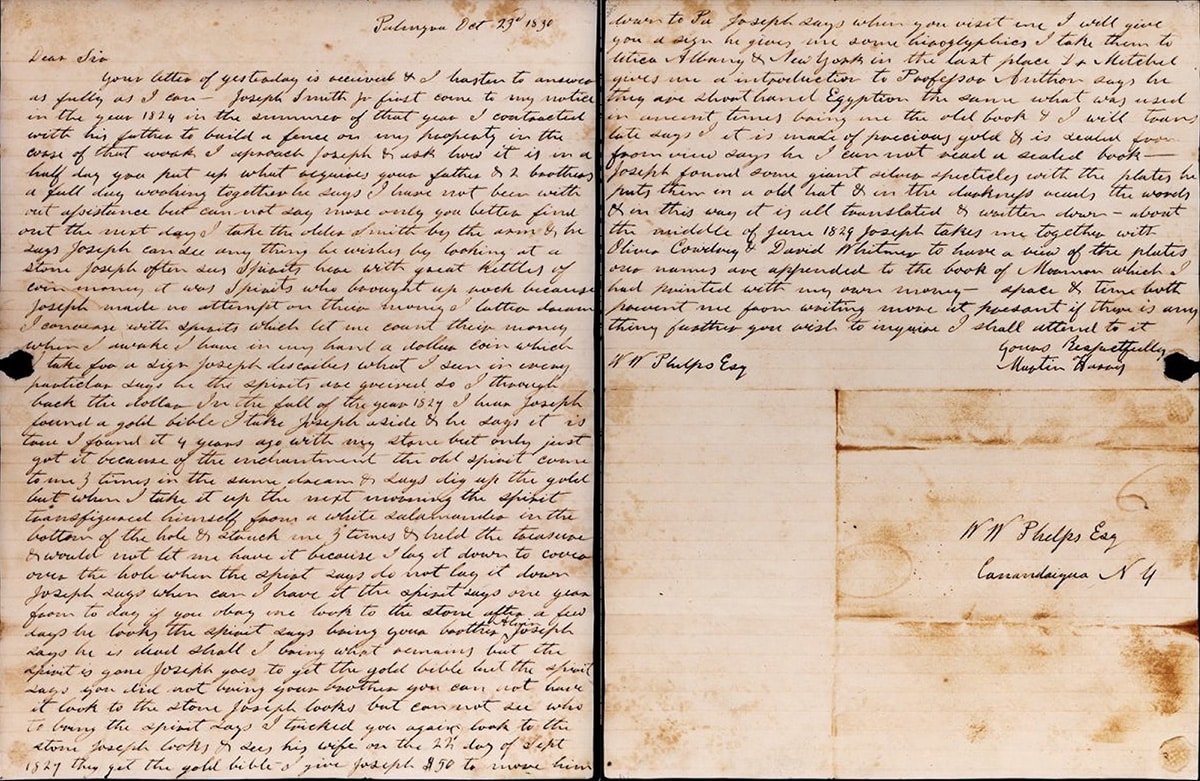
Mark Hofmann was a Salt Lake City rare-documents dealer, a returned missionary who presented as a believing Latter-day Saint though he had privately abandoned the faith years before.[2] [3] Between 1980 and 1985, he built a national reputation by "discovering" early American and Latter-day Saint documents he had in fact forged. The most famous, the Salamander Letter, purported to be an 1830 letter from Book of Mormon witness Martin Harris to W. W. Phelps, recasting the recovery of the golden plates in folk-magic terms, with a white salamander standing in the angel's place.[4] In October 1985, with creditors pressing and exposure closing in, Hofmann murdered two people with pipe bombs in Salt Lake City; he pleaded guilty in January 1987 to two counts of second-degree murder.[2:1]
The CES Letter concentrates the affair into a discernment question: if prophets cannot detect a forger, what good is prophetic authority? Its Hofmann section builds five claims around that question:
- The Church paid Hofmann hundreds of thousands of dollars for embarrassing documents in order to bury them in its vaults.
- The documents were forgeries, and the Brethren never sensed what they were holding.
- President Gordon B. Hinckley, the counselor in the First Presidency who oversaw the Church's archival acquisitions, was significantly dishonest afterward about his dealings with Hofmann.
- The Church denied holding McLellin documents it in fact held, and had to admit it under pressure.
- Sandra Tanner, a critic of the Church, discerned what the prophets could not.
Together the five describe leaders who could neither detect a fraud nor give a straight account of one afterward.
The factual half of the charge fails on the documentary record.
- The Salamander Letter's buyer was Steven F. Christensen, a private collector who paid Hofmann $40,000 in January 1984; the Church received the letter from him more than a year later as a gift.
- Sixteen days after that gift arrived, the full letter ran in the Church's own newspaper, with proof of forgery still almost two years away.
- Hinckley's public accountings were imprecise, not dishonest; his meetings with Hofmann were ordinary archival business, conducted in the open.
- The "McLellin Collection" the Church supposedly hid was a cache Hofmann invented to raise money from creditors; no such collection ever existed.
What remains is the discernment half. The Brethren were deceived; so were the FBI, the Library of Congress, and the handwriting expert who had exposed the Hitler Diaries. The central question is whether the canon, which says outright that prophets "cannot always tell the wicked from the righteous," ever promised the kind of detection the charge assumes.
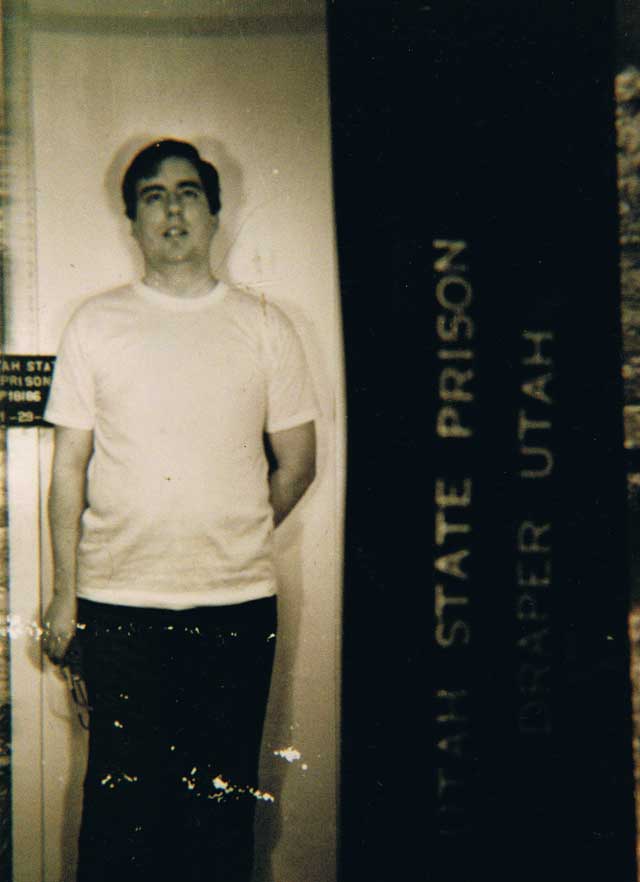
Two people died
On the morning of October 15, 1985, two pipe bombs detonated in Salt Lake City. The first killed Steven F. Christensen, a 31-year-old husband, father, document collector, and serving bishop in his ward.[5] The second killed Kathy Sheets, who had no role at all in any document transaction; her husband, Gary Sheets, ran the investment firm Christensen had worked for.[2:2] The next day a third bomb went off prematurely in Mark Hofmann's car, maiming him and triggering the investigation that would expose his decade of forgeries.[5:1] [6] The Hofmann affair is sometimes told as a story about apologetics and a forged letter. It is more accurately a story about murder; the Church's own historical essay on the affair counts the deaths of Kathy Sheets and Steven Christensen as its greatest tragedies.[3:1]
The bombings were not desperate flailing. They were calculated. Hofmann was nearing financial collapse: his debts to investors and lenders had grown beyond what even a successful forgery operation could service, and the Salamander Letter and other documents he had been promising to "find" were drawing skeptical scrutiny. Christensen was the collector most likely to expose him. Sheets was killed to make the bombings look as though they targeted Christensen's business associates rather than Hofmann's document deals.[5:2]
Steven Christensen had purchased the Salamander Letter from Hofmann in January 1984.[4:1] [5:3] He then spent over a year having the letter forensically authenticated and historically researched by leading document examiners before donating it to the Church. He was a careful, faithful, generous man whose interest in early Latter-day Saint history led him into the orbit of the man who would later kill him to silence him.[5:4] Kathy Sheets picked up a package left in front of her own home; the bomb inside killed her.[7]
The forgery operation entered the public record as evidence in a homicide case. It included Latter-day Saint documents because Latter-day Saint history is a lucrative collectibles market. It also included Emily Dickinson, Mark Twain, Abraham Lincoln, George Washington, John Adams, and Daniel Boone.[7:1] [8] The Brethren are one part of this story. They are not its protagonists, and they are not its primary victims.
Two questions the affair actually raises
The CES Letter's framing tends to fuse two questions that the evidence answers separately:
- The forensic question. Could anyone, including the Brethren, have detected Hofmann's forgeries in 1984 or 1985 by ordinary means available to careful investigators?
- The spiritual-authority question. Should prophets in particular, given what scripture and the Latter-day Saint canon promise about prophetic gifts, have detected what others could not?
The forensic question is answered by what the FBI, the Library of Congress, leading handwriting experts, and major academic historians did and did not detect. The spiritual-authority question is answered by what the canon actually claims about prophetic discernment, what the Latter-day Saint historical pattern shows about prophet-deception, and what bounded prophetic authority in fact includes. Neither answer does the other's work. Both are needed.
Forensic question: the most skilled forger in American history
No one is certain how many documents Hofmann forged and sold between roughly 1980 and 1985; a Deseret News retrospective two decades later tallied his career in "hundreds of forgeries and lies."[2:3] [7:2] The Latter-day Saint documents were only a portion of his output: the Anthon Transcript (1980), the Joseph Smith III Blessing (1981), the Salamander Letter (1984), the McLellin Collection (offered but never delivered), and dozens more. The non-Latter-day Saint forgeries were just as extensive. Hofmann forged and sold signatures and writings of George Washington, John Adams, John Quincy Adams, Daniel Boone, John Brown, Andrew Jackson, Mark Twain, Nathan Hale, John Hancock, Francis Scott Key, Abraham Lincoln, John Milton, Paul Revere, Myles Standish, and Button Gwinnett, along with "a previously unknown poem in the hand of Emily Dickinson."[8:1] [6:1]
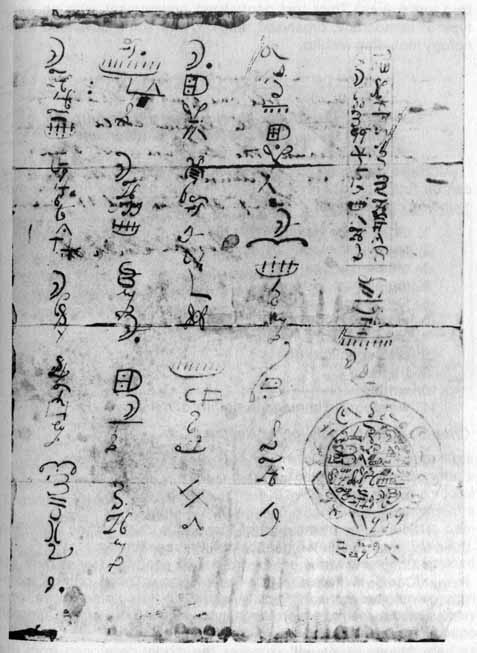
The Southwestern Association of Forensic Document Examiners, the professional body whose members spent their careers detecting exactly this kind of fraud, voted Hofmann "the best forger — or at least the best forger who was caught — in the past 1,200 years."[7:3]
The forensic methodology
Hofmann's craft was not a matter of clever signatures. He sourced period-appropriate paper from the blank end-leaves of nineteenth-century books bought at antiquarian sales. He manufactured his own iron-gallotannate ink from a period recipe he reconstructed through research. He developed a chemical aging protocol, sodium hydroxide treatment, that artificially induced the oxidation patterns iron-gall ink takes on over a century. And he studied period handwriting so meticulously that experts who knew the relevant scribes' actual signatures could not tell his work from authentic specimens.[6:2] [9]
The forgeries were not detectable by the standard tools of 1984. They were eventually detected by novel forensic chemistry developed after the bombings forced an investigation, using methodology that did not exist before George Throckmorton and William Flynn invented it.[9:1] [10]
Everyone was deceived, including the FBI and the Library of Congress
Hofmann did not deceive only Latter-day Saint authorities, a fact the CES Letter's account never confronts. He deceived essentially every relevant American forensic, archival, and scholarly authority of the period:
- The Federal Bureau of Investigation. The FBI's document laboratory initially authenticated the Salamander Letter as genuine.[9:2] [7:4]
- The Library of Congress. The Library's Conservation Office subjected Hofmann's most ambitious forgery, the Oath of a Freeman, to scientific study and reported nothing inconsistent with mid-seventeenth-century attribution. The Library nearly purchased the Oath for $1.5 million; it turned the document down in June 1985 over questions about its price, provenance, and title, not because anything forensic had been detected.[11] [12]
- The American Antiquarian Society. Held the Oath of a Freeman for two months and reported "as far as we know, there are no anomalies."[11:1]
- Kenneth W. Rendell. One of the world's foremost handwriting experts and the man who had broken the Hitler Diaries forgery case the previous year. Rendell's report on the Salamander Letter found "no indication that the document is a forgery" based on ink, paper, and postmark analysis.[13] [4:2]
- Charles Hamilton. The legendary autograph dealer, often called "the nation's pre-eminent detector of forged documents." Hamilton authenticated multiple Hofmann forgeries before being exposed; he later admitted: "He fooled me — he fooled everybody."[2:4]
- Independent forensic laboratories in Dallas and Kansas City, the McCrone Research Institute, the University of California, and the U.S. Postal Service's forensic document examiners (Albert Somerford and James Dibowski authenticated the Joseph Smith III Blessing).[6:3] [5:5]
- Dean Jessee, the Church Historical Department's leading expert on early Latter-day Saint manuscripts, who authenticated the Anthon Transcript as a Joseph Smith holograph.[2:5]
- Dozens of professional historians, both Latter-day Saint and non-Latter-day Saint, including major scholars who treated the Salamander Letter as plausible historical evidence.[14]
Dallin H. Oaks summarized the scope in his 1987 Ensign accounting:
"Hofmann succeeded in deceiving many: experienced Church historians, sophisticated collectors, businessmen-investors, national experts who administered a lie detector test to Hofmann, and professional document examiners, including the expert credited with breaking the Hitler diary forgery."[15]
Hinckley said the same thing more directly: "I frankly admit that Hofmann tricked us. He also tricked experts from New York to Utah, however. We bought those documents only after the assurance that they were genuine."[16]
The Oath of a Freeman is the key non-Latter-day Saint comparison case. Hofmann produced a forged copy in 1985 and offered it to the Library of Congress for $1.5 million. The Library's Conservation Office subjected the document to scientific testing, and the American Antiquarian Society then held it for two months for an examination of its own. This was the kind of rigorous, well-resourced forensic scrutiny that no Latter-day Saint authority ever applied to the Salamander Letter or any other Hofmann document, and neither examination identified any inconsistency with mid-seventeenth-century origin.[11:2] [12:1]
Detection in 1984–1985 required tools that did not yet exist; no relevant authority had them; the Brethren did not have them either. The religious question is a separate matter: the FBI examined documents purportedly from Joseph Smith without any claim to a revelatory gift, and the Brethren claim one.
Spiritual-authority question: what discernment actually claims
The CES Letter's deeper charge is that this is not merely a forensic question. The Brethren claim a kind of spiritual authority over Latter-day Saint history, the argument runs, that should have been audible somewhere in the room when Hofmann was selling forgeries about Joseph Smith. Whether the charge holds depends on what scripture actually promises about prophetic discernment, and on what it does not.
What the canon claims it includes
Doctrine and Covenants 46:23 identifies "the discerning of spirits" as a spiritual gift: "And to others the discerning of spirits."[17] In Latter-day Saint usage, and across the broader Christian tradition, the gift addresses spiritual claims and spiritual beings: it is the capacity to distinguish whether a particular spirit, doctrine, or messenger is from God. Moroni 7:12–19 develops the same theme, the discerning of what is of God from what is of the devil.[18]
Doctrine and Covenants 46:27, four verses later, gives the bishop and those appointed to watch over the church discernment over "all those gifts lest there shall be any among you professing and yet be not of God."[19] That verse is the nearest the canon comes to promising leader-level detection, and even it polices professed spiritual gifts inside the covenant community. Hofmann professed no gift.
What the canon and the Restoration tradition affirmatively claim about prophetic authority, the side of the ledger that is included rather than excluded, is concrete enough to test:
- Revelation about doctrine. The President of the Church can declare new doctrine "as revelation from God" (Harold B. Lee), accepted by the Council of the Twelve and sustained by the body of the Church (D&C 26:2, 28:13, 107:27).[20] [21]
- Authority to administer ordinances. Priesthood keys for baptism, confirmation, sealing, temple ordinances, and the Sacrament rest in the senior leadership and are delegated through the priesthood.
- Spiritual confirmation of truth. When the Spirit prompts, prophets and ordinary members alike can recognize when something is consistent or inconsistent with revealed truth.
- Recognition of false doctrine when the Spirit prompts. When doctrinal error is presented as binding revelation, prophets and apostles have repeatedly identified it (Pratt against Adam-God; Joseph F. Smith against Adam-God in writing in 1897; the 1916 First Presidency and Twelve in "The Father and the Son").
- Pastoral discernment in priesthood ministering. Bishops and stake presidents are promised inspiration in callings, in counseling members, in extending callings, and in priesthood blessings, all within ordinary spiritual and pastoral channels.
Each of these is a real, scripture-grounded claim, with cases in the Latter-day Saint historical record where the gift operated as claimed. The most substantial recent scholarly engagement with the Hofmann affair, J. B. Haws's 2021 BYU Studies Quarterly article on Murder among the Mormons, approaches the discernment question from a complementary direction, agency: real human choice entails the possibility of real human evil, and God does not pre-empt it, a point Haws anchors in Alma 14:11.[22]
What the canon excludes
The same canon explicitly disclaims certain things. D&C 10:37 reads: "But as you cannot always judge the righteous, or as you cannot always tell the wicked from the righteous, therefore I say unto you, hold your peace until I shall see fit to make all things known unto the world concerning the matter."[23] This is the Lord himself, in a revelation directly to Joseph Smith, telling Joseph that prophetic capacity does not include infallibly distinguishing the wicked from the righteous in every case. The verse occurs in the context of people in Joseph's own ministry whose intentions Joseph could not fully see.
The biblical canon reinforces the same pattern. In Joshua 9, Joshua and the Israelite leaders are deceived by the Gibeonites' fake provisions and false claims to be foreign travelers; the text specifies they "asked not counsel at the mouth of the Lord" (Joshua 9:14), and Joshua's covenant with the Gibeonites stands despite being procured by deception.[24]
In 1 Kings 13, the man of God who confronted Jeroboam is deceived by an old prophet who lies to him about a fresh revelation.[25] In Acts 9, the Apostles are initially suspicious of Saul of Tarsus despite his genuine conversion; recognition of his authentic discipleship requires specific revelation through Ananias.[26] If prophets carried a standing immunity to deception, why does scripture keep recording prophets who were deceived?
Joseph Smith and the Kinderhook Plates establish the same pattern within the Restoration tradition itself. Wilbur Fugate, Robert Wiley, and Bridge Whitton manufactured a set of brass plates with mock ancient characters and arranged for them to be "discovered" near Kinderhook, Illinois, in 1843. The plates were brought to Joseph Smith. According to William Clayton's contemporaneous journal, Joseph examined them and offered an initial translation, "a descendant of Ham" and so on. He did not recognize them as a hoax.[27] Modern scientific analysis confirmed in 1980 that the plates were nineteenth-century forgeries, corroborating Fugate's later confession.[28]
Kinderhook is less a tidy precedent than a second instance of the same difficulty: the same kind of physical-document fraud, the same kind of prophetic deception by it. The bounded-discernment framework absorbs both episodes; it does not make either one disappear.
The careful maximalist position
There is a strawman version of the CES Letter's worry: that prophets must have FBI-level investigative discernment. Few thoughtful Saints actually hold that view, and engaging it accomplishes little. The careful version is sharper. Many Saints have reasonably inferred, from the way prophetic authority is talked about over the pulpit, that prophets have a general spiritual sensitivity that helps them recognize people who present as faithful while operating in serious spiritual deception. A Saint might expect a man who had just murdered two people, protecting a forgery he was selling to the Church about Joseph Smith, to produce some spiritual signal in the room with an apostle. That expectation is not a strawman; it extrapolates from how prophetic authority is presented in ordinary Latter-day Saint discourse.[29]
The Latter-day Saint canon does not promise that ordinary spiritual perception will always recognize people who present in deceptive ways but who do not directly advance spiritual claims that violate revealed doctrine. Hofmann did not walk into Oaks's office and announce a new revelation from God. He presented as a credentialed document dealer with a prearranged appointment about acquisitions. The canon and the historical record support a bounded version: prophets receive revelation about doctrine, administer ordinances, recognize spiritual error when the Spirit prompts, and exercise pastoral discernment within ordinary spiritual channels. An unfailing felt alert to any individual's hidden crimes is not on the list.
Saints who revise the maximalist view toward the bounded one do give up something: the expectation that serious evil announces itself in an apostle's presence.
What "discernment" actually was, in Tanner's case
The CES Letter's specific argument, that "the Tanners had better discernment than the Brethren," turns on which sense of "discernment" is in play. In the technical scriptural sense, "discerning of spirits" is not what Sandra Tanner, a longtime critic of the Church, exercised in March 1984 when she published "Is It Authentic?" in the Salt Lake City Messenger. She did not claim to recognize a spirit; she did not claim spiritual revelation; she did not frame her work as discernment in the gift-of-the-Spirit sense.[30] [31]
What she did was historical pattern-recognition. She had studied Eber Howe's 1834 Mormonism Unvailed in detail. She noticed that the Salamander Letter's content patterns, especially the white-salamander-transforming-into-a-spirit framing, paralleled Howe's earlier published characterization of Joseph Smith's treasure-digging activities with suspicious precision. The parallel was too close to be coincidence, she inferred, and she said so in print.[31:1] When Hofmann gave his post-plea confession to prosecutors, he confirmed the borrowing in his own words: "the idea for the white salamander derived from the toad in . . . Howe's book." The copy of Howe he owned, he acknowledged, was the Tanners' own photographic reprint.[32] [6:4]
Calling this "pattern recognition" rather than "discernment" is not a dodge. It is what Tanner herself called it, and it is what scripture's technical sense of the word reserves the gift of the Spirit for.
But the everyday-English version of the criticism survives the technical move. Tanner saw something Latter-day Saint historians did not, when both had access to the same evidence, and the published, falsifiable, available-in-print objection she made deserved more institutional engagement than it got. The explanation is institutional cognitive bias. Latter-day Saint historians wanted readings compatible with the canonical Joseph Smith story, prized genuine document discoveries, and discounted objections coming from the Tanners, known critics whose work was sometimes polemical. None of that is corruption. All of it together let a published, specific, falsifiable objection from a critic go unanswered.
What would falsify the bounded-discernment claim
A claim is meaningful only if it is falsifiable. The bounded-discernment framework would be untenable if the canon promised more than it does, if the founding-prophet pattern showed detection of physical fraud, if the Brethren had claimed spiritual authentication of Hofmann's forgeries on revelatory grounds, or if Tanner's specific objections had been engaged and then dismissed in bad faith. None of those conditions are met.[33] That is what keeps the framework prospective rather than ad hoc. The rule the tradition has always claimed about prophetic authority, applied to the same evidence the CES Letter cites, classifies the Hofmann affair as consistent with bounded prophetic authority instead of falsifying it.
The Salamander Letter chronology
The CES Letter's most specific factual claim is that the Church "paid hundreds of thousands of dollars . . . to purchase and suppress" the Salamander Letter and similar documents.[1:2] The chronology, on the documentary record, makes this claim factually unsupportable.
Who purchased it
"Hofmann finally sold the letter to Steven F. Christensen on January 6, 1984, for $40,000."[4:3]
Steven F. Christensen, the man Hofmann would later kill, was a private collector and bishop. He was not the Church. He purchased the Salamander Letter from Hofmann in his personal capacity, in January 1984. That is the documented record. The Church did not purchase the Salamander Letter from Hofmann.
Who received it
Christensen, in turn, donated the letter to the Church. As Oaks summarized in his 1987 Ensign accounting:
"Some months later, after Christensen completed his research and authentication, he delivered this letter to President Hinckley as a gift to the Church."[15:1]
The donation occurred in April 1985, over a year after Christensen's purchase, and after he had spent that year having the letter forensically examined by leading document experts. The Church received it as a gift, not a purchase.[34]
What the Church did with it
The Church then published the full text of the Salamander Letter in the Church News on April 28, 1985: not a partial summary, not a redacted version, the complete document.[4:4] [35] This was over five months before the bombings, almost two years before the Throckmorton-Flynn forensic breakthrough that exposed Hofmann's chemistry, and well before any forensic authority anywhere had concluded the document was forged. The very contents the CES Letter says the Church was buying to "suppress" were printed in the Church's own newspaper, at a moment when the Church, like essentially everyone else, still took the letter to be authentic.
An institution attempting to suppress a damaging document does not print the document's complete text in its own newspaper, weeks after receiving it, while it still believes the document genuine. The "buying to suppress" framing is incompatible with the documented chronology.
Elder Oaks's 1985 talk
The CES Letter's strongest single excerpt is also the part of the Hofmann affair that reads worst in retrospect: Elder Dallin H. Oaks's CES Symposium address on August 16, 1985. The talk came roughly four months after the Salamander Letter was donated to the Church, and roughly two months before the bombings exposed Hofmann.
What Oaks actually said
The relevant section of the talk:
"Another source of differences in the accounts of different witnesses is the different meanings that different persons attach to words. We have a vivid illustration of this in the recent media excitement about the word salamander in a letter Martin Harris is supposed to have sent to W. W. Phelps over 150 years ago. All of the scores of media stories on that subject apparently assume that the author of that letter used the word salamander in the modern sense of a 'tailed amphibian.' One wonders why so many writers neglected to reveal to their readers that there is another meaning of salamander, which may even have been the primary meaning in this context in the 1820s . . . [a spirit able to live in fire] . . . In view of all this, and as a matter of intellectual evaluation, why all the excitement in the media, and why the apparent hand-wringing among those who profess friendship with or membership in the Church? The media should make more complete disclosures, but Latter-day Saint readers should also be more sophisticated in their evaluation of what they read."[36]
The specific argument was correct; the framing was wrong
The 1820s philological point was a real observation. In nineteenth-century occult and folk-magic discourse, drawing on Paracelsian elemental theory, a "salamander" was understood as one of the four elemental spirits, a being that could live in fire.[36:1] [15:2] Oaks's observation that Martin Harris (if he had used the word) might have meant a fire-spirit rather than a tailed amphibian was historically defensible. The philological argument was scholarship.
The broader framing of the talk was something else, and it is what the CES Letter quotes. Oaks did not just contextualize the word salamander. He built an apologetic frame around the document's authenticity, treating skepticism of it as itself a form of unsophisticated reading. "Why all the excitement?" implies the excitement was unwarranted. "Why the apparent hand-wringing?" implies the hand-wringing was unjustified. "Latter-day Saint readers should also be more sophisticated" implies that reasonable Saints should have moved past their concerns. The 1985 audience could see that the skepticism was being driven by serious scholars (the Tanners, Wesley Walters), not just by sensationalist reporters; the talk's framing dismissed that skepticism. That posture is the substantive criticism, separate from the retrospective forgery exposure.
The document was a forgery. The "excitement" turned out to be exactly proportionate to the real situation; the "hand-wringing" turned out to be vindicated by subsequent events. Saints who took Oaks's counsel and stopped worrying about the Salamander Letter were, two months later, watching news coverage of the bombings and the eventual confirmation that the letter had never been authentic. The CES Letter's quotation of Oaks's "be more sophisticated" line is fair to its plain meaning.
Nothing else in the affair is as hard to defend. An apostle urged sophistication about a document that was, at that moment, a live forgery, two months before its seller committed murder to protect his fraud; the confidence carried a cost that a more guarded reading of an actively contested document would not have.
The 1987 follow-up
In October 1987, Oaks published an article in the Ensign, "Recent Events Involving Church History and Forged Documents," that addressed the Hofmann affair publicly and at length.[15:3] In it, Oaks acknowledged that the Brethren had been deceived along with many other authorities, naming the FBI and the Hitler-diary expert specifically. He described the 1985 talk's position on the Salamander Letter, addressed the October 15, 1985 meeting with Hofmann without claiming any spiritual discernment about that morning's events, and discussed the discernment question without retreating to a maximally narrow definition. The 1987 article is a meaningful improvement on the 1985 silence-or-defense posture. It is the kind of accounting the affair required, even though it left the specific Tanner objections, and the institutional dynamics behind the 1985 talk's framing, unaddressed.
President Hinckley
What was alleged
The CES Letter charges: "There was significant dishonesty by President Hinckley on his relationship with Hofmann, his meetings, and which documents that the Church had and didn't have."[1:3]
What actually happened
Hinckley met with Hofmann multiple times between 1980 and 1985 in his capacity as a counselor in the First Presidency overseeing the Church's archival acquisitions.[5:6] [35:1] The meetings were ordinary archival business: Hofmann was, by reputation, one of the country's most successful dealers in early Latter-day Saint documents, and the Church was an obvious purchaser for material like the Anthon Transcript and the Joseph Smith III Blessing. None of these meetings were secret. None involved suppression deals or threats. Hinckley's interactions with Hofmann were the same kind of interactions any major archive's acquisitions officer would have with a major dealer.
After the bombings, Hinckley made several public statements about his interactions with Hofmann. These statements were not always perfectly precise. Initial accounts in some interviews understated the number of meetings; subsequent research and documentation clarified that Hinckley had met with Hofmann more often than the early statements implied.[5:7] Hinckley's statements about which documents the Church possessed (especially regarding the McLellin Collection) were also sometimes imprecise.
The fair reading
Hinckley was not deceptive in the strong sense the CES Letter charges. He was reactive rather than proactive in his public accountings, and his statements reflected what he remembered or had at hand at the time of speaking rather than the most complete possible account. As more facts emerged through journalism and the legal process, the public record grew more complete than his initial statements had been. This is consistent with imprecise memory in a high-profile, fast-moving situation.
The strongest critical reading, the version that does not rely on overstatement, runs something like this: the Church's institutional posture in handling the affair was defensive rather than transparent. A more proactive disclosure approach would have served it better in retrospect. Hinckley's accountings, while not deceptive, were part of that defensive posture. That is a fair criticism, and the cost it names is real. The "significant dishonesty" framing the CES Letter uses breaks against the documentary record. The institutional-defensiveness observation underneath it stands.
The McLellin Collection
The claim
The CES Letter alleges: "Ultimately, the Church was forced to admit it had, in the First Presidency Vault, documents (McLellin Collection) that the Church previously denied it had."[1:4]
The actual situation
The McLellin situation is complicated, and parsing it requires distinguishing three things:
Historical McLellin material that had passed through Church hands. William E. McLellin (1806–1883) was an early Latter-day Saint apostle, later a critic. Some of his journals, letters, and related material had been in Church possession at various points since his death. The Church's institutional record-keeping in the 1980s was less centralized than later policies require, and statements about what was held where were sometimes imprecise. A culture of proactive transparency did not yet exist, and the defensive instinct on archival material was real even where it was not deceptive in a specific case.[37]
Hofmann's "McLellin Collection": the fictional cache. Hofmann had been telling collectors and Church leaders for years that he had located a substantial cache of McLellin documents supposedly containing material damaging to the Latter-day Saint historical narrative. He had not. The "McLellin Collection" he was promising to "find" did not exist as he described it.[5:8] [32:1] The transactions surrounding it were part of his ongoing fraud: he used the prospect of the cache to extract advance money and to keep credibility with creditors who were beginning to doubt him.
A genuine McLellin notebook located in 2009. A McLellin notebook covering 1871–72, still in family hands, was located in 2009 by the collector Brent Ashworth. Its contents corroborated rather than undermined the Church's historical narrative: McLellin, for all his estrangement, retained what Ashworth described to the paper as "a rock-solid testimony of the Book of Mormon."[37:1]
So when the CES Letter says the Church "was forced to admit it had . . . documents (McLellin Collection) that the Church previously denied it had," the reality is more tangled than the charge. Yes, some McLellin-related material had passed through Church hands, and yes, the Church's early statements about its own holdings were not uniformly accurate. But the Church was not denying possession of damaging material it was secretly holding. It was navigating a situation in which a forger was actively manufacturing a fictional cache to extract money, while genuine McLellin material sat in archives that did not always communicate cleanly with each other. Even so, the McLellin episode is one data point in a broader pattern of archival defensiveness the Church has since moved away from.[3:2]
Tanner's objection went untested
Sandra Tanner's March 1984 Salt Lake City Messenger article was substantive, falsifiable, and available in print in Salt Lake City.[30:1] It named Howe's Mormonism Unvailed as the suspected source. That was the kind of objection a careful historian could have tested directly, by pulling Mormonism Unvailed off the shelf and comparing the two texts side by side. As far as the public record reflects, no Latter-day Saint historian engaged the Tanners' specific textual argument with comparable seriousness in 1984 or 1985. The Salamander Letter went on being treated as plausibly authentic, by Latter-day Saint and non-Latter-day Saint historians alike, until the forensic breakthrough of 1986–87. That inattention is the institutional cost the affair documents.
The forensic breakthrough
The Hofmann forgeries were ultimately exposed not by spiritual discernment, not by historical skepticism alone, and not by ordinary forensic methodology, but by novel chemistry developed after the bombings forced an investigation.
George Throckmorton, a forensic document examiner then at the Utah attorney general's office, examined the documents in Hofmann's possession after the bombings. Working with William Flynn of the Arizona Department of Public Safety crime laboratory, Throckmorton noticed something anomalous under microscope: Hofmann's iron-gallotannate ink showed an "alligator skin" pattern of microcracking that authentic nineteenth-century iron-gallotannate documents did not display.[9:3] [6:5]
Flynn experimented with sodium hydroxide treatment of iron-gallotannate ink. The sodium hydroxide produced dramatic accelerated oxidation, years of natural aging in days, but the initial recreations did not match Hofmann's exact pattern. The breakthrough came when Flynn checked a nineteenth-century ink recipe and realized Hofmann's ink contained gum arabic, a polysaccharide. When sodium hydroxide met the gum arabic, the polymer matrix became brittle, and rapid drying produced precisely the alligator-skin pattern Throckmorton had observed.[9:4] [10:1]
This was novel forensic chemistry. The methodology did not exist before Throckmorton and Flynn worked it out in 1986–87. What was an examiner in 1984 supposed to run, with the decisive test still two years from being invented? The forensic question ends there. The spiritual-authority question never rested on chemistry.
The Oaks-Hofmann meeting on October 15, 1985
The ten-minute meeting
On the morning of October 15, 1985, Mark Hofmann had a prearranged meeting with Elder Dallin H. Oaks in the Church Office Building.[15:4] The bombings that killed Steven F. Christensen and Kathy Sheets had occurred earlier that same morning, but the bomber was unknown at that point. Hofmann arrived at the meeting some hours after detonating the bombs that killed two people. He behaved, by all accounts, as the businesslike document dealer the Church staff knew. The meeting, ten minutes long by Oaks's own published accounting, concerned ongoing document business. Oaks did not know who had set the bombs. He did not know that the man across the desk was the killer. He proceeded with the meeting as he would have any prearranged appointment with a credentialed document dealer.[15:5] [38]
The CES Letter's framing, and the felt-experience question beneath it
The CES Letter, citing Worrall's The Poet and the Murderer, frames this scene as decisive evidence against prophetic discernment: "Elder Oaks had a serial murderer right in front of him in his office just hours after Hofmann killed two people . . . What does this say about the discernment of the Brethren when they can't discern a murderer and con man, hell-bent on destroying Mormonism, right under their noses?"[1:5]
The technical version of the criticism, that Oaks should have detected Hofmann's recent crimes, depends on a specific assumption about what scripture promises. The bounded-discernment framework above answers it: the canon does not promise that prophetic gifts include detecting hidden recent criminal acts in the absence of any external information.
Detection, though, is not all the scene asks about. The CES Letter's wording goes past whether Oaks detected the crimes to whether he experienced anything at all: if a man who had murdered two people that morning produced no spiritual unease whatsoever in the presence of an apostle, what does that say about the practical texture of prophetic spiritual perception? That is a different question from "did discernment fail."
The canon is as silent about that felt experience as it is about forensic detection. The bounded framework includes pastoral discernment and spiritual confirmation of revealed truth; it promises no particular intensity of feeling around people in serious deception, least of all people who present as ordinary and advance no spiritual claim against revealed doctrine. Nothing in the text suggests Joshua sensed anything wrong with the Gibeonites, or that the man of God in 1 Kings 13 felt the lie in the old prophet's words, or that the Apostles registered anything around Saul of Tarsus beyond their own suspicion, until specific revelation intervened in each case.
A promise the canon never made can still be expensive to lose, and this one is. But the bounded promise, examined at length in the reliability of spiritual witnesses discussion, is the one scripture actually makes, and the Hofmann meeting is consistent with it.
Modern teaching on prophetic fallibility
The doctrine of bounded prophetic authority is canonical Latter-day Saint teaching, going back to Joseph Smith's own time:
- Joseph Smith acknowledged he had "the frailty of human nature like other men" in remarks to the Nauvoo Relief Society on August 31, 1842.[39] His best-known articulation of the bounded principle traces to his journal for February 8, 1843: Willard Richards recorded Joseph telling visitors from Michigan that "a Prophet is not always a Prophet," only "when he is acting as such." The familiar form, "a prophet was a prophet only when he was acting as such," comes from the later History of the Church rendering.[40]
- Bruce R. McConkie, in the "Prophets" entry of Mormon Doctrine (1966): "With all their inspiration and greatness, prophets are yet mortal men with imperfections common to mankind in general. They have their opinions and prejudices and are left to work out their problems without inspiration in many instances."[41] His February 1981 letter to Eugene England put it more bluntly still: "Prophets are men and they make mistakes. Sometimes they err in doctrine."[42]
- Dieter F. Uchtdorf, in October 2013 General Conference: "And, to be perfectly frank, there have been times when members or leaders in the Church have simply made mistakes."[43]
The teaching is consistent across the dispensations of the Restoration. The framework the Hofmann affair has to fit is one in which prophets can be deceived in non-spiritual matters and the canon openly says so. A framework requiring prophetic infallibility against human deception would be a different doctrine, and the canon nowhere teaches it.
What's hard, what's not
There are real, residual difficulties from the Hofmann affair:
Oaks's 1985 talk reads worse in retrospect than it did at the time. The 1820s philological point about salamander was correct, but the broader "be more sophisticated about media coverage" framing was wrong, and the document's later exposure as a forgery made the framing's wrongness obvious. The 1987 Ensign follow-up addressed the affair but did not make the 1985 talk read better.
Hinckley's accountings were imprecise. His initial public statements about how often he had met with Hofmann and what documents the Church had handled were less complete than later documentation showed. The "significant dishonesty" framing is wrong on the record, but the underlying institutional-defensiveness observation is fair.
Latter-day Saint historians did not engage the Tanners' specific textual objection seriously enough. The March 1984 Salt Lake City Messenger article named the suspected source text; testing it meant opening two books, and no one did. Institutional cognitive bias, not corruption, is what explains the silence, and the silence is a real cost.
The affair limits maximalist versions of prophetic-authority claims. Saints who have inferred, from how prophetic authority is talked about, that prophets have general spiritual sensitivity to serious deception in every interaction are working with a doctrine the canon does not actually promise.
Other parts of the CES Letter's case are simply incorrect:
The Salamander Letter was not Church-purchased and was not suppressed. Christensen purchased it; Christensen donated it; the Church published its full contents in the Church News before forgery exposure.[4:5] [15:6]
The Brethren were deceived by methods that no relevant authority could detect at the time. The roster of others deceived is long: the FBI, the Library of Congress, the American Antiquarian Society, Rendell, Hamilton, Jessee, McCrone, the U.C. labs, the Postal Service's forensic examiners, and dozens of academic historians. That roster places the Brethren in an enormous and entirely respectable comparison class on the forensic question.
No prophetic claim was overturned by any Hofmann forgery. The Salamander Letter was forged specifically to provide manufactured evidence for folk-magic origins of the Restoration. Its exposure as a forgery removed that manufactured evidence from the historical record entirely; the canonical First Vision and Moroni accounts stand exactly where the documentary evidence had always placed them. The Anthon Transcript forgery, the Joseph Smith III Blessing forgery, and other Hofmann productions, on exposure, returned the historical questions they purported to address to their pre-Hofmann state. The affair did not move any doctrinal claim of the Church.
Sister-article alignment, and where this case differs
The companion articles in this section follow related but distinct frames. Adam-God leans on the canonized-binding-doctrine tests (D&C 26:2 in 1830, 28:13 in 1830, 107:27 in 1835), tests that were prospectively in scripture before Brigham's first Adam-God sermon and that classified Adam-God as non-binding by rules predating the rhetoric. Blood Atonement leans on the operational-versus-rhetorical distinction, supported by Brigham's own February 1857 sermon as an in-context qualifier and by D&C 134's canonized doctrinal floor predating the rhetoric. Each rests on a tightly bounded scriptural test that produces a falsifiable verdict in real time.
The Hofmann affair is structurally different. The question is not "did this become binding doctrine"; it never did. The question is "did the Brethren detect a forger," and the bounded-discernment framework that answers it is grounded in D&C 46:23, D&C 10:37, Moroni 7:12–19, Joshua 9, 1 Kings 13, Acts 9, and the Kinderhook Plates precedent, which is itself the closest Restoration-era parallel to a prophet being deceived by a physical-document fraud and a case the translator-claims discussion examines in detail. That framework is, however, less crisp than the canonized-binding-doctrine tests in the sister articles, because what discernment includes is more interpretively contested than what makes doctrine binding. The Hofmann defense is the looser of the three for exactly that reason.
Assessment
The Hofmann affair is a genuine difficulty for maximalist versions of Latter-day Saint prophetic-authority claims. Elder Oaks's 1985 talk went over badly. President Hinckley's accountings were imprecise. Latter-day Saint historians should have engaged Sandra Tanner's specific textual objection more seriously than they did. The Brethren were among the many authorities Hofmann deceived. The doctrine the Church actually teaches about prophetic authority is more bounded than the maximalist version, and the affair illustrates that boundedness.
What the affair does not do is overturn the actual scriptural doctrine. Joshua was deceived by the Gibeonites. The man of God in 1 Kings 13 was deceived by an old prophet. The Apostles were initially suspicious of Saul of Tarsus despite his genuine conversion. Joseph Smith was deceived by the Kinderhook Plates. The Latter-day Saint canon, since 1831, has affirmed that prophets speak "in their weakness, after the manner of their language" (D&C 1:24) and that even in revelation directly to Joseph Smith the Lord has said "you cannot always tell the wicked from the righteous" (D&C 10:37). Prophetic authority, as the canon actually claims it, does not extend to infallibility at detecting human fraud. That limitation comes from the canon itself.
The CES Letter's specific factual claims about the affair are mixed. Two are wrong on the documentary record: the Salamander Letter was not Church-purchased and was not suppressed; Hinckley was imprecise rather than significantly dishonest. The third, that "the Tanners had better discernment than the Brethren," is wrong in the technical scriptural sense the bounded-discernment framework defends, though its everyday-English version survives: Tanner published a testable objection, and no Latter-day Saint historian tested it.
The Hofmann affair is not, in its actual historical shape, primarily a story about prophetic authority. It is a story about a career criminal who fooled essentially the entire American forensic and archival establishment in pursuit of money, who killed two innocent people to cover his fraud, and who was eventually exposed by novel chemistry developed after the murders forced an investigation. The Brethren were participants in it the way the FBI, the Library of Congress, and the American Antiquarian Society were participants: as institutions handling material the period's tools could not detect as fraudulent. Reading the affair as mainly a referendum on Latter-day Saint prophetic authority requires foregrounding the Brethren and pushing the universal expert deception, the human cost, and the actual mechanism of detection into the background.
Steven F. Christensen, a 31-year-old bishop, was murdered by the man whose forgeries he had helped authenticate. Kathy Sheets, who had nothing to do with any of it, was killed because Hofmann needed misdirection. That is the heart of the story.
Prophets are real, prophetic authority is real, and prophetic fallibility in non-revelatory matters is real too. The Hofmann affair is consistent with all three.
The Book of Mormon appears nowhere in Hofmann's catalogue of attacks. Every Latter-day Saint document he manufactured worked on the story around the book instead: the recovery of the plates, the succession after Joseph, the private loyalties of an early apostle.
A forger's leverage lives in thin records, where one plausible page can rewrite everything around it. The Salamander Letter shows the mechanism: a single forgery, and the recovery story carried a folk-magic gloss until the chemistry caught up with it. The text of the Book of Mormon is the opposite case: its dictation, its printing history, and the testimony of its witnesses are documented at a depth no forged page could displace. The man who could forge Joseph Smith's handwriting understood the difference.
The Book of Mormon is the one thing in this story Hofmann could not counterfeit.
For sister-article treatments of related questions about prophetic authority and fallibility, see Adam-God and Blood Atonement. For the broader section, see Prophets.
Runnells, CES Letter (2017), "Prophets," pp. 66–68. The Hofmann subsection of the Prophets section. ↩︎ ↩︎ ↩︎ ↩︎ ↩︎ ↩︎
"Mark Hofmann," Wikipedia, https://en.wikipedia.org/wiki/Mark_Hofmann. Documents Hofmann's biography (his Salt Lake City upbringing, his mission to Bristol, England, his private loss of faith, and his presentation as a faithful member), his forgery career, the Anthon Transcript trade, Charles Hamilton's "He fooled me — he fooled everybody" admission, Dean Jessee's authentication of the Anthon Transcript, and the January 1987 guilty plea. ↩︎ ↩︎ ↩︎ ↩︎ ↩︎ ↩︎
"Hofmann Forgeries," Church History Topics, The Church of Jesus Christ of Latter-day Saints, https://www.churchofjesuschrist.org/study/history/topics/hofmann-forgeries?lang=eng. The Church's own accounting of the affair. It leads its reckoning with the human cost — "The greatest tragedies connected to the Hofmann forgeries are the deaths of Kathy Sheets and Steven Christensen" — notes that Hofmann "deceived not only Church leaders and historians with his forgeries but also his family and friends, archivists and librarians, and other experts," and describes the provenance-verification and publication reforms Church archives adopted after the exposure. ↩︎ ↩︎ ↩︎
"Salamander letter," Wikipedia, https://en.wikipedia.org/wiki/Salamander_letter. Documents the letter's purported content (a Martin Harris letter to W. W. Phelps dated 1830), Christensen's January 6, 1984 purchase from Hofmann for $40,000 with intent to authenticate and donate, the April 28, 1985 Church News publication of the letter's full contents, and Kenneth Rendell's examination conclusion that there was "no indication that the document is a forgery." ↩︎ ↩︎ ↩︎ ↩︎ ↩︎ ↩︎
Richard E. Turley Jr., Victims: The LDS Church and the Mark Hofmann Case (Urbana: University of Illinois Press, 1992). The official scholarly account, written by then-Managing Director of the Family History Department with full Church Historian's Office cooperation. Comprehensive treatment of the bombings, the forgery operation, the investigation, and the Church's involvement, including Hinckley's pattern of meetings with Hofmann and the Joseph Smith III Blessing trade with the RLDS Church. Available: https://archive.org/details/victimsldschurch0000turl ↩︎ ↩︎ ↩︎ ↩︎ ↩︎ ↩︎ ↩︎ ↩︎ ↩︎
Linda Sillitoe and Allen Roberts, Salamander: The Story of the Mormon Forgery Murders (Salt Lake City: Signature Books, 1988; rev. 2006). The standard scholarly history of the affair, including a forensic appendix by George Throckmorton ("A Forensic Analysis of Twenty-One Hofmann Documents") documenting the chemistry that exposed Hofmann. ↩︎ ↩︎ ↩︎ ↩︎ ↩︎ ↩︎
"Tales of Hofmann: Forgeries, Deceit Continue to Intrigue 20 Years Later," Deseret News, October 15, 2005, https://www.deseret.com/2005/10/15/19917491/tales-of-hofmann-forgeries-deceit-continue-to-intrigue-20-years-later/. Source for the Southwestern Association of Forensic Document Examiners "best forger in 1,200 years" assessment, the institutional authentication list (Library of Congress, American Antiquarian Society, FBI, University of California, McCrone Research Institute), the "hundreds of forgeries and lies" career tally, and the circumstances of both deaths, including Kathy Sheets picking up the package left in front of her home. ↩︎ ↩︎ ↩︎ ↩︎ ↩︎
"Mark Hofmann Timeline," Debunking-CESLetter, https://debunking-cesletter.com/prophets-1/mark-hofmann-timeline/. Documents the breadth of Hofmann's non-Latter-day Saint output: he "forged and sold signatures of many famous non-Mormons," including Washington, both Adamses, Lincoln, Twain, Boone, Brown, Jackson, Hale, Hancock, Key, Milton, Revere, Standish, and Gwinnett, and "also forged a previously unknown poem in the hand of Emily Dickinson." ↩︎ ↩︎
"How Two Document Examiners Solved the Case of the Salamander Letter," Western Forensic Document Examiner, https://www.westernforensicdocumentexaminer.com/document-examiners-solved-salamander-letter-case/. Accessible technical explanation of George Throckmorton and William Flynn's forensic methodology — the iron-gallotannate microcracking pattern, the sodium hydroxide protocol, and the gum arabic insight that produced the alligator-skin effect. ↩︎ ↩︎ ↩︎ ↩︎ ↩︎
"Forger Caught by Rheology of Biopolymer Gum Arabic," Cambridge Polymer Group, https://www.campoly.com/blog/forger-caught-rheology-biopolymer-gum-arabic/. Peer-accessible polymer-chemistry explainer for how Hofmann's microcracking was detected. ↩︎ ↩︎
"Oath of a Freeman," Wikipedia, https://en.wikipedia.org/wiki/Oath_of_a_Freeman. The Library of Congress Conservation Office's scientific study found nothing inconsistent with mid-seventeenth-century attribution; the American Antiquarian Society had possession of the document for two months and reported "as far as we know, there are no anomalies." ↩︎ ↩︎ ↩︎
"Famous Forgery, The Oath of a Freeman, Heads to Auction in June," Fine Books & Collections, https://www.finebooksmagazine.com/news/famous-forgery-oath-freeman-heads-auction-june. Reports that the Library of Congress turned the Oath down in June 1985 "because of questions about its price, provenance and title" after its Conservation Office "revealed no evidence that would contravene a mid-seventeenth century date for the broadside," and that the American Antiquarian Society examined the document for two months in summer 1985, found "no anomalies," and offered $250,000 for it that September. ↩︎ ↩︎
Kenneth W. Rendell, Forging History: The Detection of Fake Letters and Documents (Norman: University of Oklahoma Press, 1994). Rendell — the same examiner who broke the Hitler Diaries case — authenticated the Salamander Letter; his subsequent published account documents the deception. ↩︎
Richard P. Howard, "Why Were Scholars Misled? What Can We Learn From This?" Dialogue: A Journal of Mormon Thought 21, no. 2 (Summer 1988): 148–153. https://www.dialoguejournal.com/articles/why-were-scholars-misled-what-can-we-learn-from-this/. Documents the broad scholarly deception including major Latter-day Saint and non-Latter-day Saint historians. ↩︎
Dallin H. Oaks, "Recent Events Involving Church History and Forged Documents," Ensign (October 1987), https://www.churchofjesuschrist.org/study/ensign/1987/10/recent-events-involving-church-history-and-forged-documents. The Ensign's own attribution: "From a talk given at Brigham Young University, 6 August 1987." Oaks's post-exposure public accounting; acknowledges the Brethren were among many deceived; addresses the Salamander Letter, the October 15, 1985 meeting, and the discernment question explicitly. ↩︎ ↩︎ ↩︎ ↩︎ ↩︎ ↩︎ ↩︎
Sheri L. Dew, Go Forward with Faith: The Biography of Gordon B. Hinckley (Salt Lake City: Deseret Book, 1996), p. 432. Source for Hinckley's "I frankly admit that Hofmann tricked us. He also tricked experts from New York to Utah, however." ↩︎
Doctrine and Covenants 46:23, https://www.churchofjesuschrist.org/study/scriptures/dc-testament/dc/46. "And to others the discerning of spirits." The canonical Latter-day Saint passage on discernment as a spiritual gift. ↩︎
Moroni 7:12-19, https://www.churchofjesuschrist.org/study/scriptures/bofm/moro/7. On discerning good from evil — the broader Latter-day Saint framing of discernment as the capacity to distinguish what is of God from what is not. ↩︎
Doctrine and Covenants 46:27, https://www.churchofjesuschrist.org/study/scriptures/dc-testament/dc/46?lang=eng&id=p27#p27. "And unto the bishop of the church, and unto such as God shall appoint and ordain to watch over the church and to be elders unto the church, are to have it given unto them to discern all those gifts lest there shall be any among you professing and yet be not of God." The promised discernment addresses professed spiritual gifts within the church. ↩︎
Doctrine and Covenants 107:27, https://www.churchofjesuschrist.org/study/scriptures/dc-testament/dc/107?lang=eng&id=p27#p27. Requires every decision of the presiding quorums to be unanimous "in order to make their decisions of the same power or validity one with the other" — unanimity is what makes one quorum's decisions equal in force to another's. ↩︎
"Procedures to establish or modify Mormon doctrine," FAIR, https://www.fairlatterdaysaints.org/answers/Mormonism_and_doctrine/Establishing_new_doctrine/Procedures. Reproduces Harold B. Lee's articulation of the binding-doctrine procedure: "The only one authorized to bring forth any new doctrine is the President of the Church, who, when he does, will declare it as revelation from God, and it will be so accepted by the Council of the Twelve and sustained by the body of the Church." Includes the broader synthesis of Latter-day Saint teaching on prophetic fallibility, citing Joseph Smith, Brigham Young, McConkie, and modern apostolic statements. ↩︎
J. B. Haws, "Murder among the Mormons: Reflections on the Docuseries — and on Its Historical and Theological Implications," BYU Studies Quarterly 60, no. 2 (2021), https://byustudies.byu.edu/article/murder-among-the-mormons-reflections-on-the-docuseries-and-on-its-historical-and-theological-implications/. Haws (associate professor of Church history, BYU) provides the most substantial recent scholarly engagement with the Hofmann affair, addressing chronology corrections to the docuseries, the discernment question theologically, and Throckmorton's role (including the "one hundred ten hours examining the Salamander Letter" datum). ↩︎
Doctrine and Covenants 10:37, https://www.churchofjesuschrist.org/study/scriptures/dc-testament/dc/10. "But as you cannot always judge the righteous, or as you cannot always tell the wicked from the righteous, therefore I say unto you, hold your peace until I shall see fit to make all things known unto the world concerning the matter." Direct scriptural statement that even prophets cannot always tell the wicked from the righteous, given in revelation directly to Joseph Smith. ↩︎
Joshua 9, the deception of Joshua and the Israelites by the Gibeonites. Verse 14 specifies the Israelite leaders "asked not counsel at the mouth of the Lord" — a biblical pattern of prophet-deception by physical fraud (faked provisions, false claims about geography). ↩︎
1 Kings 13:11–18, the man of God deceived by an old prophet who lied to him about a fresh revelation. Biblical precedent for prophet-deception by another prophet's false claim. ↩︎
Acts 9:10–17, the Apostles' initial suspicion of Saul of Tarsus despite his genuine conversion; recognition required specific revelation through Ananias. ↩︎
William Clayton, journal, May 1, 1843, recording Joseph Smith's initial examination and partial translation of the Kinderhook Plates ("Prest J. has translated a portion"), as quoted in James B. Allen, No Toil nor Labor Fear: The Story of William Clayton (Provo, UT: BYU Press, 2002), 393, and reproduced in Don Bradley and Mark Ashurst-McGee, "Joseph Smith and the Kinderhook Plates," in A Reason for Faith: Navigating LDS Doctrine and Church History, ed. Laura Harris Hales (Provo, UT: BYU Religious Studies Center; Salt Lake City: Deseret Book, 2016), 98, https://rsc.byu.edu/sites/default/files/pub_content/pdf/Joseph_Smith_and_the_Kinderhook_Plates.pdf. ↩︎
Stanley B. Kimball, "Kinderhook Plates Brought to Joseph Smith Appear to Be a Nineteenth-Century Hoax," Ensign (August 1981), https://www.churchofjesuschrist.org/study/ensign/1981/08/kinderhook-plates-brought-to-joseph-smith-appear-to-be-a-nineteenth-century-hoax. Documents the 1980 chemical analysis (D. Lynn Johnson, Northwestern University) confirming the Kinderhook Plates were nineteenth-century forgeries, corroborating Wilbur Fugate's confession. ↩︎
The careful maximalist worry is not that prophets must be FBI investigators but that ordinary Latter-day Saint discourse — "watchmen on the tower," the Lord will not let his prophet lead the Church astray, priesthood blessings producing real spiritual perception, the temple as a place where spiritual realities are unusually present — teaches Saints to expect that prophets have general spiritual sensitivity helpful in recognizing serious deception. Saints extrapolate from those teachings to scenes like the Oaks-Hofmann meeting. The extrapolation is not unreasonable, even where (as the body argues) the canon itself does not promise what the extrapolation assumes. The documents Hofmann had been selling made historical claims that in 1985 did not appear obviously incompatible with revealed doctrine — many faithful historians read the Salamander Letter as compatible with a folk-magic context for early Restoration figures without finding it doctrinally impossible. The kind of "general spiritual sensitivity" the maximalist worry imagines does not, by the canon's own description, override ordinary affective experience in interactions where people present as ordinary. ↩︎
Sandra Tanner, "Is It Authentic?" Salt Lake City Messenger 53 (March 1984). Sandra Tanner's first published textual objection to the Salamander Letter, based on parallels to Eber Howe's 1834 Mormonism Unvailed. Available via Utah Lighthouse Ministry, https://archive.utlm.org/onlinebooks/trackingappendixbthruf.htm. Issue number per H. Michael Marquardt's A Tanner Bibliography 1959-2022. ↩︎ ↩︎
Jerald Tanner and Sandra Tanner, Tracking the White Salamander (Salt Lake City: Utah Lighthouse Ministry, 1986), https://archive.utlm.org/onlinebooks/trackingch1.htm. The Tanners' detailed account of their textual analysis of the Salamander Letter, the March 1984 "Is It Authentic?" objection, and the parallels to Howe's Mormonism Unvailed. ↩︎ ↩︎
Jerald Tanner and Sandra Tanner, "Hofmann Talks!" Salt Lake City Messenger 64 (September 1987), https://www.utlm.org/newsletters/no64.htm. Reproduces Hofmann's post-plea interviews with the Salt Lake County Attorney's Office, published as Hofmann's Confession: "the idea for the white salamander derived from the toad in A. D. [Eber D.] Howe's book. Salamander, from my reading of folk magic, seemed more appropriate than a toad" (transcript pp. 440, 445). Asked whose copy of Mormonism Unvailed he owned, Hofmann answered, "I had a Xerox copy published by the Tanners" (p. 444). The same interviews record his admission that he never even attempted to find a McLellin collection (p. 521). ↩︎ ↩︎
The five conditions that would have falsified the bounded-discernment claim: (1) A canonized scriptural passage explicitly promising detection of human fraud as a constitutive prophetic gift — none exists; every scriptural passage on prophetic discernment ties the gift to spirits, doctrine, or revelation. (2) A founding-prophet pattern of detecting frauds with the specific scriptural authority Hofmann's forgeries purported to derive from — the relevant test case is Joseph Smith and the Kinderhook Plates, where Joseph was deceived by a similar physical-document fraud. (3) A pattern of the Brethren claiming spiritual authentication of Hofmann's specific forgeries on revelatory grounds — they did not; they relied on outside experts (Rendell, Hamilton, Jessee, the FBI document lab), not on prophetic authority. (4) Brethren as the only institution deceived in a way connected to spiritual authority claims — the Brethren did not claim spiritual authority over the documents; they treated them as historical artifacts requiring historical and forensic authentication, which is what every institution in the relevant comparison class also did. (5) Specific Tanner objections engaged substantively and dismissed on bad-faith grounds — the failure was institutional inattention, not active rejection of valid evidence. ↩︎
"Church reaction to the Hofmann forgeries," FAIR, https://www.fairlatterdaysaints.org/answers/Church_reaction_to_the_Hofmann_forgeries. Timeline of the Church's handling of the Salamander Letter: Christensen donated the letter on April 12, 1985, President Hinckley accepting the donation, and the Church News published its full text on April 28, 1985, with a statement from President Hinckley noting that its authenticity remained uncertain. ↩︎
Sarah Allen, "CES Letter Rebuttal — Part 34: Mark Hofmann," FAIR, December 15, 2021, https://www.fairlatterdaysaints.org/blog/2021/12/15/29961. Detailed point-by-point rebuttal of the CES Letter Hofmann section, including the chronology of the Salamander Letter's purchase, donation, and Church News publication, and the documentation of Hinckley's pattern of meetings with Hofmann. ↩︎ ↩︎
Dallin H. Oaks, "Reading Church History," address at the Church Educational System Doctrine and Covenants Symposium, Brigham Young University, August 16, 1985. Full text available at https://archive.org/details/reading_church_history_1985_oaks. Includes the 1820s philological point about salamander, the "be more sophisticated" line, and the broader apologetic framing. ↩︎ ↩︎
"McLellin journal finally is located," Deseret News, January 22, 2009, https://www.deseret.com/2009/1/22/20297848/mclellin-journal-finally-is-located/. Documents the eventual recovery of the genuine McLellin journals and their contents, distinguishing them from Hofmann's fictional "McLellin Collection." ↩︎ ↩︎
Simon Worrall, The Poet and the Murderer: A True Story of Literary Crime and the Art of Forgery (New York: Dutton, 2002), p. 232. The CES Letter cites this book for the narrative of Hofmann's October 15, 1985 meeting with Oaks; Worrall's book focuses primarily on Hofmann's Emily Dickinson forgery and his broader career. ↩︎
Joseph Smith, address to the Nauvoo Relief Society, August 31, 1842. Recorded in the Nauvoo Relief Society Minute Book; reproduced in Jill Mulvay Derr et al., eds., The First Fifty Years of Relief Society: Key Documents in Latter-day Saint Women's History (Salt Lake City: Church Historian's Press, 2016), document 1.2.17, https://www.churchhistorianspress.org/the-first-fifty-years-of-relief-society/part-1/1-2/1-2-17. Source for "the wrong that I do is thro' the frailty of human nature like other men." ↩︎
Joseph Smith journal, February 8, 1843, kept by Willard Richards: "visited with breth[r]en & Sisters from. Michigan 'A Prophet is not always a Prophet' only when he is acting as such." Journal, December 1842–June 1844; Book 1, 21 December 1842–10 March 1843, p. 170, The Joseph Smith Papers, https://www.josephsmithpapers.org/paper-summary/journal-december-1842-june-1844-book-1-21-december-1842-10-march-1843/178. The expanded first-person form was published in History of the Church 5:265 and Teachings of the Prophet Joseph Smith, p. 278. ↩︎
Bruce R. McConkie, "Prophets," in Mormon Doctrine, 2nd ed. (Salt Lake City: Bookcraft, 1966), 608, as quoted by McConkie himself in "Ordinary Men, Extraordinary Callings," New Era, September 2007, https://www.churchofjesuschrist.org/study/new-era/2007/09/ordinary-men-extraordinary-callings?lang=eng (the magazine's own note gives the page). The entry continues by quoting Joseph Smith's February 8, 1843 "a prophet was a prophet only when he was acting as such" remark. ↩︎
Bruce R. McConkie, letter to Eugene England, February 19, 1981, as reproduced at Mormonism Research Ministry, https://mrm.org/bruce-mcconkies-rebuke-of-eugene-england. "Prophets are men and they make mistakes. Sometimes they err in doctrine"; elsewhere in the letter, "We are all mortal. We are all fallible. We all make mistakes." For the correspondence's context, see "A Professor and Apostle Correspond," https://www.eugeneengland.org/a-professor-and-apostle-correspond-eugene-england-and-bruce-r-mcconkie-on-the-nature-of-god. ↩︎
Dieter F. Uchtdorf, "Come, Join with Us," October 2013 General Conference, https://www.churchofjesuschrist.org/study/general-conference/2013/10/come-join-with-us. "And, to be perfectly frank, there have been times when members or leaders in the Church have simply made mistakes." Modern apostolic affirmation of prophetic fallibility from the pulpit of General Conference. ↩︎