Masonic Connections
The claim:
"Just seven weeks after Joseph's March 1842 Masonic initiation, Joseph introduced the LDS endowment ceremony in May 1842."[1]
On page 106, the CES Letter turns to the temple. Its Temples & Freemasonry section quotes a 1911 First Presidency line up front, "Because of their Masonic characters the ceremonies of the temple are sacred and not for the public," and then advances seven numbered concerns built around a single chronological frame: Joseph Smith was initiated, passed, and raised a Master Mason on March 15-16, 1842, and introduced the temple endowment seven weeks later on May 4, 1842.[1:1] From that frame the section asks why the endowment so closely resembles 1842 Illinois Masonry rather than an earlier form, points to Heber C. Kimball's claim that the Saints have "the true Masonry," asks why the Church removed the blood oath penalties and the Five Points of Fellowship in 1990 if those elements were divinely revealed, and asks whether the eternal salvation of families can really hinge on Masonic rituals.[2]
The section's centerpiece, on page 109, prints the two Five Points of Fellowship texts one above the other: an LDS endowment text reading "inside of right foot by the side of right foot, knee to knee, breast to breast, hand to back, and mouth to ear," set against a Masonic third-degree text reading "foot to foot, knee to knee, breast to breast, hand to back, and cheek to cheek, or mouth to ear."[3] The wording is nearly identical. The section's fourth concern opens with its own flat assertion, "Freemasonry has zero links to Solomon's Temple," and then quotes a FAIR (Faithful Answers, Informed Responses; FairMormon at the time) conference presentation conceding that "there is no historical evidence to support a continuous functioning line from Solomon's Temple to the present." FAIR is a volunteer Latter-day Saint apologetics organization, and the concession is genuine. The concern closes on a demand of its own: "If there's no connection to Solomon's Temple, what's so divine about a man-made medieval European secret fraternity and its rituals?" The fifth concern presses the 1990 removals the same way, asking why the Church took out elements it had taught were revealed. Put in this article's terms rather than the CES Letter's, the two together ask what is left of the endowment's claim to divine origin.[4]
This article responds to the borrowing argument: chronology, textual overlap, ancient parallels, and Joseph's own theological framework. The 1990 changes themselves and the broader history of endowment revisions belong to the sister article on temple changes; the source-of-the-endowment question and the historicity-of-the-changes question are distinct.
9.7 to 17.2 percent of the endowment's conceptual content has a counterpart in a nineteenth-century Masonic rite. David Eddington arrived at that range in 2025, after setting out to quantify an overlap the literature had mostly been content to describe.[5] His vocabulary counts, which compare word lists rather than sentences, point the same direction. The endowment shares 10.8 percent of its vocabulary with the Masonic text and 18.4 percent with the material now in the Pearl of Great Price (the Books of Moses and Abraham), which Joseph produced years before the Lodge. On that same measure the Masonic text and the Odd Fellows rite, another initiation ceremony with noted similarities to the Masonic one, share 24.7 percent, more than twice what the endowment and the Masonic text share. A ceremony plagiarized wholesale from the Lodge should not look more like Latter-day Saint scripture than it looks like the Lodge. This one does.
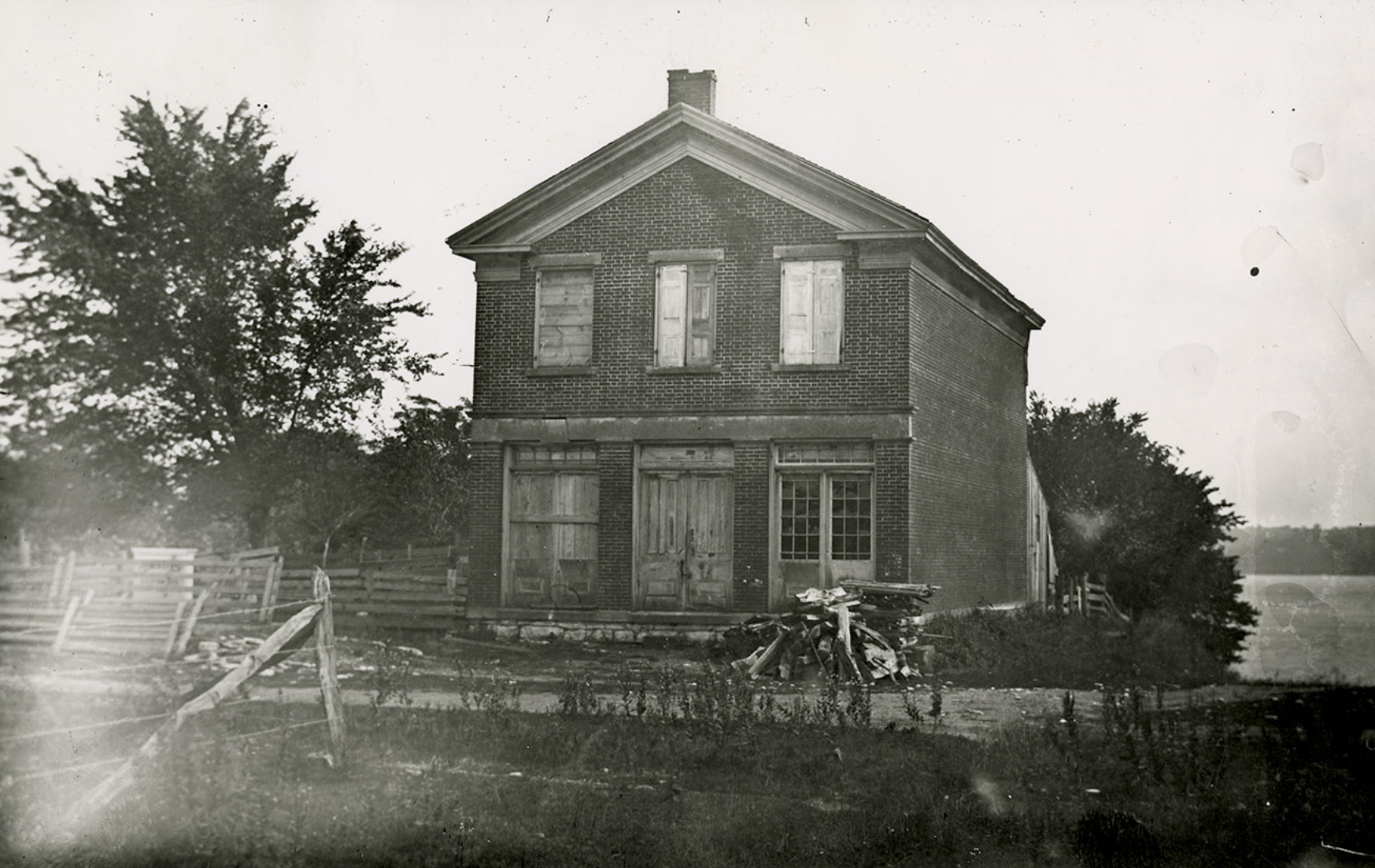
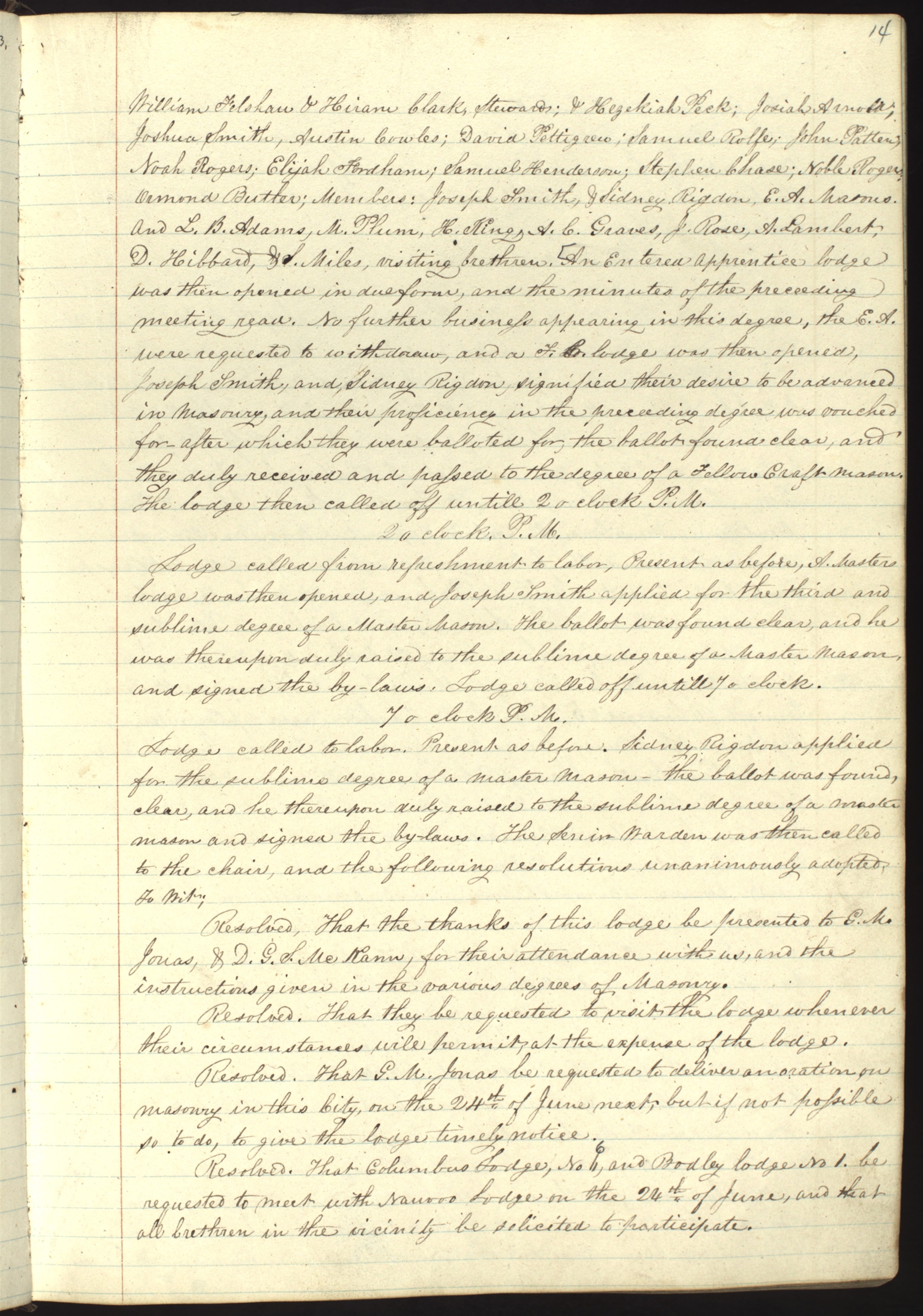
The Masonic marks on the endowment are not in question. Joseph Smith was a Master Mason. The Nauvoo Lodge minutes for March 15 and 16, 1842, record the sequence, with Grand Master Abraham Jonas of the Grand Lodge of Illinois presiding: Joseph and Sidney Rigdon were "duly initiated Entered Apprentice Masons" at the evening session on the 15th; at nine the next morning, after "their proficiency in the preceeding degree was vouched for," they were "duly received and passed to the degree of a Fellow Craft Mason"; and at the 2 PM session Joseph was "duly raised to the sublime degree of a Master Mason."[6] Seven weeks later, on May 4, the first endowment went to nine men in the upper room of the Red Brick Store, all of them Masons.[7][8] Buerger dates it exactly: forty-nine days, counted from his raising on March 16.[9] The upper room was the lodge room, the space where the Nauvoo Masons met and where Joseph had received his degrees, and he had it prepared the day before "preparatory to giving endowments to a few Elders."[10][8:1] Specific elements of that ceremony track contemporary Masonic ritual closely enough that no scholar on either side denies the surface borrowing: tokens (handgrips), signs (gestural forms), penalties whose wording matches Masonic third-degree language verbatim, aprons, the Five Points of Fellowship at the veil.[9:1] The comparison the CES Letter prints on page 109 is not a coincidence. And the symbolic penalties and the Five Points of Fellowship were in fact removed from the endowment in 1990 under President Hinckley.[11]
The chronology is suggestive, and the parallels and the 1990 removals are matters of record. What they mean is not. What this article does is engage the criticism in its most rigorous form (Buerger 1987 in Dialogue, Homer 1994 in Dialogue, Bruno-Swick-Literski 2022 in Method Infinite) rather than the compressed version in the CES Letter. The thesis it defends is narrow and, by the end, well-documented: Joseph used Masonic vocabulary to teach revealed content. He did not take the content from the Lodge.
What the pre-1842 record establishes, and what it does not
The "seven weeks" framing is the structural argument of the CES Letter section. It treats March 1842 as the starting point for the entire endowment. The pre-1842 documentary record complicates that picture in important but limited ways. It establishes the categorical existence of temple ordinance language (endowment of power, washings, anointings, sealing, baptism for the dead, solemn assemblies) fourteen months to a decade before the Lodge. It does not establish that the specific gestural vocabulary the May 1842 endowment introduced (tokens, signs, penalties with verbatim Masonic-third-degree wording, the Five Points of Fellowship) was already present in pre-1842 ritual practice. That vocabulary is where the comparisons in the CES Letter actually overlap, and it entered the LDS ceremony in 1842, not 1832.
The chronology argument is therefore not "the pre-1842 record proves no Masonic vocabulary borrowing." It is more limited: the categorical institution of temple ordinances was a decade-long project, not a seven-week one. The specific gestural vocabulary added in May 1842 was placed inside a body of teaching, narrative content, and covenant structure that had been developing under canonical revelation for years before any Lodge encounter.
The earliest endowment-of-power language in the canonical record is Doctrine and Covenants 38, the Doctrine and Covenants (D&C) being the Latter-day Saint book of canonized modern revelations, dictated January 2, 1831, which carries the promise: "Wherefore, for this cause I gave unto you the commandment that ye should go to the Ohio; and there I will give unto you my law; and there you shall be endowed with power from on high."[12] This is more than a decade before there was a Nauvoo Lodge at all, and over eleven years before the May 1842 ceremony. The endowment is named, located ("from on high"), and tied to a specific physical gathering.
In December 1832, D&C 88 (the "olive leaf") gave detailed instructions for a "school of the prophets" with ritual elements that have no nineteenth-century revivalist parallel. The text prescribes a formal greeting delivered "with uplifted hands to heaven": "Art thou a brother or brethren? I salute you in the name of the Lord Jesus Christ, in token or remembrance of the everlasting covenant" (verses 132-133). The revelation attaches the word "token" to that salutation. It adds an extended call for ritual cleanliness (v. 138) and sets the whole thing inside "a house of prayer, a house of fasting, a house of faith, a house of learning, a house of glory, a house of order, a house of God" (v. 119).[13] This is the nearest thing in the pre-1842 record to a Masonic-style token, and a skeptic can fairly note as much. The resemblance is narrower than the comparison implies, because the prescribed gesture is raised hands rather than any grip, but the fair point holds: a formal fraternal greeting, made as a covenant token, was already on the books. Even that much resembles Masonic forms; Joseph's brother Hyrum had joined the Masons in the mid-1820s, supplying potential indirect exposure. The argument is not that the 1832 greeting arose in a Masonic vacuum. It is that a formal covenant salutation was attached to canonical revelation in 1832, not introduced fresh in May 1842.
In June 1833, D&C 95 explicitly commanded the Kirtland Temple. The Lord declared: "I gave unto you a commandment that you should build a house, in the which house I design to endow those whom I have chosen with power from on high" (v. 8).[14] One year later, D&C 105:33 reaffirmed that "the first elders of my church should receive their endowment from on high in my house, which I have commanded to be built unto my name in the land of Kirtland."[15]
In November 1835, Joseph began teaching the Twelve about ritual ordinances directly. At a meeting on November 12, his journal records him teaching about the washing of feet, the solemn assembly, and the necessity of an endowment, "you need an endowment brethren in order that you may be prepared and able to overcome all things", and his reference to the endowment "you are so anxious about you cannot comprehend now, nor could Gabriel explain it to the understanding of your dark minds."[16] The endowment was being taught as a content-rich category, not just a phrase, ten weeks before the first Kirtland washings and six years and four months before the Masonic initiation.
On January 21, 1836, Joseph and the First Presidency observed an actual ritual. Joseph's own journal records that they "retired to the loft of the printing office, where we attended to the ordinance of washing our bodies in pure water, we also perfumed our bodies and our heads, in the name of the Lord."[17] The anointing followed that evening, "at early candlelight," in the west school room of the recently completed temple. Oliver Cowdery's contemporaneous record describes washing "each other's bodies" in an earlier January entry, and for the 21st the anointing with oil "in the man[ner] that were Moses and Aaron, and those who stood before the Lord in ancient days," followed by blessings.[18] On January 22, the Quorum of the Twelve and the presidency of the Seventy received their anointings. On March 27, 1836, the Kirtland Temple was dedicated; D&C 109 (the dedicatory prayer) asked, "Let the anointing of thy ministers be sealed upon them with power from on high. Let it be fulfilled upon them, as upon those on the day of Pentecost" (vv. 35-36). On March 30, 1836, a "solemn assembly" was held, with the ordinance of washing of feet administered through the day and shouts of hosanna.
That is six years before the Nauvoo Masonic initiation. It is not the May 1842 endowment; Buerger notes these Kirtland ordinances were "not an endowment as we would currently define the term."[9:2] But it is structured temple ritual (washings, anointings, sealing, prayer-circle elements, solemn assembly, pronounced blessings) performed in the absence of any Lodge.
In August 1840, Joseph introduced baptism for the dead. A vicarious ordinance for the deceased was a category nineteenth-century American Protestantism vigorously denied, and it was operational nineteen months before the Masonic initiation.
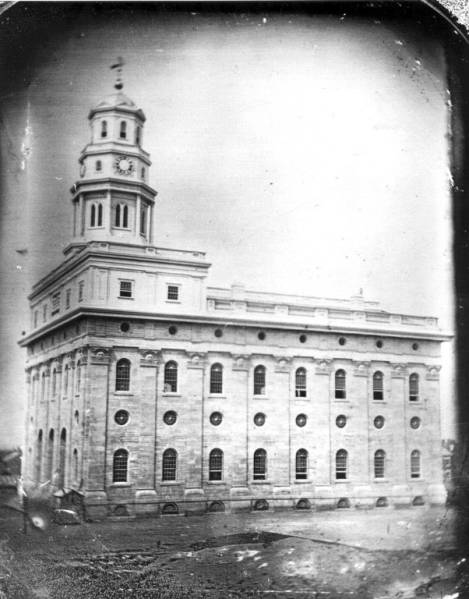
On January 19, 1841, with Joseph's Masonic initiation still fourteen months away, D&C 124 commanded the Nauvoo Temple and spelled out what the building was for:
"Therefore, verily I say unto you, that your anointings, and your washings, and your baptisms for the dead, and your solemn assemblies, and your memorials for your sacrifices by the sons of Levi, and for your oracles in your most holy places wherein you receive conversations, and your statutes and judgments, for the beginning of the revelations and foundation of Zion, and for the glory, honor, and endowment of all her municipals, are ordained by the ordinance of my holy house, which my people are always commanded to build unto my holy name."[19]
The Lord names anointings, washings, baptisms for the dead, solemn assemblies, and oracles in most holy places, fourteen months before Joseph's Masonic initiation. Verses 40-41 add that this temple is to be built "that I may reveal mine ordinances therein unto my people" and "things which have been kept hid from before the foundation of the world." Revealed ordinances inside a dedicated temple structure were on the page, in canonical revelation, in January 1841. But D&C 124 names categories of ordinances, not the specific gestural elements (tokens, signs, penalties, the Five Points of Fellowship) that the May 1842 ceremony would introduce.
In March 1842, simultaneous with the Masonic initiation, the Book of Abraham ran in Times and Seasons in two serial installments. The first appeared on March 1; the second, in the issue dated March 15, carried Abraham 4-5, the creation account that would form the narrative core of the May endowment, under the same date as Joseph's initiation. The Book of Abraham was begun in 1835; its 1842 publication is contemporaneous with the Lodge, not caused by it.[10:1] The Book of Moses, dictated in 1830-31, had supplied the Adam and Eve material more than a decade earlier.
| Date | Event |
|---|---|
| 1830-31 | Book of Moses dictated; supplies the creation, Fall, and Eden material that anchors the endowment narrative |
| January 2, 1831 | D&C 38: "endowed with power from on high" promised |
| December 1832 | D&C 88: school of the prophets ritual with a formal covenant salutation ("in token or remembrance of the everlasting covenant"), made with uplifted hands |
| June 1833 | D&C 95: Kirtland Temple commanded, "I design to endow those whom I have chosen with power from on high" |
| November 1835 | Joseph teaches the Twelve about the necessity of an endowment they "cannot comprehend now" |
| January 21-22, 1836 | Washings and anointings in the Kirtland Temple |
| March 27-30, 1836 | Kirtland Temple dedication, solemn assembly, Hosanna Shout |
| August 15, 1840 | Baptism for the dead introduced |
| January 19, 1841 | D&C 124: Nauvoo Temple commanded; anointings, washings, baptisms for the dead, solemn assemblies named, but tokens, signs, penalties, Five Points of Fellowship not named |
| March 1 and 15, 1842 | Book of Abraham published in Times and Seasons in two installments; the creation account (Abraham 4-5) in the March 15 issue |
| March 15-16, 1842 | Joseph made a Mason: Entered Apprentice the evening of March 15, Fellow Craft the next morning, Master Mason at 2 PM on March 16, under Grand Master Jonas's written dispensation |
| April 28, 1842 | Joseph addresses Relief Society in the upper room of the Red Brick Store |
| May 4, 1842 | First endowment given to nine men in the same upper room: first appearance in LDS practice of tokens, signs, penalties, Five Points of Fellowship |
The seven-week chronology is mathematically accurate for the specific Masonic-form elements. It also misses more than a decade of categorical development of temple ordinance language under canonical revelation. Both observations are true at once.
There is a further complication, and it works against the faithful reading. Joseph's personal exposure to Masonic content stretches back fifteen years before his March 1842 initiation, through Hyrum, Heber C. Kimball, John C. Bennett, and other Masonic associates.[9:3][20] A naturalistic account does not need Joseph formally initiated in 1832 to have him aware of Masonic ritual content. It needs only proximity to Masons, which he had from at least the mid-1820s onward. That much is true, and denying it would weaken the case rather than strengthen it.
What survives the concession is narrower, and it holds. The theological content of the endowment (creation, Fall, Atonement-centered covenants made between participant and God, the return to God's presence) was developed through canonical revelation and scripture-translation across the decade before May 1842, on a track carrying material absent from Masonic ritual at any layer. The form/content distinction does not require pre-1842 development to have been Masonry-blind. It requires the content to have come from somewhere other than the Lodge. The documentary record establishes that, even allowing for indirect Masonic exposure through Hyrum and the others.
Key Point
The pre-1842 record establishes the categorical existence of temple ordinance language fourteen months to a decade ahead of the Lodge. It does NOT establish the presence of the specific Masonic-form gestural elements (tokens, signs, penalties, Five Points of Fellowship) in LDS ritual before 1842; those elements entered the ceremony in May 1842. The seven-week timeline is real for those specific elements. The chronology defeats the categorical version of the seven-week argument; answering the gestural-vocabulary version is work for the form/content distinction and for the ancient-parallels evidence.[19:1][21]
What the actual scholarly literature says
The CES Letter compresses the scholarly conversation into bullet points. The conversation itself is more careful, and the most important scholars on this question, across the faithful-critical spectrum, agree on more than Runnells acknowledges.
David John Buerger's 1987 article in Dialogue: A Journal of Mormon Thought, "The Development of the Mormon Temple Endowment Ceremony," is the standard critical-but-thoughtful scholarly history of the endowment, expanded in his book The Mysteries of Godliness.[9:4][22] Buerger writes from a position skeptical of orthodox claims; he is not a faithful apologist. His bottom line is direct:
"The temple ceremony cannot be explained as wholesale borrowing from Masonry; neither can it be explained as completely unrelated to Masonry."[9:5]
Buerger then catalogs three categories of overlap that he describes as "very marked" or "sometimes identical": tokens (handgrips), signs (gestural forms), and penalties.[9:6] He is equally precise about what is not in the overlap. In his words, "the creation and fall narrative, the content of the major covenants, and the washing and anointings have no parallel in Masonry." The structural backbone of the endowment is, on Buerger's own account, theologically and textually independent of Masonic ritual.
Michael W. Homer's 1994 Dialogue article, "'Similarity of Priesthood in Masonry'," runs 113 pages and is the longest sustained scholarly treatment of the question, expanded in his 2014 University of Utah Press book Joseph's Temples.[23][24] Homer documents real overlap and real influence on form while consistently distinguishing form from theological content.
Bruno, Swick, and Literski's 2022 Method Infinite: Freemasonry and the Mormon Restoration, published by Greg Kofford Books, is the most ambitious recent critical-scholarly work on the topic, arguing for a more substantial Masonic axis running through the Restoration than faithful scholars typically grant.[25] It is the version of the criticism most worth answering. Bradshaw's review in Interpreter 54 engages the work seriously, agreeing where the documentation supports the thesis, dissenting where it does not, and concluding with a framing Bradshaw himself developed and which much faithful scholarship accepts: "Masonic and temple rituals are better characterized overall as distant cousins rather than members of the same nuclear family," sharing "some common ancestry in the Bible and also some nineteenth-century borrowing."[26] Bruno, Swick, and Literski read the same overlap as far more than surface borrowing. Bradshaw's review describes the book's pervasive theme of Joseph Smith as "a Masonic restorer, bringing to light the heretofore concealed Masonic and priestly mysteries," and reports its argument that the ritual similarities cannot be explained through "common ancient sources."
Jeffrey M. Bradshaw's 2015 Interpreter article, "Freemasonry and the Origins of Modern Temple Ordinances," is the longest single faithful-scholarly response and the most carefully argued.[21:1] Bradshaw concedes the chronological optics openly: "Because Joseph Smith became a Mason not long before he began to introduce others to the Nauvoo endowment, some suppose that Masonry must have been the starting point for his inspiration on temple matters. The real story, however, is not so simple." He then argues at length that the suspicion is not borne out by the textual data, the pre-1842 chronology, or the ancient parallel evidence, and that "what he did with those suggestions through his prophetic gifts was seen by the Saints as transformative, not merely derivative." Bradshaw's framing is translation rather than derivation: Joseph translated revealed truths "into words and actions that the Saints in Nauvoo could readily understand," using familiar Masonic vocabulary among other available cultural materials.
Greg Kearney, an LDS Master Mason whose 2005 FAIR conference paper the CES Letter actually quotes against the Church, gives the cleanest summary of the faithful position.[27] Kearney's view, broadly shared by Matthew B. Brown and Bradshaw, frames the question this way:
"Everybody wants to know, 'Okay Greg, did the temple ritual come from Freemasonry?' And I'm going to answer that with a qualified yes."[27:1]
Kearney is careful to distinguish what the qualified yes does and does not concede. On his reading, the endowment is revealed doctrine necessary for the salvation of the Saints; "the ritual" (call-and-response, memorized sequences, three-stage progression, ritual gesture) is how that doctrine is taught. Masonry influenced the form of instruction, not the doctrinal content. He describes Joseph's experience in Lodge in his own words:
"Joseph Smith sat in Lodge, he watched as humble farmers–most of whom he knew probably couldn't read and write well–learned complicated, difficult ritual and he said in his mind, 'Ah! This is how I'll do it. This is how I'll teach the endowment to the Saints.'"[27:2]
The endowment, on Kearney's reading, is revealed content delivered through a teaching method that Joseph encountered through Masonry and recognized as effective pedagogy for transmitting complex doctrine to a frontier audience that included many illiterate converts. The familiar packaging let the converts focus on the unfamiliar content.
Massimo Introvigne, a non-Latter-day Saint Catholic scholar of new religious movements who has been engaged by LDS scholars but has no apologetic stake, frames the question similarly. In his published work on Mormonism and Freemasonry he describes Joseph as having "used the masonic language of the rituals for the purpose of confirming his followers familiar with Freemasonry into a doctrine which had no 'similarities' with anything they had heard in the masonic lodges."[28]
Notice where this leaves the two camps. The faithful scholarly position (Bradshaw, Brown, Kearney, John W. Welch, the contemporary Church History Topics page) is closer to "form yes, content no" than to "no Masonic influence whatsoever." Buerger and Homer, working the critical side, land closer to real but limited overlap with substantial independent material than to wholesale plagiarism. Bruno, Swick, and Literski push further, reading the overlap as a deep Masonic thread running through the Restoration; even their version is an influence-and-appropriation claim rather than a claim that the endowment is a plagiarized ceremony. Between the faithful scholars and the two critical historians, the argument is over the relative weights of acknowledged form-overlap and acknowledged content-independence, not over whether each exists.
Key Point
Even Buerger, a critical scholar, explicitly rejects "wholesale borrowing." Even Bradshaw, a faithful scholar, concedes "some nineteenth-century borrowing." The faithful and critical literature agree on more than the CES Letter's framing suggests: real but limited form-level overlap, substantial content-level independence, and an ongoing dispute about what the limited overlap means.
Quantifying the actual overlap, and its limits
What the opening figure measures matters as much as what it says. David Eddington's 2025 article in Interpreter 66, "A Textual Comparison of Masonic Rites and the LDS Temple Endowment," applied n-gram and conceptual-similarity techniques to four corpora: an early-twentieth-century LDS endowment text (the 1931 Paden version, which preserves more of the original 1842 elements than later versions and is publicly available); a nineteenth-century Masonic rite (Duncan, 1866); the Pearl of Great Price's Books of Moses and Abraham; and Cyril of Jerusalem's Mystagogical Catecheses (c. 350 AD).[5:1] He added the Odd Fellows rite (1909) as a point of comparison.
| Comparison | Conceptual or vocabulary overlap |
|---|---|
| Endowment vs. Masonic rite (liberal, conceptual) | 17.2% (77 of 448 sentences) |
| Endowment vs. Masonic rite (restrictive, conceptual) | 9.7% (41 of 423 lines) |
| Current 2023 endowment vs. Masonic rite (after revisions, conceptual) | 8.3% |
| Endowment vocabulary vs. Pearl of Great Price | 18.4% |
| Endowment vocabulary vs. Masonic rite | 10.8% |
| Masonic rite vs. Odd Fellows (vocabulary) | 24.7% |
| Endowment vs. Cyril of Jerusalem (bigram) | Second-highest bigram match to the endowment (highest: the Books of Moses and Abraham), above the endowment-Masonic bigram match |
These numbers are the best quantitative evidence currently available on the borrowing question. They are interpretive rather than dispositive, and several methodological caveats matter before drawing conclusions: vocabulary measures word-frequency overlap rather than ritual-form overlap, the 1931 Paden text is a publicly available proxy for an unavailable 1842 original, and the Cyril comparison has a Christian-vocabulary confound on the bigram measure that the structural argument (stripping, anointing, clothing, sealing, new name) does not depend on.[29] Eddington is open about his own aim as well: demonstrating the unlikeliness of wholesale appropriation is a purpose he names for himself in the methods section. He is equally open about his adjustments. Paden's version of the endowment was thin on the creation material, so he filled it in from other online sources, and he set aside Duncan's higher degrees (Mark Master, Past Master, Most Excellent Master, Royal Arch) because Joseph had been initiated only into the first three before the endowment was created. The Odd Fellows rite is in the study for a reason he states: both ceremonies are initiations, and he wanted "a point of comparison with another initiation ceremony, especially one that like the endowment, has noted similarities to the Masonic rite."
With those caveats in place, three findings carry real weight.
First, the maximum conceptual overlap between the endowment and the nineteenth-century Masonic rite is 17.2% under a generous criterion, dropping to 9.7% under a stricter one.[5:2] Neither figure is anywhere near wholesale copying. The CES Letter's "100% Masonic" language is aimed at the two elements the Church removed in 1990, and the Five Points section below meets that specific claim; the sentence right after it widens the charge, asking what it says about the endowment if "100% pagan Masonic rituals were in it from its inception," and the wider charge is the one these figures answer.
Second, the endowment shares more vocabulary with the Pearl of Great Price (18.4%) than with the Masonic rite (10.8%).[5:3] This is a result Eddington calls expected, and it rests on a text whose thin creation material he filled in himself, so on its own it discriminates less than it looks like it does.
Third, on the like-for-like measure (vocabulary against vocabulary), the endowment matches the Masonic text less closely (10.8%) than the Odd Fellows rite does (24.7%). Eddington's abstract records the result without hedging: "In some instances, comparisons indicate more similarity between the Masonic and Odd Fellows ceremonies than between the LDS endowment and the Masonic rite."[5:4] What was copied, then, if the endowment's nearest kin is Joseph's own scripture while the Masonic rite's is the Odd Fellows?
Eddington states his own conclusion in measured terms: "The overlap between an early version of the endowment and a nineteenth century version of the Masonic rite reaches about 10% to 17% (depending on how liberal or restrictive the definition of similarity)."[5:5] Studies that dwell only on the similarities, he writes, "may give the false impression of massive plagiarism on the part of Joseph Smith." Keeping the scope of that claim straight matters: it bears on wholesale borrowing, not on the existence of Masonic influence at all.
The Five Points of Fellowship problem
Among the textual overlaps, one is conspicuously close. The CES Letter places it at the center of its case for a reason. On page 109:
"PETER: 'The five points of fellowship are: inside of right foot by the side of right foot, knee to knee, breast to breast, hand to back, and mouth to ear.'" – LDS Temple Endowment - Five Points of Fellowship, Removed 1990
"WORSHIPFUL MASTER: 'The five points of fellowship are: foot to foot, knee to knee, breast to breast, hand to back, and cheek to cheek, or mouth to ear.'" – Masonic Five Points of Fellowship from the 3rd Degree Master Mason Ritual[3:1]
Nothing else in the section comes this close. The two texts share their sequence nearly word for word, and coincidence is not a serious explanation. An answer that opens by denying the match has already lost the reader.
And in 1990, under President Hinckley, the Church took it out of the endowment altogether.[11:1] The article on temple changes treats the 1990 revisions in full. For the source-of-the-endowment argument, the relevant fact is plain: the section's closest parallel points at an element the live ceremony no longer contains.
No covenant was made at the Five Points of Fellowship. The moment taught rather than bound: it showed participants where they stood in relation to Christ at the veil. The five promises that bracket that moment (obedience, sacrifice, the law of the gospel, chastity, consecration) have no counterpart anywhere in Masonry, and 1990 left every one of them untouched. In the lodge, the gesture belongs to the close of the Hiram Abiff drama, where the Worshipful Master lifts the candidate out of a staged death by the grip and the lesson drawn is loyalty between lodge brothers. In the endowment the same posture pointed elsewhere, toward Christ receiving the participant. Anyone who had knelt in a lodge would have recognized the posture; what it was being used to say was not what the lodge said.
The gesture is one of the conceptual similarities Eddington counted; his published examples set the line "The five points of fellowship are ___" against its Masonic counterpart. It is also exactly the kind of overlap the faithful scholarly position has always conceded.
A skeptic can press the 1990 pattern further. The changes removed precisely the elements that match Masonic ritual forms, penalties and the Five Points of Fellowship, which is consistent with institutional discomfort about Masonic appearance and can be read as the Church quietly fixing a source problem. Two things answer that. First, the form/content distinction was not invented in 1990; it is what Joseph's contemporaries said about the relationship from 1842 onward, as the next section documents. Second, what the 1990 pattern actually demonstrates is that the Masonic-form elements were structurally severable from the covenants without altering the substance of what was being made, or to whom. That is the empirical signature one expects from "form, not content." It is not the only reading: a critic can take the same removal as the institution recognizing a source problem and addressing it.
What the framework of the early Saints does and does not establish
Heber C. Kimball's "true Masonry" statement is the second pillar of the CES Letter section. The CES Letter prints it as its second numbered concern:
"We have the true Masonry. The Masonry of today is received from the apostasy which took place in the days of Solomon, and David. They have now and then a thing that is correct, but we have the real thing."[30]
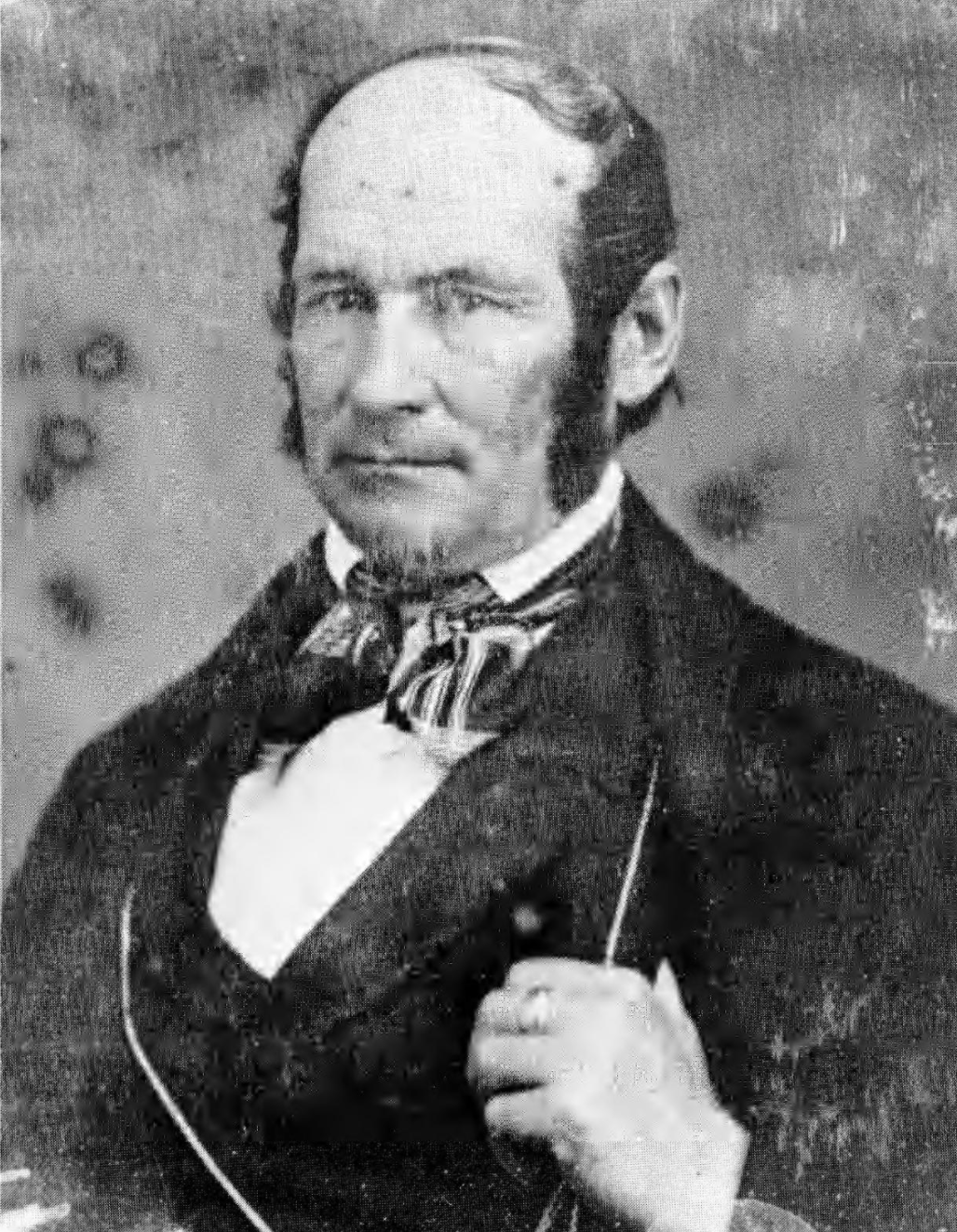
The CES Letter cites "Heber C. Kimball and Family: The Nauvoo Years, Stanley B. Kimball, p.458," and that citation checks out. The 1975 BYU Studies article runs from 447 to 479, page 458 sits inside it, and page 458 is where the quoted sentence appears, on the same page as Kimball's June 1842 letter to Parley P. Pratt.[31] Two transcription traditions of the 1858 speech survive, and they differ the way two independent shorthand transcriptions would. Stanley Kimball printed the Manuscript History of Brigham Young text, which reads "the Masonry of today," and that is the form the CES Letter copies; the General Meeting minutes in the Church History Library (CR 100 318) read "the Masonary of the day."[32] Nothing in the sourcing is wrong. What is wrong is what the CES Letter takes the sentence to mean.
Kimball had articulated a parallel statement in 1842, within weeks of the first endowment, in a primary-source letter to Parley P. Pratt. Buerger 1987 reproduces the 1842 letter in Kimball's hand:
"Thare is a similarity of preast Hood in Masonry. Br. Joseph Ses Masonry was taken from preasthood but has become degenerated. But menny things are perfect."[9:7]
Kimball's June 1842 letter is contemporaneous primary attestation of what Kimball reports Joseph as teaching ("Br. Joseph Ses..."). It is hearsay-format in the technical sense, documenting what Kimball understood Joseph to be saying rather than Joseph's words as recorded by Joseph himself. But it is contemporaneous, written by an inner-circle participant six weeks after the first endowment, and consistent with what later witnesses recorded.
A careful framing of what these statements establish, and what they do not, matters here.
What the early-Saint witnesses establish: the contemporaneous theological interpretation held by Joseph and his closest associates. Within weeks and months of May 1842, the inner circle was articulating a single coherent framework about the relationship between Masonry and the temple. That framework was not a mid-twentieth-century apologetic invention; it is what early Saints were saying contemporaneously with the events.
What the early-Saint witnesses do not establish: the historical accuracy of the ancient-transmission claim the framework embeds. Whether Masonry actually preserved fragments of an ancient priesthood ordinance through millennia of apostasy is a historical claim about ancient transmission, and that claim is not established by documenting what nineteenth-century Mormons believed about ancient transmission. The witnesses corroborate the contemporaneity and consistency of the framework's articulation; they do not corroborate its underlying historical premise. Nor are the witnesses strictly independent. Kimball, Willard Richards, Benjamin Johnson, Joseph Fielding, and Franklin D. Richards were Joseph's inner circle, hearing the framework from Joseph or from one another.
Within those limits, the framework the early Saints articulated is documented across the following primary or near-primary sources:
- Willard Richards (Joseph's secretary, an endowed Mason, present at the May 4 endowment), writing of the May 4, 1842 council: "In this council was instituted the ancient order of things for the first time in these last days." Bradshaw reads the line as asserting both the antiquity of the ordinance and the fact that it was new to the men who received it.[21:2]
- Heber C. Kimball, June 1842 letter to Parley P. Pratt (six weeks after the first endowment): "Br. Joseph Ses Masonry was taken from preasthood but has become degenerated. But menny things are perfect."[9:8]
- Heber C. Kimball, November 13, 1858 General Meeting Minutes: "We have the true Masonary. The Masonary of the day is received from the apostasy which took place in the days of Solomon and David. They have now and then a thing that is correct, but we have the real thing, but how many comprehend it and see the propriety of being true towards each other?"[32:1]
- Benjamin F. Johnson, recording Joseph's teaching (memoirs published 1947 from material written from memory in earlier decades): "Freemasonry, as at present, was the apostate endowments, as sectarian religion was the apostate religion."[21:3]
- Joseph Fielding (an endowed Mason), 1844 journal: "Many have joined the Masonic Institution… this seems to have been a Stepping Stone or Preparation for something else, the true Origin of Masonry."[33]
- Franklin D. Richards records Joseph as having "desired to know what they were" regarding ancient elements in Masonry, language consistent with (though not requiring) a frame in which Joseph approached the lodge as an investigation of preserved fragments rather than as a source.[21:4]
The framework is internally consistent with broader Restoration theology, which takes as foundational the premise that primitive Christianity was corrupted across centuries of apostasy with fragments of true doctrine and ordinances surviving in degraded forms throughout that period. From inside that framework, the existence of a Masonic ritual sharing fragments with the endowment is what one would expect.
It is also unfalsifiable as a strictly historical claim. If the endowment looks Masonic, that is because Masonry preserved fragments. If it looks like Cyril of Jerusalem, that is because early Christianity preserved fragments. If it looks like the Mari Investiture Panel, that is because temple ideology was pan-cultural in the ancient Near East. The framework can absorb either "Joseph received material via revelation that Masonry happened to preserve in degraded form" or "Joseph absorbed Masonic content naturalistically and theologically reframed it as ancient priesthood preservation." Both are compatible with what early Saints believed about transmission. The framework remains coherent as a theological claim whose truth depends on the truth of the Restoration as a whole; it is not a historical hypothesis that documentary evidence about nineteenth-century beliefs can independently confirm.
The CES Letter drops the Kimball quote in without comment, inside a section arguing that the endowment came from the Lodge. Set there, it invites the reader to take it as a confession that the temple is just Masonry. This section rejects that reading, because it inverts what Kimball was claiming. He was claiming the opposite: that the priesthood is anciently and divinely authentic, and that Masonry is its degenerate descendant rather than its ancestor.
Key Point
The "Masonry came from priesthood" framework is documented in contemporaneous primary sources from 1842 onward, articulated consistently by Joseph and his inner circle. What this establishes is the contemporaneity and consistency of the early Saints' theological interpretation, not whether the ancient-transmission story they told is historically true. The framework remains coherent as a theological reading; whether it is true depends on whether the Restoration is. Its work here is to invert the CES Letter's framing of the Kimball quote: Kimball was not confessing borrowing; he was articulating a framework in which the priesthood is the ancient ancestor and Masonry the degenerate descendant.[9:9][32:2][21:5]
The Solomon-temple objection and the ancient-parallels case
The CES Letter's fourth numbered concern, that "Freemasonry has zero links to Solomon's Temple," is, on its surface, correct. Faithful and critical scholars agree. There is no documentary evidence of continuous ritual transmission from the First Temple in Jerusalem (c. 950 BC) to the Grand Lodge of London in 1717. The CES Letter quotes FAIR conceding the point, and Greg Kearney concedes it explicitly.[27:3] It then adds a second quotation, "Masonry, while claiming a root in antiquity, can only be reliably traced to medieval stone tradesmen," this one from a second FAIR piece titled "Similarities Between Masonic and Mormon Temple Ritual." Kearney's own nearest wording reads "Freemasonry as we know it today can trace its origins only as far back as the medieval stone Masons guilds of the Middle Ages."[27:4] The substance is the same.
Two further facts about Masonic ritual matter for the structure of this argument.
The 1842 Masonic ritual is the eighteenth-century English form, not an ancient form. Freemasonry as a documented institution dates to 1717 (the first Grand Lodge in London); the three-degree system with the Hiram legend took shape in the 1720s and 1730s. The third-degree Hiram Abiff legend, the penalties, the Five Points of Fellowship, and the specific tokens and signs Joseph encountered in Nauvoo Lodge in 1842 are products of eighteenth-century English Speculative Masonry. When the LDS endowment matches Masonic ritual on tokens, signs, penalties, and the Five Points of Fellowship, it matches the eighteenth-century English form, not an abstract ancient form.
The faithful position therefore must distinguish between two claims. Ancient temple ideology (washing, anointing, sacred clothing, progressive covenants, name-and-token-mediated ascent) is documented across the ancient Mediterranean and Near East and recurs in patterns that exceed what 1842 cultural availability can explain. The specific Masonic-form elements in the May 1842 endowment are products of eighteenth-century English Masonic ritual development. So the faithful argument is not "the specific Masonic forms trace back through ancient priesthood transmission." It is "Joseph used eighteenth-century English Masonic forms as teaching scaffolding for ancient temple content whose underlying pattern recurs across ancient initiation traditions." The scaffolding came from Masonic forms culturally available to him; the pattern it carried is older than Masonry itself.
This distinction matters because the ancient-parallels case does not require Masonic mediation. It requires the ancient parallels to exist independently of Masonry. That case is empirically substantial, with one honest qualification: the reading of these parallels as specifically prefiguring the LDS endowment is more LDS-inflected than the documentary evidence alone determines, and a general academic reader without those commitments may find the parallels suggestive without finding them dispositive. The qualification mirrors the one already placed on the early Saints' framework: coherent as theology, not independently confirmable as history.
Cyril of Jerusalem's Mystagogical Catecheses (c. 350 AD) is the ancient initiation text closest to the endowment in structure, matching it step for step on stripping, anointing, clothing, sealing, and the conferral of a new name, and there is no evidence Joseph ever saw it. Cyril's five lectures detail catechumenal initiation: candidates strip off old clothing, are anointed with "exorcised oil, from the very hairs of your head" (Lecture 20:2-4), undergo triple immersion baptism, are clothed in the white robes of "the garment of salvation" (19:10-11), are sealed with the sign, and receive a new name through ritual progression.[34] On Eddington's bigram analysis, Cyril is the second-highest bigram match to the endowment, behind only the Books of Moses and Abraham and above the match between the endowment and the nineteenth-century Masonic rite.[5:6] (The bigram measure has a Christian-vocabulary confound, as noted; the structural correspondence just described holds independent of bigram methodology.) Cyril's own text, in the same analysis, shares more vocabulary with the Books of Moses and Abraham (16.9%) than with anything else in the corpus, a figure subject to that same confound since both texts are explicitly Christian.[5:7] The first complete English translation, volume 2 of the Oxford Library of the Fathers (1838), appeared only four years before the endowment, in a High-Church Anglican series launched to remedy what its own prospectus called the state of the Fathers: "inaccessible, except to such as have large libraries, and are familiar with the languages in which they are written." No evidence places a copy in frontier Illinois or in Joseph's hands.
The Pistis Sophia and the Books of Jeu, Christian Gnostic texts of about the third century AD, describe disciples in linen garments surrounding Christ for prayer and contain detailed instructions for the ascending soul to pass heavenly guardians using seals, names, and signs. The first English translation of the Pistis Sophia (G. R. S. Mead, 1896) was published fifty-two years after Joseph's death.[35]
Joseph and Aseneth (c. 100 BC – 200 AD) contains a sequence in which Aseneth takes Levi's hand, and Levi, who "saw letters written in heaven," "revealed them to Asenath in secret." The first English translation was published in 1918.[36]
The Apocalypse of Paul in the Nag Hammadi library contains an ascent through gates with the apostle giving signs at each. The Nag Hammadi codices were not discovered until 1945, 101 years after Joseph's death.[37]
The Hekhalot Rabbati describes a ritual ascent through the heavenly palaces, the hekhalot that give the literature its name. William Hamblin summarizes the corpus this way: "To move between the various sections or hekhalot of the celestial temple, the visionary initiate must pass through a series of doors or gates, each guarded by angels."[38] The texts reached Western scholarship only in the mid-nineteenth century, after Joseph's death, and critical editions came in the twentieth.
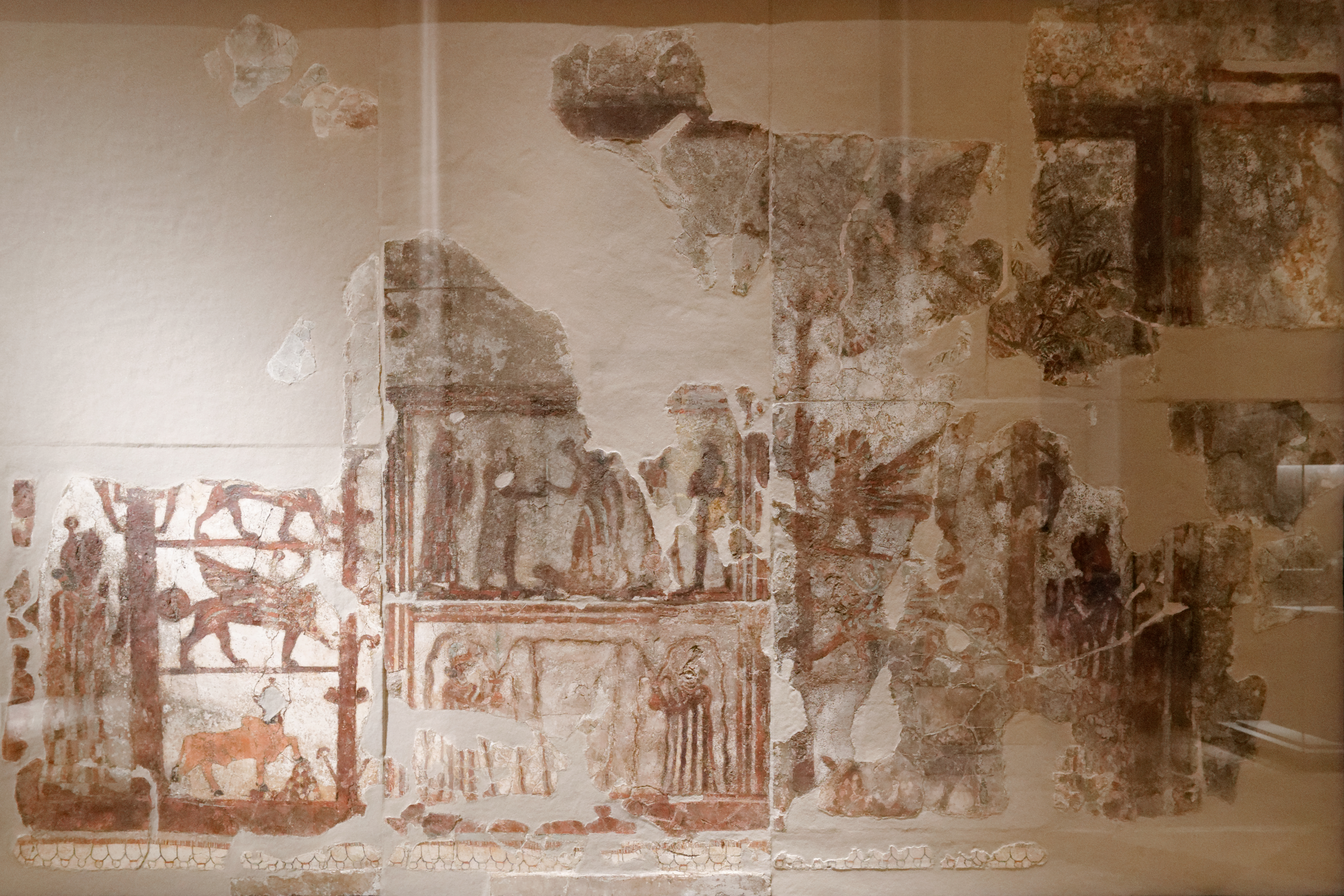
The Mari Investiture Panel was painted on a palace wall in Old Babylonian Mesopotamia around 1800 BC. It is what most scholars take to be, in Bradshaw's summary, "a pictorial representation of the ritual in which kingship was renewed." The central scene shows the king before the goddess Ishtar, who holds out to him the symbols of power. Around that scene Bradshaw traces a whole ritual sequence: a palace garden courtyard, a sacrificial procession, sacrifices the queen furnished for the "Lady of the Palace," and guardians posted at the entrance to each private chamber.[21:6] Western scholarship knew nothing of the panel until Mari was excavated in the 1930s.
The Dead Sea Scrolls (1947-1956) include community texts whose rituals Bradshaw reads as "enabling members of the community… to participate in a form of worship that brought them into the presence of God ritually."[21:7]
Margaret Barker's First Temple reconstruction. Barker, an Old Testament scholar in the Methodist Church and a former president of the Society for Old Testament Study, has spent four decades arguing that pre-exilic Israelite religion preserved temple traditions (a divine council, a high God and an enthroned son figure, ritual meals in heaven, theophanies in the most holy place) that were systematically suppressed in post-exilic redactions but are recoverable from the apocrypha, pseudepigrapha, and early Christian texts.[39] Kevin Christensen's Interpreter survey "Twenty Years After 'Paradigms Regained'" documents the convergence between her reconstruction and Latter-day Saint temple themes, a convergence that emerges from her independent reading of Old Testament textual history.[40] Barker is not LDS and has no apologetic stake. Her conclusions are also genuinely contested in mainstream Old Testament scholarship; the "high God / enthroned son" reconstruction is not consensus. She is cited here as independent corroboration of a reading of First Temple ideology that aligns with Latter-day Saint themes, corroboration that is real on her reading and weaker if mainstream scholarship's more conservative reconstruction is preferred.
John W. Welch's The Sermon on the Mount in the Light of the Temple (Ashgate Society for Old Testament Study Monographs, 2009; reprinted Routledge), published outside the LDS scholarly press, argues for the Sermon on the Mount as itself an ancient temple text.[41] Welch's reading is contested in mainstream NT scholarship; it stands here as scholarly support, with the flag that it is one LDS-friendly interpretation among others.
The Hugh Nibley corpus, John Gee, Kerry Muhlestein, William Hamblin, and Donald Parry / Stephen Ricks edited volumes catalog parallels across Egyptian, Mesopotamian, Greek-magical-papyri, Ethiopic, Coptic, and rabbinic literatures.[42][43][44][45][46][47] Gee, Muhlestein, and Hamblin are LDS scholars whose readings of the evidence are inflected by faith commitments; the parallels they document are real, the specific interpretation of those parallels as prefiguring the LDS endowment depends on readings the LDS scholarly tradition has developed. William Hamblin and David Seely's Solomon's Temple: Myth and History (Thames & Hudson, 2007), published outside the LDS press, documents priestly consecration via washing, anointing, and vestments; the Holy of Holies as sacred space; and ritual ascent symbolism implicit in the temple's architectural progression, features common to many ancient temple traditions.[48]
The pattern recurring across these ancient sources (ritual washing, anointing with oil, donning of sacred clothing, conferral of a new name, progressive covenants, ritual ascent toward the divine presence, prayer circle) is not present in modern Masonic ritual at the depth or specificity it reaches in the endowment. Where could Joseph have seen it whole? The empirical claim that the pattern is real, recurs across antiquity, and includes Latter-day Saint temple worship as one instance is well-supported. The interpretation of that pattern as evidence for the Restoration's truth claims depends on readings stronger for LDS-friendly audiences than for general academic ones. The typological parent the LDS scholarly tradition consistently identifies is the Israelite Temple, with its priestly consecration, washings, anointings, holy of holies, and architectural progression. It is not the Lodge.[48:1]
Further Reading
For the foundational compilation of ancient parallels: Donald W. Parry and John W. Welch, eds., Temples of the Ancient World (FARMS, 1994); Donald W. Parry and Stephen D. Ricks, eds., The Temple in Time and Eternity (FARMS, 1999); Truman G. Madsen, ed., The Temple in Antiquity (BYU Religious Studies Center, 1984). For Margaret Barker's non-LDS reconstruction of First Temple traditions, see her Temple Theology: An Introduction (London: SPCK, 2004). The clearest single faithful-scholarly response to the borrowing argument is Jeffrey M. Bradshaw, "Freemasonry and the Origins of Modern Temple Ordinances," Interpreter 15 (2015): 159-237.
The 1842 cultural context
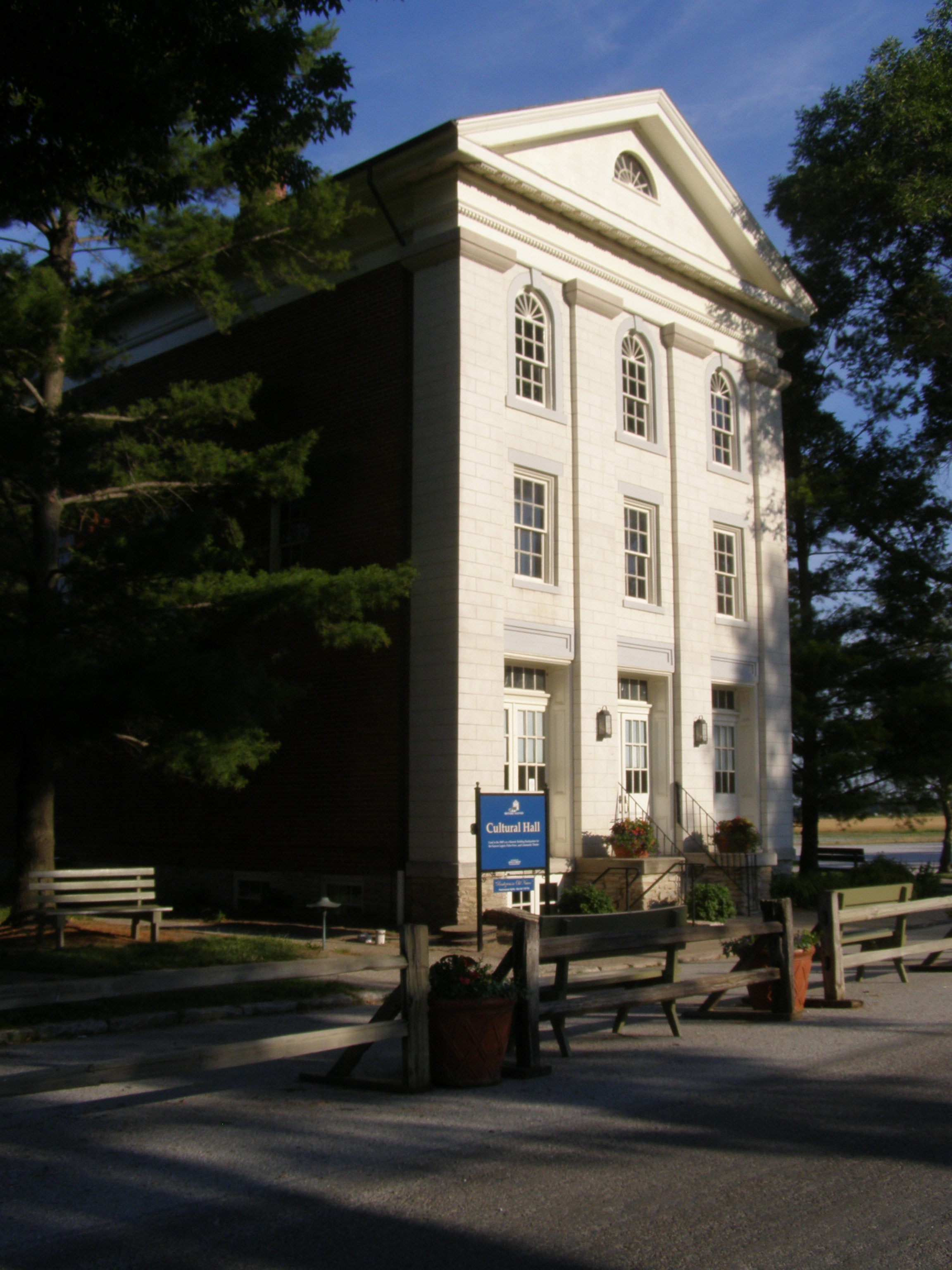
There is a piece of cultural context the CES Letter does not work in. In 1842 Illinois, Masonry was not coded as a deceptive secret society. The anti-Masonic period of the late 1820s and 1830s, triggered by the William Morgan disappearance in 1826, had largely subsided by the early 1840s, and lodges were re-establishing themselves. What they were re-establishing was small. When the Grand Lodge of Illinois reorganized in 1839 and 1840, Homer records, "there were only about 2,000 Freemasons in the United States and little more than 100 in Illinois," the fraternity's American popularity having come and gone between 1790 and 1826.[23:1][8:2] Nauvoo was then the outlier rather than an instance of ordinary civic joining: by October 1842 the Grand Lodge counted 480 Masons in twelve Illinois lodges, and the Nauvoo Lodge accounted for 253 of them.[23:2] The two facts sit together without strain. Masonry was not disreputable in 1842 Illinois, it was simply not yet common there, and Nauvoo is most of the reason the state's numbers grew at all. Hyrum Smith's Masonic membership dated to the mid-1820s. Heber C. Kimball was a Mason before Joseph. John C. Bennett was an active Mason brokering Mormon-Masonic relations from 1840 onward.[9:10][23:3] The CES Letter implicitly invokes a later register in which Masonry reads as suspicious or occultic. That coding does not match the 1842 environment.
Joseph's route into the fraternity was unusually fast. Jonas's written dispensation authorized the Nauvoo Lodge to act on his petition at once and to raise him through all three "as speedily as the nature of the case will admit," compressing into two days a progression that normally took months.[6:1] What that waived was the customary waiting time between degrees. The balloting was not waived, and Joseph's proficiency in the preceding degree was vouched for before he was passed. Jonas had set aside a different requirement the previous October, issuing the dispensation that organized the Nauvoo Lodge without the recommendation of an existing lodge, "perhaps," Homer writes, "to obtain Mormon votes in the next election and further his own political ambitions."[23:4]
The lodge's later history was rough. The Grand Lodge suspended it on August 11, 1842 over alleged irregularities; Grand Master Helm lifted the suspension after an investigation that turned up no ritual complaint, a silence that becomes important below; the dispensations of the Mormon lodges were revoked in October 1843; and in October 1844 the Grand Lodge severed relations and declared their work clandestine because they refused to surrender those dispensations.[23:5] What Joseph's own involvement meant to him is a question the sources leave open. The Church's history topic says so directly: "Historical sources do not explain Joseph Smith's motives for joining the Freemasons."[8:3] He did attend, and often. Buerger counts him witnessing the Entered Apprentice degree five times, the Fellow Craft three times, and the Master Mason five times before May 4.[9:11] Read against everything else in this article, that attendance fits a man studying a teaching method he meant to use; read on its own, it fits a man absorbing material he would shortly reproduce. Both are interpretations, and the record does not settle it.
What the silence of the endowed Masons does and does not establish
The first endowment on May 4, 1842 was given to nine men: Hyrum Smith, Brigham Young, Heber C. Kimball, Willard Richards, William Law, William Marks, George Miller, Newel K. Whitney, and James Adams.[8:4] All nine were Masons, and one of them, James Adams, was Deputy Grand Master of the Illinois Grand Lodge. Whatever Masonic material the ceremony carried, it was introduced in a room full of Masons with a senior officer of the state's Grand Lodge sitting in it. Bradshaw documents that "none of the many contemporary Mormon Masons who remained faithful to the Prophet following their temple endowment expressed a concern that Joseph Smith had been untrue to his Masonic oaths by incorporating some Masonic elements into the endowment ceremony."[21:8]
The argument from silence here is real but bounded. The endowed Masons were LDS believers whose loyalty bound their public criticism, and Masonic oaths bound them to silence on third-degree content under self-cursing penalties, so a portion of the silence is structurally compelled. What the 1842 investigation does not show is a ritual complaint. Homer reports that the Grand Lodge's inquiry made "no mention... of Bennett's allegations of a clandestine ritual," and that the suspensions "apparently had nothing to do with Joseph Smith's introduction of the temple endowment."[23:6][49] Within those bounds, the endowed Masons wrote about the endowment in their journals and letters using language that distinguished it from Masonic ritual. Fielding described the Saints' joining of the lodge as "a Stepping Stone or Preparation for something else, the true Origin of Masonry"; Kimball reported Joseph teaching that Masonry "was taken from preasthood but has become degenerated." That is not the language of men keeping quiet about a plagiarism. William Law later left the Church and turned on Joseph in print without ever charging that the endowment was Masonic theft. The Nauvoo Expositor he helped publish resolved "that we consider all secret societies, and combinations under penal oaths and obligations, (professing to be organized for religious purposes,) to be anti-Christian, hypocritical and corrupt," and still made no Masonic-borrowing allegation.[50] None of this is decisive proof of nothing-Masonic. It is one piece of evidence consistent with the faithful reading among others.
Key Point
Nine men, including a Deputy Grand Master of the Illinois Grand Lodge, received the first endowment, and none ever publicly charged Joseph with Masonic borrowing. The argument from silence is bounded by their LDS loyalty and by their Masonic oaths, while the Grand Lodge's own 1842 investigation of the Nauvoo Lodge recorded no complaint about the endowment at all. Within those bounds, the diaries and letters that survive describe the endowment as theologically distinct from Masonry, in language consistent across decades.[21:9]
What endured: covenants, narrative arc, theology
Even granting maximum Masonic borrowing on every gestural form (every token, every sign, every penalty, every piece of ritual vocabulary), the deep structure of the endowment remains theologically and structurally distinct from anything in Masonic ritual.
The endowment's narrative arc: creation of the heavens and the earth (drawn from the Books of Moses and Abraham); placing of Adam and Eve in the Garden of Eden; the Fall; the introduction of the gospel of Jesus Christ; a sequence of progressive covenants: obedience, sacrifice, the law of the gospel, chastity, consecration; the Atonement of Jesus Christ; the return through the veil into God's presence.
Masonic ritual's narrative arc: the legend of Hiram Abiff, master architect of Solomon's Temple. Three ruffians murder him when he refuses to surrender the Master Mason's word, he is buried, and the Worshipful Master raises him symbolically from the grave. What the story teaches is fidelity, brotherhood, and the persistence of light beyond death.
These are not the same story. They are stories with different protagonists, different conflicts, and structurally different theological purposes. The endowment's story is every person's story: Adam and Eve as everyman and everywoman, the Fall as universal human condition, the Atonement as universal remedy. The Masonic third-degree story is the story of one specific (legendary) person, and the moral the story teaches concerns brotherhood within a fraternity. The covenants the endowment teaches are made between the participant and God. The covenants the third-degree teaches are made between the participant and his Masonic brethren.
| Feature | Masonic Rites (1842) | Temple Endowment (1842) |
|---|---|---|
| Central narrative | Legend of Hiram Abiff | Creation, Fall, Atonement, return to God's presence |
| Candidate's role | Plays Hiram Abiff | Plays Adam or Eve |
| Theological frame | Non-sectarian; "Great Architect" | Explicitly Christian; Atonement-centered |
| Covenants | Between participant and Masonic brethren | Between participant and God |
| Salvation claim | None (Masonry is not a religion) | Essential ordinance for exaltation |
| Gender | Male-only (American practice) | Men only at first; women included from September 1843 |
| Washing and anointing | Absent | Central preparatory ordinance |
| Creation narrative | Absent | Foundational |
| Atonement | Absent | Theological backbone |
| Sealing ordinances | Absent | Central to temple worship |
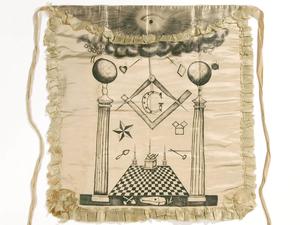
Matthew B. Brown's Exploring the Connection Between Mormons and Masons is the source for a FAIR list of more than 130 specific elements present in Masonic ritual, as Joseph Smith and his contemporaries would have experienced it, but absent from the endowment: sharp objects pressed against the candidate's body, the pillars Jachin and Boaz, the working tools of a mason (twenty-four-inch gauge, gavel, trowel), the cable-tow, the checkered pavement, the legend of the three ruffians, the 47th Problem of Euclid, the coffin and the symbolic raising sequence specific to the Hiram Abiff drama.[51]
Greg Kearney puts the structural asymmetry in one sentence: "Whereas the temple ritual teaches us about our relationship to deity the Masonic Lodge is teaching us about our relationship to our fellowmen."[27:5]
Eddington's quantitative work converges on the same point. Comparing the two rites by their people, places, participants, and objects, he reports that "the commonalities in tables 1–4 are primarily limited to some items of clothing, references to heavenly bodies, and the existence of the square and compass," and that the compass and square "in the endowment appear only symbolically, not as actual props." The 9.7-17.2% figure comes from a separate, line-by-line comparison, and counts how many of the endowment's sentences have any Masonic correlate at all. What both comparisons establish, in his words, is that "different narratives are utilized in the Masonic lodge and the LDS temple endowment," and that "the purposes of the two ceremonies are different, and the story told in each is unique."
Key Point
Even granting maximum Masonic borrowing on every gestural form, the endowment's narrative arc, its covenants made between participant and God, its washing and anointing ordinances, its sealing theology, and its salvation claim are all absent from Masonic ritual. The covenants and the narrative are the endowment.
The hardest version of the question
The deepest residual challenge is the one Bruno-Swick-Literski press hardest: does the "ancient pattern restored" claim have the kind of empirical content that can be tested against alternatives?
The candid answer has two parts.
First, the framework does make empirical claims that can be tested. It claims that ancient temple-style initiation rituals existed, that they shared specific structural features (washing, anointing, sacred clothing, progressive covenants, name-and-token-mediated ascent), and that these features recur across cultures and texts beyond what cultural diffusion or chance can explain. The cross-cultural pattern catalog (Egyptian, Near Eastern, Cyril, Pistis Sophia, Joseph and Aseneth, the Mari Panel, the Dead Sea Scrolls, Hekhalot literature, Barker's First Temple reconstruction, Welch on the Sermon on the Mount) and the documentary work in Hamblin and Seely on actual ancient Israelite temple practice all bear on that claim. The ancient-parallels section above already weighed how far the evidence carries it, caveats about LDS-inflected readings included.
Second, the framework does not make a strict claim about the historical channel by which the pattern reached Joseph. Faithful scholars do not need a documentary chain of custody from the First Temple to the Red Brick Store. They claim, and the evidence supports, that the patterns Joseph instantiated have ancient analogues he could not have reached through his cultural environment, whether those patterns came to him by direct revelation, by providential preservation of fragments in many traditions, or by some combination.
What the faithful position should not claim, and apologetic literature has sometimes overclaimed, is that "we have proven ancient transmission to Joseph Smith." We have not. What we have is a pattern of correspondences between Latter-day Saint temple worship and ancient initiation traditions, documented across multiple sources at multiple temporal layers, exceeding what 1842 cultural availability can explain. Which of those channels carried it (direct revelation, inspired pattern-recognition, providential preservation, or some mix) is a theological judgment the textual data do not by themselves settle.
Bradshaw's "distant cousins" formulation, which much faithful scholarship accepts, is the most defensible current statement of the faithful position: Masonic and temple rituals share "some common ancestry in the Bible and also some nineteenth-century borrowing."[26:1] The "nineteenth-century borrowing" is the form-level overlap; the "common ancestry in the Bible" is the broader temple-ideology pattern.
Bottom line
The seven-week argument the CES Letter implicitly makes for wholesale Masonic borrowing requires four things at once: (a) treating the categorical absence of pre-1842 Masonic-form vocabulary as the only relevant timeline question, when the prior decade of canonical revelation establishes the development of temple ordinance categories, narrative content, and covenant structure that the May 1842 ceremony placed Masonic-form vocabulary inside of; (b) treating the measured overlap as proof of plagiarism, when a like-for-like vocabulary count puts the Odd Fellows rite closer to the Masonic text (24.7%) than the endowment does (10.8%); (c) treating ancient Christian and Jewish initiation patterns Joseph could not have accessed as irrelevant; and (d) substituting surface ritual parallel for deep structural and theological identity, when the real identity of the endowment lies in its narrative arc, its covenants, and its soteriology, none of which appear in Masonic ritual at any level the comparison documents.
The most rigorous critical scholarship does not defend that compressed argument. Buerger settles on real but limited overlap and no wholesale borrowing; Bradshaw on distant cousins, common biblical ancestry, and nineteenth-century borrowing of form. Both sit nearer the faithful reading than the plagiarism charge. The textual and chronological evidence is consistent with the faithful reading and inconsistent with the wholesale-borrowing reading the CES Letter implicitly defends. The question that outruns the data (whether the correspondences with ancient initiation traditions point to direct revelation, providential preservation, inspired pattern recognition, or some combination) is one the case for the Restoration as a whole has to carry, not this article.
So set the ledger out plainly, because the Masonic question is hard. There are real Masonic-form parallels. There is a chronology that looks suggestive on its face for those specific elements. Against that, here is what can be independently documented. The pre-1842 development of temple ordinance categories sits in canonical revelation across a full decade. The quantitative ceiling on textual overlap sits in Eddington's analysis, the same 9.7 to 17.2 percent this article opened with, with the vocabulary counts placing the endowment nearer to Latter-day Saint scripture than to the Lodge. The ancient parallels Joseph could not have reached sit in the Pistis Sophia, the Mari Panel, the Nag Hammadi codices, the Hekhalot literature, Barker's First Temple work, and the wider catalog of Christian and Jewish initiation literature; Cyril, in English only from 1838, stands beside them on the body's no-evidence-of-access footing. And the framework that "Masonry came from priesthood" sits in the journals and letters of the inner circle, written beginning within weeks of the first endowment.
Read that ledger and the answer to the borrowing question is not the one the CES Letter needs. The form is partly Masonic; this article said so in its opening section and says so still. The content (creation, Fall, covenant, Atonement, the return to God's presence) is not. From the Lodge, Joseph took a manner of teaching. What he taught was never the Lodge's to give.
Runnells, CES Letter (2017), "Temples & Freemasonry," no. 1, p. 107. ↩︎ ↩︎
Runnells, CES Letter (2017), "Temples & Freemasonry," nos. 2–7, pp. 107–108. ↩︎
Runnells, CES Letter (2017), "Temples & Freemasonry," p. 109. The CES Letter prints the two texts one above the other beneath an illustration captioned "MASTER GIVING THE GRAND MASONIC WORD ON THE FIVE POINTS OF FELLOWSHIP." ↩︎ ↩︎
Runnells, CES Letter (2017), "Temples & Freemasonry," nos. 4 and 5, pp. 107–108. ↩︎
David Eddington, "A Textual Comparison of Masonic Rites and the LDS Temple Endowment," Interpreter: A Journal of Latter-day Saint Faith and Scholarship 66 (2025): 311–326. Quantitative analysis using n-gram, vocabulary-overlap, and conceptual-similarity techniques across the 1931 Paden version of the LDS endowment, the 1866 Duncan Masonic ritual, the Pearl of Great Price (Books of Moses and Abraham), Cyril of Jerusalem's Mystagogical Catecheses, and the 1909 Odd Fellows rite. Core findings: 9.7–17.2% conceptual overlap between endowment and Masonic rite; 18.4% vocabulary overlap with the Pearl of Great Price; 24.7% Masonic-Odd Fellows vocabulary overlap; bigram similarity between endowment and Cyril higher than between endowment and Masonic rite. Methodological caveats: the 1931 Paden text is a publicly available proxy for an unavailable 1842 original; bigram comparison across translated texts is sensitive to translator vocabulary choices; vocabulary measures word-frequency overlap rather than ritual-form overlap; the Cyril comparison has a Christian-vocabulary confound on the bigram measure. https://interpreterfoundation.org/journal/a-textual-comparison-of-masonic-rites-and-the-lds-temple-endowment/ ↩︎ ↩︎ ↩︎ ↩︎ ↩︎ ↩︎ ↩︎ ↩︎
"Minutes, 15–16 March 1842, as Recorded in Nauvoo Masonic Lodge Minute Book," Joseph Smith Papers. The minutes record Joseph Smith and Sidney Rigdon initiated Entered Apprentice on the evening of March 15, passed to Fellow Craft the morning of March 16, and Joseph raised to Master Mason at the 2 PM session that day, with Grand Master Abraham Jonas of the Grand Lodge of Illinois presiding. Jonas's written dispensation authorized the lodge to confer the degrees "as speedily as the nature of the case will admit." https://www.josephsmithpapers.org/paper-summary/minutes-15-16-march-1842-as-recorded-in-nauvoo-masonic-lodge-minute-book/3 ↩︎ ↩︎
"Temple Endowment," Church History Topics, The Church of Jesus Christ of Latter-day Saints. https://www.churchofjesuschrist.org/study/history/topics/temple-endowment?lang=eng ↩︎
"Masonry," Church History Topics, The Church of Jesus Christ of Latter-day Saints. The Topics article confirms the May 4, 1842 first endowment to nine men and identifies the participants. https://www.churchofjesuschrist.org/study/history/topics/masonry?lang=eng ↩︎ ↩︎ ↩︎ ↩︎ ↩︎
David John Buerger, "The Development of the Mormon Temple Endowment Ceremony," Dialogue: A Journal of Mormon Thought 20, no. 4 (Winter 1987): 33–76. Buerger identifies tokens, signs, and penalties as the three categories of "very marked" overlap between the May 1842 endowment and contemporary Masonic ritual, while explicitly noting the absence of Masonic parallels for the creation/Fall narrative, major covenants, and washings/anointings. Buerger reproduces the June 1842 Heber C. Kimball letter to Parley P. Pratt with the verbatim wording "Thare is a similarity of preast Hood in Masonry. Br. Joseph Ses Masonry was taken from preasthood but has become degenerated. But menny things are perfect." https://www.dialoguejournal.com/articles/the-development-of-the-mormon-temple-endowment-ceremony-2/ ↩︎ ↩︎ ↩︎ ↩︎ ↩︎ ↩︎ ↩︎ ↩︎ ↩︎ ↩︎ ↩︎ ↩︎
"Introduction to Documents, Volume 9: December 1841–April 1842," Joseph Smith Papers. The introduction frames the chronological context including the publication of the Book of Abraham in Times and Seasons in March 1842. https://www.josephsmithpapers.org/intro/introduction-to-documents-volume-9-december-1841-april-1842 ↩︎ ↩︎
David John Buerger, The Mysteries of Godliness: A History of Mormon Temple Worship, 2nd ed. (Salt Lake City: Signature Books, 2002), chapters 7–8. Buerger documents the 1990 changes that removed the symbolic penalties and the Five Points of Fellowship at the veil, alongside earlier and later revisions. The 1990 dating is well-documented in contemporaneous Salt Lake Tribune coverage and in Buerger's book-length treatment. The Church History Topics page on "Adjustments to Temple Work" discusses the broader history of temple revisions but does not name 1990 specifically. https://www.signaturebooks.com/books/p/the-mysteries-of-godliness ↩︎ ↩︎
Doctrine and Covenants 38:32. Revelation given through Joseph Smith, January 2, 1831. https://www.churchofjesuschrist.org/study/scriptures/dc-testament/dc/38?lang=eng ↩︎
Doctrine and Covenants 88, dictated December 27–28, 1832 and January 3, 1833. The school of the prophets salutation, made "with uplifted hands to heaven" and offered "in token or remembrance of the everlasting covenant," appears in verses 132–133; the cleanliness requirement in verse 138; the description of the temple as "a house of prayer, a house of fasting, a house of faith, a house of learning, a house of glory, a house of order, a house of God" in verse 119. https://www.churchofjesuschrist.org/study/scriptures/dc-testament/dc/88?lang=eng ↩︎
Doctrine and Covenants 95:8. Revelation given through Joseph Smith, June 1, 1833, commanding the Kirtland Temple. https://www.churchofjesuschrist.org/study/scriptures/dc-testament/dc/95?lang=eng ↩︎
Doctrine and Covenants 105:33. Revelation given through Joseph Smith, June 22, 1834. https://www.churchofjesuschrist.org/study/scriptures/dc-testament/dc/105?lang=eng ↩︎
"Journal, 1835–1836," entry for November 12, 1835, Joseph Smith Papers. Joseph teaches the Twelve about the necessity of an endowment and the washings, anointings, and ritual ordinances to be received in the Kirtland Temple. https://www.josephsmithpapers.org/paper-summary/journal-1835-1836/ ↩︎
"Journal, 1835–1836," entry for January 21, 1836, Joseph Smith Papers. Joseph records that the presidency "retired to the loft of the printing office, where we attended to the ordinance of washing our bodies in pure water, we also perfumed our bodies and our heads, in the name of the Lord"; the anointing followed "at early candlelight" in "the west school room in the Chapel," that is, in the Kirtland Temple. The entry for the following day records the evening meeting of "the council of the 12 and the presidency of the 70 who were to receive this ordinance." https://www.josephsmithpapers.org/paper-summary/journal-1835-1836/136 ↩︎
Oliver Cowdery, journal ("sketch book") entries, January 16 and 21, 1836. Published in Leonard J. Arrington, "Oliver Cowdery's Kirtland, Ohio, 'Sketch Book,'" BYU Studies 12, no. 4 (1972): 410–426; the reciprocal washing ("wash each other's bodies") at 416, the Moses-and-Aaron anointing at 419. https://scholarsarchive.byu.edu/byusq/vol12/iss4/6/ ↩︎
Doctrine and Covenants 124:38–41. Revelation given through Joseph Smith at Nauvoo, Illinois, January 19, 1841 — fourteen months before Joseph's Masonic initiation. The Lord names anointings, washings, baptisms for the dead, and solemn assemblies as the ordinances to be revealed in the Nauvoo Temple. https://www.churchofjesuschrist.org/study/scriptures/dc-testament/dc/124?lang=eng ↩︎ ↩︎
Joseph's pre-initiation exposure to Masonic content runs through multiple inner-circle associates fifteen years before his March 1842 initiation. Hyrum Smith joined Freemasonry between 1825 and 1827. Heber C. Kimball was a Mason before Joseph. John C. Bennett, an active Mason, was politically pushing Mormons toward Masonry. Buerger p. 42 lists prominent Mormons "all of whom were Freemasons prior to joining the Church," including Deputy Grand Master of Illinois James Adams, Heber C. Kimball, Newel K. Whitney, George Miller, John C. Bennett, John Smith, and Brigham Young. The pre-1842 LDS ritual development was therefore not strictly Masonry-independent in a cultural-availability sense, and this concession cuts genuinely against the simplest "fifteen years of Masonry-independent preparation" framing. See Buerger, "The Development of the Mormon Temple Endowment Ceremony," Dialogue 20, no. 4 (Winter 1987): 33–76, on the Hyrum/Kimball/Bennett biographical particulars. ↩︎
Jeffrey M. Bradshaw, "Freemasonry and the Origins of Modern Temple Ordinances," Interpreter: A Journal of Latter-day Saint Faith and Scholarship 15 (2015): 159–237. Bradshaw documents the pre-1842 chronology of endowment-related teaching, including Joseph's November 1835 instruction to the Twelve about the necessity of an endowment, the Mari Investiture Panel as a Bronze Age Mesopotamian parallel, and the multiple primary-source attestations of the "Masonry came from priesthood" framework from Willard Richards, Benjamin Johnson, and Franklin D. Richards. Bradshaw 2015 (p. 162) addresses the silence of the endowed Masons: "none of the many contemporary Mormon Masons who remained faithful to the Prophet following their temple endowment expressed a concern that Joseph Smith had been untrue to his Masonic oaths by incorporating some Masonic elements into the endowment ceremony." https://interpreterfoundation.org/journal/freemasonry-and-the-origins-of-modern-temple-ordinances/ ↩︎ ↩︎ ↩︎ ↩︎ ↩︎ ↩︎ ↩︎ ↩︎ ↩︎ ↩︎
David John Buerger, The Mysteries of Godliness: A History of Mormon Temple Worship, 2nd ed. (Salt Lake City: Signature Books, 2002). Originally published 1994; the 2002 edition is generally a reprint. https://www.signaturebooks.com/books/p/the-mysteries-of-godliness ↩︎
Michael W. Homer, "'Similarity of Priesthood in Masonry': The Relationship between Freemasonry and Mormonism," Dialogue: A Journal of Mormon Thought 27, no. 3 (Fall 1994): 1–113. https://www.dialoguejournal.com/articles/11636/ ↩︎ ↩︎ ↩︎ ↩︎ ↩︎ ↩︎ ↩︎
Michael W. Homer, Joseph's Temples: The Dynamic Relationship Between Freemasonry and Mormonism (Salt Lake City: University of Utah Press, 2014). Book-length expansion of the 1994 Dialogue article. For Jonas's motives in issuing the October 1841 dispensation that organized the Nauvoo Lodge, the reachable source is Homer's 1994 article at p. 28. ↩︎
Cheryl L. Bruno, Joe Steve Swick III, and Nicholas S. Literski, Method Infinite: Freemasonry and the Mormon Restoration (Salt Lake City: Greg Kofford Books, 2022). Argues for substantial Masonic influence beyond the endowment, including in early Mormon language and certain Restoration narratives. https://gregkofford.com/products/method-infinite ↩︎
Jeffrey M. Bradshaw, "An Important New Study of Freemasonry and the Latter-day Saints: What's Good, What's Questionable, and What's Missing in Method Infinite," Interpreter: A Journal of Latter-day Saint Faith and Scholarship 54 (2022): 223–332. Bradshaw's review of Bruno-Swick-Literski 2022, including the "distant cousins" framing. https://interpreterfoundation.org/journal/an-important-new-study-of-freemasonry-and-the-latter-day-saints-whats-good-whats-questionable-and-whats-missing-in-method-infinite/ ↩︎ ↩︎
Greg Kearney, "The Message and the Messenger: Latter-day Saints and Freemasonry," paper presented at the FAIR Conference, August 2005. Kearney is a Latter-day Saint Master Mason. The 2005 paper is the source the CES Letter cites for the "no continuous functioning line from Solomon's Temple" admission; the CES Letter's "medieval stone tradesmen" quotation comes from a different FAIR source, "Similarities Between Masonic and Mormon Temple Ritual." The admission sits in the session's question-and-answer period, in reply to a question about whether Masonry came out of the endowment: "It would be if you believed that Freemasonry has a continuous historical line from King Solomon's Temple to the current. Unfortunately, there is no historical evidence to support a continuous functioning line from Solomon's Temple to the present." The verbatim text in Kearney's paper on Masonry's origins reads: "Freemasonry as we know it today can trace its origins only as far back as the medieval stone Masons guilds of the Middle Ages." https://www.fairlatterdaysaints.org/conference_home/2009-2005-fair-conferences/august-2005-fair-conference/the-message-and-the-messenger-latter-day-saints-and-freemasonry ↩︎ ↩︎ ↩︎ ↩︎ ↩︎ ↩︎
Massimo Introvigne, "Freemasonry and New Religious Movements," in Handbook of Freemasonry, ed. Henrik Bogdan and Jan A. M. Snoek, Brill Handbooks on Contemporary Religion 8 (Leiden: Brill, 2014), 308–11; the quoted sentence closes his Mormonism section at 311: Joseph "used the masonic language of the rituals for the purpose of confirming his followers familiar with Freemasonry into a doctrine which had no 'similarities' with anything they had heard in the masonic lodges." Introvigne is an Italian Catholic sociologist of religion specializing in new religious movements; his work on Mormonism and Freemasonry has been engaged by LDS scholars but he has no LDS apologetic stake. The BH Roberts Foundation catalog entry transcribes the passage: https://bhroberts.org/records/0OAwhk-QZFyhh/introvigne_explores_the_complex_and_evolving_relationship_between_mormonism_and_freemasonry_emphasizing_joseph_smiths_influence_and_the_subsequent_tensions_and_adaptations_in_rituals_and_beliefs ↩︎
Detailed methodology caveats on Eddington's analysis. "Vocabulary overlap" measures word-frequency match. "Conceptual overlap" measures sentence-level concept matching under criteria Eddington describes as "liberal" (counting loosely related material) and "restrictive" (requiring tight conceptual correspondence). "Bigram similarity" measures two-word sequence overlap. None of these is a direct measure of ritual-form overlap: the specific Masonic-form elements — penalties with verbatim third-degree wording, the Five Points of Fellowship as a structured gesture, the tokens with associated penalty signs — are real and identifiable even at modest vocabulary or bigram measures, so vocabulary analysis is necessary but not sufficient for the question of how much Masonic ritual form the endowment incorporated. The 1931 Paden text is the most appropriate publicly available proxy for the unavailable 1842 original, but it is a reconstruction of a ceremony revised multiple times since 1842; other Masonic-ritual versions exist beyond the 1866 Duncan text Eddington uses, and methodological choices on both sides bound the precision of the figures. The Cyril comparison's bigram measure has a Christian-vocabulary confound: Cyril is Greek (the bigram analysis runs on an English translation) and is explicitly Christian (anointing in the name of Christ, baptism into the Trinity, sealing with the Holy Spirit, clothing in white robes representing the body of Christ); the endowment is also explicitly Christian; the Masonic third degree is explicitly non-sectarian ("Great Architect of the Universe" rather than Christ). A bigram measure of two Christian texts will rank them more similar to each other than either to a non-sectarian text, simply by virtue of shared Christian vocabulary (anointing, sealing, witness, covenant, light). The Cyril comparison therefore does not by itself prove "the endowment is closer to ancient Christian initiation than to Masonic ritual." What it can show is that ancient Christian initiation literature contains structural features (pre-baptismal stripping, anointing with oil, white robes, sealing with a sign, new-name reception, ritual progression) that recur in the endowment in ways Masonic ritual does not match — a structural argument that holds independent of bigram methodology, supported by the broader cross-cultural pattern catalog. See Eddington 2025 for the full methodological treatment. ↩︎
Runnells, CES Letter (2017), "Temples & Freemasonry," no. 2, p. 107. ↩︎
Stanley B. Kimball, "Heber C. Kimball and Family, The Nauvoo Years," BYU Studies 15, no. 4 (1975): 447–479, quote at 458. Page 458 carries both the 17 June 1842 letter to Parley P. Pratt and the 1858 "true Masonry" statement, and it is the page the CES Letter cites. Kimball's body text dates the 1858 statement to a special conference on 9 November 1858, while his own footnote 29 cites "Manuscript History of Brigham Young, unpublished, 13 November 1858, p. 1085"; the source traditions differ on the day. https://scholarsarchive.byu.edu/byusq/vol15/iss4/7 ↩︎
BH Roberts Foundation, "Heber C. Kimball Attributes Freemasonry to Solomon and David and Church Possesses True Masonry," primary-source record. The original quote is from Heber C. Kimball's address at a General Meeting on November 13, 1858; the manuscript record is preserved in the Church History Library, CR 100 318, scribed by J. V. Long. https://bhroberts.org/records/qqPgcb-wSYutc/heber_c_kimball_attributes_freemasonry_to_solomon_and_david_and_church_possesses_true_masonry ↩︎ ↩︎ ↩︎
Joseph Fielding, journal, 1844. Fielding, an endowed Latter-day Saint and a Mason, describes Masonry as "a Stepping Stone or Preparation for something else, the true Origin of Masonry." The rendering printed here follows David John Buerger, "The Development of the Mormon Temple Endowment Ceremony," Dialogue: A Journal of Mormon Thought 20, no. 4 (Winter 1987): 45, whose own apparatus cites Ehat 1979, 145. Buerger's printing shows an unpunctuated gap between "Institution" and "this seems"; the ellipsis here is editorial, marking that break. Bradshaw 2015 prints a modernized rendering of the same passage. ↩︎
Cyril of Jerusalem, Mystagogical Catecheses, c. 350 AD. Five lectures detailing Christian initiation: stripping, anointing with oil "from the very hairs of your head" (Lecture 20:2–4), triple immersion baptism, clothing in white robes (19:10–11), reception of a sealing sign, and a new name. F. L. Cross, ed., St. Cyril of Jerusalem's Lectures on the Christian Sacraments (Crestwood, NY: St. Vladimir's Seminary Press, 1977), is the standard modern English edition. ↩︎
Pistis Sophia, Coptic Gnostic text, c. 3rd–4th century AD, preserved in the Askew Codex (acquired by the British Museum in 1785); the related Books of Jeu survive only in the Bruce Codex, held by the Bodleian Library, Oxford. First English translation of the Pistis Sophia: G. R. S. Mead, Pistis Sophia, 2nd ed. (London: J. M. Watkins, 1921 [1st ed. 1896]). ↩︎
Joseph and Aseneth, Jewish-Christian text, c. 100 BC – 200 AD. Earliest English translation: E. W. Brooks, Joseph and Asenath: The Confession and Prayer of Asenath, Daughter of Pentephres the Priest (London: SPCK, 1918). ↩︎
The Nag Hammadi codices, twelve leather-bound papyrus codices unearthed near Nag Hammadi in Upper Egypt in late 1945. James M. Robinson, ed., The Nag Hammadi Library in English, 4th rev. ed. (Leiden: Brill, 1996), is the standard English edition. ↩︎
The Hekhalot literature, a corpus of Jewish merkavah mystical texts; hekhalot is the Hebrew for "palaces" or "temples." The summary quoted here is William J. Hamblin, "Temple Motifs in Jewish Mysticism," in Temples of the Ancient World (Salt Lake City: Deseret Book and FARMS, 1994), 440–477, at 452. The corpus entered Western scholarship with Adolf Jellinek's Bet ha-Midrasch (Leipzig, 1850s), after Joseph Smith's death; the standard critical edition is Peter Schäfer, ed., Synopse zur Hekhalot-Literatur (Tübingen: Mohr Siebeck, 1981). ↩︎
Margaret Barker, Temple Theology: An Introduction (London: SPCK, 2004). Barker, an Old Testament scholar in the Methodist Church, has spent four decades reconstructing pre-exilic First Temple traditions from the apocrypha, pseudepigrapha, and early Christian texts. See also Margaret Barker, The Great Angel: A Study of Israel's Second God (London: SPCK, 1992); The Older Testament (London: SPCK, 1987). Barker's reconstruction of First Temple ideology is contested in mainstream Old Testament scholarship; her readings are influential but not consensus. ↩︎
Kevin Christensen, "Twenty Years After 'Paradigms Regained,' Part 1: The Ongoing, Plain, and Precious Significance of Margaret Barker's Scholarship for Latter-day Saint Studies," Interpreter: A Journal of Latter-day Saint Faith and Scholarship 54 (2022): 1–64. Christensen's 2001 FARMS occasional paper "Paradigms Regained" was the original treatment; the 2022 Interpreter article is the twenty-year follow-up surveying the convergence between Barker's reconstruction of First Temple ideology and Latter-day Saint temple themes. https://interpreterfoundation.org/journal/twenty-years-after-paradigms-regained-part-1-the-ongoing-plain-and-precious-significance-of-margaret-barkers-scholarship-for-latter-day-saint-studies/ ↩︎
John W. Welch, The Sermon on the Mount in the Light of the Temple, Ashgate Society for Old Testament Study Monographs (Farnham, UK: Ashgate, 2009; reprinted Routledge). Welch argues for the Sermon on the Mount as an ancient temple text reflecting initiation themes. The reading is contested in mainstream NT scholarship. ↩︎
Hugh Nibley, "What Is a Temple?" (1968), reprinted in The Temple in Antiquity, ed. Truman G. Madsen (Provo, UT: BYU Religious Studies Center, 1984). See also Hugh Nibley, Temple and Cosmos: Beyond This Ignorant Present, vol. 12 of The Collected Works of Hugh Nibley (Salt Lake City: Deseret Book and FARMS, 1992). ↩︎
Hugh Nibley, "The Early Christian Prayer Circle," BYU Studies 19, no. 1 (1978): 41–78. https://scholarsarchive.byu.edu/byusq/vol19/iss1/5/ ↩︎
Donald W. Parry and John W. Welch, eds., Temples of the Ancient World: Ritual and Symbolism (Provo, UT: FARMS, 1994). https://scholarsarchive.byu.edu/mi/76/ ↩︎
Donald W. Parry and Stephen D. Ricks, eds., The Temple in Time and Eternity (Provo, UT: FARMS, 1999). Follow-up volume to Temples of the Ancient World. https://mi.byu.edu/the-temple-in-time-and-eternity/ ↩︎
John Gee, "Prophets, Initiation and the Egyptian Temple," Journal of the Society for the Study of Egyptian Antiquities 31 (2004): 97–107. Gee is an LDS Egyptologist; the article is published in a peer-reviewed non-LDS Egyptology journal. ↩︎
Kerry Muhlestein, BYU Egyptologist whose work documents structural parallels between Egyptian temple ritual and Latter-day Saint temple themes. See Kerry Muhlestein, "Egyptian Papyri and the Book of Abraham: A Faithful, Egyptological Point of View," in No Weapon Shall Prosper: New Light on Sensitive Issues, ed. Robert L. Millet (Provo, UT: BYU Religious Studies Center, 2011); and "A Primer on Egyptian Religion, How it Parallels LDS Beliefs and Temples." https://rsc.byu.edu/no-weapon-shall-prosper/egyptian-papyri-book-abraham ↩︎
William J. Hamblin and David Rolph Seely, Solomon's Temple: Myth and History (London: Thames & Hudson, 2007). Non-LDS-press scholarly treatment of Israelite temple practices. Hamblin is an LDS scholar; the volume documents priestly consecration via washing, anointing, and vestments; the Holy of Holies as sacred space; sacred-name traditions; and ritual ascent symbolism implicit in the temple's architectural progression. ↩︎ ↩︎
The argument from silence among the endowed Masons is bounded in three ways. (1) The endowed Masons were also LDS believers, several were Joseph's closest associates, and their loyalty and theological commitment bound their public criticism in ways the silence of neutral Masonic observers would not have been bound — argument-from-silence among loyalists is much weaker than argument-from-silence among neutral parties. (2) Masonic oaths bound Master Masons to silence on third-degree content under self-cursing penalties; an endowed Mason who wrote in a private letter that "Joseph is repeating Masonic content" would himself have violated his Masonic oath, so a portion of the silence is structurally compelled by Masonic obligations the witnesses had taken, independent of any belief about whether Joseph violated those obligations. (3) Some external Masons did, in fact, object: the Grand Lodge of Illinois suspended the Nauvoo Lodge in August 1842 and declared the Mormon lodges' work "clandestine" in October 1844, in both cases over irregular-work and procedural charges. On the ritual question the record is affirmative rather than merely silent: Homer finds no trace of a ritual complaint in the 1842 proceedings, and concludes that the suspensions were unrelated to Joseph Smith's introduction of the endowment. The argument from silence remains real within these bounds — it is one piece of evidence consistent with the faithful reading, not decisive proof of nothing-Masonic. ↩︎
Nauvoo Expositor, Nauvoo, Illinois, June 7, 1844, the paper's single issue, published by William Law, Wilson Law, Charles Ivins, Francis M. Higbee, Chauncey L. Higbee, Robert D. Foster, and Charles A. Foster. Resolution 11 of the seceders' resolutions reads: "That we consider all secret societies, and combinations under penal oaths and obligations, (professing to be organized for religious purposes,) to be anti-Christian, hypocritical and corrupt." The issue makes no allegation that the endowment was borrowed from Freemasonry. Full text: https://www.fairlatterdaysaints.org/answers/Primary_sources/Nauvoo_Expositor_Full_Text ↩︎
Matthew B. Brown, Exploring the Connection Between Mormons and Masons (American Fork, UT: Covenant Communications, 2009). FAIR's page, displayed as "Question: What are the differences between the Endowment and Freemasonry?", enumerates more than 130 elements of Masonic ritual, as Joseph Smith and his contemporaries would have experienced it, that have no analogue in Latter-day Saint temple worship; its item 28 gives the working tools of a mason as the twenty-four-inch gauge, gavel, and trowel. https://www.fairlatterdaysaints.org/answers/Mormonism_and_temples/Endowment/Freemasonry/Unparallels ↩︎