James Strang Comparison
The claim:
The CES Letter's Strang block opens on page 95 and runs through the end of the Witnesses section. The framing is symmetric: if the Book of Mormon witnesses' testimony grounds Joseph Smith's claims, the same testimonial framework should ground James Strang's, and the framework cannot pick which is true. The opening is page 95:
"James Strang and his claims are fascinating. He was basically Joseph Smith 2.0 – but with a twist. Like Joseph, Strang did the following:
- Claimed that he was visited by an angel who reserved plates for him to translate into the word of God. 'The record which was sealed from my servant Joseph. Unto thee it is reserved.'
- Received the 'Urim and Thummim'.
- Produced 11 witnesses who testified that they too had seen and inspected ancient metal plates.
- Introduced new scripture. After unearthing the plates (the same plates as Laban from whom Nephi took the brass plates in Jerusalem), Strang translated it into scripture called the 'Book of the Law of the Lord'.
- Established a new Church: The Church of Jesus Christ of Latter Day Saints (Strangite). Its headquarters is still today in Voree, Wisconsin."[1]
The CES Letter then quotes the seven-witness statement to The Book of the Law of the Lord in full (p. 96), the four-witness affidavit to the Voree Plates in full (pp. 96-98), and on page 99 makes the central assertion:
"There is no direct evidence that any of the above 11 Strang witnesses ever denied their testimony of James Strang, the Voree Plates, Strang's church, or Strang's divine calling. Every single living Book of Mormon witness besides Oliver Cowdery accepted Strang's prophetic claim of being Joseph's true successor and joined him and his church. Additionally, every single member of Joseph Smith's family except for Hyrum's widow also endorsed, joined, and sustained James Strang as 'Prophet, Seer, and Revelator.'"[2]
The closing rhetorical question (p. 99):
"What does this say about the credibility of the Book of Mormon witnesses if they were so easily duped by James Strang and his claims of being a prophet called of God to bring forth new scripture from ancient plates only to later turn out to be a fraud?"[3]
The numbered "Problems" section restates the parallel in summative form. Problem 6 (p. 103) emphasizes that Strang's witnesses were not related, that some were not church members, that the plates were displayed publicly, and that four witnesses claimed to have dug them up themselves.[4] Problem 7 (pp. 103-104) extends the parallel to the Shaker A Holy, Sacred and Divine Roll and Book, quoting the eight-name witness statement from page 304 and Clark Braden's 1884 claim that "Harris declared repeatedly that he had as much evidence for a Shaker book he had as for the Book of Mormon."[5]
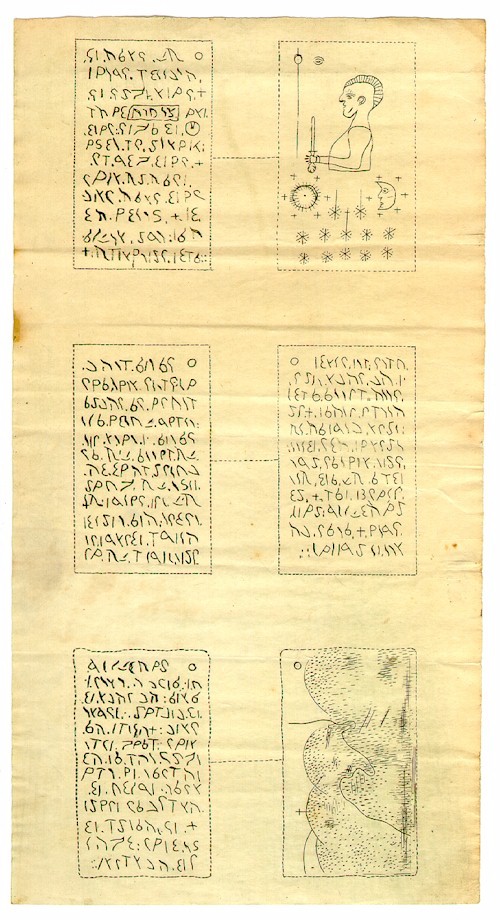
The three small brass plates dug up near Voree yielded a translation of roughly 200 words of lament poetry. The confession report that later surfaced named no marginal figure: Caleb Barnes, the settlement's banker, a practicing lawyer, and a silent stakeholder in its land company. Barnes and Strang, by that report, shaped the plates from an old kettle, lettered them with a saw file, and gave them their aged look with acid.[6] The CES Letter's parallel treats those plates and Joseph's as interchangeable objects. Everything below tests that equivalence: the affidavits sound alike; the artifacts behind them, and the fates of those artifacts, do not.
The Strang and Shaker comparative-religion challenge is what this article handles. The individual-witness credibility material (Burnett, magical worldview, family relationships) lives in the Credibility Concerns sister article; the "spiritual eyes only" theological framework lives in Second Sight; the broader cumulative-case epistemology lives in Competing Spiritual Claims. The Whitmer and Cowdery post-1838 testimony chains are detailed in Late Appearance and Backdating & Retrofitting.
Worth Acknowledging
Surface parallels between Joseph Smith and James Strang are genuine. Strang did claim angelic visitation. Strang did produce witnesses who signed affidavits to metal plates. Some Strangite witnesses didn't formally recant. Several Smith family members and Book of Mormon witnesses briefly investigated Strang's claims after Joseph's death. The Shaker Sacred Roll did have more than sixty witness signatures. None of these conceded facts is contested by faithful scholarship. The disagreement is whether the surface parallels survive once the structural details are laid out: content complexity, translation timeline, witness corpus structure, internal-source confessions, and institutional outcome.
What the CES Letter gets right
Strang did claim angelic ordination and metal plates. James Jesse Strang (March 21, 1813 – July 9, 1856) converted to Mormonism on February 25, 1844, baptized personally by Joseph Smith four months before Joseph's June 27 assassination. After Joseph's death, Strang produced a "Letter of Appointment" dated June 18, 1844 and claimed angelic ordination occurring at the moment of Joseph's death. He gathered followers at Voree, Wisconsin, then relocated to Beaver Island, Michigan in 1848, was crowned "King" by counselor George J. Adams in 1850, adopted polygamy ca. 1849-50, and was assassinated on the St. James dock by Alexander Wentworth and Thomas Bedford on June 16, 1856 (he died July 9).[7]
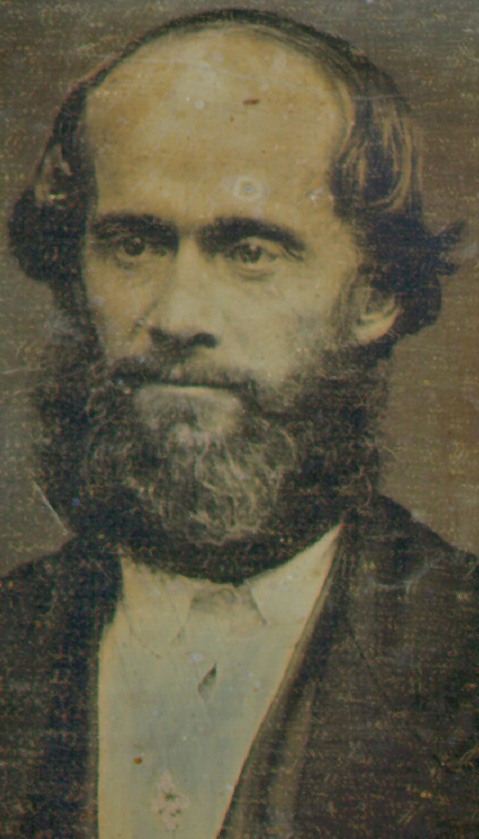
Strang produced multiple witness affidavits to metal plates. On September 13, 1845, four men (Aaron Smith, Jirah B. Wheelan, James M. Van Nostrand, and Edward Whitcomb) signed an affidavit to the discovery of three small brass plates near Voree, Wisconsin.[8] In 1851, seven men (Samuel Graham, Samuel P. Bacon, Warren Post, Phineas Wright, Albert N. Hosmer, Ebenezer Page, and Jehiel Savage) signed a witness statement to a separate set of eighteen brass plates Strang translated as The Book of the Law of the Lord.[9] [10] The witness language deliberately echoes the Book of Mormon witness statements: "We examined them with our eyes, and handled them with our hands."[9:1]
Some Strangite witnesses did not formally recant. Wikipedia's summary of the Book of the Law witnesses is deliberately bounded: "Although some of these witnesses later left Strang's church, none of them is known to have ever denied their testimony as given in the Book of the Law."[10:1] Aaron Smith eventually renounced Strang as a fallen prophet and still stood by what he had signed about the plates.[11] On this point the CES Letter's bounded version of the "non-recantation" claim is technically true for some of the witnesses.
Some Book of Mormon witnesses briefly investigated Strang. Martin Harris went on a Strangite mission to England that ran under two months, from October to December 1846.[12] The Whitmers (David, John, Jacob) and Hiram Page held favorable views of Strang from approximately March 1846 to April 1847. William Smith briefly served as Strang's Chief Patriarch. The flirtations were real.[13]
The Voree Plates were physically accessible. Strang did display them publicly. Christopher Latham Sholes (later inventor of the typewriter), as editor of the Southport Telegraph, examined them as a non-Mormon journalist.[14] Stephen Post, Warren Post's brother, examined them and reported that they were brass, resembling the French brass used in familiar kitchen kettles.[15]
The Shaker Sacred Roll witnesses are real. A Holy, Sacred and Divine Roll and Book; From the Lord God of Heaven, to the Inhabitants of Earth was published in 1843. Philemon Stewart was the "instrument" who claimed angelic dictation. More than sixty individuals signed witness statements. The eight-name witness on page 304 quoted by the CES Letter (Boothe, Chamberlain, De Witt, Jacobs, Lewis, Spencer, McDoniels, Hedrick) is authentic.[16]
The Strangite movement persisted in some form. Strang's June 1856 assassination and the Beaver Island expulsion of approximately 2,600 followers in July 1856 were a violent collapse, but the Strangite remnant survives in small numbers. The Strangite Church continues today, headquartered in Voree, Wisconsin, with approximately 50-300 members.[17]
None of these concessions, individually or cumulatively, entails the conclusion the CES Letter draws.
The translation asymmetry
The first structural difference between Strang's plates and Joseph's plates is not plate dimensions. The Voree witnesses described small brass plates, and small brass plates are what Strang displayed; plate size by itself does not bear on translation authenticity. The difficulty for the parallel is what the plates produced.
Translation content and timeline
The published translation of the Voree Plates is The Voree Plates: The Record of Rajah Manchou of Vorito, approximately 200 words of stylized prose. The opening reads:
"My people are no more. The mighty are fallen, and the young slain in battle. Their bones bleached on the plain by the noonday shadow. The houses are leveled to the dust, and in the moat are the walls. They shall be inhabited."[18]
The closing: "Record my words and bury it in the Hill of Promise."[18:1] The record ends there. That is the whole of it. The text is internally generic. There are no proper names that map to known ancient persons, no narrative complexity, no chiasmus (the inverted A-B-B-A parallelism characteristic of ancient Hebrew texts), no Hebraisms. A moderately literate nineteenth-century writer, working from biblical phrasing, could have composed it in a single afternoon.
Strang's second translation was The Book of the Law of the Lord, this time from eighteen brass plates he called the "Plates of Laban." The translation itself appeared as an 80-page volume in 1851; by 1856, the book had grown to approximately 320 pages, and that growth came from added essays and modern revelations rather than from new translation.[10:2] Even with a decade to work in, Strang never assembled a scriptural corpus to match the Book of Mormon's length.[19]
The Book of Mormon (BoM), the foundational scripture Joseph Smith published in 1830, is a different order of thing: approximately 270,000 words of complex narrative integration across multiple peoples and centuries, dictated in roughly sixty working days during April-June 1829 through the seer stone in the hat.[20] Its internal features have been the subject of two centuries of textual scholarship: chiastic structures spanning hundreds of words (Welch 1969 on Alma 36), Hebrew syntactic patterns (Skousen's Critical Text Project), ancient names later attested archaeologically (Nahom, Alma, Sariah), the "tight control" pattern of dictation reflected in the original manuscript, and multi-author internal voice differences detected statistically.[21] [22] [23]
| Feature | Voree Plates | Book of the Law plates | Book of Mormon |
|---|---|---|---|
| Translation length | ~200 words | ~80 pages (1851); ~320 pages (1856) | ~270,000 words |
| Time to produce the text | Single sitting | ~8-10 years | ~60 working days |
| Internal complexity | Generic four-stanza poem | Brief expansion of biblical commandment material | Multi-author narrative, chiasmus, Hebraisms, ancient names attested archaeologically |
| Subsequent revisions | None published | Multiple expansions 1851→1856 | No substantive revisions |
Key Point
The Voree Plates produced approximately 200 words; the Book of the Law plates produced approximately 320 pages over the better part of a decade; the Book of Mormon produced 270,000 words in roughly sixty working days. The witnesses are testifying about an artifact, but the translated text is itself the most testable feature of the case. Run fairly, that comparison breaks before the witness corpora are even examined.
Christopher Latham Sholes, the closest non-Mormon examiner
Christopher Latham Sholes, then editor of the Southport Telegraph and later the inventor of the first practical typewriter (and the QWERTY layout), examined the Voree Plates as a non-Mormon journalist with no doctrinal stake. Sholes "offered no opinion on the plates" but described Strang as "honest and earnest" and his followers as "among the most honest and intelligent men in the neighborhood."[14:1] So the closest thing to a neutral examiner declined to call the plates genuine. The surface presentation passed casual inspection without compelling endorsement. The confession of forgery came later, and it came from inside Strang's own movement.
Internal Strangite confessions of fabrication
The CES Letter's central assertion is that "no direct evidence" exists of any Strangite witness denying his testimony. That framing depends on a narrow definition of "direct" that excludes confession-of-fabrication evidence from internal Strangite sources. Three insiders left documentary traces of forgery confession or fabrication evidence, and all three are Strangite-internal sources, not external critics.
The accounts come through three different reporters with different relationships to the movement, and each carries different evidentiary weight. That distinction matters, and the sections below keep it in view.
Caleb Barnes and the "Ben Pierce's old kettle" confession
Caleb P. Barnes was the village banker at Voree and a silent partner in the land company there, a stake few in the company knew he held. He also practiced law. Per Isaac Scott, an ex-Strangite who had defected to the Reorganization (the Reorganized LDS Church, or RLDS, led by Joseph Smith III after 1860 and today the Community of Christ) by 1888, Barnes confessed the Voree Plates were a joint production: he and Strang had fashioned them "out of Ben Pierce's old kettle and engraved them with an old saw file" and applied acid "to corrode them and give them an ancient appearance." Scott described the burial method: a "large auger" used for rafting, fitted with a fork handle, was used to bore "a long, slanting hole under a tree" where the plates were deposited "leaving no trace of their work visible." The confession is preserved in Scott's signed article "James J. Strang in Voree," published in The Saints' Herald on December 29, 1888, thirty-two years after Strang's death.[6:1]
Scott was an RLDS-affiliated ex-Strangite with institutional incentive to discredit Strang. Sarah Allen's rebuttal for FAIR (Faithful Answers, Informed Responses, the volunteer Latter-day Saint apologetics organization) supplies the caveat itself: "This is a secondhand account from 1888, 32 years after Strang's death... I am not stating it as settled fact."[19:1] The Barnes confession is real, but it travels through a hostile reporter writing decades later.
The Strangite side answered in print, and the answer deserves a hearing. Wingfield Watson's Prophetic Controversy, No. 3 (1889) objected that a flat stone a foot square and three inches thick lay over the case holding the record, and asked how that stone got in under the tree through an auger hole of two or two and a half inches; he also objected that Scott was resting on the testimony of men then dead, who could not answer for themselves.[24]
Samuel Graham and the beeswax-and-pen-knife confession
Samuel Graham held two positions at once: he signed the seven-man testimony statement to The Book of the Law of the Lord, and he served as the scribe who took down Strang's translation. The CES Letter itself presents him that way: "Like Joseph, Strang had a scribe (Samuel Graham) who wrote as Strang translated."[25] The confession report styles him "president of the Twelve" in Strang's church.[26] He held the structural position that Oliver Cowdery held in Joseph's movement.
Per Chauncy Loomis's letter to Joseph Smith III, published in The Saints' Herald on November 10, 1888, Graham later "declared that he and Strang made those plates that Strang claimed to translate the Book of The Law from," and described how they "coated them with beeswax and then formed the letters and cut them in with a pen knife."[26:1] Graham subsequently left Beaver Island, taking his family and Strang's first wife, Mary, with him to Voree.[26:2]
Loomis, like Scott, was an ex-Strangite writing to the RLDS publication decades after the events. The Graham report is the structurally heaviest of the three: the man was Strang's own translation scribe, and he reportedly confessed to fabricating his prophet's plates. But the report itself is still hearsay carried at that same remove.
Set Cowdery beside him. The Book of Mormon's own translation scribe spent 1838-1848 estranged from the Church, practiced law professionally in Ohio and Wisconsin, returned in November 1848, and died affirming the testimony in March 1850.[27] Cowdery never produced a confession of forgery. Graham reportedly did.
Samuel P. Bacon and the Warren Post 1855 council
Samuel P. Bacon was another of the seven Book of the Law witnesses, and he became a Strangite high priest. Two reports converge on him, from two different kinds of source.
The Loomis report, from that same 1888 ex-Strangite letter, claims that "in repairing Strang's house [Bacon] found hid behind the ceiling the fragments of those plates," after which Bacon "turned infidel" and "left the island."[26:3] The ceiling-fragments claim is itself a hearsay assertion. No surviving fragment, no second witness to the discovery. It carries the same evidentiary weight as Barnes and Graham.
The Warren Post record is different. Post was himself one of the seven Book of the Law witnesses and a Strangite apostle who remained sympathetic to the movement, an internal source rather than an ex-Strangite defector. The action he describes is an internal Strangite proceeding taken in 1855, while Strang lived: Post, who presented the resolution himself, later wrote that the council stripped Bacon of his Strangite office after Bacon "denied the work being done was the inspiration of God" and called the entire enterprise "human invention."[28] [29]
This is the strongest piece in the chain. A Strangite council action, preserved by a sympathetic Strangite witness rather than a defector, documents that one of the seven Book of the Law witnesses denounced the movement as "human invention" while Strang was still alive and was formally disciplined for it. It is still not a denial in Bacon's own hand; the words come to us in Post's writing, not Bacon's, and even the friendliest treatment of this material flags that. Loomis's ceiling-fragments report sits beside it; Post is the internal source whose institutional position runs against the direction his testimony points.
Stephen Post: "it was possible that he made them"
Stephen Post, brother of the Strangite apostle Warren Post, examined the Voree plates and reported that they were brass, resembling the French brass of ordinary kitchen kettles.[14:2] [15:1] He admitted "all that I could realize was that Strang made the plates himself, or at least that it was possible that he made them."[15:2] He was not one of the eleven Strangite witnesses, but he was close to the movement's inner circle, and he examined the artifact the four Voree witnesses had signed for and concluded Strang could have made it.
What survives the hearsay test
All four insider reports raise the hearsay-symmetry question that the strongest version of the parallel argument presses hardest. The asymmetry that survives is not one of evidentiary form but of number, content, and source independence.[30]
- On the Strang side, three insider source-lines alleging fabrication: Barnes (via Scott), Graham (via Loomis), and Bacon (via both Loomis and Warren Post). Each reaches a different aspect: Barnes describes the kettle-and-saw-file method; Graham confesses as Strang's translation scribe, the highest-ranking insider to leave a confession report; Bacon allegedly discovers the physical residue and is publicly disciplined for denouncing the work.
- Reporters with different relationships to the movement. Scott and Loomis are ex-Strangites, defectors with motive. Warren Post is a sympathetic Strangite who moved the discipline himself and later wrote it down. The convergence of an ex-Strangite report (Loomis on Bacon) with an internal-Strangite record of a council action taken while Strang lived (Post on that same action) is source independence that single-line hearsay does not have.
- Zero comparable insider claims on the Book of Mormon side across eleven witnesses over fifty years. No witness, no scribe, no contemporaneous Latter-day Saint council action has ever produced a confession-of-fabrication report. Whitmer's 1887 Address, the closest analog a critic can point to, is a 75-page institutional-criticism document of the Utah Church, not a fabrication confession; it simultaneously affirms "I have never at any time denied that testimony or any part thereof."[31]
The difference is in the content of insider claims. Strang's critics, including ones internal to the movement, alleged fabrication. The Book of Mormon's critics, including the most embittered defectors over fifty years, alleged institutional disagreement, doctrinal corruption, and prophetic over-reach. None of them claimed the witnesses had been duped about a physical artifact, and none claimed Joseph had manufactured plates with a saw file and acid.
Key Point
The Strangite fabrication chain stands on three separate insider-claim lines, two of them ex-Strangite reports and one of them an 1855 Strangite council action taken while Strang lived and preserved by a sympathetic Strangite witness. The Book of Mormon corpus has zero comparable insider-claim lines across eleven witnesses over fifty years.
Further Reading
The fabrication-confession evidence is documented in multiple primary sources:
- Isaac Scott, "James J. Strang in Voree," The Saints' Herald 35 (December 29, 1888): 831-833, the Caleb Barnes confession
- Chauncy Loomis to Joseph Smith III, "Experience on Beaver Island with James J. Strang," Saints' Herald (November 10, 1888): 718-719, the Samuel Graham and Samuel Bacon reports
- Warren Post's record of the 1855 Strangite council that stripped Bacon of his office, corroborating Bacon's denunciation
- For comprehensive engagement: Sarah Allen, "The CES Letter Rebuttal — Part 50" and "Part 52," FAIR Blog (2022)
- For accessible synthesis: Daniel C. Peterson, "Defending the Faith: The Story Behind James Strang and His Sect," Deseret News, June 9, 2011
Strangite witnesses' subsequent histories
The CES Letter says Strang's witnesses "never denied" their testimony. Grant the strongest critic-friendly version of that claim, bracketing the Barnes, Graham, and Bacon reports entirely, and the post-departure pattern is still structurally different from the Book of Mormon witnesses'.
The Voree Plates witnesses
The four Voree Plates witnesses' subsequent biographies are documented unevenly. Aaron Smith, described as "the most prominent of the Voree Plate witnesses," eventually renounced Strang as a fallen prophet but continued to affirm his testimony of the plates.[11:1] This is the cleanest case for the CES Letter's "didn't recant" claim: Aaron Smith left Strang but stuck with the plates. For Jirah B. Wheelan, James M. Van Nostrand, and Edward Whitcomb, specific recantation statements are not consistently documented in scholarly sources. FAIR reports that "most of the four" ultimately repudiated their testimonies, on the authority of what Peterson calls "[o]ne not altogether reliable source," and the documentary trail for the three non-Aaron witnesses' specific testimonial trajectories is thin.[15:3] [32]
The seven Book of the Law witnesses
The biographies of the seven Book of the Law witnesses, drawing on Sarah Allen's research:
- Samuel Graham became a Strangite apostle and Strang's translation scribe (the CES Letter's own framing, p. 98); by Loomis's account president of Strang's Twelve; was reported by Loomis to have confessed fabrication; left Beaver Island with Strang's first wife.
- Samuel P. Bacon became a Strangite high priest; was disciplined by the 1855 Strangite council for denouncing the work as "human invention" (recorded by Warren Post); was further reported by Loomis to have discovered plate fragments in Strang's ceiling.
- Warren Post remained a sympathetic Strangite apostle; presented the 1855 resolution against Bacon and later wrote the denunciation down.
- Phineas Wright became a Strangite apostle. Sarah Allen's Part 52 documents that Strang married one of Phineas Wright's daughters four years after Wright signed the witness statement, making Strang Wright's son-in-law.[33]
- Albert N. Hosmer, Ebenezer Page, Jehiel Savage became Strangite apostles.
The Phineas Wright detail has to be handled carefully. Wright signed the witness statement before Strang married Wright's daughter; at the moment of witnessing, Wright was not Strang's father-in-law. What the marriage shows is post-hoc family entanglement, not pre-existing entanglement. The Book of Mormon witness corpus, by contrast, included family relationships that existed at the time of witnessing: Hyrum, Joseph Sr., and Samuel Smith were already Joseph's blood relatives in 1829-1830. On family ties at the time of witnessing, the CES Letter is right that the Strangite corpus was less entangled than the Book of Mormon corpus. The structural work has to be done by the post-departure pattern, the content contrast, and the internal-confession record, not by family ties.
Post-departure silence vs. post-departure reaffirmation
The decisive structural fact is what Sarah Allen documents: "While they're similar to the Book of Mormon witnesses in that they all eventually left Strang's church behind, there are some major differences. To start with, they all abruptly stopped testifying of Strang's plates after they left his church."[19:2] The Strangite witnesses did not continue affirming the Voree Plates or the Book of the Law of the Lord across decades of public scrutiny. They went silent. Some defected to the Reorganization. Some "turned infidel" (Bacon). Some left the public stage entirely. Allen's broader research finds no first-hand reaffirmations from any Strangite witness after departure.[19:3]
The Book of Mormon witnesses did the opposite. They continued to affirm their published testimony across fifty years of post-1838 public scrutiny. Credibility Concerns documents twenty-four discrete reaffirmation events from primary sources across 1838-1888: hostile interrogations, journalist interviews, deathbed statements, family accounts. When, in the decades after the Strangite witnesses scattered, did any of them do what Cowdery, Whitmer, and Harris kept doing: repeat the testimony, on the record, to whoever asked?
| Pattern | Strangite witnesses | Book of Mormon witnesses |
|---|---|---|
| Insider fabrication-confession reports | 3 source lines (Barnes via Scott; Graham via Loomis; Bacon via Loomis + Warren Post) | 0 |
| Post-departure public reaffirmations | No documented first-hand reaffirmations after departure (Allen) | 24 documented across 1838-1888 |
| Time to produce the foundational text | ~8-10 years (Plates of Laban) | ~60 working days |
| Foundational text length | ~320 pages (1856 final) | ~270,000 words / ~590 pages 1830 ed. |
| Foundational text revisions | Multiple expansions 1851→1856 | No substantive revisions |
The CES Letter's "no direct evidence" claim is technically defensible only by excluding the Loomis letter, the Isaac Scott letter, and Warren Post's record from "direct evidence." Even granting that exclusion, the larger structural fact survives: Strangite witnesses stopped speaking; Book of Mormon witnesses kept speaking. Non-recantation is a much weaker claim when the witnesses go silent than when the witnesses produce decades of affirmative restatements. For the Book of Mormon reaffirmation arc (Cowdery's 1846 letter to Phineas Young, his 1848 Kanesville reaffirmation, his 1850 deathbed; Whitmer's 1861 graveside report, 1881 Proclamation, 1885 Moyle interview, 1887 Address, 1888 deathbed; Harris's 1859 Tiffany interview, 1870 Tabernacle testimony, 1875 deathbed), see Credibility Concerns.
The CES Letter's specific factual errors
Beyond the rhetorical-elision issues already noted, several specific factual claims in the Strang block are simply wrong. These are not interpretive disagreements; they are empirical errors detectable in primary-source documentation.
"Every single living Book of Mormon witness besides Oliver Cowdery accepted Strang"
This is empirically false in two specific senses.
The first sense is arithmetic. Six of the eleven witnesses were alive when Strang appeared in 1844-45. Christian Whitmer (died 1835), Peter Whitmer Jr. (1836), Joseph Smith Sr. (1840), Hyrum Smith (1844), and Samuel H. Smith (1844) were already dead.[34] The "every living except Cowdery" claim therefore refers to five witnesses: David Whitmer, John Whitmer, Hiram Page, Jacob Whitmer, and Martin Harris. Cowdery did not endorse Strang. In a July 1847 letter to David Whitmer he dismissed Sidney Rigdon and James Strang as uninspired men not called of God, a private verdict that became public when McLellin printed the letter without permission in May 1848.[35]
The second sense is evidentiary. Of the remaining five, "accepted Strang's prophetic claim" overstates what the documentary record shows. Saints Unscripted's research, drawing on Robin Scott Jensen's 2005 BYU Studies article, documents:
- Martin Harris went on a Strangite mission that lasted less than two months (October-December 1846). It ended early because Harris declined to preach Strangism, and went on bearing testimony specifically of the Book of Mormon. His missionary partner Lester Brooks decided to end Harris's mission, writing to a fellow Strangite that if "Martin Harris ever knew any thing about the principles of the gospel he has lost that knowledge."[12:1] Orson Hyde, the LDS apostle then editing the Millennial Star in England, wrote that Harris was "afraid or ashamed of his profession as a Strangite." By early 1847, Harris was hostile to Strang; Lester Brooks had heard he was "at Kirtland Doing all he can against [James Strang]."[12:2]
- The Whitmers (David, John, Jacob) and Hiram Page held favorable views of Strang from approximately March 1846 to April 1847, about a year. None of the Whitmers or Page joined Strang's community in Voree or Beaver Island. Saints Unscripted's search turned up exactly one firsthand statement supporting Strang from any Whitmer, in John Whitmer's history, and it was later crossed out.[13:1]
The CES Letter's framing, "accepted... and joined him and his church," implies sustained Strangite membership. The actual record shows brief flirtations, no sustained organizational involvement, and explicit rejection within months for Harris and within about a year for the Whitmers. "Accepted... and joined" describes William Smith and (briefly) Martin Harris; for the others, "investigated and withdrew" is more accurate.
"Every single member of Joseph Smith's family except for Hyrum's widow"
This claim depends on a William Smith-published Voree Herald letter of June 1846, which named Lucy Mack Smith and her daughters as Strangite endorsers. Katharine Smith Salisbury, one of the daughters named, later issued an emphatic written denial: "I never signed my name to such certificate or document; neither did I give my consent for anyone to sign it."[36] The published letter is, by Katharine Salisbury's own account, a forgery.
So the sweeping claim that "every single member of Joseph Smith's family" endorsed Strang[2:1] rests on a denied-forgery document. William Smith warned Strang that Emma would not "give her name and testimony to your appointment," and a historian records that when Strang sought her support she "was not interested in aligning herself with any factions." Strangite newspapers did twice claim her support.[13:2] William Smith briefly served as Strang's Chief Patriarch but was excommunicated from Strang's church in 1847.[37]
Hearsay and the asymmetric standard
The "no direct evidence" claim about Strang witness denial requires a narrow definition of "direct" that excludes the Barnes, Graham, and Bacon reports as second-party hearsay. Apply that standard symmetrically to the Book of Mormon corpus, and most of the 1850-1888 reaffirmation chain is also "indirect": Pilkington's 1934 deathbed affidavit was recorded 59 years after Harris's 1875 death; Whitmer's report of Cowdery's 1850 deathbed was second-party; the 1888 Whitmer deathbed statement was made before his family and his attending physician and published in the Millennial Star weeks later.[30:1] The CES Letter applies one standard to Strang (excluding hearsay confessions) and another to the Book of Mormon (admitting all reaffirmations).
| CES Letter framing | What the documentary record shows |
|---|---|
| Every living BoM witness except Cowdery accepted Strang | 6 alive in 1844-45; Harris's mission lasted under two months; Whitmer flirtation was 1 year with one statement (later crossed out); Cowdery never followed Strang. |
| Every Smith family member except Hyrum's widow endorsed Strang | Depends on a William Smith-published 1846 letter; Katharine Smith Salisbury later denied in writing ever signing it; Emma declined to endorse Strang. |
| No direct evidence any Strang witness ever denied | Excludes the Barnes report (Scott letter), the Graham report (Loomis letter), and the Bacon ceiling-fragments + Warren Post 1855 council action. The same hearsay-exclusion standard applied symmetrically to the BoM witnesses' lifetime affirmations would invalidate Pilkington 1934 (recorded 59 years after Harris's death, longer than any Strangite confession), Whitmer's report of Cowdery's deathbed, and the Whitmer 1888 deathbed accounts. |
| Strang's witnesses didn't recant | Aaron Smith renounced Strang (though he continued to affirm his testimony of the plates); Bacon was disciplined by an 1855 Strangite council for denouncing the work as "human invention"; the seven Book of Law witnesses produced no first-hand reaffirmations after departure. |
The Letter of Appointment
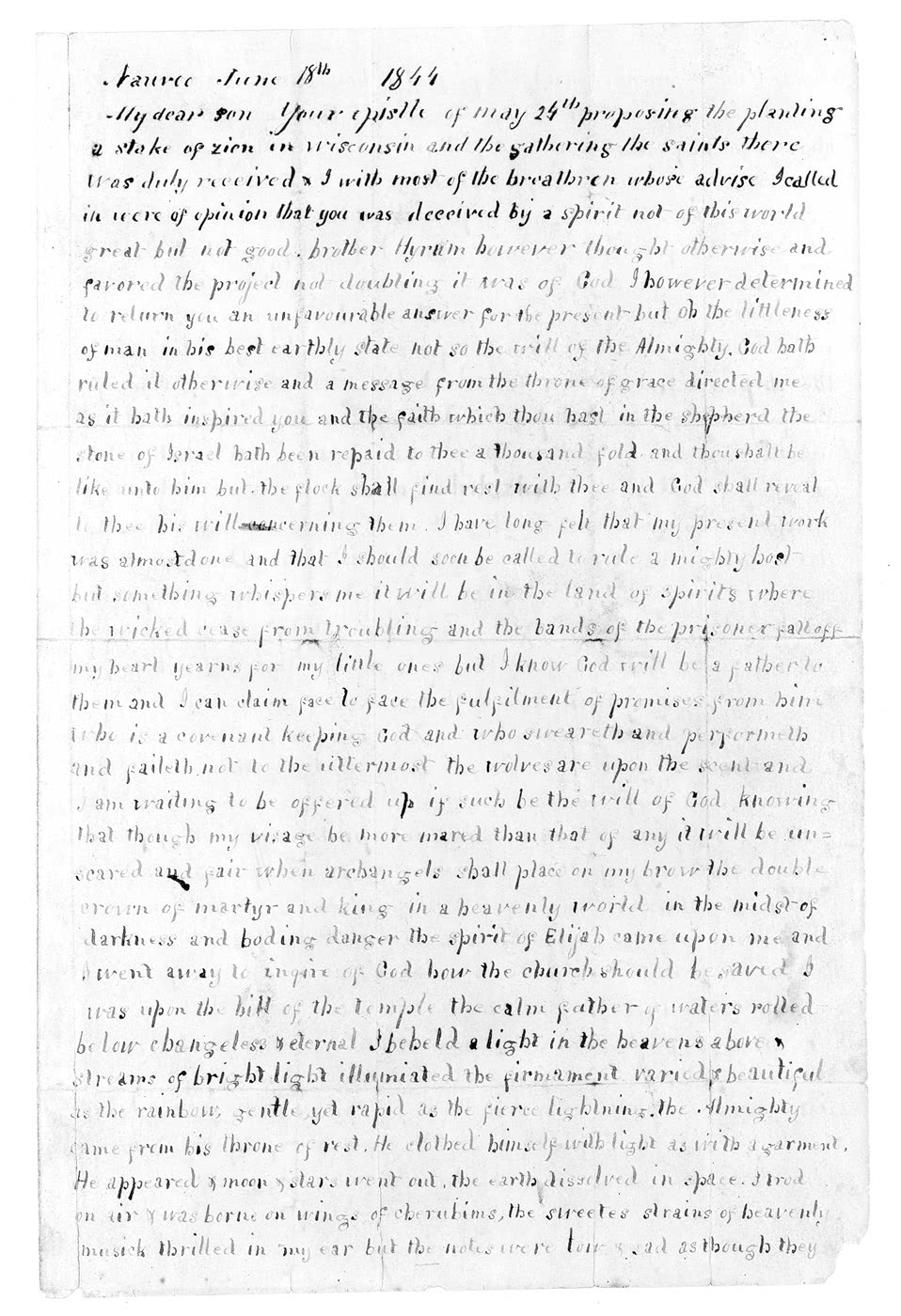
Strang's claim to be Joseph Smith's prophetic successor depended on a "Letter of Appointment" dated June 18, 1844, nine days before Joseph's June 27 assassination, and postmarked from Nauvoo the next day, purporting to be from Joseph Smith. The original is held at Yale University's Beinecke Rare Book and Manuscript Library (catalog WA MSS 447).[38]
The forensic anomalies
The documentary anomalies critics cite:
- All-caps print lettering: the main text uses "print lettering rather than in cursive script—a style of penmanship so unusual for the prophet and his secretaries that no other examples are known to exist, according to one scholar."[39]
- Signature mismatch: the signature "bears no slightest resemblance to that of Joseph Smith."[39:1]
- Different paper stocks: the two sheets came from different kinds of stock, suggesting later concatenation (a point Strangite apologists contest).[39:2] [40]
- A disaffected Strangite later claimed Strang's associate Caleb P. Barnes, the same Barnes implicated in the Voree Plates kettle confession, fabricated the letter.[7:1]
One item often listed with those anomalies belongs on the other side of the ledger. In 1956, the handwriting firm of Tyrell and Doud compared the Letter of Appointment with three letters the Illinois Historical Library accepts as Joseph Smith's and reported that because the letter is "in handprinting, where as the other documents in question are not, few conclusions are possible."[40:1] The same examiners judged the language of all four documents "consistent with the theory that all four documents were authored by one individual," and their report reaches us through a Strangite imprint. Strangite writers cite it in the letter's defense.
The strongest evidence for authenticity is the outer envelope's postmark, which appears genuine. Miles Harvey's own summary is that "someone did indeed send the cover sheet to Strang from Nauvoo on June 19, 1844, even if the inside sheet was a total fabrication."[39:3] The forgery hypothesis runs that the cover was authentic but the inner pages were fabricated and substituted later. Strang's prior experience as a postmaster has been cited as relevant.[39:4]
The scholarly assessment
The immediate denunciation came from Crandall Dunn, the presiding elder of the Church's branch at Florence, Michigan, who on August 5, 1844, called the claim an imposture and read the envelope's postmark as proof of forgery rather than of authenticity. Brigham Young, in January 1846, denounced the entire letter as a forgery: "Every person acquainted with Joseph Smith, and his style of dictation and writing might readily know that he never wrote nor caused to be written that letter to Strang."[37:1] Roger Van Noord's standard scholarly biographies, King of Beaver Island (University of Illinois Press, 1988) and Assassination of a Michigan King (University of Michigan Press, 1997), concluded: "it is probable that Strang — or someone under his direction — manufactured the letter of appointment and the brass plates to support his claim to be a prophet and to sell land at Voree."[41] D. Michael Quinn's "The Mormon Succession Crisis of 1844" (BYU Studies 16/2, 1976) is the standard peer-reviewed scholarly treatment.[37:2] Strangite scholars defend authenticity; the surviving Strangite Church's website continues to defend Strang's succession claim.[42] The mainstream non-LDS press treatment (e.g., Miles Harvey's Literary Hub essay) accepts the modern forgery consensus.[39:5]
Documenting that Strang's foundational corpus has forgery indicia does not establish that the Book of Mormon corpus is clean; that direction of inference is not the one in play here. The point is comparative. Strang has at least three foundational artifacts that scholars have characterized as forgeries or probable forgeries: the Voree Plates, the Book of the Law plates, and the Letter of Appointment. Set the attested indicators side by side, and the documentary case against Strang's foundational claims is the heavier one: Van Noord's probable-forgery judgment on both the letter and the plates, the Church's 1846 verdict of forgery with Dunn's 1844 postmark objection before it, and the 1888 Saints' Herald confession reports.[41:1] [37:3] [6:2] [26:4] If the Letter of Appointment is a forgery, Strang's initial claim to succession was fraudulent. His authority rests on a single letter, and that letter is documentarily compromised. The downstream scriptural production (plates, Book of the Law, polygamy revelations) follows from the assumed prophetic authority the letter was supposed to confer.
Further Reading
- Roger Van Noord, King of Beaver Island: The Life and Assassination of James Jesse Strang (University of Illinois Press, 1988), standard scholarly biography
- Roger Van Noord, Assassination of a Michigan King: The Life of James Jesse Strang (University of Michigan Press, 1997), revised paperback edition
- Vickie Cleverly Speek, "God Has Made Us a Kingdom": James Strang and the Midwest Mormons (Salt Lake City: Signature Books, 2006), standard contemporary social/family history
- D. Michael Quinn, "The Mormon Succession Crisis of 1844," BYU Studies 16/2 (1976), peer-reviewed scholarly treatment
- Miles Harvey, "The Forged Letter that Began a Mormon Succession Crisis," Literary Hub, accessible mainstream-press narrative
Strangite movement decline
The movement-persistence dimension of the comparison is bounded, not a knockdown. But it is data the framework should accommodate without distortion.
On June 16, 1856, Alexander Wentworth and Thomas Bedford shot Strang three times on the St. James dock. Strang died July 9, 1856, at age 43. Within a month, on July 5 (and so before Strang died of his wounds), approximately 2,600 Strangites were forcibly expelled from Beaver Island by non-Mormons from Mackinac and elsewhere.[7:2] Strang appointed no successor (he had taught that successors required angelic ordination), the movement fragmented immediately, and most former Strangites eventually joined the Reorganized Church of Jesus Christ of Latter Day Saints (now Community of Christ).[17:1] Today the Strangite Church is headquartered in Voree, Wisconsin with approximately 50-300 members worldwide. Sarah Allen's framing: "though it does still exist today and is still headquartered in Voree, Wisconsin, there are only around 300 members worldwide. Many of us have more people than that in our wards."[19:4]
The Church of Jesus Christ of Latter-day Saints had approximately six members at its founding in April 1830. As of the end of 2025, it has approximately 17.9 million members worldwide. The Eight Witnesses' testimony has been printed in every edition of the Book of Mormon since 1830, an unbroken canonization stretching 195 years.[43]
Worth Acknowledging
Movement persistence is sociological, not theological. Christianity persists; Islam persists; Hinduism persists; Buddhism persists. They cannot all be doctrinally correct in their distinctive claims. Institutional success is not dispositive proof of authenticity. The Strangite collapse is partly explained by contingent factors (Strang's assassination, no designated successor, Beaver Island's geographic isolation); LDS persistence is partly explained by contingent factors too. The contrast is bounded, consistent with the imbalance at the foundations, not proof of them.
Still, the outcome fits the inputs. A movement that drew three insider fabrication reports, rested on a forensically compromised foundational document, and turned on a single charismatic king is structurally predicted to collapse upon the king's removal. A movement built on eleven witnesses who never recanted, a 270,000-word text that has resisted naturalistic explanation for two centuries, and an apostolic-quorum continuity structure is structurally predicted to persist. Both predictions held: bounded evidence, nothing more, but evidence all the same.
The Shaker Sacred Roll
The CES Letter's third comparator is Philemon Stewart's A Holy, Sacred and Divine Roll and Book; From the Lord God of Heaven, to the Inhabitants of Earth (1843). Over sixty individuals signed testimony statements to the Sacred Roll. The CES Letter argues this is a parallel to the Eleven Witnesses. The argument fails on three structural facts.
The Era of Manifestations context
The Shaker United Society of Believers in Christ's Second Appearing was founded by Ann Lee (1736-1784). By the 1830s-1840s, the movement entered the "Era of Manifestations" (also called "Mother Ann's Work"), a period of intense visionary activity beginning in 1837 and lasting more than a decade. Young Shakers (especially girls aged 10-14) reportedly received revelations, danced ecstatically, drew visionary "gift drawings," and claimed angelic visitations.[44] [45]
Philemon Stewart, a Shaker "instrument" at the New Lebanon community, claimed angelic dictation of A Holy, Sacred and Divine Roll and Book, published in 1843. The book is approximately 400 pages, divided into "rolls" purporting to come from various angelic and divine sources.[16:1] [44:1]
Fact 1: Different category of witness experience
The Shaker witnesses did not testify to physical handling of an artifact. They testified to a vision. The published Shaker witness testimony reads: "We, the undersigned, hereby testify, that we saw the holy Angel standing upon the house-top, as mentioned in the foregoing declaration, holding the Roll and Book."[5:1]
What the Shaker witnesses attest is a vision of the angel holding the book. In the 1843 volume their statement sits directly beneath the Shaker Emily Babcock's own declaration of that vision, which the eight are corroborating rather than independently declaring.[16:2] They are not testifying to handling the book themselves. The Eight Witnesses' testimony, "we did handle with our hands... and we also saw the engravings thereon," is a structurally different category of claim.[46] The Shaker testimony is parallel to the Three Witnesses' visionary testimony at most; it has no parallel to the Eight Witnesses' physical-handling testimony at all. The CES Letter flattens this distinction.
The book the Shaker witnesses claim to have seen is also not a translation from physical plates. It is a book purportedly dictated by an angelic instrument to Stewart, a revelation rather than a translation. The CES Letter treats this as parallel to the Eleven Witnesses' testimony to a metal-plate translation, which it is not.
Fact 2: Shaker leadership de-emphasized the Sacred Roll
Within decades of its 1843 publication, the Sacred Roll was effectively de-canonized in Shaker practice. Stephen Stein, author of the standard scholarly history The Shaker Experience in America (Yale UP, 1992), writes of the era's close that "[t]here also had been some collective embarrassment with the revelations and rituals, with the instruments and their behavior," and the Sacred Roll itself was withdrawn from active circulation and gradually marginalized.[47] [44:2] The institutional response was gradual de-canonization rather than a single formal repudiation, but it was de-canonization nonetheless.[48]
Stein's study of the Sacred Roll in the Proceedings of the American Antiquarian Society records what the Shaker Central Ministry did about Philemon Stewart. It summoned him and "stated forthrightly that they 'could not accept' his counsel as 'the Word of the Lord.'" It also criticized him "for elevating his own role in the revelation and for soliciting too many testimonies in support of it." The sixty-odd signatures the CES Letter counts against the Book of Mormon's eleven were, in other words, part of what Shaker leadership itself disavowed.[47:1] Sarah Allen documents the trajectory: at least one Shaker leader told a visiting journalist the Sacred Roll's "best use was to burn them," while the scholarly paper she quotes describes how the book "quickly faded into the background, becoming the province of historians rather than of the living, worshiping Shaker community."[49] Charles Nordhoff's 1875 record of that "burn them" line is one Shaker elder's view to a visitor, not an institutional declaration.[50] By the 1870s, the Sacred Roll had faded into irrelevance.
The contrast with the Book of Mormon is sharp. The Book of Mormon has not been de-canonized. The Eleven Witnesses' testimony has been printed in every edition since 1830. The Church has never withdrawn the testimony, never characterized the witnesses as embarrassments, never told members the witness statements should not be read.
Fact 3: Stewart marginalized
Philemon Stewart was the Shaker "instrument" who claimed the angelic dictation. He was later marginalized by the Shaker Ministry; leadership directed him to "cease writing anything more to them in the line of Inspiration."[47:2] Joseph Smith's prophetic role was not analogously marginalized by the institution he founded. He was killed at Carthage in 1844, but the Church he founded did not "cease writing anything more." It continued to publish, expand, and reaffirm.
Key Point
The CES Letter's Shaker comparator requires the Sacred Roll witnesses and the Book of Mormon witnesses to sit on the same evidential footing. They do not. The Shaker witnesses described visions of an angel holding a book; the Eight Witnesses described holding the book themselves. The Shaker leadership effectively de-canonized the Sacred Roll in practice within decades; the Book of Mormon has been continuously reaffirmed for 195 years.
The Clark Braden Martin Harris quote
The marquee Shaker citation in the CES Letter is Clark Braden's 1884 claim that "Harris declared repeatedly that he had as much evidence for a Shaker book he had as for the Book of Mormon."[5:2] The quote requires careful provenance analysis.
Clark Braden preached for the Disciples of Christ. The Braden-Kelley Debate (1884) was a public debate between Braden and Edmund L. Kelley of the Reorganized Church. The debate occurred nine years after Harris's July 10, 1875 death. Braden's claim is hostile-source thirdhand hearsay reported nearly a decade after Harris's death.[51]
Even if the report is accurate, it has to be read against Harris's contemporaneous statements from the Shaker investigation period itself:
- Edward Bunker, 1844: Bunker visited Harris and heard him "bear his testimony to the truth of the Book of Mormon."[52]
- Jeremiah Cooper, 1845: Cooper reported Harris "bore testimony to the truth of the Book of Mormon."[52:1]
- November 1850 journal entry: Harris said he "was one of the 3 Witnesses to the Book of Mormon and said he knew it was true, for he saw the plates and knew for himself."[52:2]
- Thomas Colburn, 1855, recorded Harris's own verdict on the detour: "he tried the Shakers, but that would not do."[53]
By 1855, Harris had explicitly rejected Shakerism. By 1870, Harris returned to the LDS Church and was rebaptized at age 87. By his July 1875 deathbed, multi-source accounts (Pilkington 1934, Godfrey, Homer, Harris's son) record Harris reaffirming the Book of Mormon. The Braden quote, even if real, describes a brief mid-1840s investigation period that Harris explicitly closed by 1855. It does not describe a settled view.
For the full Harris-and-Shakers analysis, see Credibility Concerns.
Peterson's framework: articulation vs. features
A faithful response can't just keep saying "but these other cases are different." That would be question-begging. The response has to demonstrate, on the basis of contemporaneous primary-source evidence, that the framework grounding the Book of Mormon-witnesses claim has internal features distinguishing it from the Strang and Shaker corpora. And it has to answer the hardest version of the challenge: the framework's modern apologetic articulation is post-Strang.
Daniel C. Peterson's foundational scholarly statement of the structural-asymmetry argument is his 2006 FAIR Conference address, "Tangible Restoration: The Witnesses and What They Experienced." His own contrast is four-membered: "Strang's plates were much less numerous than those associated with Joseph Smith, his witnesses saw nothing supernatural, his translation required the better part of a decade rather than a little more than two months, and, unlike the Witnesses to the Book of Mormon, Strang's witnesses did not remain faithful to their testimonies."[32:1] This article organizes the same contrast into five features:
- Physical artifact: a specific physical object whose dimensions, weight, and material properties multiple witnesses described consistently.
- Content complexity: internal properties of the translated text (length, narrative complexity, multi-author voice differences, ancient parallels) that the Voree Plates' translation lacks.
- Witness diversity: eleven witnesses of different ages, backgrounds, and (after 1838) institutional loyalties.
- Lifetime affirmation: fifty years of post-1838 public reaffirmation against the Strangite witnesses' post-departure silence and three reported insider fabrication confessions.
- Institutional persistence: 195 years of continuous canonization against the Strangite collapse of 1856 and the Shaker Sacred Roll's de-canonization.
A skeptic will reasonably press: this five-element framework is not what Joseph and Cowdery articulated in 1830, and it is not Peterson's enumeration either. The five-part structure is this page's own organization of the evidence, and it looks like a response to the Strang/Shaker symmetry challenge. Anderson's foundational Investigating the Book of Mormon Witnesses came in 1981, Peterson's "Tangible Restoration" in 2006, more than a century after Strang. The credible answer distinguishes framework articulation from framework features.[54]
The articulation of the framework into a five-element structure is admittedly modern. Joseph and Cowdery did not, in 1830, set out proof conditions; they named no plate weight, invoked no chiasmus, and staked nothing on whether their church would outlast them. The Eight Witnesses' 1830 statement is brief; it specifies physical handling but does not tabulate dimensions, content properties, or institutional projections. The framework as a structured analytical packaging of multiple features is the work of modern scholarship: Anderson 1981, Peterson 2006, Welch's translation-timing studies, Skousen's textual-critical work. On the articulation point, the parallel argument has real force.
The features the framework points to are a different matter. They are documented in 1829-1888 contemporaneous evidence:
- The Book of Mormon plates' weight and dimensions were described by the Eight Witnesses in 1830 ("we did handle with our hands"), by household witnesses in the late 1820s and 1830s, by William Smith (about sixty pounds, hefted in a tow frock), by John Whitmer ("8 by 6 or 7 inches" with three D-shaped rings), and by Emma Smith, who said the leaves "would rustle with a metalic sound when the edges were moved by the thumb, as one does sometimes thumb the edges of a book."[55] [56] [57] [58]
- The translation timeline is established by contemporaneous 1829 letters, the Cowdery-Smith correspondence, Emma's continuity-of-dictation account, and the original manuscript itself.[20:1]
- The 270,000-word content existed by 1830 publication.
- The witnesses' diversity of post-1838 institutional loyalty is documented across 1838-1888 in primary sources (Whitmer never returned; Cowdery returned in 1848; Harris returned in 1870).[31:1] [27:1]
Modern scholarship is articulating the framework that organizes this contemporaneous evidence into selection criteria. It is not inventing the evidence. No one in 1830 needed the framework for the 270,000 words to be on the page, and the framework did not produce the fifty years of reaffirmations that followed; both facts predate the framework and neither depends on it. The features run through the contemporaneous record.
Could the Strang case clear the same five features? It comes up short on every one: the translation produced 200 words of lament plus 320 pages of biblical-commandment expansion assembled across eight to ten years; the witnesses went silent post-departure; three insider sources reported fabrication.[32:2] [59] The Sacred Roll was de-canonized in Shaker practice, and the Strangite movement collapsed within months of Strang's death.[49:1] [48:1] [7:3]
| Feature | Book of Mormon | Voree Plates | Book of the Law | Shaker Sacred Roll |
|---|---|---|---|---|
| Physical artifact | ~6×8×4-6 inches, 40-60 lbs, hundreds of pages, gold-colored alloy | ~2.5×1.25-1.5 inches, sheet-thin, 3 plates, brass | ~7⅜×9 inches, ~6 lbs, 18 plates, brass | No physical artifact; vision of angel holding book |
| Content complexity | ~270,000 words, multi-author, chiastic, ancient names, Hebraisms, no naturalistic explanation | ~200 words, generic religious poetry | ~80 pages (1851); ~320 pages (1856), biblical commandment expansion | Direct revelation, ~400 pages |
| Witness diversity | 11 named, 3+8 split, dual visionary/physical, household corroboration | 4 named, physical-only, inner circle | 7 named, a disjoint set (4 + 7 = 11 across both artifacts), all Strangite officers | 60+ signatures, tight communal context |
| Lifetime affirmation | 24 documented reaffirmations across 50 years; 0 recantations; 0 fabrication-confession reports | No documented first-hand post-departure reaffirmations; 1 insider fabrication-confession line (Barnes via Scott) | Post-departure silence; 2 insider fabrication-confession lines (Graham via Loomis; Bacon via Loomis + Post) | Mixed; institutional de-canonization by Shaker Ministry |
| Institutional persistence | ~18M members; 195 years; continuous canonization | ~50-300 members; effective collapse 1856 | (same as Voree; same movement) | De-canonized in Shaker practice; "best use was to burn them"[50:1]; Stewart marginalized |
Engaging the serious version
The CES Letter's parallel argument is rhetorically reductive. The serious academic version (Foster, Stein, Vogel, Palmer) is stronger, and it engages structural features the CES Letter elides. A faithful response should meet that version, not just the weakest one.
The framework's application differs by case
Every religious tradition has some witness corpus, and the cumulative-witness framework grounds many of them: Catholic Marian apparitions, Pentecostal experience, Shakers, Strangites, and others. The framework cannot privilege the Book of Mormon witnesses by mere assertion. Its application differs by case: Catholic Marian apparitions are typically individual visionary experiences (sequential, not corporate); Pentecostal experience is typically interior and not anchored to a specific physical artifact. The Book of Mormon witnesses are testifying to a specific physical artifact examined by multiple people at known times and places, with both visionary (Three) and physical-handling (Eight) categories represented. The framework privileges the Book of Mormon witnesses by the empirical features Peterson catalogs, features detectable in the contemporaneous primary-source evidence, not retrospectively constructed. The Light of Christ doctrine explicitly predicts genuine spiritual experience across traditions; for the broader question, see Competing Spiritual Claims.
"Two hands and two eyes" rhetoric is shared
The faithful response often invokes what Sally Parker heard Hyrum Smith say in 1838, "He said he had but two hands and two eyes. He said he had seen the plates with his eyes and handled them with his hands," as evidence the Book of Mormon witness experience was physical, not visionary.[60] The skeptic notes that similar language exists in the Strangite corpus: "We examined them with our eyes, and handled them with our hands."[9:2] If physical-handling rhetoric grounds belief, the same rhetoric in Strang's witnesses should ground belief equally.
The concession is real: witness testimony alone, the rhetoric of physical handling, cannot by itself establish Joseph's plates as ancient artifacts or expose Strang's as modern forgeries by Strang and Barnes. The selection runs through what the witnesses are testifying about: content (270,000 words of complex narrative vs. 200 words of generic poetry vs. 320 pages of commandment expansion), translation timeline (roughly sixty days against at least seven years), the translation instruments themselves (Nephite interpreters and the seer stone, distinct from Strang's bare "Urim and Thummim" claim), post-departure trajectory (50-year reaffirmation vs. silence and reported fabrication), and institutional outcome (continuous canonization vs. effective collapse and de-canonization). The witnesses' "two hands and two eyes" language is one piece of a larger evidentiary structure. The Strang parallel needs the witness language to stand alone as evidence. It does not.
The CES Letter is weaker than the academic version
Lawrence Foster's Women, Family, and Utopia (Syracuse UP, 1991) includes a dedicated chapter, "James J. Strang: The Prophet Who Failed."[61] Foster treats Strang seriously without reducing Joseph to the same. Dan Vogel's Joseph Smith: The Making of a Prophet (Signature Books, 2004) treats both as 19th-century prophet-figures via psychobiographical analysis; Vogel's "pious fraud" thesis is engaged in Credibility Concerns. Stephen Stein's analysis of the Sacred Roll engages the Shaker leadership's later distancing without concluding the Sacred Roll was fabricated; he treats it as a genuine product of communal religious enthusiasm later renarrated by the institution.[44:3] [47:3]
The CES Letter's specific weaknesses, beyond what even the academic version concedes: it doesn't engage the Voree Plates' actual content; doesn't engage the post-departure-silence pattern; conflates "investigated and withdrew" with "endorsed, joined, and sustained" for the Whitmers and Harris; rests its "every Smith family member" claim on Katharine Salisbury's denied-forgery letter; doesn't engage the Letter of Appointment question; doesn't engage the Shaker leadership's later effective de-canonization; and treats the Clark Braden 1884 quote as Harris's settled view rather than thirdhand hostile-source reporting nine years after his death. The structural features that distinguish the Book of Mormon witness corpus survive the academic engagement. The CES Letter's surface-parallel framing does not.
The Book of Mormon as anchor
Strang's witnesses are testifying about three small brass plates that produced 200 words of generic religious poetry, plus eighteen plates that produced an 80-page volume in 1851, expanded over the next five years to 320 pages with material that was not new translation. The Eleven Book of Mormon witnesses are testifying about a metal volume that produced 270,000 words of internally complex multi-author scripture in roughly sixty working days, with no whistleblower across 195 years of continuous publication, and a textual structure that has resisted naturalistic explanation for two centuries.[20:2] [22:1]
That difference is why the witnesses' character does not have to carry the case alone. The artifact has properties of its own. Take those properties away (no internal complexity, no scholarly engagement, no testable features) and the witnesses' character would be the only support, and the Strang parallel would have more purchase. But the Book of Mormon does have those properties, and they are independent evidence the parallel argument has to reckon with. The Strang parallel asks the reader to set that evidence aside. The evidence asks the reader not to.
Bottom-line assessment
The CES Letter's Strang/Shaker comparison is the most rhetorically structured argument in the Witnesses section. It frames a parallel: Joseph had witnesses, Strang had witnesses, Shakers had witnesses, therefore witnesses prove nothing. Surface parallels exist. Its specific factual claims are partially accurate. What the framing needs in order to work is structural equivalence, and structural equivalence does not hold.
Walk the dimensions one more time. The translation comparison is the most testable: 270,000 words of complex multi-author narrative in roughly sixty working days, against 200 words of generic poetry and 320 pages of commandment expansion over the better part of a decade. The internal-fabrication evidence is one-sided in number and source independence: three insider source-lines on Strang's side (Scott reporting Barnes; Loomis reporting Graham; and, for Bacon, Loomis alongside the 1855 Warren Post council action taken while Strang lived); on the Book of Mormon's side, no counterpart line from any of its eleven witnesses across fifty years. The post-departure trajectories diverge sharply: Strangite witnesses produced no documented first-hand reaffirmations after departure; Book of Mormon witnesses produced twenty-four documented reaffirmations across 1838-1888. The Letter of Appointment is forensically compromised. The CES Letter's specific factual claims about the Smith family's endorsement and the Book of Mormon witnesses' Strangite sympathies are wrong on multiple specifics. And the Shaker comparator runs against the parallel argument: the Sacred Roll was effectively de-canonized in Shaker practice within decades, while the Book of Mormon has been continuously canonized for 195 years.
Run rigorously rather than rhetorically, the comparison points the opposite way from the CES Letter's reading. The parallel holds at the surface. Below the surface, on every dimension where comparison is even possible (content, witness corpus, internal confessions, post-departure trajectory, foundational document, institutional outcome), the data tilts the same direction, and it is not the direction the parallel was built to show.
Further Reading
- Daniel C. Peterson, "Tangible Restoration: The Witnesses and What They Experienced," 2006 FAIR Conference, foundational scholarly statement of the structural-asymmetry framework
- Daniel C. Peterson, "Defending the Faith: The Story Behind James Strang and His Sect," Deseret News, June 9, 2011, accessible essay rehearsing the same structural case
- Sarah Allen, "The CES Letter Rebuttal — Part 50," "Part 52," "Part 53," FAIR Blog (2022), the most thorough recent apologetic engagement
- Vickie Cleverly Speek, "God Has Made Us a Kingdom": James Strang and the Midwest Mormons (Salt Lake City: Signature Books, 2006), standard contemporary social/family history
- Roger Van Noord, King of Beaver Island: The Life and Assassination of James Jesse Strang (University of Illinois Press, 1988) and Assassination of a Michigan King (University of Michigan Press, 1997), standard scholarly biographies
- Stephen J. Stein, The Shaker Experience in America: A History of the United Society of Believers (Yale UP, 1992), standard scholarly history of the Shakers
- Lawrence Foster, Women, Family, and Utopia (Syracuse UP, 1991), comparative framework with "James J. Strang: The Prophet Who Failed" chapter
- D. Michael Quinn, "The Mormon Succession Crisis of 1844," BYU Studies 16/2 (1976), standard peer-reviewed scholarly treatment
- FAIR, "James Strang movement," master apologetic page with primary-source citations
- Witnesses of the Book of Mormon: Insights Episode 11 (Dirkmaat on the Voree Plates) and Episode 26 (Peterson on Strang's Witnesses)
Runnells, CES Letter (2017), "Witnesses," p. 95. ↩︎
Runnells, CES Letter (2017), "Witnesses," p. 99. ↩︎
Runnells, CES Letter (2017), "Witnesses," "Problems" 6, p. 103. ↩︎
Runnells, CES Letter (2017), "Witnesses," "Problems" 7, pp. 103-104, citing A Holy, Sacred and Divine Roll and Book, p. 304, and The Braden and Kelly Debate, p. 173. ↩︎ ↩︎ ↩︎
I. F. Scott, "James J. Strang in Voree," The Saints' Herald 35 (December 29, 1888): 831-833. The Caleb Barnes confession is reported through Scott — an RLDS-affiliated ex-Strangite by the time he wrote, 32 years after Strang's death. Scott describes Barnes as "the banker of the village" and "a silent partner in the land [company] in Voree" who also "practiced law." Cited and excerpted in FAIR's master Strang page; Daniel C. Peterson, "Defending the Faith: The Story Behind James Strang and His Sect," Deseret News, June 9, 2011. ↩︎ ↩︎ ↩︎
"James Strang," Wikipedia. https://en.wikipedia.org/wiki/James_Strang. Documents Nauvoo conversion February 1844; Voree 1844-1848; Beaver Island 1848-1856; assassination June 16, 1856 (died July 9 at age 43); peak ~12,000 adherents; July 5, 1856 forced eviction of ~2,600 Strangites. ↩︎ ↩︎ ↩︎ ↩︎
Runnells, CES Letter (2017), "Witnesses," pp. 96-98, quoting the four-witness affidavit to the Voree Plates dated September 13, 1845. ↩︎
Runnells, CES Letter (2017), "Witnesses," p. 96, quoting the seven-witness statement to The Book of the Law of the Lord. ↩︎ ↩︎ ↩︎
"Book of the Law of the Lord," Wikipedia. https://en.wikipedia.org/wiki/Book_of_the_Law_of_the_Lord. Eighteen brass plates, ~7⅜ x 9 inches, ~6 lbs; seven witnesses (Graham, Bacon, Post, Wright, Hosmer, Page, Savage); 1851 (80 pp) and 1856 (320 pp) editions; "none of them is known to have ever denied their testimony as given in the Book of the Law." ↩︎ ↩︎ ↩︎
John Hamer, "The Miraculous Plates of Voree Examined," By Common Consent, June 23, 2008. LDS-faithful blog post providing detailed comparison; documents Aaron Smith's continued affirmation of the plates after renouncing Strang. ↩︎ ↩︎
Robin Scott Jensen, "A Witness in England: Martin Harris and the Strangite Mission," BYU Studies 44, no. 3 (2005): 79-98. Documents Harris's England trip with Strang (October-December 1846), the Birmingham affirmations ("I know more about that book than any man living"), Lester Brooks's decision to end Harris's mission, and the broader pattern of Harris affirming the Book of Mormon while refusing to preach Strangism. ↩︎ ↩︎ ↩︎
Saints Unscripted, "Who Supported James Strang... Really?" Documents that 5 of 11 BoM witnesses were already dead when Strang appeared, Cowdery never followed Strang, the Whitmer/Harris flirtations were brief, Emma Smith resisted Strang, and Katharine Smith Salisbury denied her purported signature as a forgery. ↩︎ ↩︎ ↩︎
"Voree plates," Wikipedia. https://en.wikipedia.org/wiki/Voree_plates. Documents the plates' physical character (three brass plates, ~2.5 x 1.25-1.5 inches; ~200-word translation as "The Record of Rajah Manchou of Vorito"; discovered Sept. 13, 1845) and Sholes's Southport Telegraph assessment ("offered no opinion on the plates" but described Strang as "honest and earnest"). ↩︎ ↩︎ ↩︎
"James Strang movement," FAIR. https://www.fairlatterdaysaints.org/answers/James_Strang_movement. Compiles the Barnes/Scott, Graham/Loomis, Bacon ceiling-fragments, and Stephen Post primary-source material; documents that "most of the four" Voree witnesses eventually broke with Strang. ↩︎ ↩︎ ↩︎ ↩︎
Philemon Stewart, A Holy, Sacred and Divine Roll and Book; From the Lord God of Heaven, to the Inhabitants of Earth (Canterbury, NH: printed by the United Society, 1843), 304. https://archive.org/details/holysacreddivine00stew. The eight-name statement on p. 304 follows directly on Emily Babcock's own declaration of the vision, signed "New Lebanon, N. Y. April 8, 1843." ↩︎ ↩︎ ↩︎
"Church of Jesus Christ of Latter Day Saints (Strangite)," Wikipedia. https://en.wikipedia.org/wiki/Church_of_Jesus_Christ_of_Latter_Day_Saints_(Strangite). Headquartered in Voree, WI; current active membership 50-300 worldwide; most post-1856 Strangites joined the Reorganized Church. ↩︎ ↩︎
The Voree Plates: The Record of Rajah Manchou of Vorito (public domain), via OpenScriptures: https://openscriptures.net/wp-content/uploads/2021/04/Voree-Plates.pdf. Strang's full published "translation" — approximately 200 words (202 by word count). ↩︎ ↩︎
Sarah Allen, "The CES Letter Rebuttal — Part 50," FAIR Blog (March 2, 2022). Documents the Voree Plates fabrication chain; Strangite witnesses' post-departure silence ("they all abruptly stopped testifying of Strang's plates"); current ~300 Strangite members. Concedes the secondhand status of the Scott letter: "This is a secondhand account from 1888, 32 years after Strang's death... I am not stating it as settled fact." ↩︎ ↩︎ ↩︎ ↩︎ ↩︎
John W. Welch, "Timing the Translation of the Book of Mormon: 'Days [and Hours] Never to Be Forgotten,'" BYU Studies Quarterly 57, no. 4 (2018): 10-50. https://byustudies.byu.edu/article/timing-the-translation-of-the-book-of-mormon-days-and-hours-never-to-be-forgotten/. Welch calculates 57 to 63 available full-time working days between April 7 and June 30, 1829, and concludes the dictation took "not many more than the equivalent of about 60 actual working days." ↩︎ ↩︎ ↩︎
John W. Welch, "Chiasmus in the Book of Mormon," BYU Studies 10, no. 1 (1969). The foundational treatment of Hebraic chiastic structure in the Book of Mormon, including Alma 36. ↩︎
Royal Skousen, Book of Mormon Critical Text Project (FARMS / Interpreter Foundation, 2001-2025). Multi-volume critical text edition documenting the dictation pattern, original manuscript features, and textual integrity. ↩︎ ↩︎
Warren P. Aston, Lehi and Sariah in Arabia: The Old World Setting of the Book of Mormon (Bountiful: Xlibris, 2015); Book of Mormon Central / Evidence Central entries on Nahom (NHM) altar inscriptions from the Bar'an temple, Marib, Yemen. ↩︎
Wingfield Watson, Prophetic Controversy, No. 3: or, The Even Balances by Which Isaac Scott, Chancy Loomis, and the Founders of the Reorganization Are Weighed and Found Wanting ([Boyne, Mich.?]: Wingfield Watson, 1889), 37. https://archive.org/details/propheticcontr1889wats. The contemporaneous Strangite reply to the Scott and Loomis letters. Watson objects that "[a] flat stone one foot wide each way, and three inches thick was found over the case containing the record," and asks "how that stone ever got in so far under that tree through a two, or two and a half inch auger hole." ↩︎
Runnells, CES Letter (2017), "Witnesses," p. 98. ↩︎
Chauncy Loomis, letter to Joseph Smith III, "Experience on Beaver Island with James J. Strang," The Saints' Herald (November 10, 1888): 718-719. Loomis reports Graham's beeswax-and-pen-knife confession and Bacon's discovery of plate fragments behind Strang's ceiling. Loomis was an ex-Strangite writing in the RLDS publication 32 years after Strang's death. ↩︎ ↩︎ ↩︎ ↩︎ ↩︎
David Whitmer, quoted in Richard Lloyd Anderson, Investigating the Book of Mormon Witnesses (Salt Lake City: Deseret Book, 1981); quoted in Vogel, Early Mormon Documents, 5:105. Cowdery died March 3, 1850, in Whitmer's home in Richmond, Missouri. "Oliver never wavered in his testimony, and when he was on his death bed, I was there, with many of his friends, until he passed away. He bore the same testimony on his dying bed that he had always borne through life..." ↩︎ ↩︎
Warren Post's record of the 1855 Strangite council that stripped Samuel P. Bacon of his office after Bacon "denied the work being done was the inspiration of God" and called it "human invention." Discussed in FAIR's master Strang page and Saints Unscripted's "Did James Strang's Witnesses Deny Their Testimonies?"; also referenced in Daniel C. Peterson's broader treatment of the Strang witness corpus. ↩︎
Saints Unscripted, "Did James Strang's Witnesses Deny Their Testimonies?" Documents the Warren Post 1855 council action and the broader internal-Strangite confession chain. ↩︎
The Strangite confessions are not materially better-evidenced than the BoM reaffirmation chain on a pure documentary-immediacy metric — most of the Strang confession reports are hearsay carried through ex-Strangite intermediaries decades after the events, and the same evidentiary standard applied symmetrically to the Book of Mormon corpus would dismiss large portions of the BoM-witness reaffirmation chain (Pilkington's 1934 affidavit on Harris's 1875 deathbed recorded 59 years after death, Reuben Miller's 1848 record of Cowdery's Kanesville reaffirmation, Whitmer's 1861 graveside report). The article concedes this. The asymmetry the article actually wants to draw is one of number, content, and source independence — not of documentary-immediacy. ↩︎ ↩︎
David Whitmer, An Address to All Believers in Christ (Richmond, MO: David Whitmer, 1887), 8. Available in full via Internet Archive: https://archive.org/details/addresstoallbeli00whit. The booklet runs approximately 75 printed pages (the 102-page archival scan includes covers and endpapers) and is a sustained criticism of the Utah Church's later doctrinal developments, but on the Book of Mormon affirmation it is unequivocal: "I have never at any time denied that testimony or any part thereof." Cross-referenced in Credibility Concerns. ↩︎ ↩︎
Daniel C. Peterson, "Tangible Restoration: The Witnesses and What They Experienced," 2006 FAIR Conference. https://www.fairlatterdaysaints.org/wp-content/uploads/2011/11/2006-Daniel-Peterson.pdf. Foundational scholarly statement of the structural-asymmetry framework. Concludes "forgery is the virtually certain explanation" for the Strang plates. ↩︎ ↩︎ ↩︎
Sarah Allen, "The CES Letter Rebuttal — Part 52," FAIR Blog (March 10, 2022). Documents Strangite witness biographies and the post-departure silence pattern; notes that Strang married one of Phineas Wright's daughters four years after Wright signed the Book of the Law witness statement (making Strang the son-in-law). ↩︎
Death dates of the five witnesses who died before Strang's 1844-45 emergence: Christian Whitmer (November 27, 1835), Peter Whitmer Jr. (September 22, 1836), Joseph Smith Sr. (September 14, 1840), Hyrum Smith (June 27, 1844), and Samuel H. Smith (July 30, 1844). ↩︎
Oliver Cowdery to David Whitmer, July 1847, a confidential letter in which Cowdery "tersely dismissed Sidney Rigdon and James Strang as uninspired men who were not called by God to lead the church"; William E. McLellin obtained a copy and printed it without permission in his Ensign of Liberty in May 1848. Narrated in Scott H. Faulring, "The Return of Oliver Cowdery," in Oliver Cowdery: Scribe, Elder, Witness, ed. John W. Welch and Larry E. Morris (Provo, UT: Neal A. Maxwell Institute, 2006), 321-362, which also dates Cowdery's rebaptism to November 12, 1848, about sixteen months before his death on March 3, 1850. On Cowdery's character and testimony generally, see Larry E. Morris, "The Private Character of the Man Who Bore That Testimony: Oliver Cowdery and His Critics," FARMS Review 15, no. 1 (2003). ↩︎
Katharine Smith Salisbury's written denial of her purported signature on the William Smith-published 1846 Voree Herald endorsement letter, discussed in Sarah Allen, "Part 50": "I never signed my name to such certificate or document; neither did I give my consent for anyone to sign it." ↩︎
D. Michael Quinn, "The Mormon Succession Crisis of 1844," BYU Studies 16, no. 2 (Winter 1976): 187-233. https://mormonpolygamydocuments.org/wp-content/uploads/2014/12/JS0324.pdf. Standard peer-reviewed scholarly treatment of the 1844 succession crisis; documents Strang's letter-based claim, its rejection by the Church, and the movement's disintegration after Strang's 1856 assassination. Crandall Dunn's August 5, 1844 postmark objection and Brigham Young's January 1846 denunciation are at p. 195. ↩︎ ↩︎ ↩︎ ↩︎
"Joseph Smith, attributed, Letter of Appointment, 1844 June 18," Yale Beinecke Library (catalog WA MSS 447). https://archives.yale.edu/repositories/11/archival_objects/3166399. ↩︎
Miles Harvey, "The Forged Letter that Began a Mormon Succession Crisis," Literary Hub. Documents the all-caps print lettering, the signature mismatch ("bears no slightest resemblance" to Joseph's known hand), the two-paper-stocks anomaly (contested by Strangite apologists), the envelope's apparently genuine June 19, 1844 Nauvoo postmark, and Strang's prior postmaster experience. ↩︎ ↩︎ ↩︎ ↩︎ ↩︎ ↩︎
"Letter of appointment (Mormonism)," Wikipedia. https://en.wikipedia.org/wiki/Letter_of_appointment_(Mormonism). Letter dated June 18, 1844; original at Yale Beinecke Library; 1956 Tyrell-and-Doud handwriting analysis, published via the Strangite imprint Shepard 1977 and read by its examiners as consistent with a single author; written in all-capital print uncharacteristic of Joseph Smith; signature disputed by multiple analyses. ↩︎ ↩︎
Roger Van Noord, King of Beaver Island: The Life and Assassination of James Jesse Strang (Urbana: University of Illinois Press, 1988), 274. Internet Archive copy: https://archive.org/details/kingofbeaverisla0000vann. Van Noord concludes: "Based on the evidence, it is probable that Strang — or someone under his direction — manufactured the letter of appointment and the brass plates to support his claim to be a prophet and to sell land at Voree." See also Van Noord's revised paperback: Assassination of a Michigan King: The Life of James Jesse Strang (Ann Arbor: University of Michigan Press, 1997). ↩︎ ↩︎
Church of Jesus Christ of Latter Day Saints (Strangite) — "James J. Strang Legal Successor." https://www.ldsstrangite.com/james-j-strang-legal-successor.html. The surviving Strangite community's theological case for Strang's succession claim; included as a steelmanning resource. ↩︎
The Church of Jesus Christ of Latter-day Saints reports 17,887,212 members worldwide, last updated December 31, 2025 (https://newsroom.churchofjesuschrist.org/facts-and-statistics). The Book of Mormon has been published in 113 languages, 92 of them full translations and 21 selections, and publication has topped 200 million copies since 1830, the 200 millionth having been printed in December 2023 (https://news-europe.churchofjesuschrist.org/article/publication-of-the-book-of-mormon-has-topped-200-million-copies). ↩︎
Stephen J. Stein, The Shaker Experience in America: A History of the United Society of Believers (New Haven: Yale University Press, 1992). https://yalebooks.yale.edu/book/9780300059335/the-shaker-experience-in-america/. Standard scholarly history of the Shakers; covers the Era of Manifestations, which began in 1837 and ran more than a decade, and the Sacred Roll period. ↩︎ ↩︎ ↩︎ ↩︎
Edward Deming Andrews, The People Called Shakers: A Search for the Perfect Society (Oxford UP, 1953; Dover paperback). https://archive.org/details/peoplecalledshak0000andr_y8f4. Standard pre-Stein reference history of the Shakers; documents the Era of Manifestations and the Sacred Roll. ↩︎
"The Testimony of Eight Witnesses," Book of Mormon (Palmyra: E.B. Grandin, 1830), [590]; published in every edition since. The 1830 statement: "Joseph Smith, Jr. the Author and Proprietor of this work, has shewn unto us the plates of which hath been spoken, which have the appearance of gold; and as many of the leaves as the said Smith has translated, we did handle with our hands; and we also saw the engravings thereon, all of which has the appearance of ancient work, and of curious workmanship." ↩︎
Stephen J. Stein, "Inspiration, Revelation, and Scripture: The Story of a Shaker Bible," Proceedings of the American Antiquarian Society 105, pt. 2 (1996): 347-376. https://americanantiquarian.org/proceedings/44539469.pdf. Peer-reviewed study of Stewart's 1843 Sacred Roll. The Central Ministry passages quoted here are at pp. 370 and 372; the Era of Manifestations frame ("[b]eginning late in the summer of 1837 and lasting for more than a decade") is at p. 351. ↩︎ ↩︎ ↩︎ ↩︎
The Shaker case is not parallel to the Roman Catholic Church declaring a Marian apparition non-credible — there was no single formal repudiation, and "de-canonization" here means a gradual process: leadership stopped using the Sacred Roll in worship, withdrew it from circulation, and marginalized its principal author over the decades following 1843. Even under that softer description, the Shaker institutional trajectory toward the Sacred Roll is sharply different from the LDS institutional trajectory toward the Book of Mormon, which has been continuously canonized, distributed, and reaffirmed. ↩︎ ↩︎
Sarah Allen, "The CES Letter Rebuttal — Part 53," FAIR Blog (March 16, 2022). Documents the Shaker leadership's later effective de-canonization of the Sacred Roll; "best use was to burn them"; the book "faded into the background"; Stewart marginalized and told to cease writing "in the line of Inspiration"; quotes at length from a scholarly paper on the Sacred Roll's reception. ↩︎ ↩︎
Charles Nordhoff, The Communistic Societies of the United States (New York: Harper & Brothers, 1875), 250. Records a Shaker elder's report to Nordhoff (one Shaker leader's view to a visiting journalist, not an institution-wide declaration) that the Sacred Roll's "best use was to burn them." Cited in Sarah Allen's "Part 53." ↩︎ ↩︎
Clark Braden and E. L. Kelley, Public Discussion of the Issues Between the Reorganized Church of Jesus Christ of Latter Day Saints and the Church of Christ (Disciples), Held in Kirtland, Ohio (St. Louis: printed by Christian Publishing Co., 1884), 173. The debate occurred nine years after Harris's July 10, 1875 death; Braden's claim is hostile-source thirdhand hearsay. ↩︎
FAIR — "Question: Does Martin Harris' involvement with the Shakers undercut his testimony?" Documents the Edward Bunker 1844 testimony, the Jeremiah Cooper 1845 testimony, and the November 1850 journal entry — all establishing Harris's contemporaneous Book of Mormon affirmation during his Shaker investigation period. ↩︎ ↩︎ ↩︎
Thomas Colburn account, 1855, recorded in St. Louis Luminary 1 (May 5, 1855): 94 (p. 2 of the issue). Colburn recorded Harris on Shakerism: "he tried the Shakers, but that would not do." Cited in Anderson, Investigating the Book of Mormon Witnesses (1981), and Black/Porter, Martin Harris (2018). ↩︎
The 137-162 year gap between Strang's challenge (1844-45) and Anderson's Investigating the Book of Mormon Witnesses (1981) / Peterson's "Tangible Restoration" (2006) raises a legitimate question: did the framework get retrofitted to defeat a challenge the original three-element framework (witnesses + plates + non-recantation) couldn't handle? The honest answer requires distinguishing the articulation of the framework into its modern five-element packaging (post-Strang, and in the five-part form used here, this site's own) from the features the framework points to (which are documented in contemporaneous 1829-1888 primary sources). Modern scholarship organizes contemporaneous evidence into selection criteria; it does not invent the evidence. ↩︎
Steven C. Harper, "The Eleven Witnesses," in The Coming Forth of the Book of Mormon, ed. Dennis L. Largey, Andrew H. Hedges, John Hilton III, and Kerry Hull (Provo, UT: Religious Studies Center, 2015), 117-132. Harper weighs the sources critics prefer against what he calls "the overwhelming preponderance of the evidence" (p. 128), and records that "[t]he three saw and the eight 'hefted' the plates." ↩︎
Daniel C. Peterson, "The Book of Mormon Witnesses and Their Challenge to Secularism," Interpreter: A Journal of Mormon Scripture 27 (2017): vii-xxviii. https://interpreterfoundation.org/journal/the-book-of-mormon-witnesses-and-their-challenge-to-secularism. Records that William Smith "handled them and hefted them while wrapped in a tow frock and judged them to have weighed about sixty pounds." ↩︎
P. Wilhelm Poulson, interview with John Whitmer, April 1878, Deseret Evening News, August 6, 1878 (citing Poulson's letter to the editors dated July 31, 1878). Reproduced in Vogel, Early Mormon Documents, 5:247-249. Whitmer described the plates as "8 by 6 or 7 inches," "very heavy," with "three rings, each one in the shape of a D"; when asked if the plates were "a material substance," Whitmer answered: "Yes, as material as anything can be." ↩︎
Emma Smith, interview by Joseph Smith III, February 1879, published in Saints' Herald 26 (October 1, 1879): 289-290. Emma described feeling the covered plates on the table: they "seemed to be pliable like thick paper, and would rustle with a metalic sound when the edges were moved by the thumb, as one does sometimes thumb the edges of a book." ↩︎
Daniel C. Peterson, "Defending the Faith: The Story Behind James Strang and His Sect," Deseret News, June 9, 2011. Peterson rehearses the asymmetry: Strang's translation spanned the better part of a decade against Joseph's roughly two-month dictation timeline; names Bacon's "human invention" denouncement and Graham's reported confession to fabricating the plates. ↩︎
Sally Parker to John Kempton, August 26, 1838. Quoted in Steven C. Harper, "The Eleven Witnesses," The Coming Forth of the Book of Mormon (Provo, UT: Religious Studies Center, 2015). Parker's letter reports what she heard Hyrum Smith say as "spiritual eyes" claims circulated: "He said he had but two hands and two eyes. He said he had seen the plates with his eyes and handled them with his hands." Discussed in Credibility Concerns. ↩︎
Lawrence Foster, Women, Family, and Utopia: Communal Experiments of the Shakers, the Oneida Community, and the Mormons (Syracuse UP, 1991). https://archive.org/details/womenfamilyutopi0000fost. Includes a dedicated chapter, "James J. Strang: The Prophet Who Failed." ↩︎